Theatre review: Salt-Water Moon's casting brings compelling undercurrent of melancholy to story of first love
Two senior artists play young Newfoundland couple in Western Gold Theatre’s gentle staging

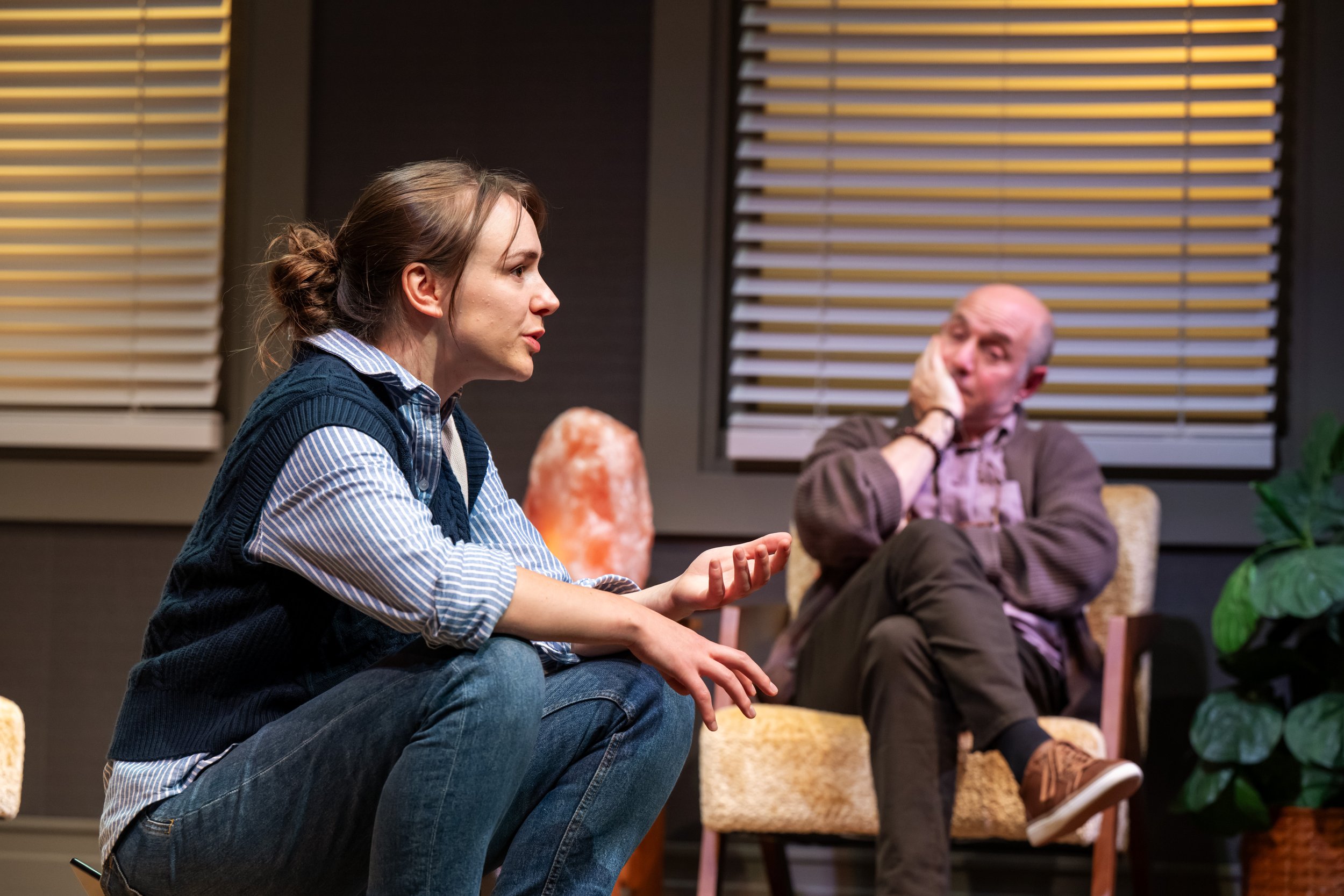
Salt-Water Moon. Photo by Javier Sotres
Western Gold Theatre presents Salt-Water Moon at PAL Studio Theatre to June 7
CANADIAN PLAYWRIGHT David French’s Salt-Water Moon is a play haunted by time.
Set over the course of a single night in his own hometown Coley’s Point, Newfoundland in the 1920s, the two-hander follows Jacob Mercer, returning home after a year away in Toronto, as he attempts to win back Mary Snow, the young woman he abruptly left behind. What’s most exciting about Western Gold Theatre’s staging of the play is that those two young lovers are played by veteran actors.
For those unfamiliar, the theatre company’s mandate is to “create opportunities for senior artists to continue their lifelong work, and to encourage discourse about the impact and joys of aging”. It proves an inspired choice here with Dolores Drake as Mary and Craig March as Jacob at the helm of the love story.
French’s dialogue remains steeped in the rhythms and cadences of Newfoundland speech. Jacob himself recounts with a small dose of resentment how his Maritimer manner of speaking is treated as “quaint” in Toronto. There is, undeniably, a quaintness to Salt-Water Moon: the outport setting, the old songs the characters break into, the brash humour in their conversation and the lilt in their voices, the ocean sounds and the light of the moon that backdrop their winding, late-night reunion.
When Jacob arrives singing in the distance, Mary initially mistakes his voice for that of the dead man waiting to be buried. The ghost, however, turns out to be a living one. Jacob has returned determined to win her back even though enough time has passed that she is now engaged to another man—though she remains deeply hurt by Jacob’s sudden disappearance. As the night wears on, the play becomes less about whether Jacob and Mary will end up together and more about whether Mary will relent to Jacob’s advances. The romance, and the gender roles sitting underneath it, are unmistakably of another time.
But to make for a subtle but compelling complication of the nostalgia that runs through the piece, Western Gold’s production fully embraces other temporal dislocations. Individual lines make it obvious the roles were originally written for 18-year-olds, but the production never asks the audience to ignore the age of the performers.
This is especially resonant in Mary’s case. Though initially more guarded than Jacob, you can see her feeling her way through every word he throws at her, trying to keep herself emotionally contained. As the evening wears on, her fiery disposition and world-worn wisdom begin to soften the restraint she has carefully constructed around herself. Most movingly, Drake’s performance manages to preserve a kind of emotional innocence that we rarely get the chance to see older actors embody onstage.
Jacob, meanwhile, is all restless energy and relentless determination. His stories about Toronto, his teasing, his grand romantic gestures, and his emotional volatility all carry the bravado of youth, but the casting lends those qualities an undercurrent of melancholy.
The intimacy of the production extends beyond the performances themselves. Michael Fera’s gentle direction keeps things grounded and unfussy, allowing the play’s melodrama, humour, and silences room to breathe. Sheila White’s open, homey set positions the viewers like nosy neighbours eavesdropping on the whole thing, with antique wooden chairs mixed among the audience seating and warm lanterns hanging overhead. Hannah Patrice’s sound design fills out the edges of the production with just enough atmosphere to root it in its richly regional setting without pushing too hard.
The tale of the romance at its centre may be as old as time, but Western Gold’s staging of Salt-Water Moon refreshingly pushes back against the idea that desire, stubbornness, heartbreak, and promise belong exclusively to the young. The production treats those feelings as lifelong conditions, no less volatile or alive simply because time has passed. 

Related Articles