At THIS Gallery, Angela Fama’s Love Letters to Turbulence reimagines ideas of identity following trauma
In her participatory exhibition, interdisciplinary artist invites visitors to share narratives of trauma and healing through drawings, workshops, collaborative zines, and an online space
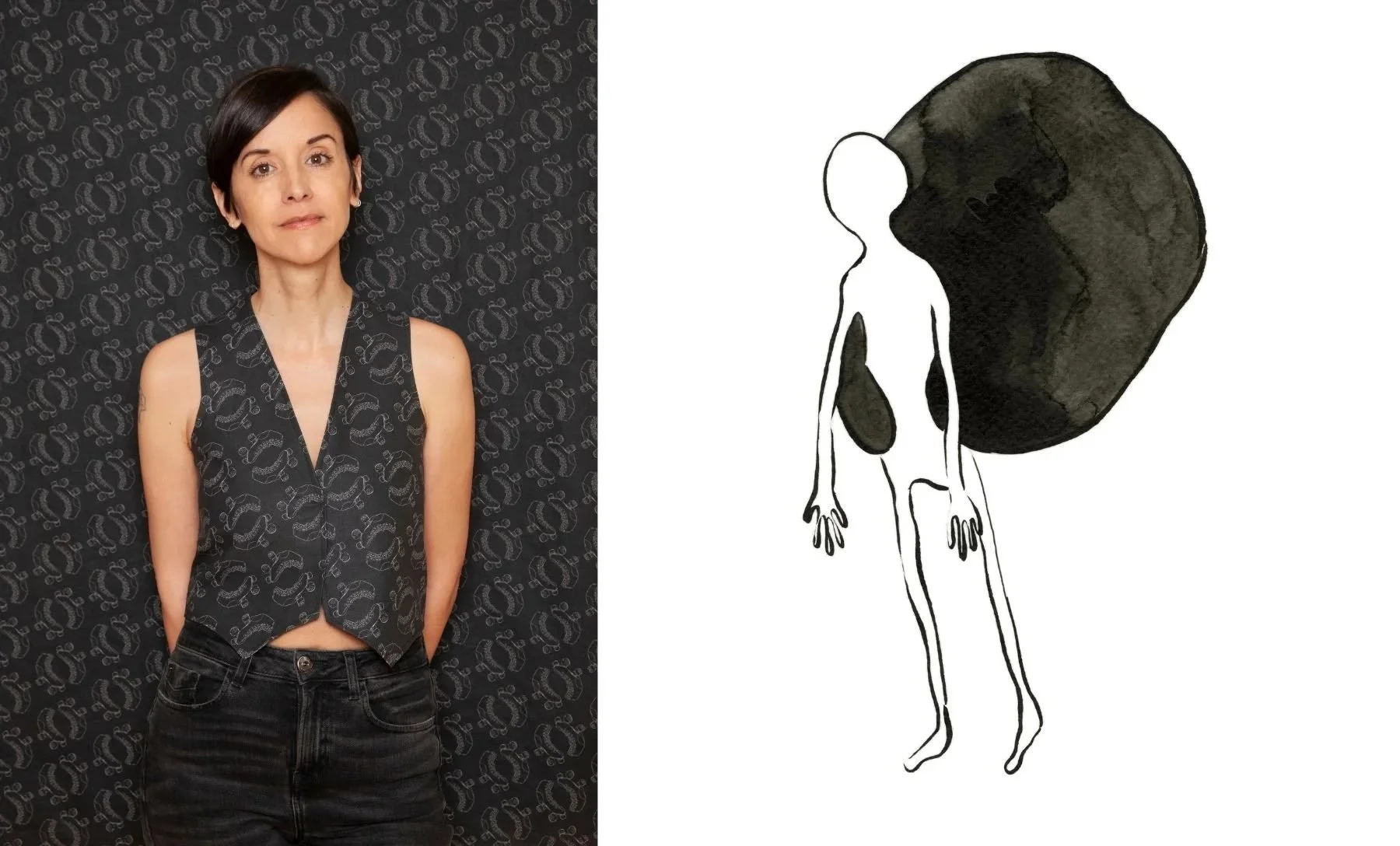
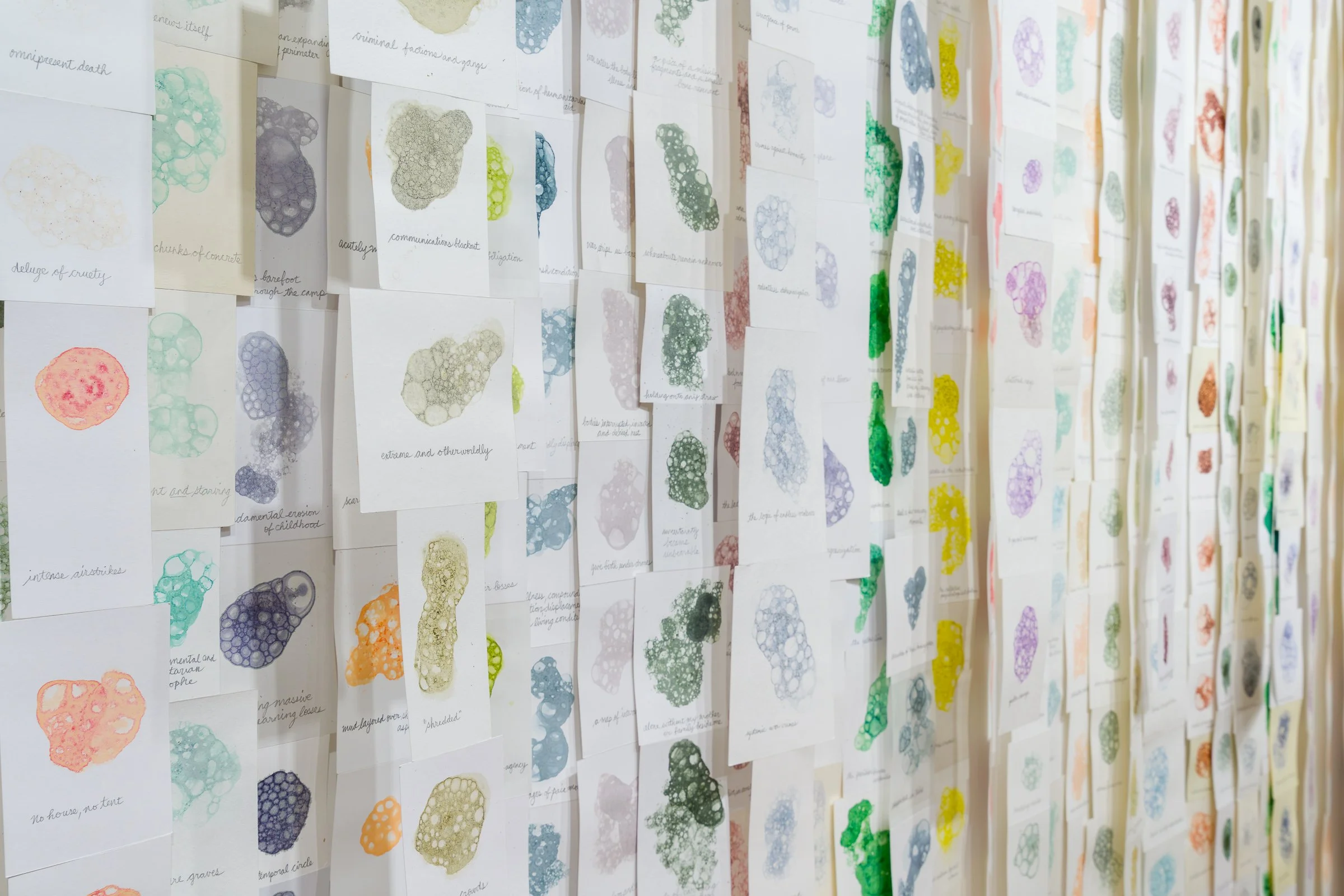
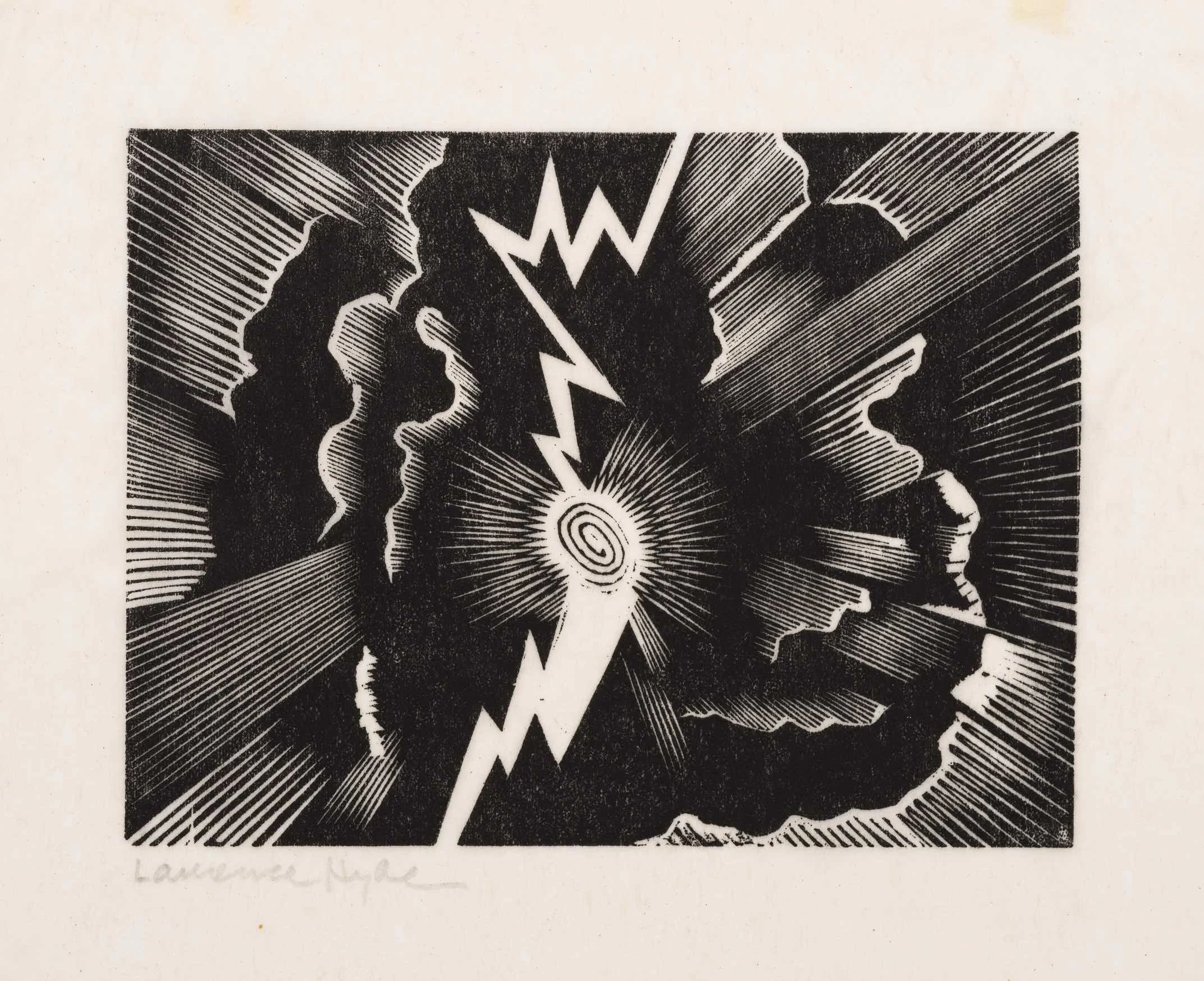
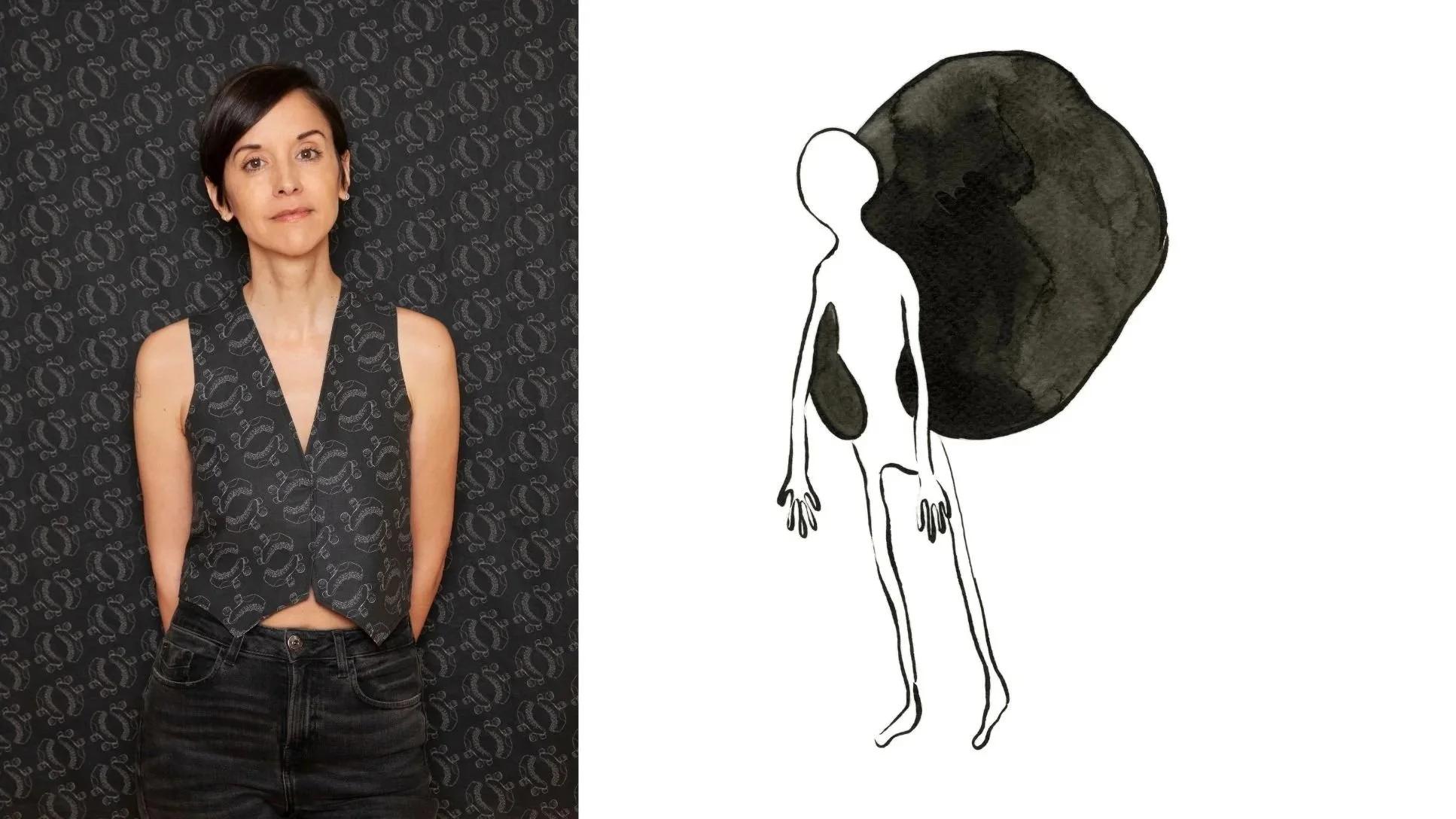
(Left to right) Angela Fama (photo by Angela Fama); Love Letters to Turbulence, “manuscript” 00299, ink, graphite, rag paper, 2001-6.
Love Letters to Turbulence is at THIS Gallery to August 30, with a closing reception on the last day from 12 to 4 pm
FOR VANCOUVER-BASED INTERDISCIPLINARY artist Angela Fama, overcoming discomfort through her work is nothing new. Whether facilitating open conversations about death or collaboratively redefining the concept of love, Fama’s projects seek to create safe opportunities for collective creation and dialogue.
“I do a lot of work that is interactive with the community where I might present something, and then the work itself is cocreated by the community,” Fama tells Stir over Zoom. “And I don’t really believe in asking people to go deep into things without my own vulnerability in that. Often why I’m drawn to do these works is because there’s something in me that’s scratching at me to be explored.”
Her latest project, Love Letters to Turbulence, is no different.
The durational participatory exhibition, which just opened at THIS Gallery, is rooted in the idea of how people communicate with themselves and others about trauma. Covering three walls of the gallery room is a nonlinear autobiographical “manuscript” sharing Fama’s story as a survivor of child, teen, and adult trauma: 217 8.5 x 8.5 loose-leaf pages hang from clotheslines, filled with typewritten fragments of personal journal entries and ink and graphite drawings. Three clotheslines remain empty for displaying visitor creations that are anonymously donated from any of the artist-led workshops.
In one corner of the room is a selection of zines made by seven collaborating artists (Joy Gyamfi, Kira Pratt, Leah Abramson, Lichen, M-A Murphy, Marieke Helmke, Sonja Ahlers), who collaged elements of Fama’s manuscript with their own art. And beside the entrance is a QR code directing visitors to a Digital Container, cocreated with designer Randy Walton, where anyone can contribute to an evolving collection of anonymous narratives on trauma, support, and healing.
Although the initial planning for the project started five years ago, Fama says this curiosity started 10 years before that, when she decided to transcribe all her personal journals from childhood to the present. “I got quite overwhelmed by my body reliving the experiences at that time, and I was like, ‘Okay, I’m just going to shut that away,’ and I didn’t really think about it as a project for the next five years,” she explains. “It was through a lot of exploration and a lot more work internally that I was able to find the space and the voice that this project needed.”
And that exploration was anything but linear. Ink, watercolour, photographic retouching fluid, and even an old typewriter became tools for Fama’s experimentation. “During the pandemic, I started an exercise of one drawing a day, and from that I was like, ‘Oh, what are these things coming out in my drawing?’” she recalls.
Allowing her body to lead the way in her creative release, the casual daily sketches organically shifted into a distinct visual style. Over the five years, she worked with video, audio, photography, and even interactive sculpture before whittling down thousands of drawings and typewritten texts to a few hundred. Once again, she relied on her instincts to decide which images she felt comfortable sharing.
Among the images that made the cut is a small, spindly figure with a black cloud wrapping around its waist, pushing down the body, or perhaps pulling it up. Another is of a figure leaning over, a dark goop seemingly oozing out of or into the bent body. For Fama, the ability to view her own work from different perspectives did not come easily. “I have become so much more of a person through the process of this project, and through these experiences I can approach the effects and affects of trauma multiple ways,” she says.
How does one talk to others about trauma? How can we normalize that conversation safely? Love Letters to Turbulence responds to these questions not only through Fama’s personal explorations, but also through the voices of those who choose to witness and take part in the conversation.
Fama understands first-hand the challenges that come with telling stories about trauma, and for those who may not feel comfortable sharing in the moment or are not present at the exhibition, she created the Digital Container as another accessible space to hold those narratives. For the next three years, people can submit anonymous reflections to the online space, where three different categories will be displayed as clouds moving across the screen: black clouds relating to personal trauma, grey clouds conveying what support feels like, and white clouds representing healing acts. Each reflection is then reviewed by Fama and uploaded at random to ensure anonymity.
“I wanted to offer a space where those stories could be shared and seen, but not in a public space where you might be shocked by it or surrounded by others,” says Fama. “This is an opportunity where people can contribute a personal narrative, and if they want to, they can come back and send a new story, or the same one again—perhaps it changes through repetition, and if they need to repeat it the exact same way every single time, that’s awesome too!”
Although the exhibition offers various ways for attendees to safely engage in thoughtful dialogue, Fama stresses that participation is completely optional and up to the individual.
“It isn’t very often that there’s public spaces to communicate about things like this,” she says. “And it will be just as successful if, when the show is done, the three clotheslines that start empty for contributions remain empty, knowing people had enough agency in themselves to not donate.” 
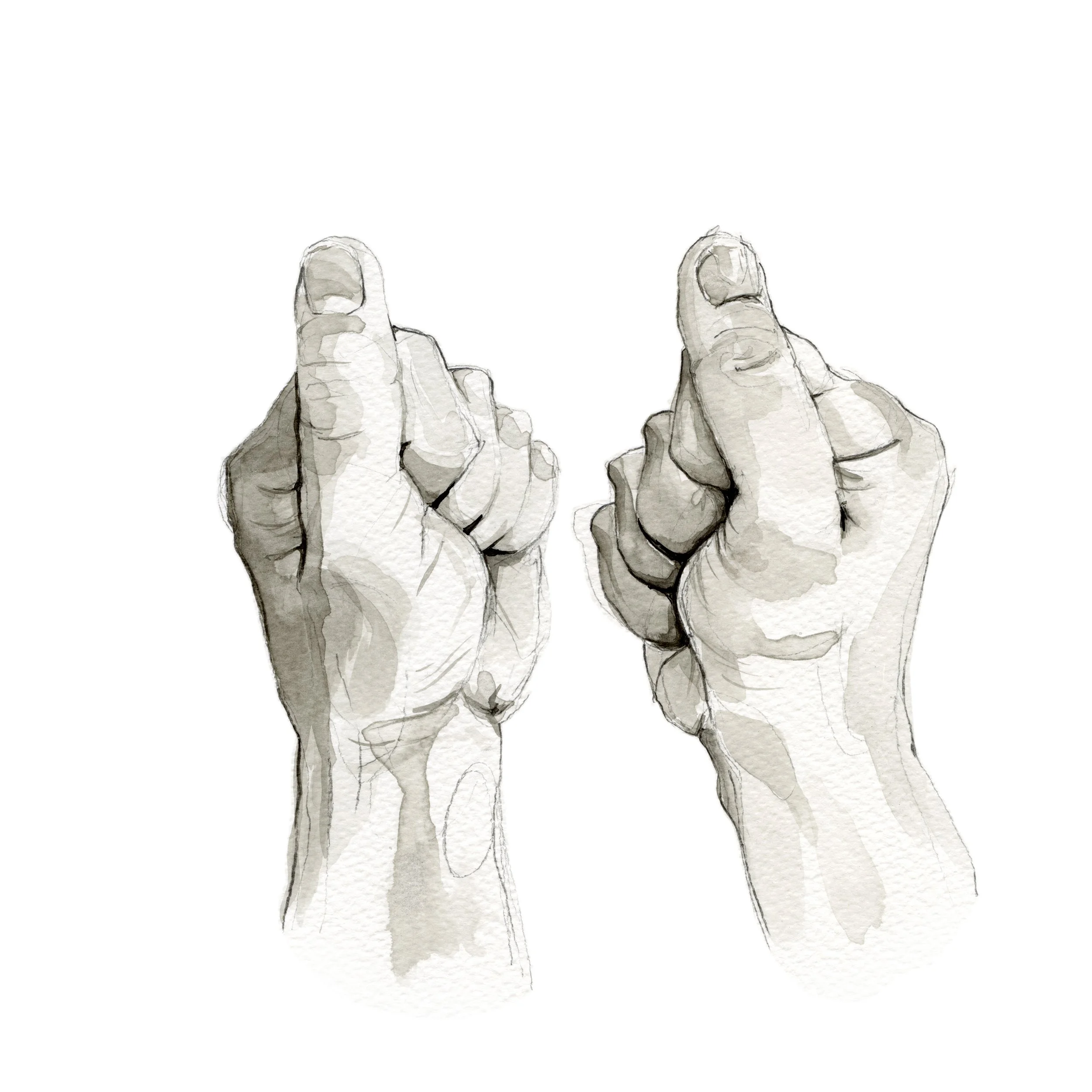
Love Letters to Turbulence, “manuscript” 00112, ink, graphite, rag paper, 2001-6.

Related Articles