At Eastside Culture Crawl, three ceramic artists make their mark in clay
From nature-inspired sculptures to playful tableware, Jenna Kim, Mika Abele, and May Ann Villanueva reveal what shapes their distinct approaches to ceramics
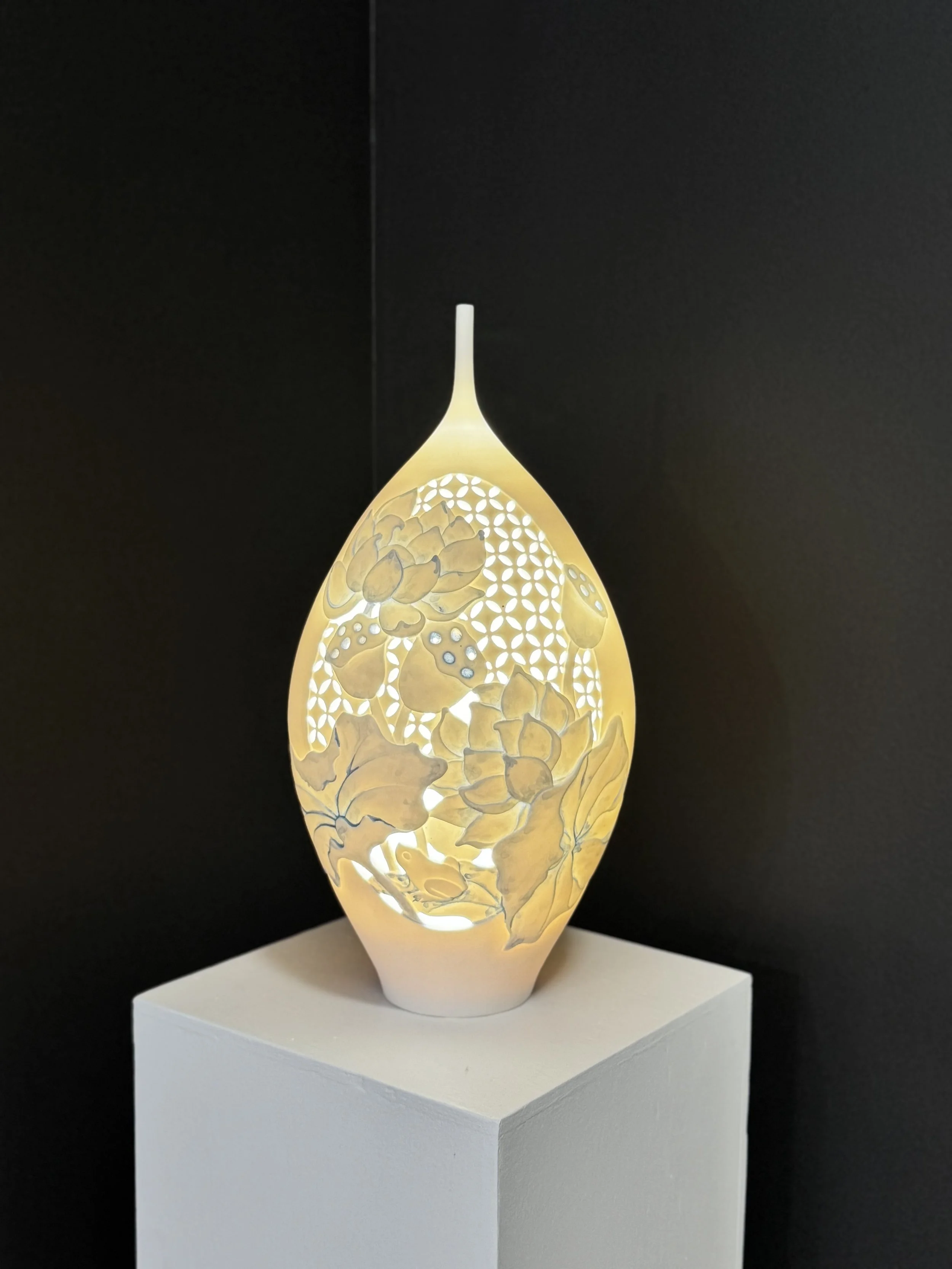
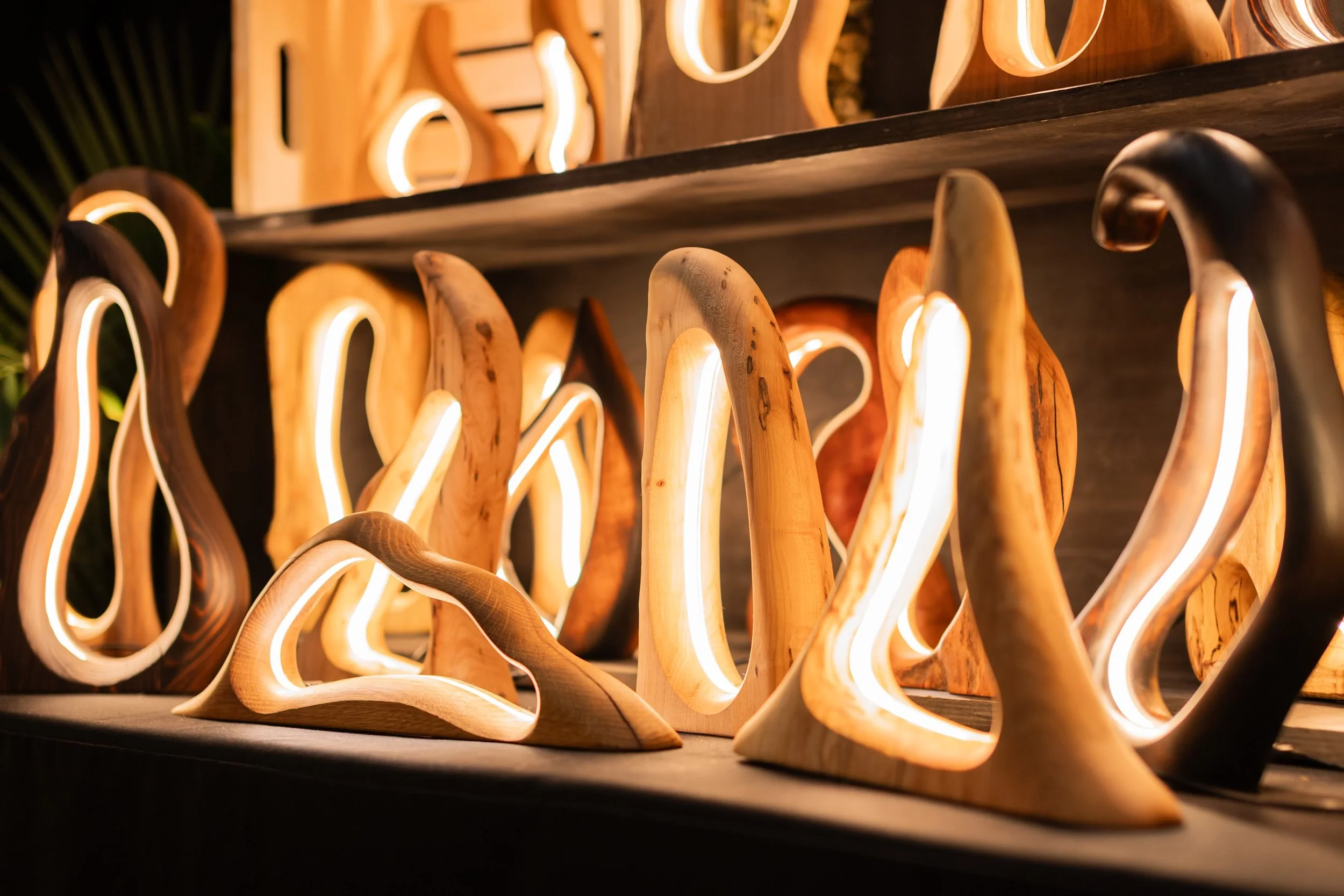
Jenna Kim’s Blooming Light, hand-painted and hand-pierced ceramic lamp. Photo by Jenna Kim
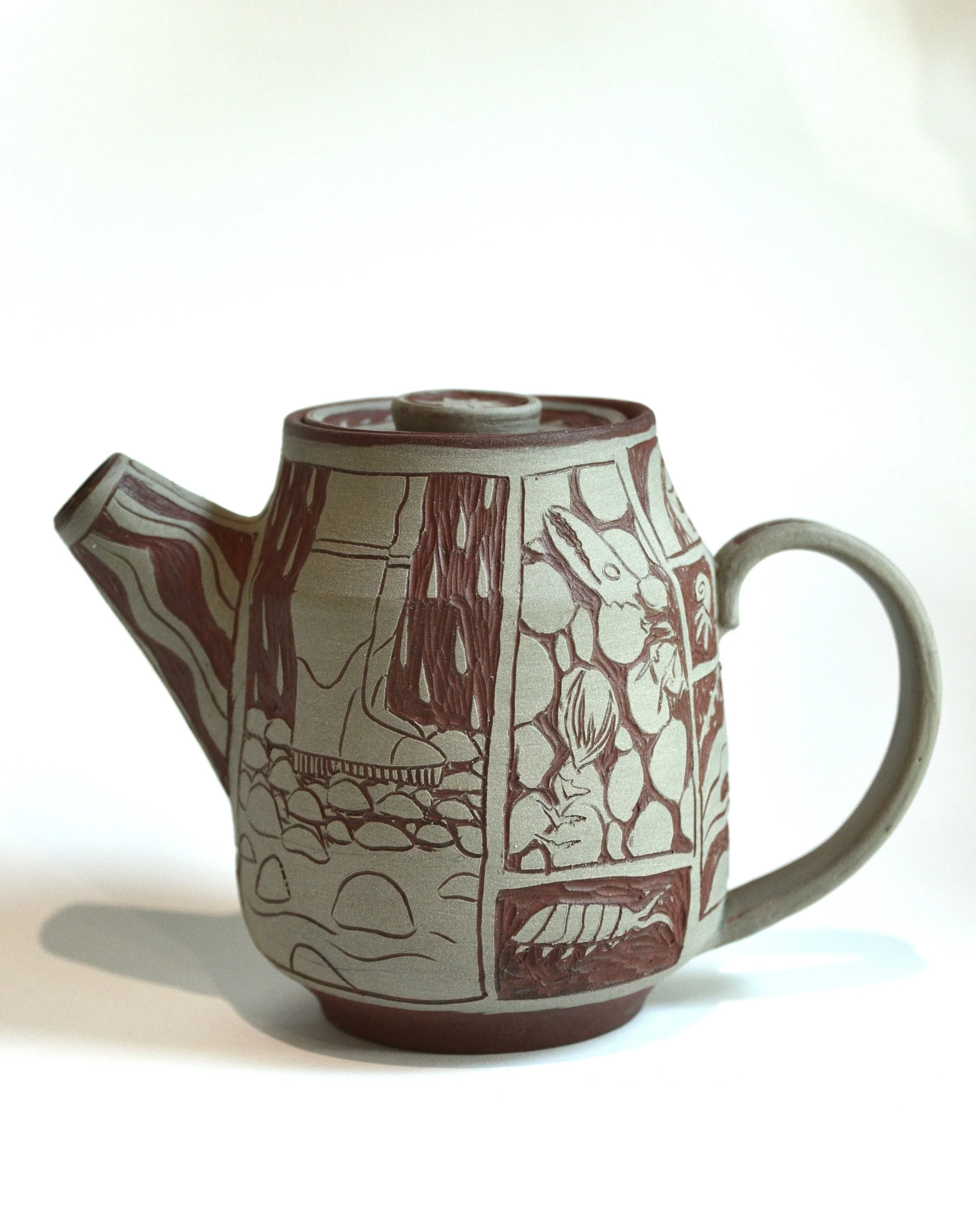
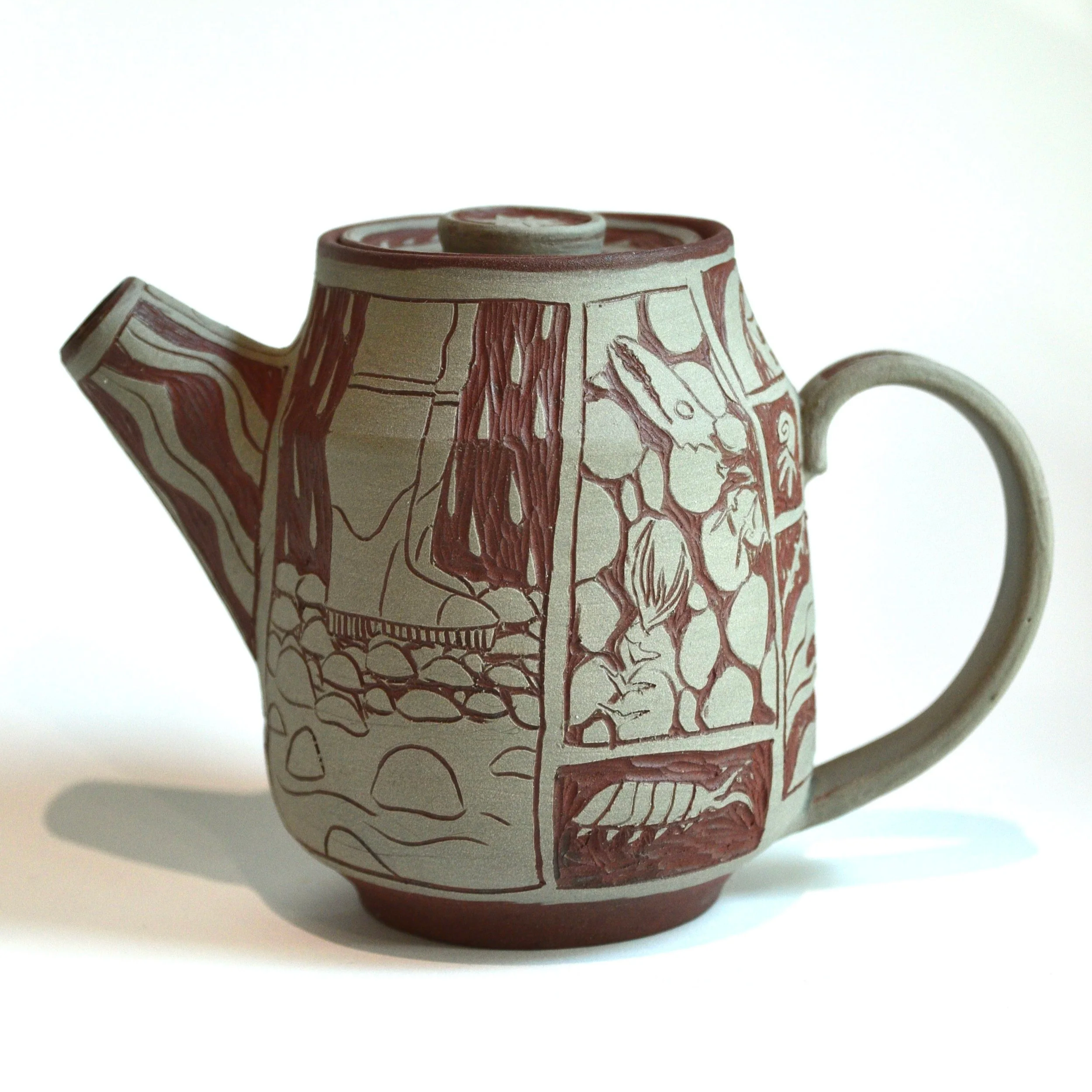
Mika Abele’s Salmon Spawn Teapot, 2026, ceramic. Photo by Mika Abele
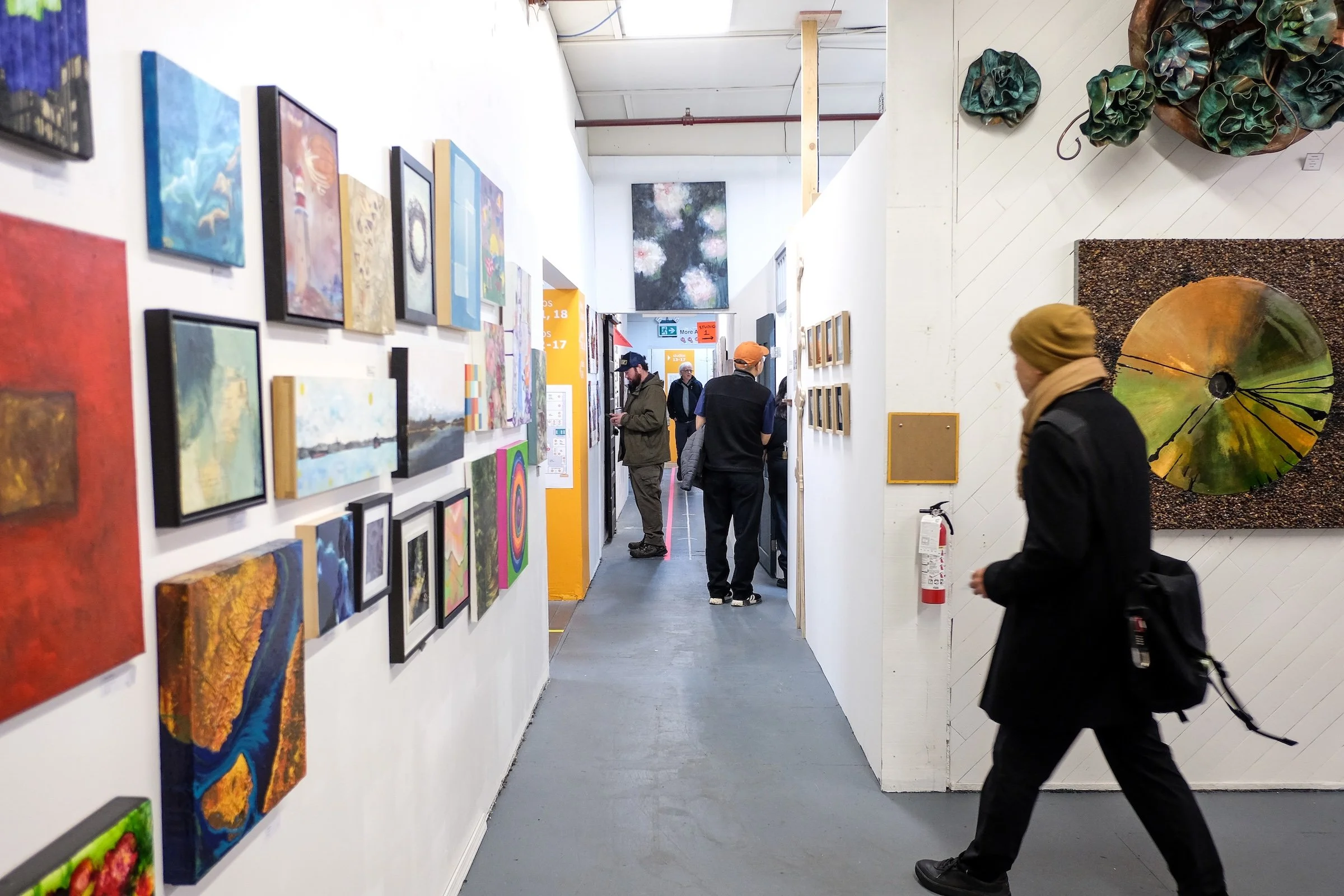
The Eastside Culture Crawl runs November 19 to 22 at various locations in Vancouver’s Eastside Arts District
WITH A HISTORY that dates back as far as 29,000 BCE, ceramics is regarded as one of the oldest human art forms. Yet, thousands of years later, the craft continues to evolve as artists discover endless paths to creativity and self-expression.
Tranquil moon jars, whimsical teapots, and quirky dishes bedecked with polka dots—ceramic artists are once again bringing their diverse perspectives and practices to the Eastside Culture Crawl, celebrating its 30th anniversary this year.
Ahead of the festivities, Stir connected with Jenna Kim, Mika Abele, and May Ann Villanueva to learn what first drew them to the medium and what keeps them coming back.
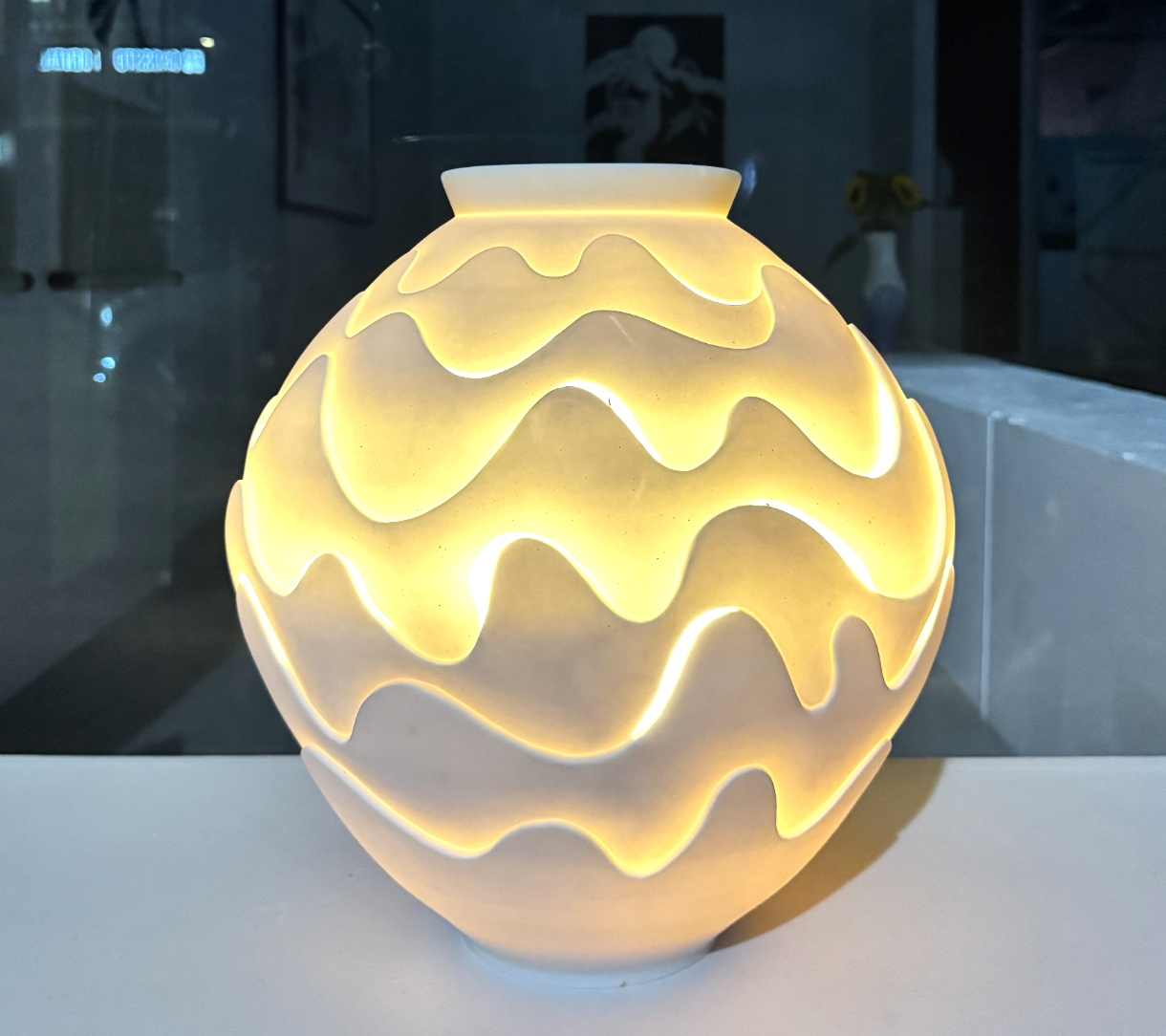
Jenna Kim’s The River in the Moon, moon jar. Photo by Jenna Kim
Jenna Kim
ARC (1701 Powell Street)
Light is as much a material as clay for Jenna Kim, who specializes in white porcelain and sculptural lighting. Take her perforated ceramic lamp Blooming Light, with its delicate floral designs and intricately pierced holes that allow light to shine through.
“I often explore sculptural forms through carving and piercing, allowing light to pass through the clay and become part of the piece itself,” the Korean-born artist tells Stir via email. “I’m interested in how light changes the way we experience an object, creating different impressions depending on the surroundings and the time of day.”
At 14 years of age, Kim learned pottery as a simple hobby. Over time, her curiosity grew into a passion, leading her to earn a technical certificate in 2013 and spend seven years on the South Korean ceramics team for the Skills Olympics.
That artistic journey continued in Canada, where Kim developed her distinct practice blending traditional Korean techniques with contemporary approaches to form and expression.
“Over time, ceramics became more than something I had studied or trained in,” she says. “It became the way I wanted to build my life and communicate with the world.”
Kim is known for her modern reinterpretations of the moon jar, a traditionally spherical, white-glazed porcelain vessel originating in Korea’s Joseon dynasty. In her piece The River in the Moon, the carved surface is reminiscent of flowing water that glows in the light of the full moon.
“I’m drawn to the balance between strength and fragility in nature,” she says. “Water, for example, can appear gentle and quiet, yet it has the ability to shape the land over time.”
As for the jar’s subtle asymmetry, that too is intentional in a way. “I don’t necessarily aim for perfect symmetry or a predetermined shape,” the ceramicist explains. “I allow the clay to guide the form, and through throwing, carving, and piercing, the piece gradually develops its own character.”
Working under the studio name Dogi Jagi Ceramics at the Artist Resource Centre, Kim looks forward to her second year as a Crawl artist. “One of the things I enjoy most about the Culture Crawl is the opportunity to connect with people through art,” she says. “I find it meaningful to see how different people respond to my work and what they take away from experiencing it.”
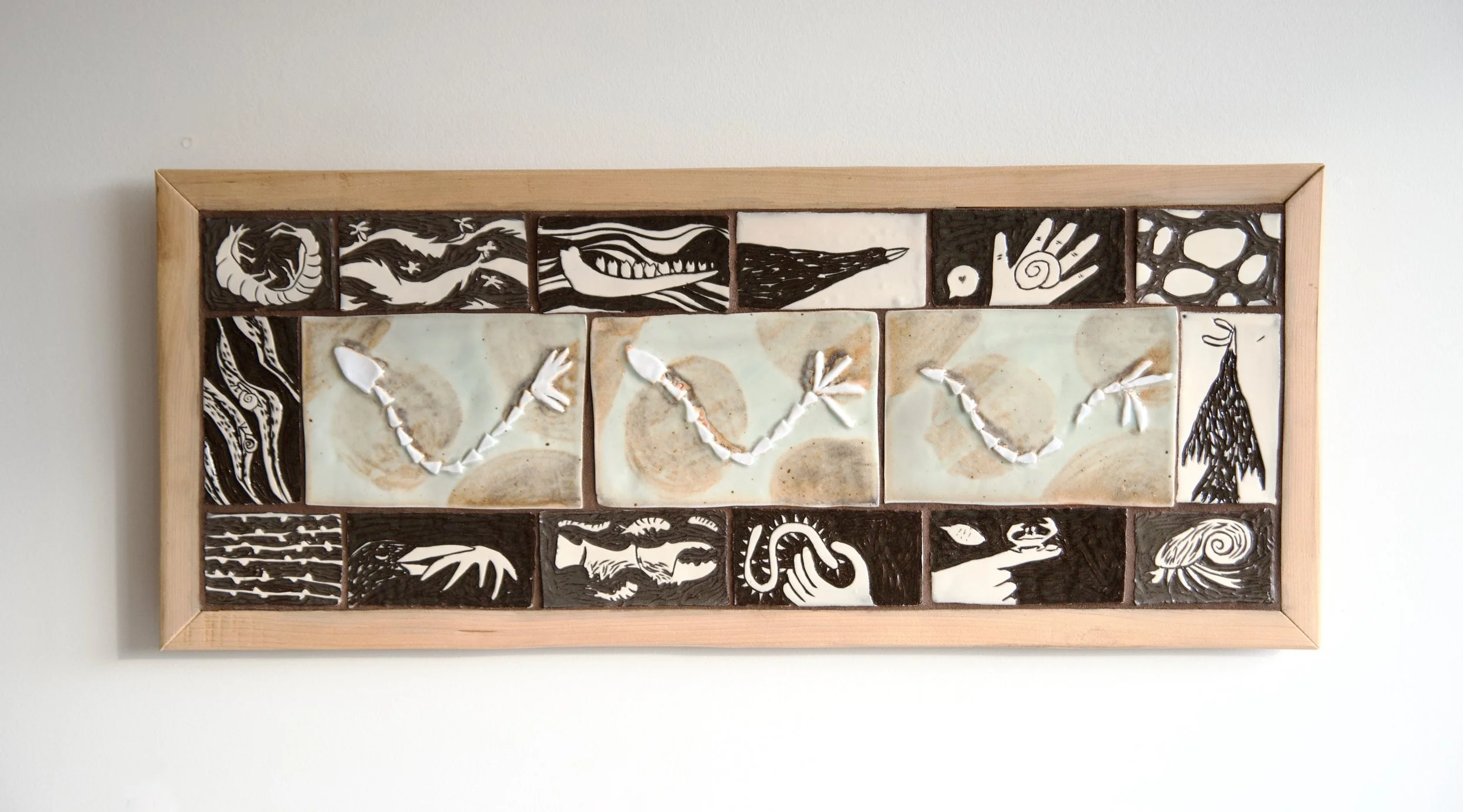
Mika Abele’s Things I Was and Will Be, 2025, cedar and reduction fired ceramic. Photo by Mika Abele
Mika Abele
CLAE STUDIO (729 Gore Avenue)
Mika Abele has been a regular Crawl-goer since she was a kid. But this year, the ceramicist and illustrator will be on the other side of the studio door for the first time.
“Usually, I’m walking around and looking at people’s works, so it’ll be interesting to be on the flip side of that,” she tells Stir over Zoom. “I’m just excited to have conversations with people and meet the public.”
Abele’s introduction to pottery began during her studies at Emily Carr University, where she started in the painting department. While searching for a more complex medium that could challenge her artistry, she discovered ceramics, which she quickly realized would never cease to teach her something new.
“What really drew me was the fact that I felt like I could spend 50 or more years studying this medium and still have things to learn from it,” she reflects. “There’s glaze chemistry, different clay bodies, different techniques, different firing atmospheres…there’s so much to learn, and I was really fascinated by that.”
Still, drawing never left Abele’s practice. Throughout her creations, bold, contrasting colours are paired with graphic linework, in a style that sits somewhere between comic book and children’s story illustration. She notes that while the aesthetic can often be dismissed as childish, it carries a unique strength and accessibility in its “cuteness”.
“[My illustrations] kind of have the air of a comic book, but when you’re experiencing the piece deeper down, there are things that might not be in a kid’s book,” she adds.
The subjects in Abele’s work come from the natural world, from geological cycles and animal migration to weather patterns. In her tile board Things I Was and Will Be, several illustrations surround three tiles depicting fishbone-like figures: a tiny crab sits atop someone’s finger, a bird catches a worm in its beak, and sea snails crawl over strands of seaweed.
But what she’s after, the artist explains, is being able to capture a specific experience or emotion in a functional item.
“How do I distill a feeling into an object?” she asks. “Like, ‘Oh, I’m at a beach and I’ve picked up a seashell,’ or ‘You’re a kid and you’ve picked up a little crab in your hand.’ How does that feel, and how can I distill that feeling into an object that people can use? That’s kind of what I’m trying to get at.”
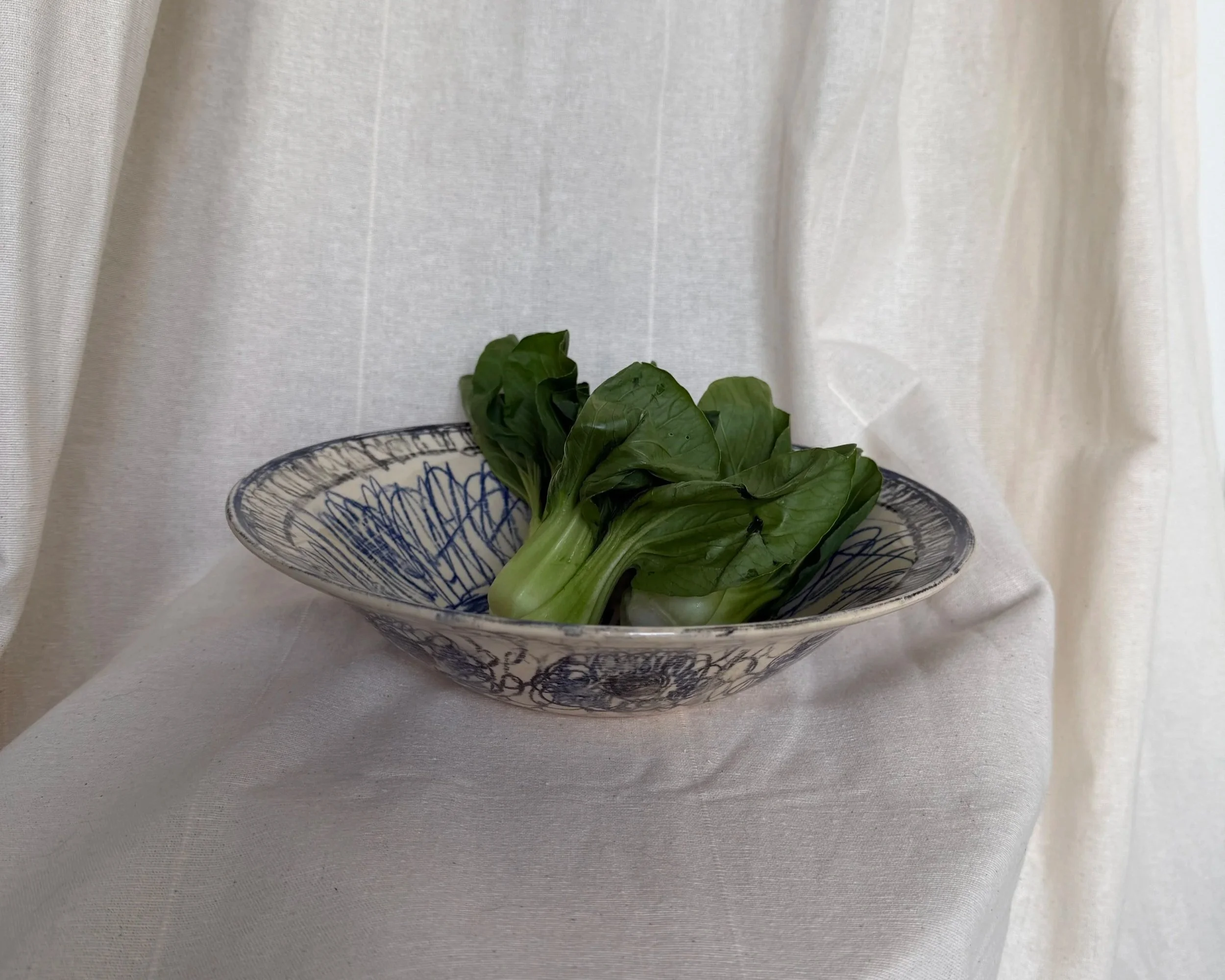
A plate by May Ann Villanueva. Photo by May Ann Villanueva
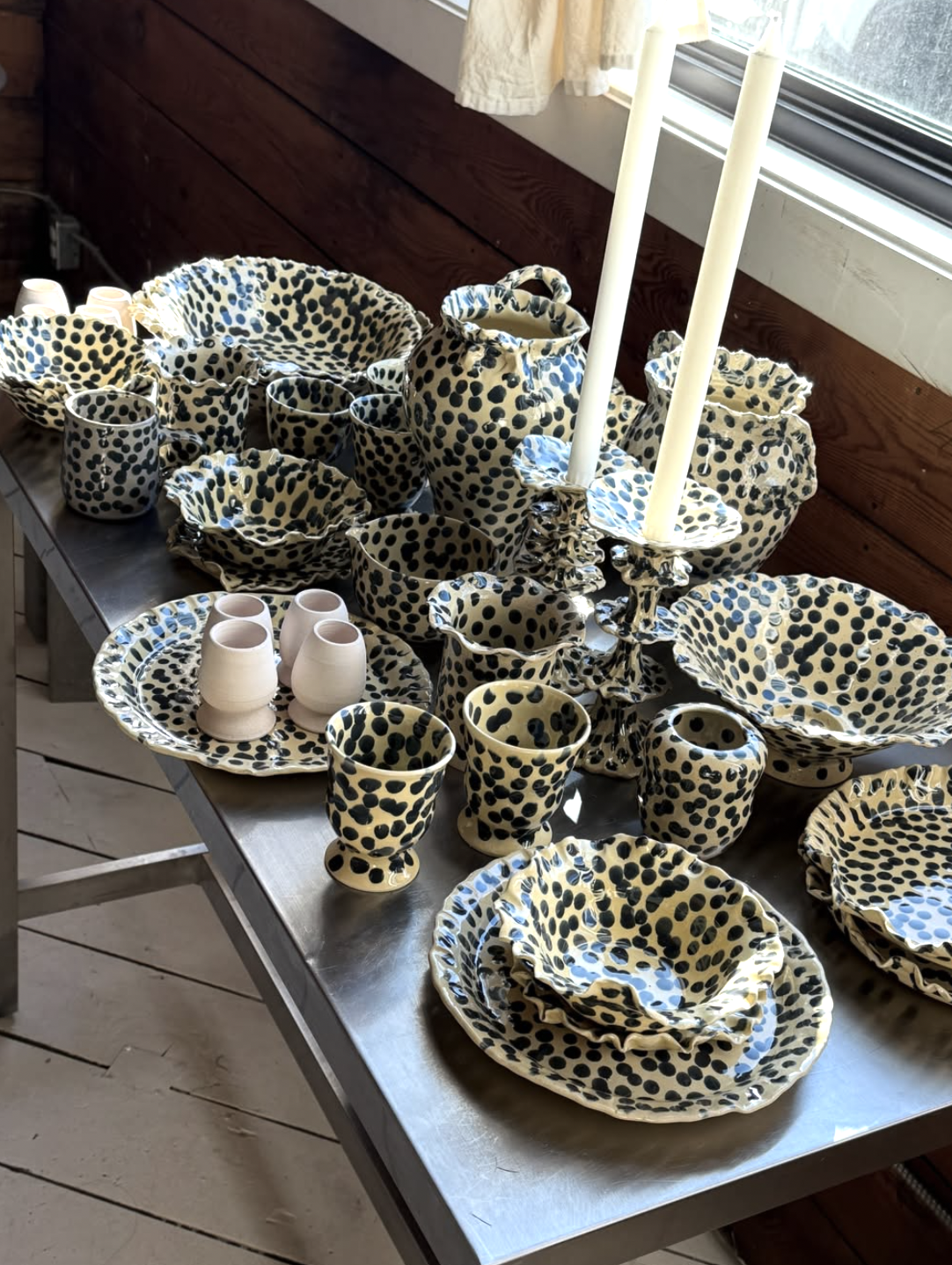
May Ann Villanueva’s latest collection. Photo by May Ann Villanueva
Studio Fundamentals (510 Clark Drive)
May Ann Villanueva didn’t set out to be a ceramicist, nor did she enjoy working with clay at all.
“I think I just prided myself as someone that is a quick learner, and wheel throwing definitely humbles you,” she tells Stir with a chuckle. “It was the absolute opposite of who I was—it required me to be patient.”
Despite her initial disinclination, the first-time Crawl artist eventually found herself revisiting the wheel while studying communication design at Emily Carr University. Far from being a passion, she admits, ceramics was a course she took to fulfill a studio credit requirement. It wasn’t until postgraduation that she started to turn to pottery as a way to unwind outside work.
Today, Villanueva is the founder and creative director of Studio Fundamentals, a community-focused ceramics studio that offers pottery workshops and monthly memberships. She shows her own work under the name Sediment Home, a new gathering space for creatives that will be open to the public during the festival.
“I’m excited to introduce Sediment Home because, in a sense, I’m introducing myself and the environment that’s been created out of my character,” she says.
Villanueva’s approach to her creations is a mixture of precision and spontaneity. She builds with careful attention to technique and functionality, but decoration is where she lets loose. Her dishes are playfully adorned with colourful scribbles or scattered with eye-catching polka dots.
“They’re not calculated polka dots; I drop them wherever,” she says of her latest tableware collection. “There’s no real control on where these dots are going, but I find that there’s beauty with understanding the functionality, but also the aesthetic. And I love finding the balance between the two.”
For Villanueva, that contrast is a direct reflection of herself. “In my mind, I’m very technical. I like to dissect the process of things,” she elaborates. “But when I’m hanging out with my friends, I’m funny, I’m hilarious.”
She’s unbothered by the imperfections of everyday life, whether they’re clay stains on her clothes or holes her dog has made in her favourite sweater.
“There’s that imperfection to these things, but they have value to me,” she says. 

Related Articles