Textiles and language become vessels for lived experiences in Surrey Art Gallery show In the Folds of Memory
Shaped by South Asian artistic traditions, Farheen Haq and Russna Kaur explore personal and collective histories across mediums
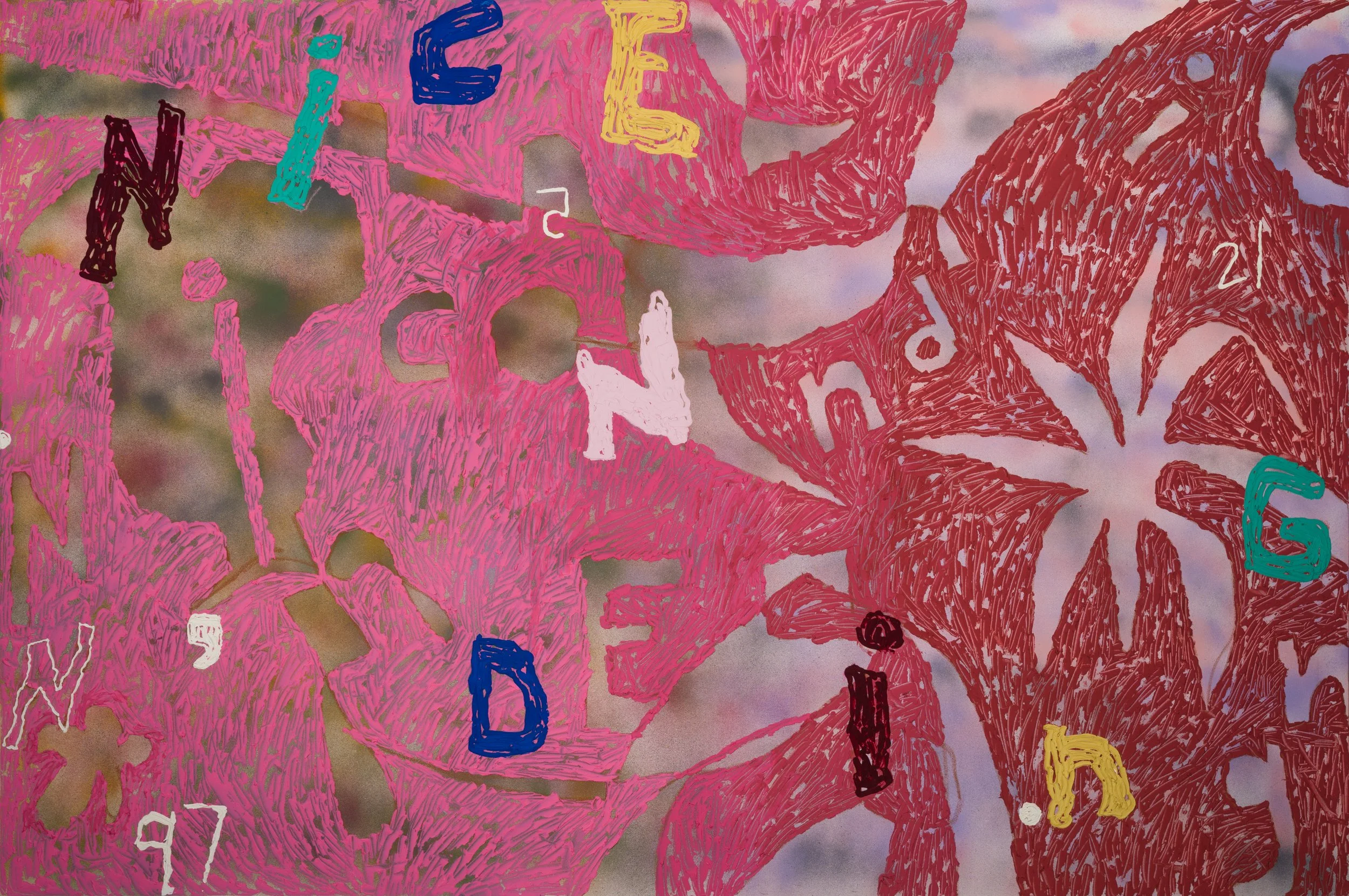
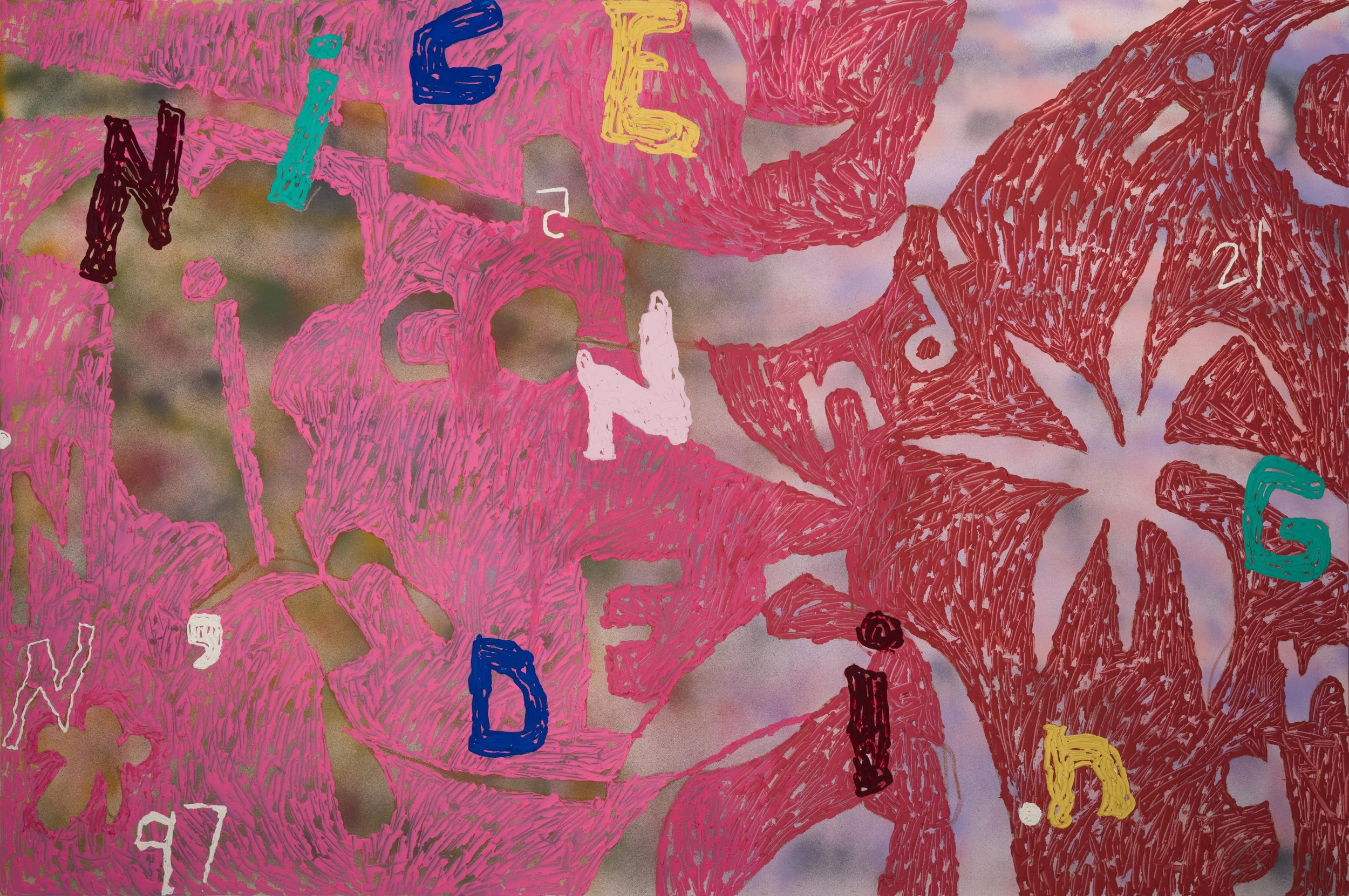
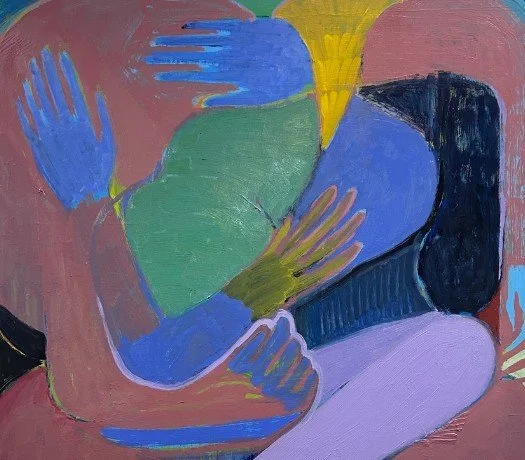
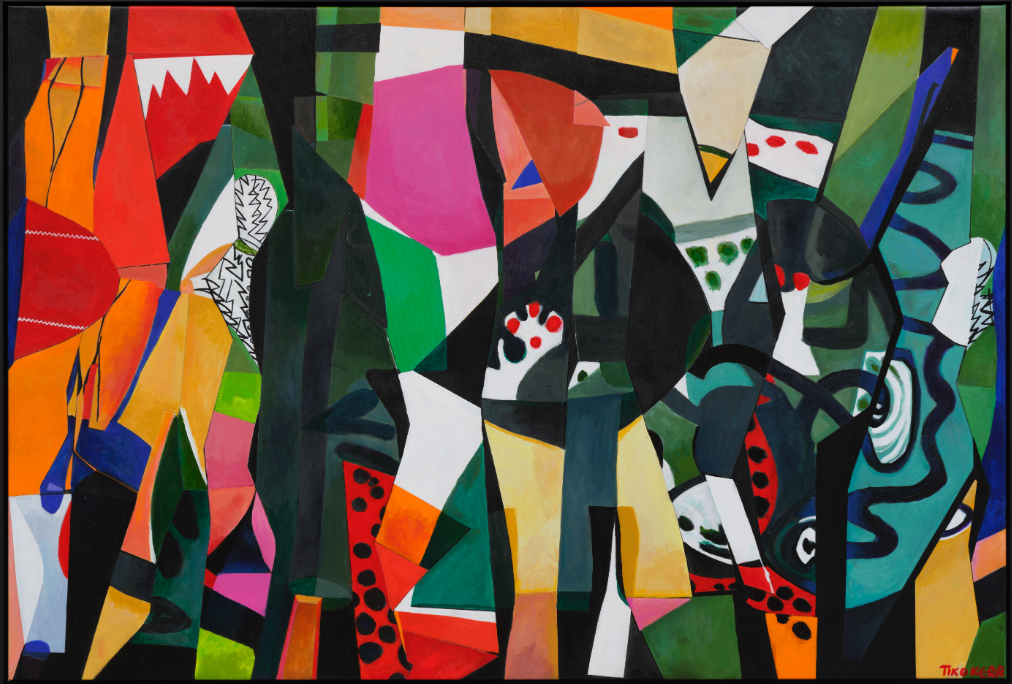
Russna Kaur, Nice Ending, 2021, acrylic on canvas. Collection of Surrey Art Gallery. Photo by Dennis Ha Photography
Surrey Art Gallery presents Farheen Haq and Russna Kaur: In the Folds of Memory to December 6, with a community weaving session on October 22 and an exhibition tour on December 5
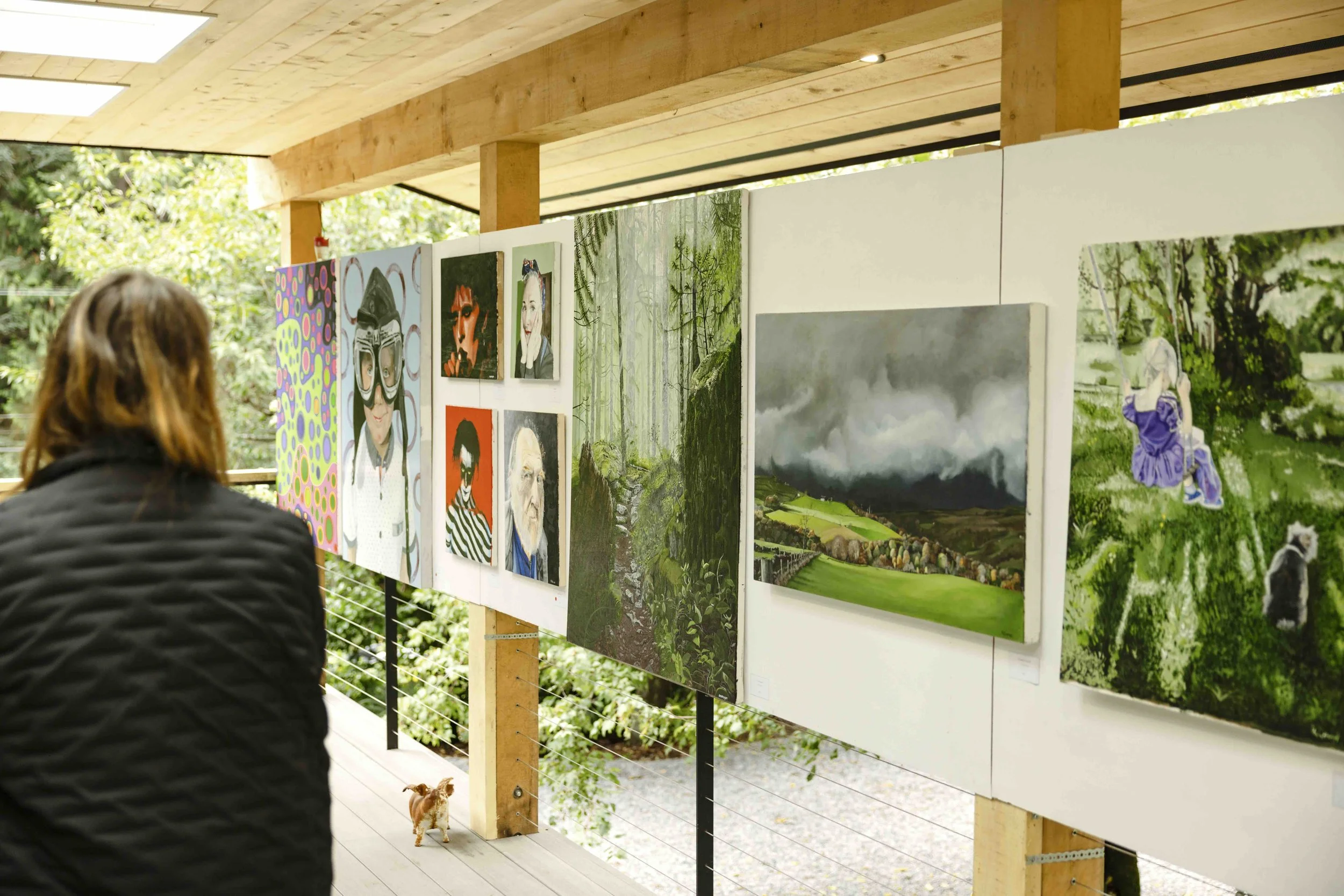
A ROUND LAVENDER PLINTH sits in the middle of the gallery, where visitors can weave using colourful strips of gota ribbon. Translucent fabrics, vibrantly textured paintings, and intimate videos fill the room, accompanied by sounds of crushed bricks and gentle waves of the Salish Sea.
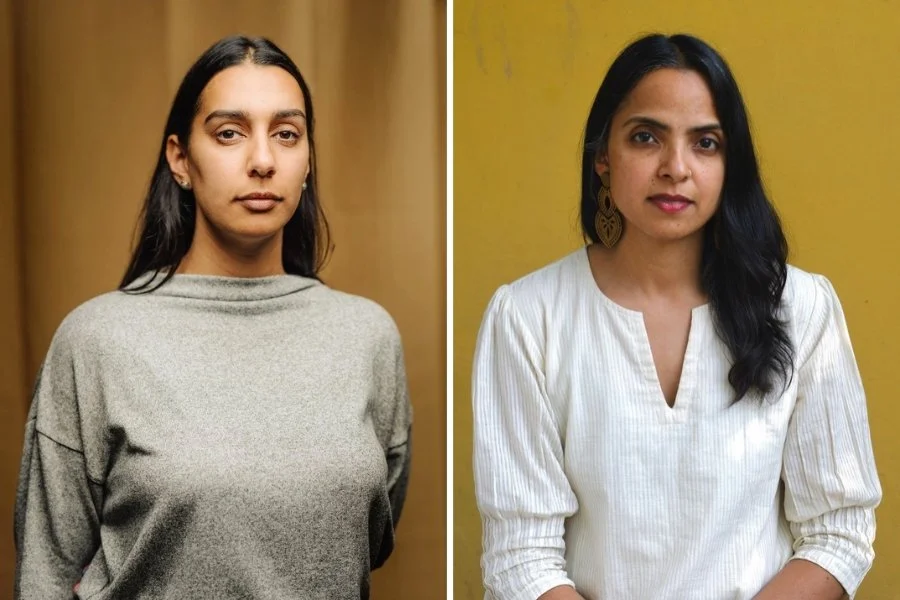
At Surrey Art Gallery, associate curator of engagement Jas Lally reflects on the ways in which artists use textiles and language to record, transform, and share personal and collective stories. Marking the end of the gallery’s 50th anniversary, In the Folds of Memory showcases the distinct material practices of artists Farheen Haq and Russna Kaur, running until December 6.
Lally’s inspiration for the exhibition title stems from a quote she encountered in Jessica Hemmings’s anthology The Textile Reader: “Textiles remember. This is not something that we necessarily ask of them, nor is it something we can divert them from doing. They do it regardless… moments of joy and tragedy are recorded on the surface and embedded into the structure of the cloth, without permission and often without intention.”
“The idea for me is how cloth and textiles can be understood as a witness to lived experiences rather than just an object of decorative material,” Lally explains over the phone. “I really want viewers to take in how the show brings together these works that speak to memory as something carried through material, transformed through the making, and reshaped by the lived experiences of the individual artists.”
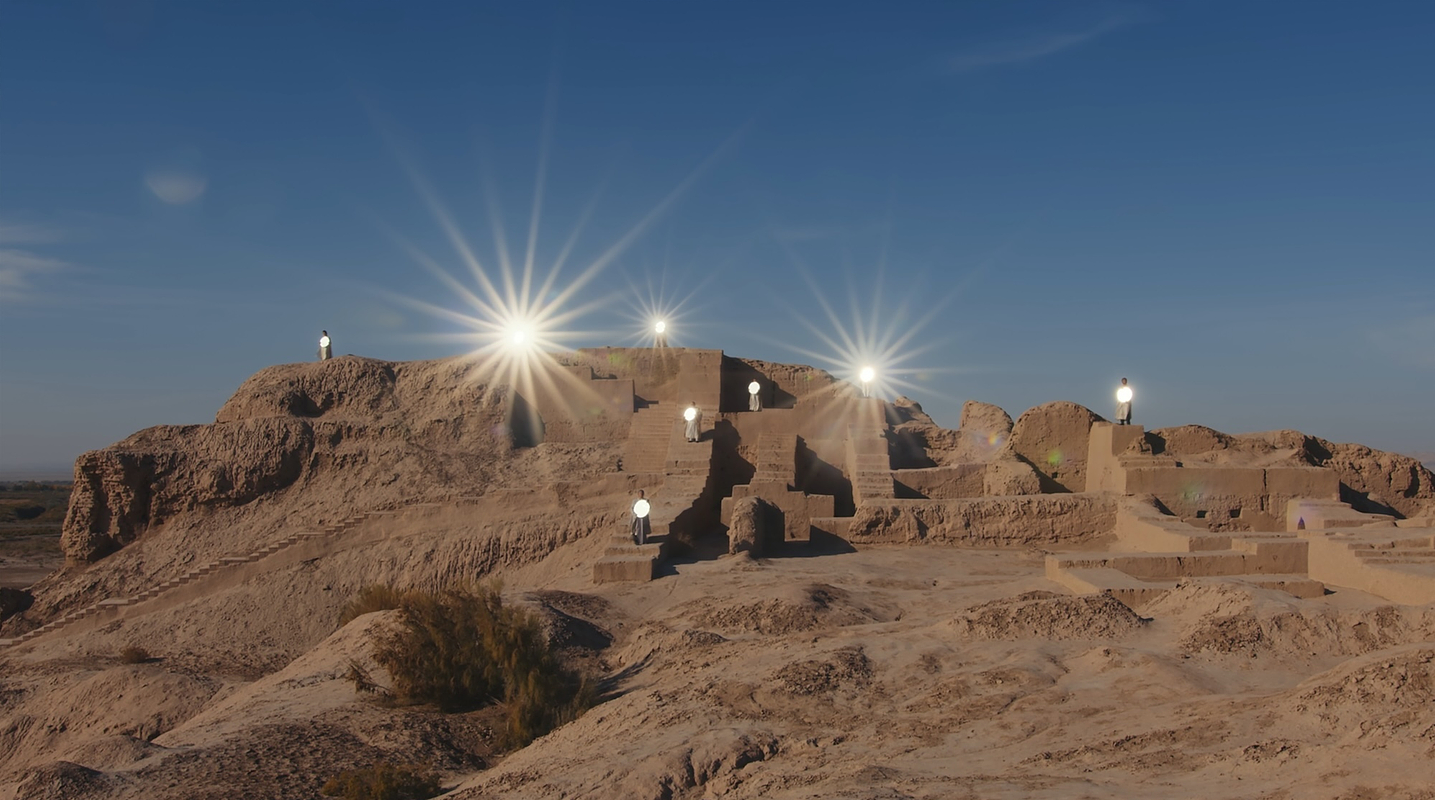
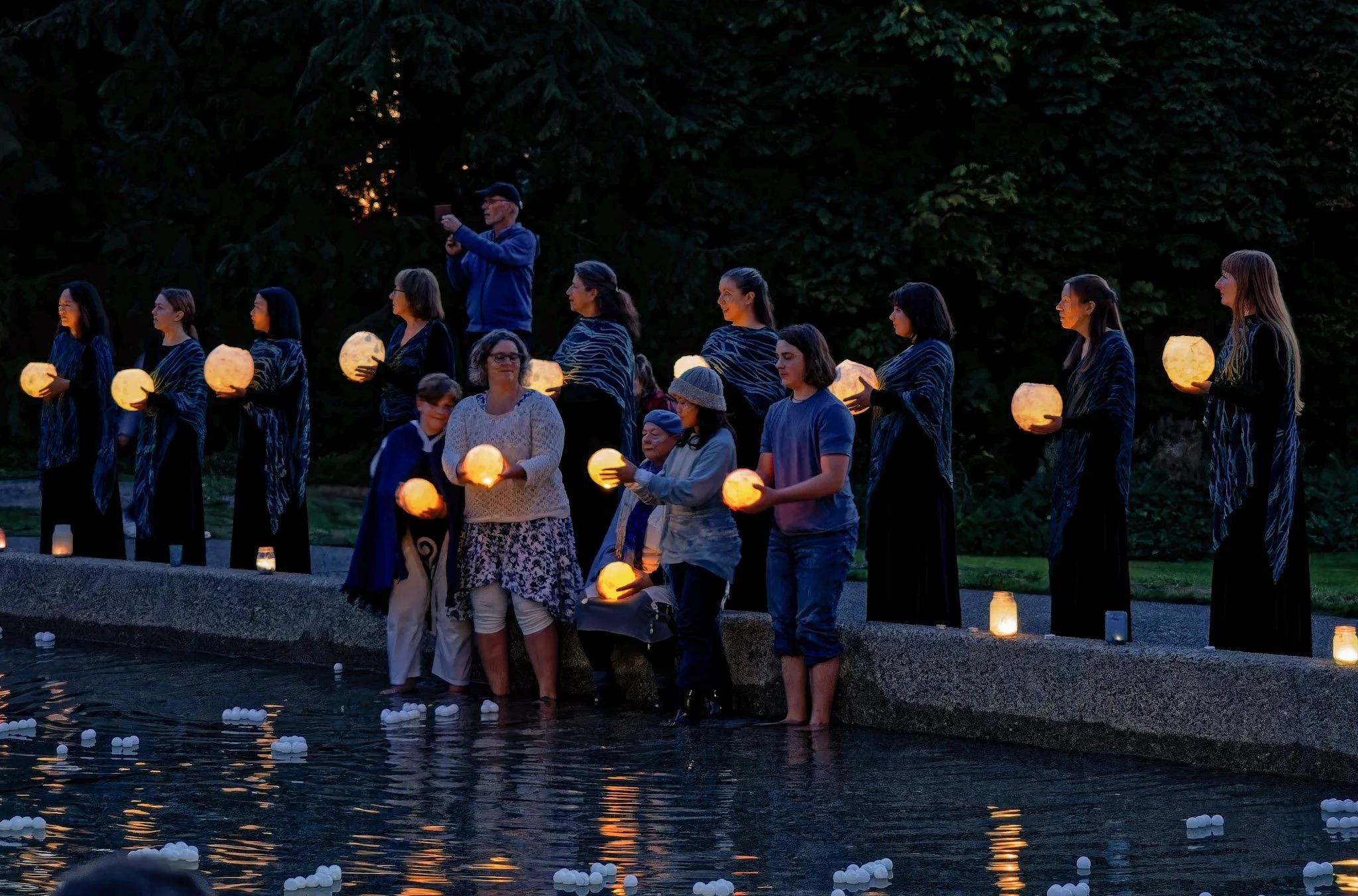
Haq’s work is rooted in her desire to reconnect with her inner self and her South Asian heritage. She likens her process of creation to “alchemy”, revisiting past moments, words, or impressions to form something new. The story of her mother keeping her eyes closed throughout her own wedding translates to the 2022 video piece Aankhein Band Kar Ke Dekho (Close Your Eyes and See), where Haq reenacts her mother’s wedding rituals. As the red dupatta sways with the wind, folding and unfolding alongside the steady currents of the Salish Sea, the interdisciplinary artist channels her mother’s strength while tracing her ties to Lək̓ʷəŋən lands and waters. Her 2024 tapestry project Ghoonghat Ke Pat Khol Re (Lift up the Veil) borrows from 15th-century poet Kabir, whose poem of the same title calls for the symbolic removal of ignorance and illusion to discover the divine within. Community members contributed to the embroidery of Kabir’s poem on two panels of delicate red organza framed with gold kiran fringe, in Punjabi and phonetic Urdu translation.
The exploration of language continues in Haq’s 2017 brick and video installation Revelation #2 (part of the gallery’s permanent collection), reflecting her shifting relationship with religion as a Muslim in Canada. In the video, her hands cover and uncover the Arabic word Iqra, the first word of the Quran that was revealed to the Prophet Mohammed, using crushed bricks that allude to the destruction of sacred Islamic sites. In addition to English, Urdu, Arabic, Hindi, and Punjabi are incorporated into her works.
“Language is an important part of my practice as well, and in the last few years I’ve also been leaning into my mother tongue, Urdu,” Haq tells Stir over Zoom. “There’s so many of these core memories and worldviews that I’m able to re-enter and access through exploring language.”
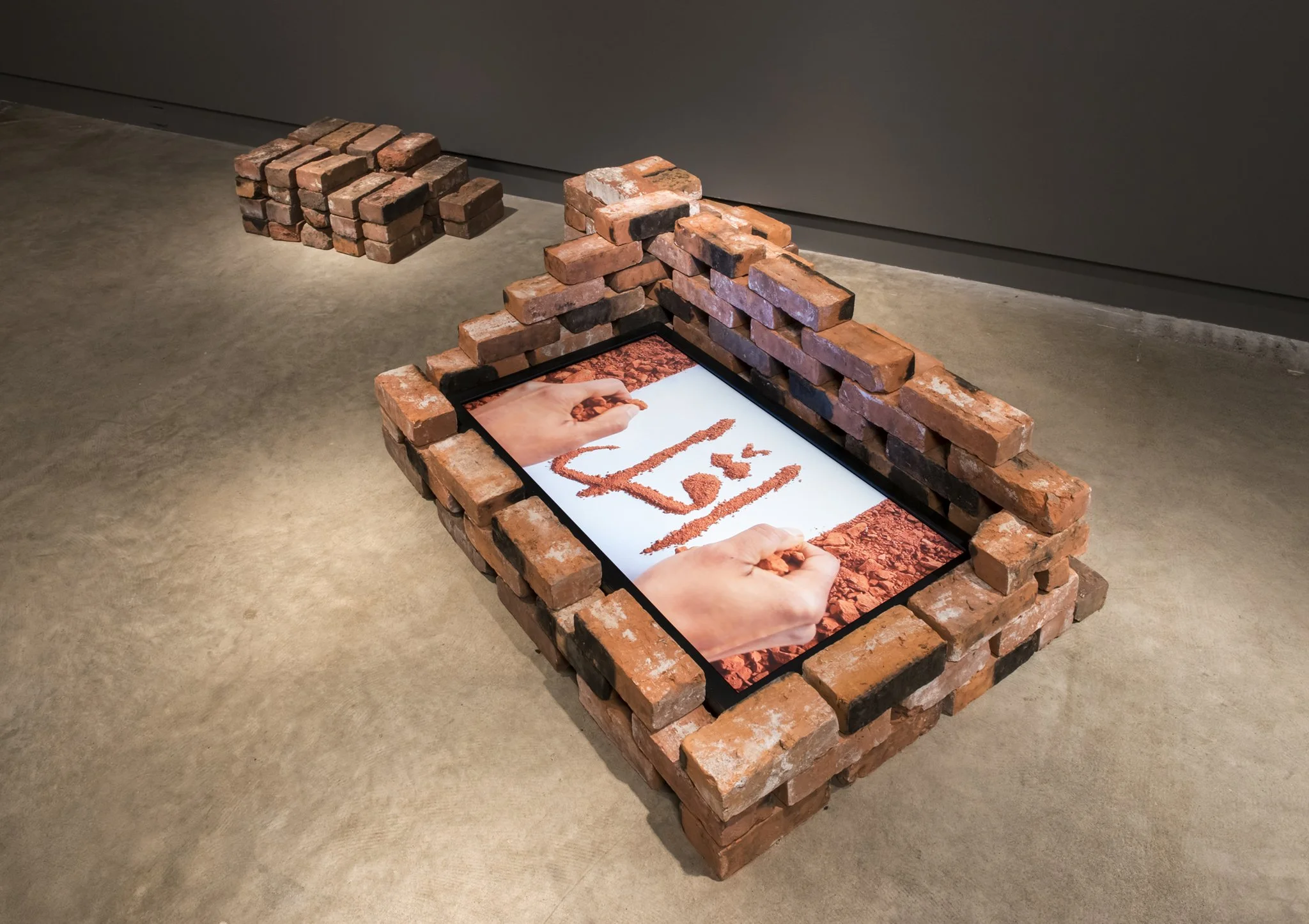
Farheen Haq, Revelation #2, 2017, bricks, digital video loop. Collection of Surrey Art Gallery. Photo by Site Photography
For Kaur, memory surfaces through abstract layers of paint, colour, and texture. Having grown up surrounded by intricate patterns and textiles from her mother’s Indian bridal boutique, the abstract painter’s works often incorporate unlikely combinations of materials and texture that reveal deeper narratives about herself and the viewer. “A lot of my work deals with themes of identity beyond the surface of what we see—thinking about how our lived experiences influence how we move through the world, but also how we approach our surfaces and materials,” Kaur says in a Zoom interview. “You might not be able to understand the story right away just by looking at the surface quickly, but the longer that you look, and the more you pay attention to the composition, a deeper story can start to be revealed.”
In her 2025 painting A mistake now came in a cloudburst, fabric is worked directly into the canvas; the combination of bridal mesh and piped acrylic paint resembling embossed embroidery evoke layered lehengas of South Asian bridal wear. The same can be seen for her 2019 canvas What would YOU do? that spans 16 feet long and 13 feet high. Several fragmented panels are connected through Kaur’s repeated mark-making and raised textures, leaving behind layers of abstracted gestures.
Similarly, text is transformed and obscured in Kaur’s creative process. Her 2021 painting Nice Ending (also part of the gallery’s permanent collection) draws on a humorous memory of miscommunication. The title comes from Kaur’s childhood drawing of a little girl and a creature, with the text: “I think the crocodile will eat me and nobody will see me again.” Her teacher’s casual comment? “Nice ending.” The words are fragmented and scattered across the painting, applied using piped acrylic mixed with cold wax to give it volume. Behind the layers of bright pink, red, blue, green, yellow, brown, and white, is a misty background reminiscent of a foggy glass window of a clothing shop—full of colourful, embroidered fabric and prints.
Returning to the plinth in the centre of the gallery, Haq will lead an evening community weaving session on October 22, which will include an artist talk, poetry, chai, and snacks. On November 21, Haq will also reveal a new video at the gallery’s annual media arts symposium. Her latest project draws on a ghazal by nineteenth-century Urdu poet Mirza Ghalib, delving into her relationship with place as a daughter of immigrants and a settler on unceded Indigenous land. The season concludes with a Punjabi-language tour of the exhibition on December 5, led by Lally.
Reflecting on their distinct yet intermingled practices, Haq and Kaur share their hopes for how visitors will interact with the show. “I always have that aspiration that my work will allow people to just slow down and consider their own inner experience,” says Haq. “I want to create something beautiful and contemplative that might reconnect people to their interiority and their inner landscape.”
“What I get excited about in terms of showing with other artists is the connections between our practices that might seem quite different at first,” Kaur adds. “I hope that viewers will take the time to really slow down the viewing process and think about how even though the output is very different, what’s going on behind the layers of the work is, in some ways, quite similar.”


Related Articles