Theatre review: Between Breaths honours the stubborn dignity of a man devoted to saving whales
Artistic Fraud production portrays the joys and griefs of Jon Lien, a pioneering Newfoundland conservationist whose challenges included a late-life struggle with dementia
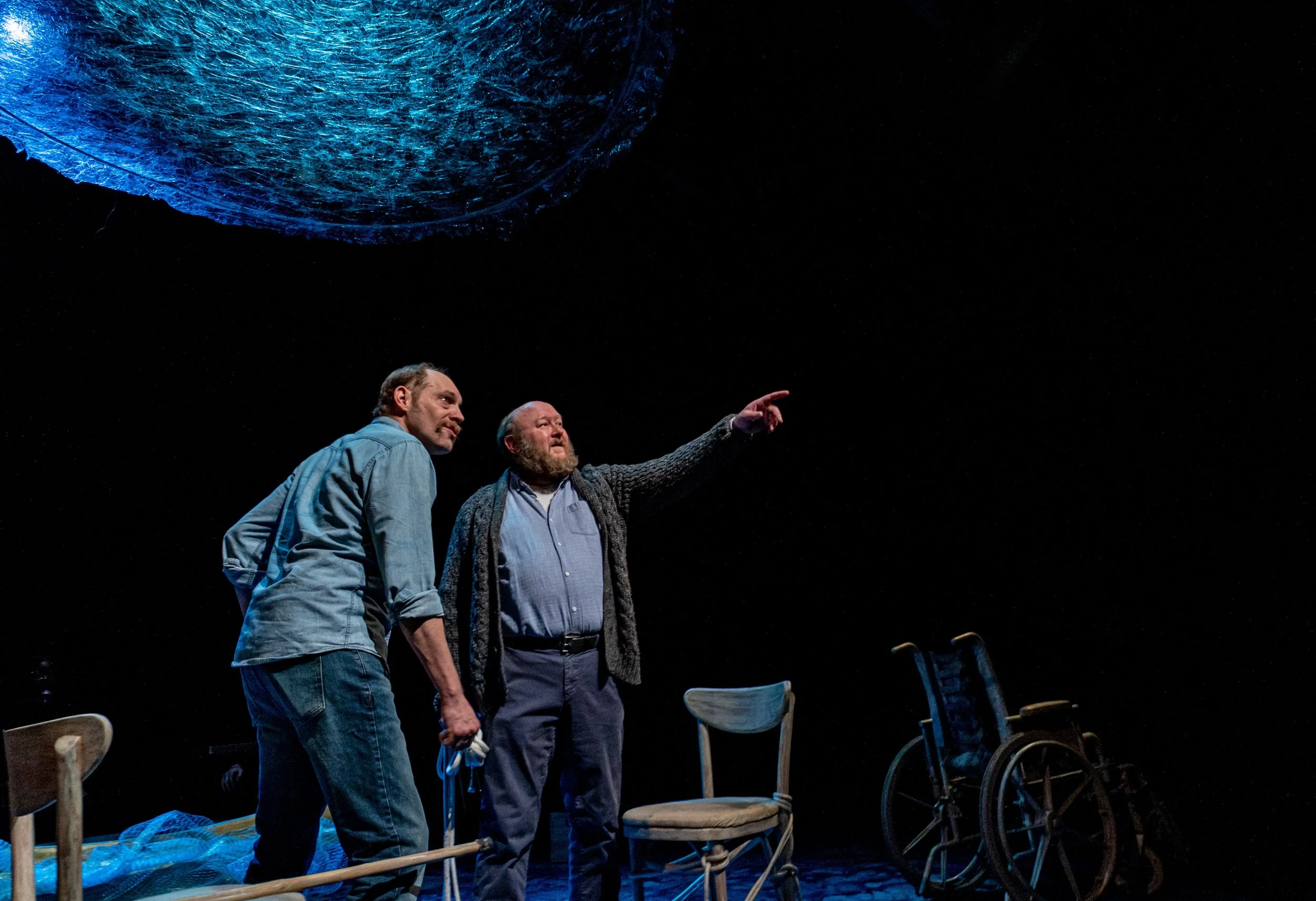
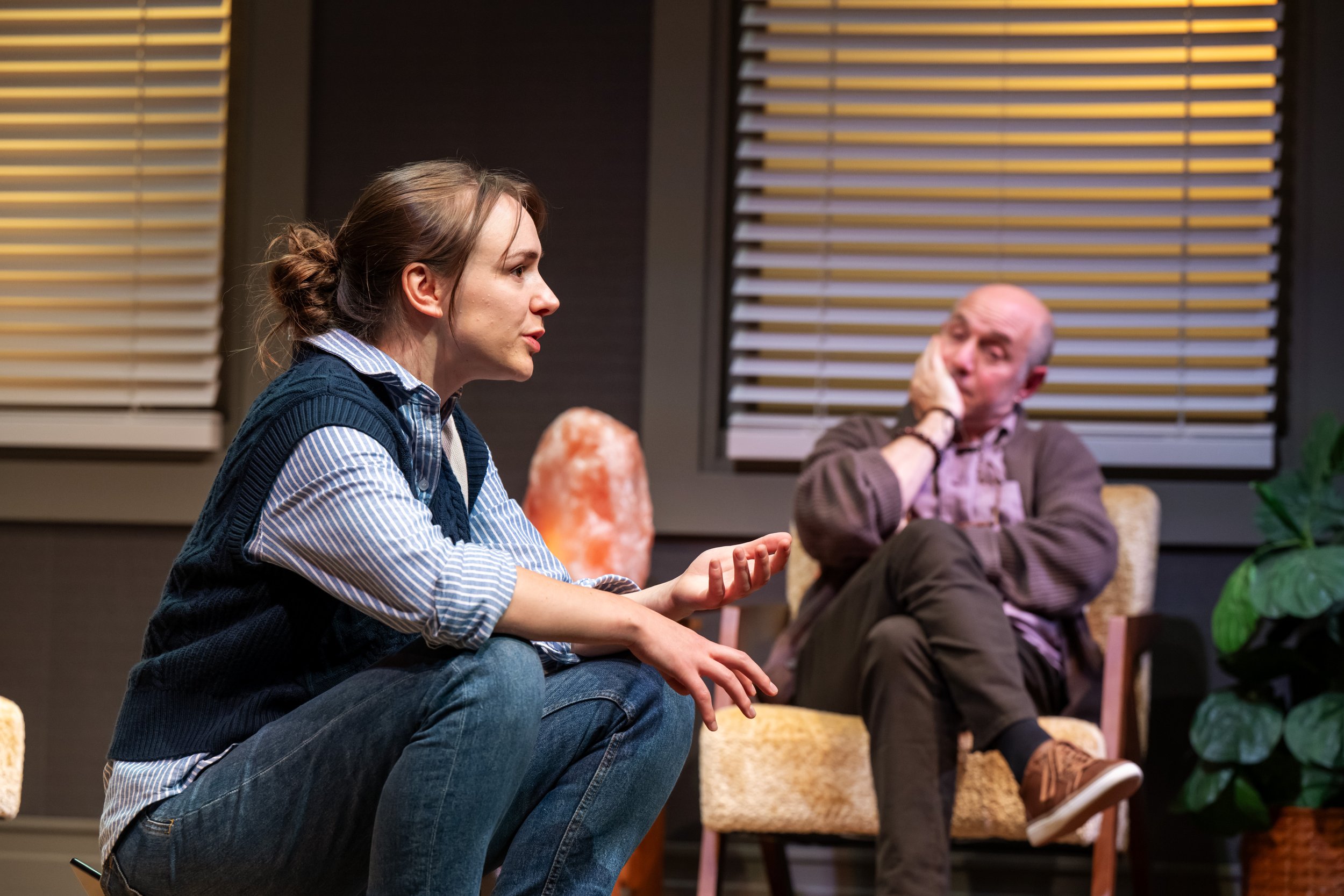
Darryl Hopkins (left) and Steve O’Connell in Between Breaths. Photo by steelcut media
The Firehall Arts Centre presents Artistic Fraud’s production of Between Breaths at the Firehall Theatre to November 23
LONG BEFORE THE International Whaling Commission began calling out entanglement as one of the most serious threats to marine mammals, Jon Lien was already wading into the cold waters of the Atlantic, cutting whales loose from fishing nets. Simply because no one else would, and with no formal training, he rescued more than 500 marine animals throughout his career.
The deep, wavering call of whales opens Between Breaths, and the show carries a similar pull of unsettling softness as it traces the animal behaviourist and conservationist’s life.
The play from St. John’s–based theatre company Artistic Fraud, now on the West Coast for the first time, opens at the very end of Jon’s life. From the image of him in decline, with his mind slipping in and out of clarity, the story moves backward through his years as “the whale man of Newfoundland”. What could have been delivered as straightforward biography instead comes to us in a looping, tidal way, drifting in as Jon wrestles against his deteriorating mind and body.
Director Jillian Keiley keeps things intentionally pared down: muted colours and lighting, a few chairs, and a small, rounded stretch of stage the actors circle around. Inside that simplicity sit the big joys and griefs piecing together the connective tissue of a life.
Among the details, we learn about Jon and his wife Judy starting out in landlocked South Dakota, Jon’s deep respect for local fishermen and their knowledge, his grounded belief that conservation only works if you approach it with humility and empathy, and the running joke that he was a “starter”, not a “finisher”. What really comes through in the play’s own restless pacing is just how hard Jon was pushing himself. Between teaching at Memorial University of Newfoundland, field research, mentoring students, advocacy and conservation work, and, of course, rescuing whales, you quickly realize that he didn’t know how to stop.
Steve O’Connell’s performance leans into that. There’s a lot of physical work that goes into the way he plays Jon, especially in the confusion and frustration of his later years, threaded with the stubborn dignity that seems to have carried him through everything.
Judy Lien, played by Bernardine Stapleton, moves toward him with tenderness and caution, the way one might approach a wild animal in need. She’s the one who keeps anchoring us to the present amid the play’s sometimes disorienting timelines.
Darryl Hopkins plays Wayne, a former whaler who became Jon’s rescue partner. His well-realized, salt-of-the-earth performance shakes the play awake with the close calls, the swearing, and the sheer chaos of the pair’s scenes out on the water.
Musicians Andrew Laite, Valmy Assam, and Josh Sandu accompany the players onstage, playing original songs by Newfoundland band the Once. Their sound swells between understated and full.
The play is obviously emotionally heavy. It also nods to another kind of weight: the burden protectors and conservationists carry, and the physical, emotional, and mental toll of doing that work every day.
People with dementia often return to familiar roles and habits. Teachers slip into giving instructions; nurses check on others; farmers wake early, for example. For Jon, as someone who built his whole world around helping animals (and fishermen, just trying to make a living), the feeling hanging over him that the work isn’t done is also tragically real.
In the play’s final moment, all these threads come together—including the ones that tie Jon to the animals he spent his life freeing. Between Breaths leaves you with the sense that his spirit is still moving, that the work continues as long as the legacy does. 

Related Articles