Theatre review: Gateway Theatre’s ambitious Annie has girl power to burn
Energized title-role performance by Azaleah Korn leads an ensemble with a gift for the physical comedy and classic song-and-dance numbers of this beloved musical
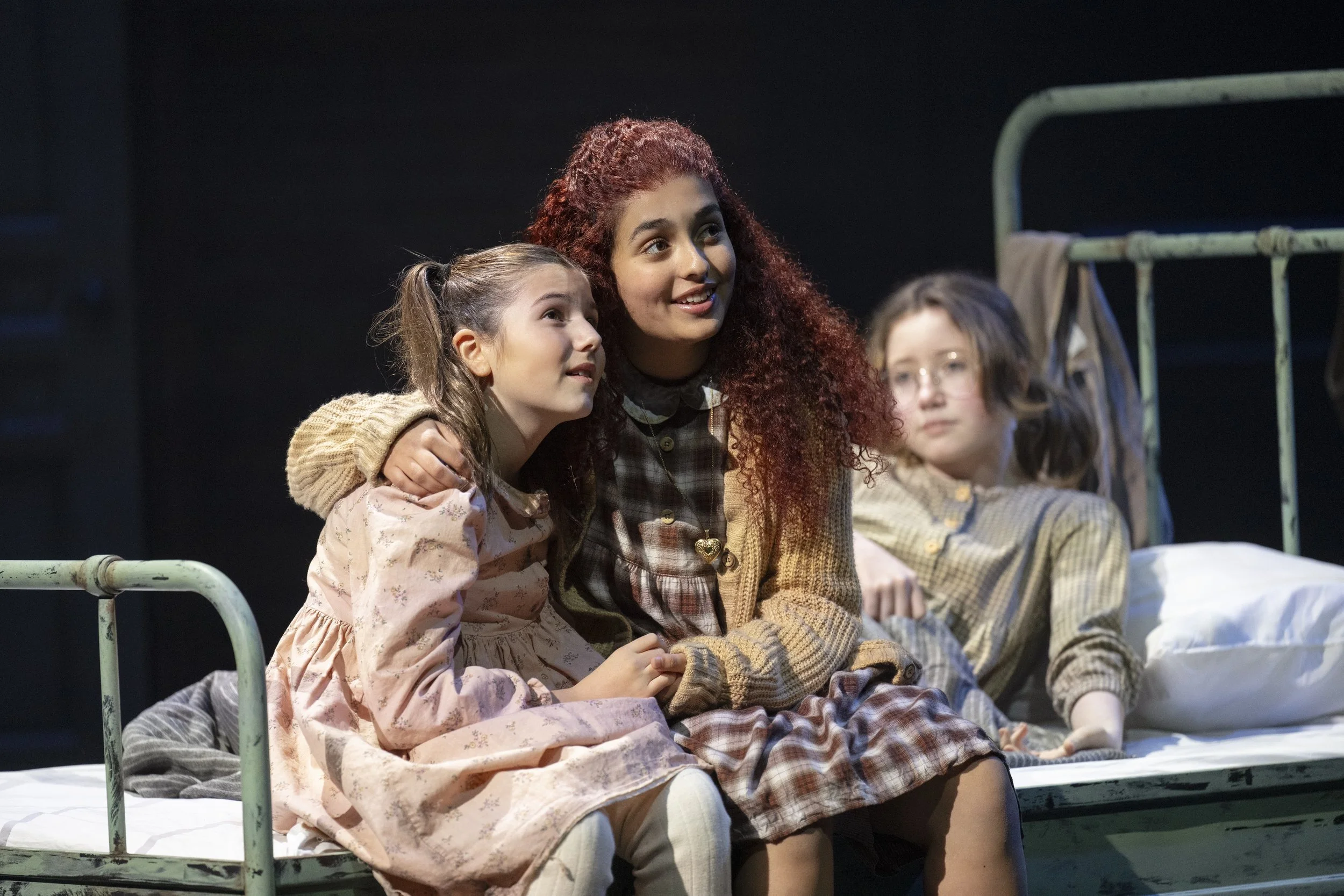
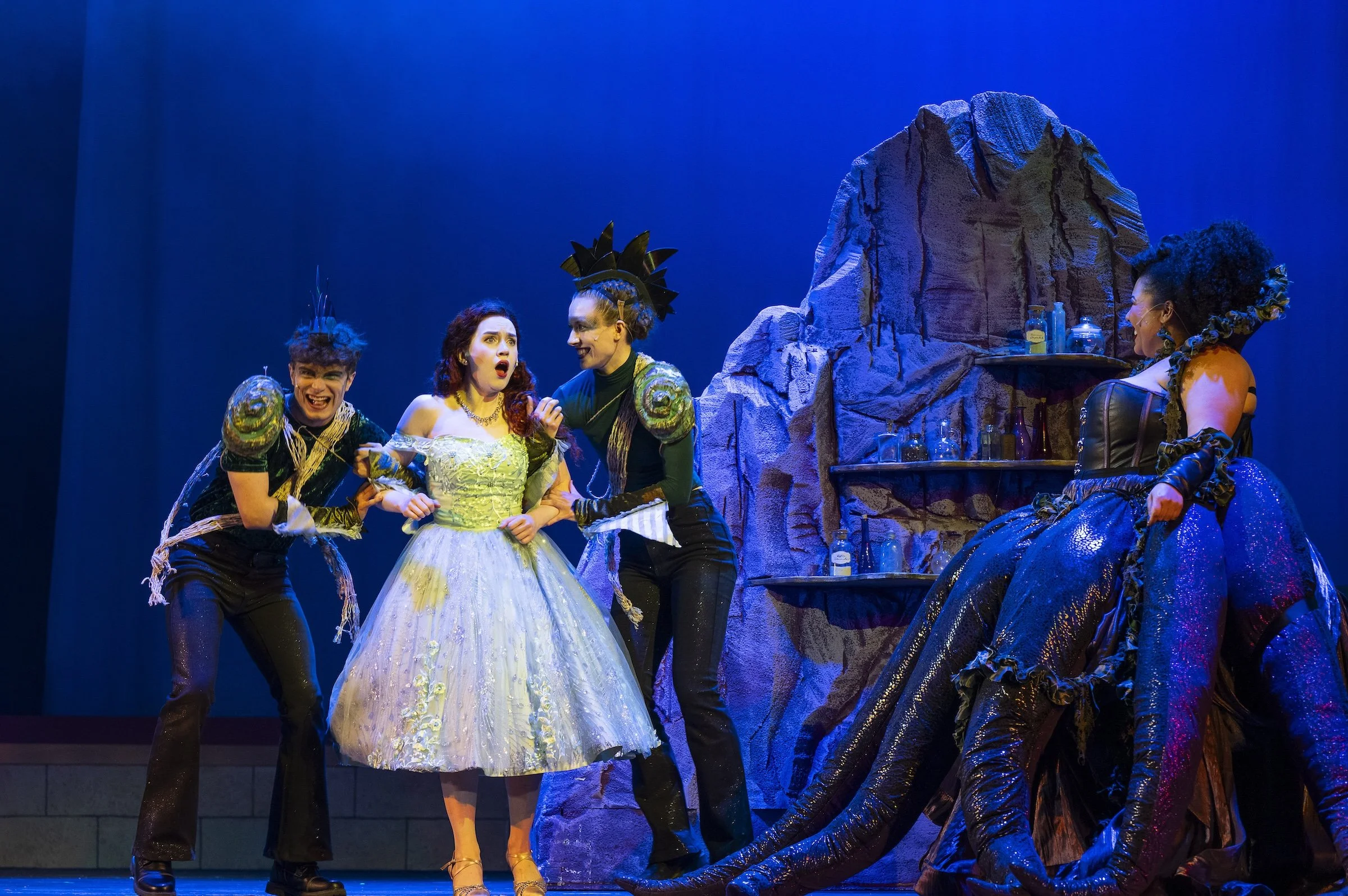
(From left) Elle Hanson, Azaleah Korn, and Katie Bradshaw in Annie. Photo by David Cooper
Gateway Theatre presents Annie to January 3, 2026
FOR GENERATIONS, Annie has remained one of the most frequently staged musicals, cherished for its uplifting messages of optimism and familial love, and for the opportunities it offers young performers to take centre stage. On these fronts, Gateway Theatre’s ambitious production, directed by Josh Epstein, checks the boxes, anchored by a standout performance from its young star, Azaleah Korn.
Set during the Great Depression, Annie follows a scrappy orphan who clings to the hope that her parents will one day return to rescue her from the grim orphanage overseen by the cruel Miss Hannigan. Annie’s fortunes change when Grace Farrell, the assistant to tycoon Oliver Warbucks, invites her to spend Christmas at Warbucks’s mansion. What follows is a time-honoured narrative audiences love: a lonely, impoverished hero lifted into a world of warmth and love. In fact, last year Gateway staged Oliver!, which, of course, has many parallels with Annie. But this year, it’s time for girl power!
And there’s supercharged girl power to burn from Korn as Annie. She is a gifted young singer with a resonant voice and an impressive belt, making her renditions of “Tomorrow” and “Maybe” thrilling. Beyond vocal prowess, Korn brings spunk, confidence, and mature emotional range to the role. Korn is a young performer well worth keeping an eye on.
As for her band of orphans—they’re older in this production than usual. While the orphans in Annie typically range from six to 13 years of age, most here appear to be in their teens. But this group of strong triple-threat performers brings so much humour, physical comedy, and song-and-dance talent that it’s unlikely anyone will care about their ages. Highlights include their spirited performances of “It’s the Hard Knock Life” and the reprise of “You’re Never Fully Dressed Without a Smile”, as well as Nicol Spinola’s athletic, character-driven, and era-appropriate choreography.
Another delight is the deliciously villainous trio of Jennifer Copping as the infamous Miss Hannigan, Josh Graetz as her slimy brother Rooster Hannigan, and Manuela Palmieri as Rooster’s equally conniving girlfriend, Lily St. Regis. Draped in Donnie Tejani’s costume design of a second-hand, lingerie-style robe, and perpetually clutching a flask, Copping gives us a ton of comedy and attitude. In “Little Girls”, Copping even evokes sympathy for her character as she’s endlessly tormented by the tirades of the orphans.
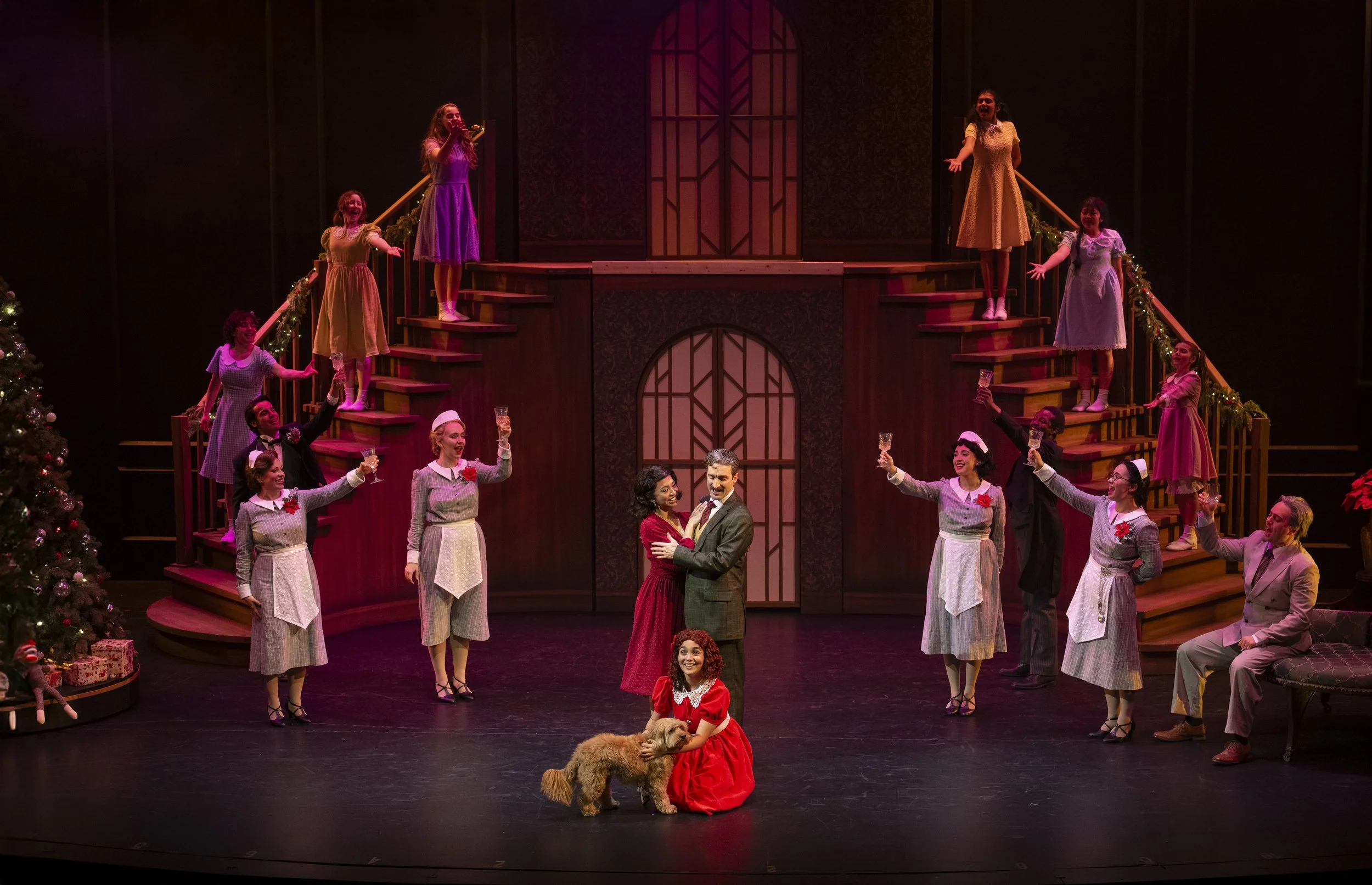
The cast of Annie. Photo by David Cooper
Both Graetz and Palmieri add fun wickedness and sexy swagger to this villainous troupe, and their song-and-dance to “Easy Street”, set to Spinola’s sassy choreography, is dynamite. The number is accentuated by Graetz’s impressive pirouettes and Palmieri’s Rockette-worthy kicks and splits. Also deserving mention is that this production has erased traditional gender casting for many of the ensemble roles. Looking at the cast and understudy roster, many roles in Warbucks’s and Roosevelt’s staff are interchangeable among actors of all genders.
Visually, the production is striking. Ryan Cormack’s set design delivers an opulent foyer for Warbucks’s mansion, complete with sweeping staircases and elegant decor, as well as a spectacular cascade of marquees during “N.Y.C.”. Tejani’s costume design brings to life gorgeous styles from the era, including GQ-worthy suits for Warbucks and outfits for Grace that look like they’ve been pulled from a 1930s issue of Vogue. Sophie Tang’s lighting reinforces the contrast between worlds, casting Miss Hannigan’s orphanage in a chilly gloom before bathing Warbucks’s mansion in warmth and glow.
This visual ambition comes with a few drawbacks, however, as scene changes occasionally stall the show’s momentum. One distracting moment sees a Hooverville set piece preset in the wings, lingering in full view of the audience, pulling focus from Korn during “Tomorrow.”
There are other aspects that don’t quite hit the mark. Epstein has focused considerable attention on developing Annie’s relationship with Warbucks (Charlie Gallant) and Grace (Sarah Cantuba) but neglects to fully establish the romantic arc between Warbucks and Grace themselves. As a result, their late-show sparks feel abrupt and forced.
Some staging choices muddy the storytelling rather than enhance it. An opening shadow-puppetry sequence performed by the orphans, using a bedsheet and props, initially suggests a preview of the tale to come, as indicated by visuals of Annie, a dog, and a big city. But when a winged unicorn is introduced before the orphans abruptly end the charade, one must wonder what the intended message is.
Also puzzling is a recurring visual motif in “N.Y.C.”, when performers appear frozen inside an oversized art frame before springing to life—a device that repeats without clear meaning and ultimately distracts rather than enhances.
Still, Annie is carried across the finish line by its many strengths, including a small but mighty ensemble that works overtime to play multiple roles. Korn and her castmates’ heartfelt performances embody the optimism the musical champions. Another heartwarming element is the role of Annie’s dog, Sandy, brought to life by three adorable stage dogs—Mylo, Neko, and Poco—who alternate performances. (Throughout the run of Annie, Gateway Theatre is hosting a pet food drive.) By the show’s final moments, as the stage fills with warmth and goodwill, Gateway Theatre’s Annie inspires us not to wait for the sun to come out tomorrow, but to use love and hope to help make it happen. 

Related Articles