At the Advance Theatre Festival, Alexandra Lainfiesta uses magic realism to explore the personal sacrifices of immigration
Latinx theatre artist’s debut script unfolds across three worlds: Toronto, Antigua Guatemala, and a realm in which the immigration system functions like a game show

Alexandra Lainfiesta. Photo by Peter Holst
Ruby Slippers Theatre, in association with the Shadbolt Centre for the Arts and Playwrights Guild of Canada, presents Bella Luz at the Shadbolt Centre on January 29 at 7:30 pm as part of the Advance Theatre Festival
IN ALEXANDRA LAINFIESTA’S magic-realist play Bella Luz, main character Sumailla’s quest for Canadian permanent residence is comparable to competing on a game show.
Not in the sense that the process is fun, or that it’s televised, or that Steve Harvey is guiding you through it—but rather in the sense that in both cases, people are trying to actualize a dream. If you guess enough answers correctly, earn enough points, or surmount all the obstacles in front of you, then you win the object of your desire. On a game show, that may be a million dollars, a luxury car, or a hilltop mansion. But in the case of Guatemalan dancer Sumailla, the prize is a stable future.
Much of Sumailla’s backstory mirrors Lainfiesta’s own. Speaking to Stir by Zoom, the theatre artist reflects on the bureaucratic obstacles she faced during the process of immigrating to Canada from Guatemala in 2010 through the government’s Self-Employed Persons Program—a permanent residence program that’s now been put on pause.
“A lot of the satire and humour that I use in the play really stems from the seeds of my own experience as I was navigating the system and trying to get answers,” Lainfiesta says. “And it really felt like all these different game shows that I was playing as I was trying to find the answers and fill in the paperwork, do this, do that—especially being the first person in my family history who immigrated somewhere new, and to a country no one in my family had ever been to.
“It’s not a system that has ever been familiar to me or anybody who’s close to me,” she continues. “So it’s something that I had to explore on my own, and try to navigate and understand and figure out on my own. And that’s a lot of the drive behind the main character and her own navigation of the system.”
Bella Luz, the first play Lainfiesta has written, will debut as a staged reading at this year’s Advance Theatre Festival, which is running from January 26 to 30. The Ruby Slippers Theatre event—presented in association with the Shadbolt Centre for the Arts and Playwrights Guild of Canada—serves as a platform for new works by BIPOC female-identifying and gender-nonconforming artists.
Lainfiesta is a Jessie Richardson Theatre Award– and Dora Mavor Moore Award–winning actor who has appeared onstage with a wide variety of Canadian companies, ranging from Bard on the Beach and the Arts Club Theatre Company to the Stratford Festival and the Citadel Theatre. As she takes the leap into playwriting, she’s focused on representing her heritage and her love of Latinx stories—but particularly from new Canadian angles.
“There are so many plays out there that explore the Latin American immigrant experience, but a lot of them are through the United States’ lens,” Lainfiesta says. “So it’s really exciting to see us build our own Latin Canadian identity, especially in theatre.”
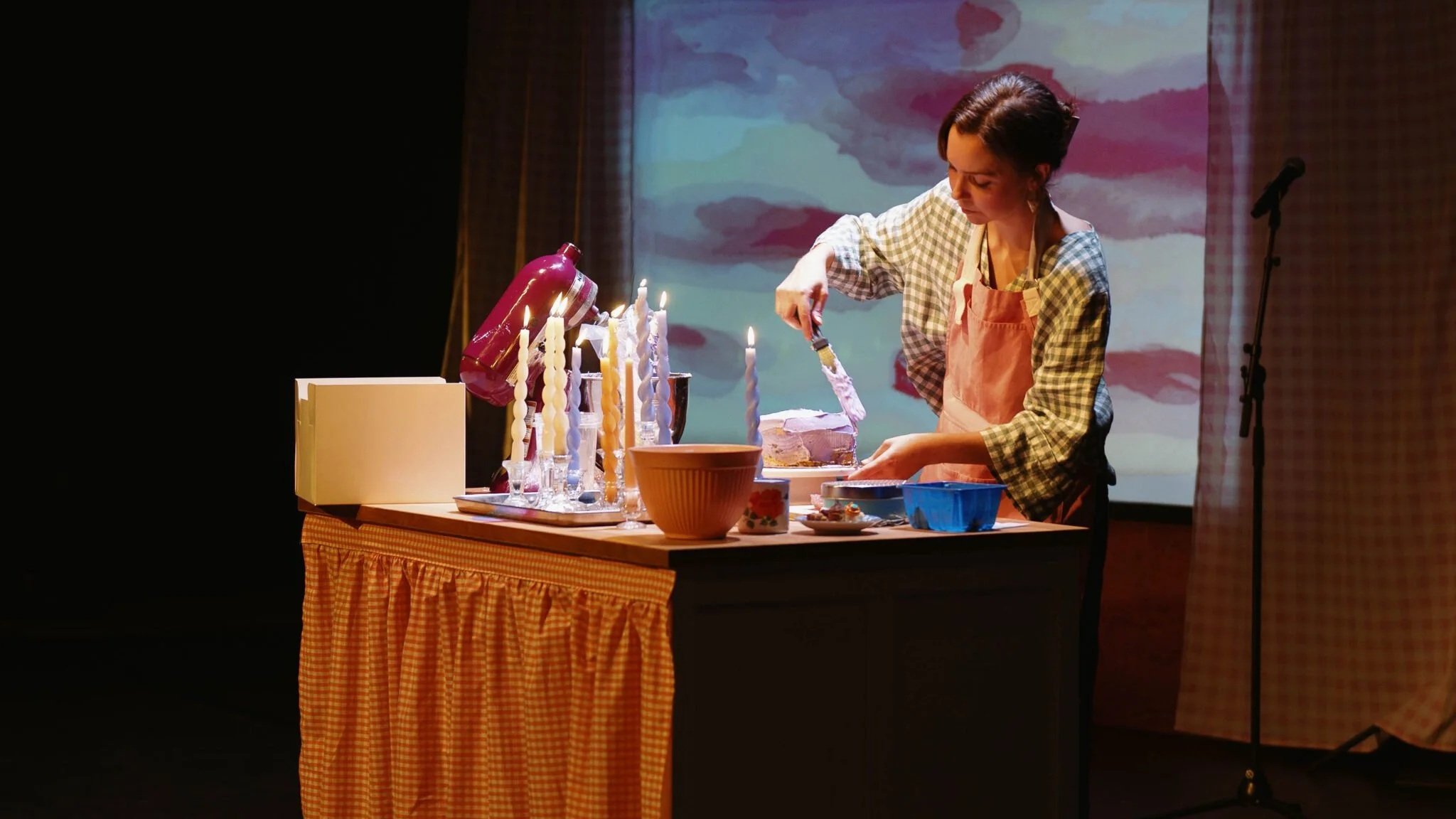
Bella Luz (Spanish for “beautiful light”) unfolds seamlessly across three different worlds. The first is Toronto, or “Here”, where Sumailla is working in the stunt industry while trying to gain her permanent residency. Then there’s her home city of Antigua Guatemala, or “There”, where her mother and grandmother reside. And finally there’s the realm of Immigration System Game Shows, or “Nowhere”, where Sumailla receives any given number of points (the more, the better) for things like her age, English skills, and education level.
But Sumailla finds herself missing her mother’s drive and her grandmother’s wisdom as she struggles with all the moral compromises required of her throughout the immigration process. She finds herself repeatedly typecast in Latina roles while pursuing her career as a stuntwoman and, most heart-wrenchingly, portraying onstage many of the stereotypes and acts of violence that fractured her own family back home.
Weighing such personal sacrifices, says Lainfiesta, is a big piece of the emotional puzzle for many immigrants. And shifting the story between three worlds allows the ripple effect of those sacrifices to be seen through a broader lens.
“What I wanted to do with that,” she explains, “was really blend humour, spectacle, and a sharp critique on the systems in place….So it really is a metaphorical representation of the lived experience of an immigrant who is always living in the in-between. There are parts of you that belong here, there are parts of you that belong there, and there are parts of you that belong nowhere as you shape a new identity on new soil when you immigrate.”
Lainfiesta developed much of Bella Luz through the Arts Club’s Emerging Playwrights’ Unit in 2021, and then continued working on it while completing her master’s degree in creative writing at the University of Victoria.
“When we did a reading in Victoria at the end of my program, a lot of the feedback I got was from Canadians who had never been through the immigration system,” she says. “They shared how this play really made it accessible for them to understand the bureaucratic obstacles that immigrants have to overcome—and the new respect they felt after attending the play for immigrants and anybody who’s choosing to come to Canada.”
At the Advance Theatre Festival, Lainfiesta will be reading the role of Sumailla. Jane Heyman and Carmela Sison are serving as co-directors and providing dramaturgy support. Ultimately, says the emerging playwright, creating a play specifically about the immigrant experience in Canada has been an extremely rewarding process.
“I think it’s super exciting, and it speaks to voices and people who worked so hard to be here,” she says. “And to me, if a production takes place, my goal is for other immigrants or Latinx artists to come see this production—and get inspired to also write their own.” 

Related Articles