Bilingual Montreal band Bibi Club prefers to perform without a safety net
The duo of Adèle Trottier-Rivard and Nicolas Basque likes to keep an element of onstage tension at its shows
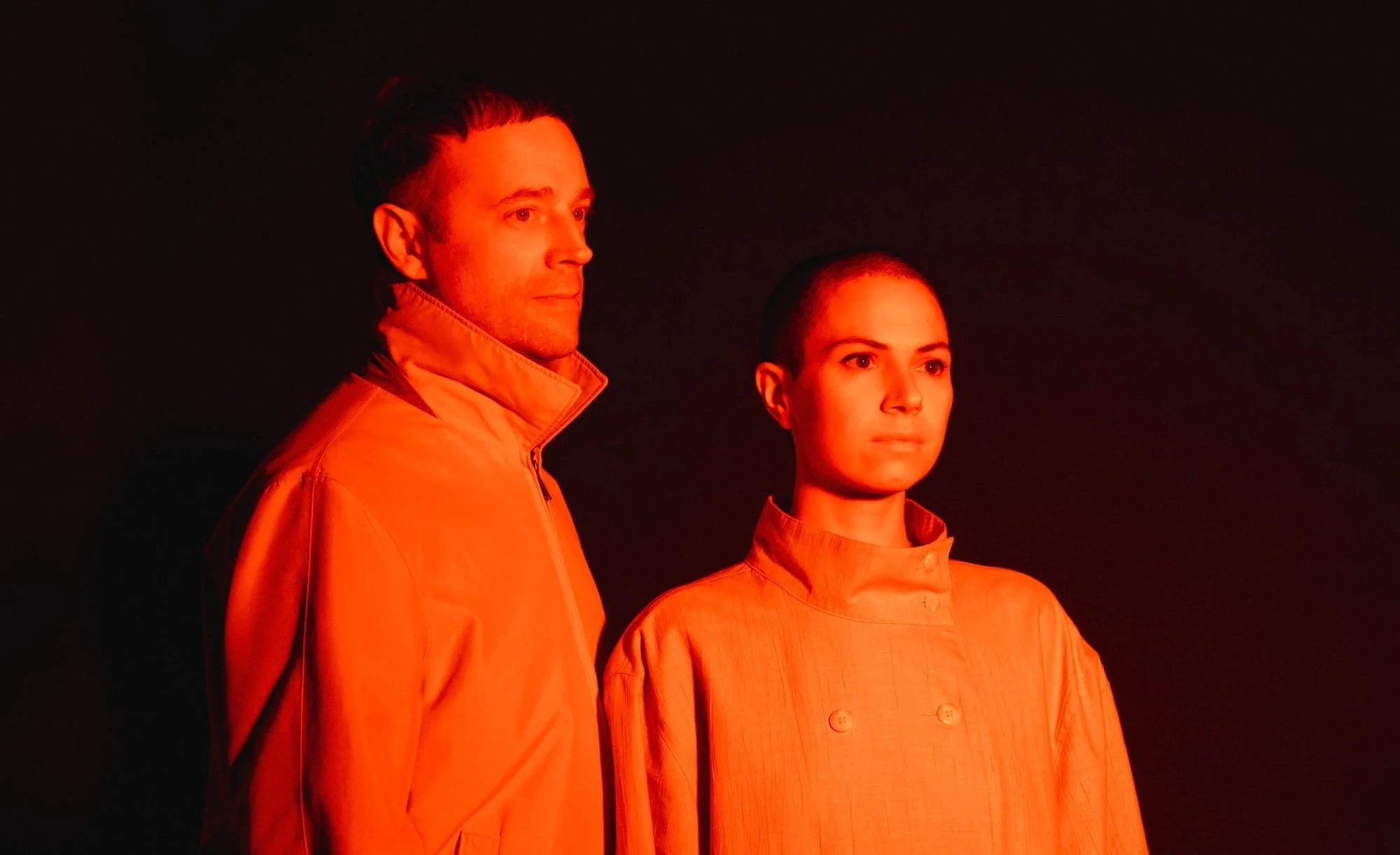
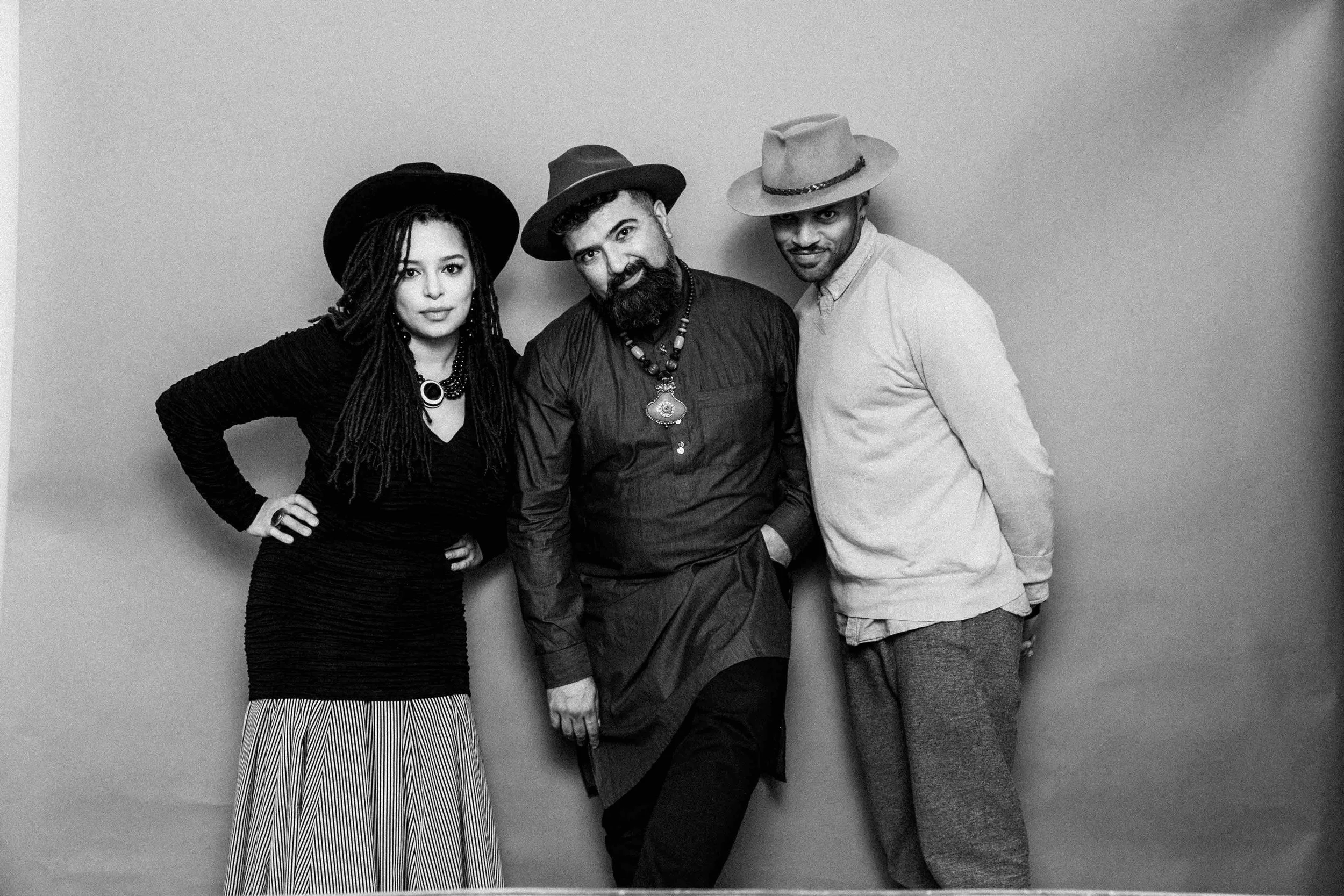
Bibi Club. Photo by Manoushka Larouche
As part of the Coup de Coeur francophone 2025, le Centre culturel francophone de Vancouver presents Bibi Club at The Dance Centre on October 24 at 8 pm
WHEN ONE OF YOUR parents is enough of a cultural icon to have appeared on a postage stamp, you inevitably end up answering a lot of questions from journalists about your family—even when the interview topic is your own band. That’s the position Adèle Trottier-Rivard finds herself in, but she doesn’t seem to mind.
On a Zoom call from Montreal alongside her Bibi Club bandmate Nicolas Basque, Trottier-Rivard tells Stir, “Yes, people talk to me a lot about my dad, that’s for sure. So it’s never a surprise. I really appreciate the fact that he and my mom shared with me their passion for music. My parents had a huge music library in the living room. I would dig into CDs and grab them and put them in my room and listen to stuff. So I discovered a lot of music through my parents.”
Trottier-Rivard’s father, Michel Rivard, is a founding member of Beau Dommage, one of the most successful and influential Québécois bands of all time. In 2023, Rivard was inducted into the Canadian Songwriters Hall of Fame. To get a sense of just how important his contributions to the francophone music scene have been, consider that when Canada Post put out the Beau Dommage stamp in 2013, it also released postage bearing the images of the Tragically Hip and the Guess Who.
Bibi Club has yet to appear on any postage stamps, but the duo has racked up its share of accolades in its own right, including a 2024 Félix Award (the Quebec music industry’s equivalent to a Juno or Grammy) for best new artist. Bibi Club’s most recent album, Feu de garde, was shortlisted for this year’s Polaris Music Prize.
Based around Trottier-Rivard’s unassumingly melodic vocals and Basque’s guitar work, which sometimes takes things into left field with unexpected chord voicings and occasional dissonance, Bibi Club’s music draws on the traditions of indie-rock forebears including Blonde Redhead, My Bloody Valentine, and Stereolab.
That last band looms especially large in the Montreal duo’s pantheon of influences; Bibi Club even recorded its own version of Stereolab’s “Orgiastic” for the extended edition of Feu de garde.
“Stereolab inspired me when I was younger, because I think it was the first time I was listening to a female voice that honest,” Trottier-Rivard says. “It really spoke to me, the way the singer [Lætitia Sadier] sings, and it was the first time I would listen to someone sing in French the way she does, and it really inspired me. I think it kind of helped me to write in French and try to find the right words to make me comfortable, and just to find my style in writing. So that band in that way really inspired me.”

Bibi Club. Photo by Dominic Berthiaume
Another, less immediately apparent influence is Suicide, the seminal no-wave minimalist duo of Alan Vega and Martin Rev, whose confrontational performances occasionally devolved into bloody riots.
“They’ve influenced a million other bands, but there’s something—maybe not the provocateur aspect, that’s not who we are, but going radical, going to the essential and trying to do it with what you have,” Basque says. “It’s a band we often refer to in our heads when we’re in the studio, like, ‘What would a band like that do? Would they keep all this, or try to be minimal but at the same time keep the energy building in a song?’ That’s a band that we both really like.”
Bibi Club is a bilingual act, but almost in the opposite way that Basque’s other band, Plants and Animals, is. Where Plants and Animals creates songs primarily in English, with a few French ones flavouring the mix, Bibi Club writes mostly in French with just a handful (including “Parc de Beauvoir”, “You can wear a jacket or a shirt”, and “Nico”) in Canada’s other official language.
“With Bibi Club, I feel the music dictates what the lyrics are gonna be, and sometimes it makes more sense in French,” Basque says. “Sometimes it’s more original in French. Sometimes it just comes more naturally in English. Also, we’re from Montreal. It’s a pretty bilingual town. Adèle grew up in Montreal in a neighbourhood that’s mostly anglophone, so it’s natural. And usually Adèle knows when she sings what makes sense, or what’s the right direction. It happens once in a while that a song gives us more trouble, that we’re like, ‘Oh, where do we go?’ and then it feels like you’re translating something. But it usually comes up naturally.”
Bibi Club—which headlines a Coup de Coeur francophone de Vancouver show that also features an opening set by indie-folk singer-songwriter Étienne Fletcher—tours with an offstage crew of two handling sound, lighting, and visuals. Onstage, however, it’s just Trottier-Rivard and Basque, backed by a drum machine.
“So it is a bit like Suicide, without the blood,” Trottier-Rivard jokes.
Even so, Basque says there is a certain element of danger that keeps things exciting.
“You know at the circus, when you have someone on a wire and they could fall at any moment, but there’s no net under?” he says. “It feels a bit like that. It’s extremely vulnerable but intense. There’s like a tension in the show—without violence—and usually it’s surprising for people.” 

Related Articles