At DOXA, təm kʷaθ nan Namesake confronts the painful legacy of colonialism
Documentary by Eileen Francis and Evan Adams looks at the Tla’amin Nation’s efforts to change the contentious name of the city of Powell River
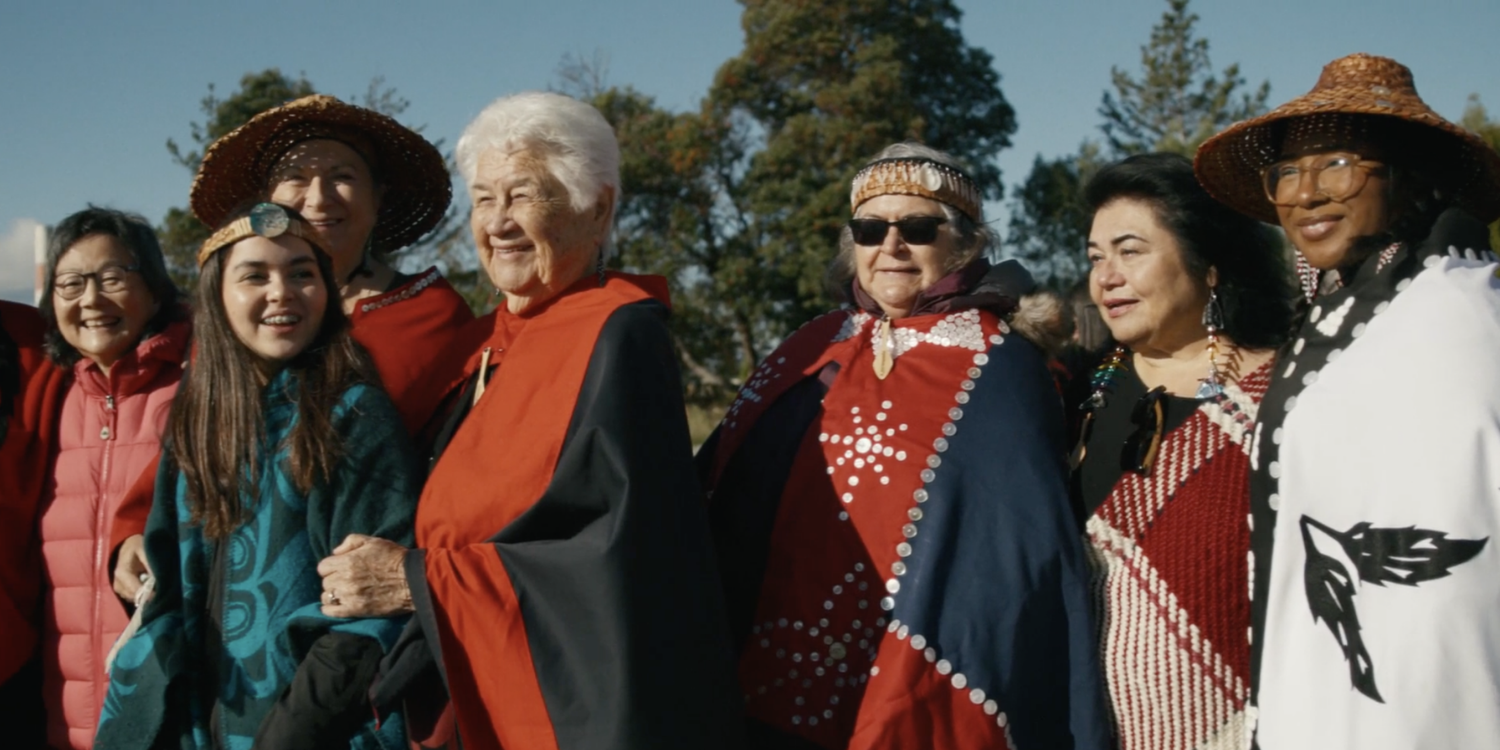
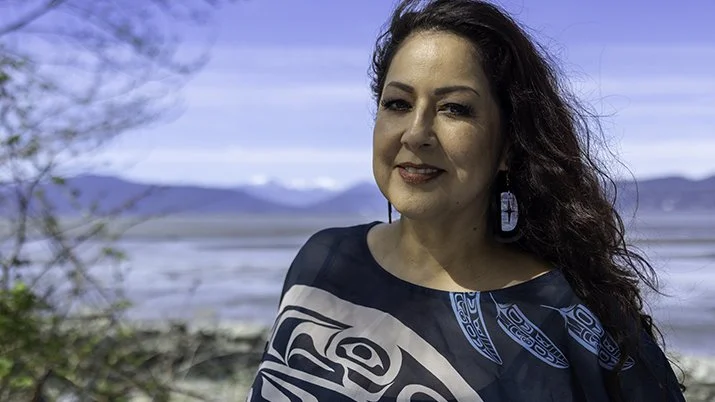
Tla’amin Nation women in təm kʷaθ nan Namesake.
The DOXA Documentary Film Festival screens təm kʷaθ nan Namesake as part of the Justice Forum series, at SFU’s Djavad Mowafaghian Cinema on May 2 at 2:45 pm and at the VIFF Centre on May 3 at 8:50 pm. DOXA runs April 30 to May 10
YOU KNOW HIS name, even if your knowledge of exactly who he was is a little hazy, or even non-existent. As they have with countless other prominent white men of his generation, the people in charge of deciding what to call places in British Columbia put Israel Wood Powell’s name on a few things.
Think of Powell Street here in Vancouver and, a few hours’ drive northwest of here on the Sunshine Coast, Powell River (both the river itself and the city). Among the myriad reasons Powell is remembered today is the fact that he was the first chancellor of UBC, and the first president of the Medical Council of British Columbia.
More significantly, Powell was the province’s first superintendent of Indian Affairs, from 1872 to 1889. As history shows, during his tenure he pushed the provincial government to grant Indigenous peoples land and water rights, but his general view was that they needed to be “civilized” according to the white, Christian standards of the day.
This meant the banning of the potlatch—a sacred practice among Coast Salish peoples that involves the ceremonial giving away of one’s possessions—because it defied the ethics of colonial Protestant capitalism.
As part of their civilization and Christianization, Powell advocated the removal of Indigenous children from their families for the purposes of giving them a proper education. His beliefs informed policies of forced assimilation and the foundation of the Indian residential school system, which created trauma for several generations of Indigenous communities all across the country.
Eileen Francis is a member of the Tla’amin Nation, on whose traditional territory the city of Powell River was built. Francis has joined a Zoom call with Stir to talk about təm kʷaθ nan Namesake, her new documentary about her community’s years-long efforts to change the city’s name to something less wounding to her people. Francis had some help in making the film from some serious heavyweights, including producer Peg Campbell, and fellow Tla’amin Nation member Evan Adams, an actor well known outside the local community for his performances in Smoke Signals, Da Vinci’s City Hall, and other movies and series.
“This is my first feature film,” Francis says, speaking from Toronto, to which she has travelled to screen təm kʷaθ nan Namesake at the Hot Docs festival. “When we asked Evan to come into the project, I asked him, ‘Could you be my mentor?’ And then we agreed that we’d be co-directors, because Evan had done a documentary before [2004’s Kla Ah Men: As Far Back as the Story Goes], and so I was really inspired by this documentary to show our community the way I see our community—through an Indigenous lens, I guess you would call it.”
On paper, changing the city’s name seems a simple enough matter, and it is not without recent precedent. In 2018, for example, the Powell River Regional District was redesignated as qathet, from a word meaning “working together” in the Comox language.
As the film shows, however, there has been pushback from a certain faction of non-Indigenous residents, mostly former employees of the city’s long-shuttered pulp mill and their descendents.
“Back in the fall of 2021, there were these C3 meetings, where the regional district, the nation, and the city would come together,” Francis says. “Because we have a community court, everything that falls under that category is meant to create a joint working group. That’s how they started to discuss it, having consultants and engagements. They started off with educational engagements first, and then it went on to listening events. When I heard ‘listening events’, I thought it would be a discussion between people—so, I thought, five minutes for one person’s point of view, then five minutes for another person’s point of view.”
As it turned out, however, a few particularly vocal opponents of the name change saw this as an opportunity to filibuster.
“Somebody said they had a speech, and they wanted to speak in front of the crowd, and so it happened,” Francis says. “And then more and more came forward with their speeches; such unfiltered comments, without knowing. I remember a man in his 80s saying, ‘If it was so bad for them for so long, how come they didn’t say anything sooner?’ He was like, ‘I’ve lived here for 80 years and I haven’t heard anything about any trauma or any hurt that has gone on.’
“My friend, who is non-Indigenous, she said, ‘Well, did anyone trust that man enough to share that part of their life with him?’” Francis recalls. “Maybe not, but now we’re at a space where a lot of allies are coming forward. A lot of people want to listen and reflect and have conversations, even if they’re super hard at times. Even if this process brought out a lot of this dark underbelly, a lot of allies showed up.”
The process has been a long one, and təm kʷaθ nan Namesake includes a beautiful and moving device for illustrating this. Sequences animated by multimedia artist Sterling Larose use the traditional 13-moon calendar of the Tla’amin People not only to mark the passage of time but also to illustrate how giving something a name is delicately interwoven with how we interact with a place.
For now, Powell River retains Israel Wood Powell’s contentious name; the local civic government has kicked the matter down the road for its successors to deal with.
“Eventually, a new mayor and council will come in, in October, and so I’m guessing the new mayor and council will have to be briefed on what has happened so far,” Francis says. “And they can start to, hopefully, take it off the back burner and move forward.”
Until then, she and her fellow documentarians will continue to get the word out in their own way. It’s already having an impact on the local level, Francis says, sharing an especially affecting bit of feedback she received from a woman in her community.
“We try to lead our life in a humble way, just go through the day and not cause trouble, but after watching the film she was like, ‘I feel like I can just stand a little bit taller when I go into town,’ just knowing that she’s very deeply rooted in being Tla’amin.” 

Related Articles