At DOXA, Concrete Turned to Sand surveys a mysterious, haunting universe under the waves
Contemplative new work by acclaimed filmmakers Jessica Johnson and Ryan Ermacora explores imperfect balance between an ancient, shifting ecosystem and a Cortes Island community of oyster farmers
Concrete Turned to Sand
The DOXA Documentary Film Festival screens Concrete Turned to Sand at the VIFF Centre on May 6 at 7 p.m., and at The Cinematheque on May 9 at 8:15 p.m. DOXA runs April 30 to May 10
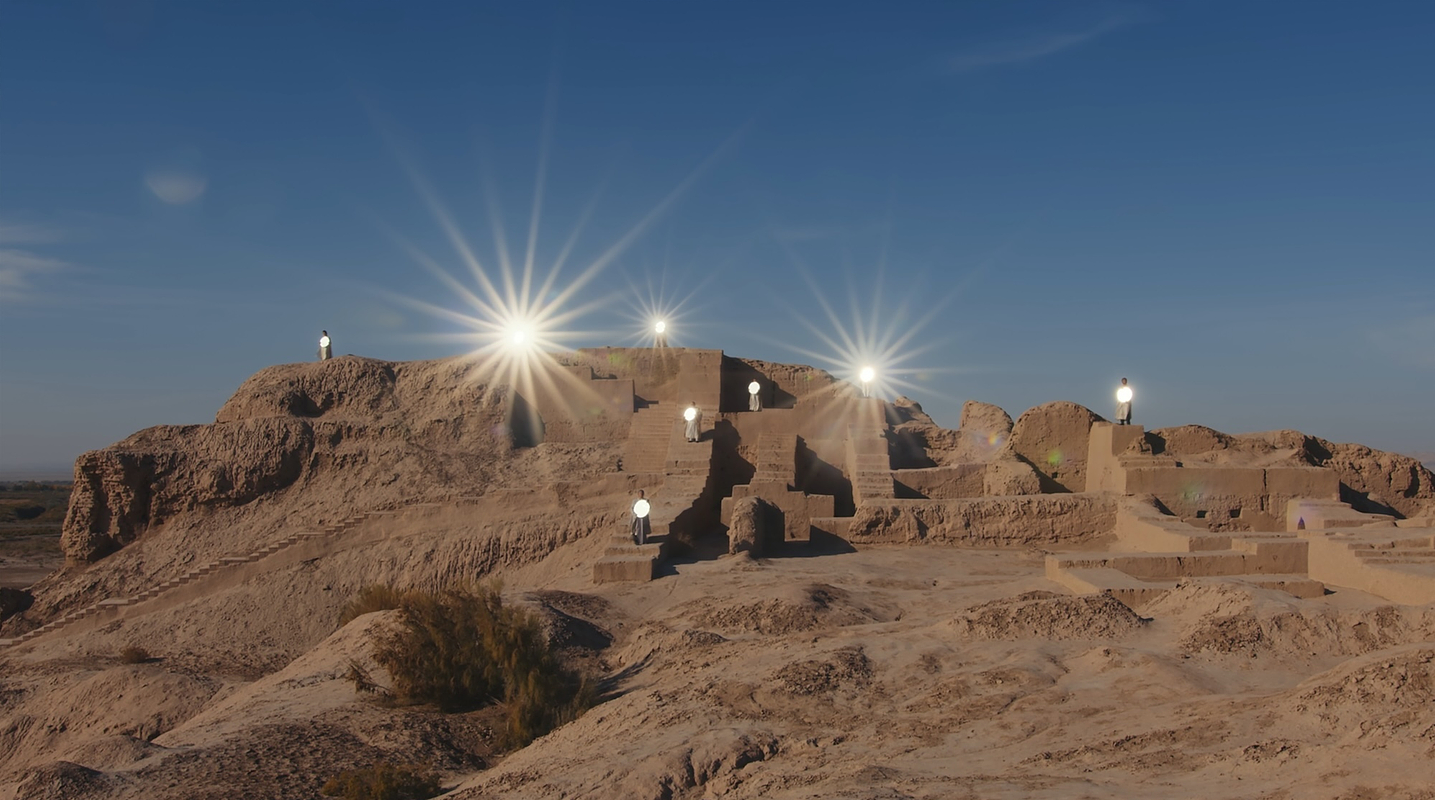
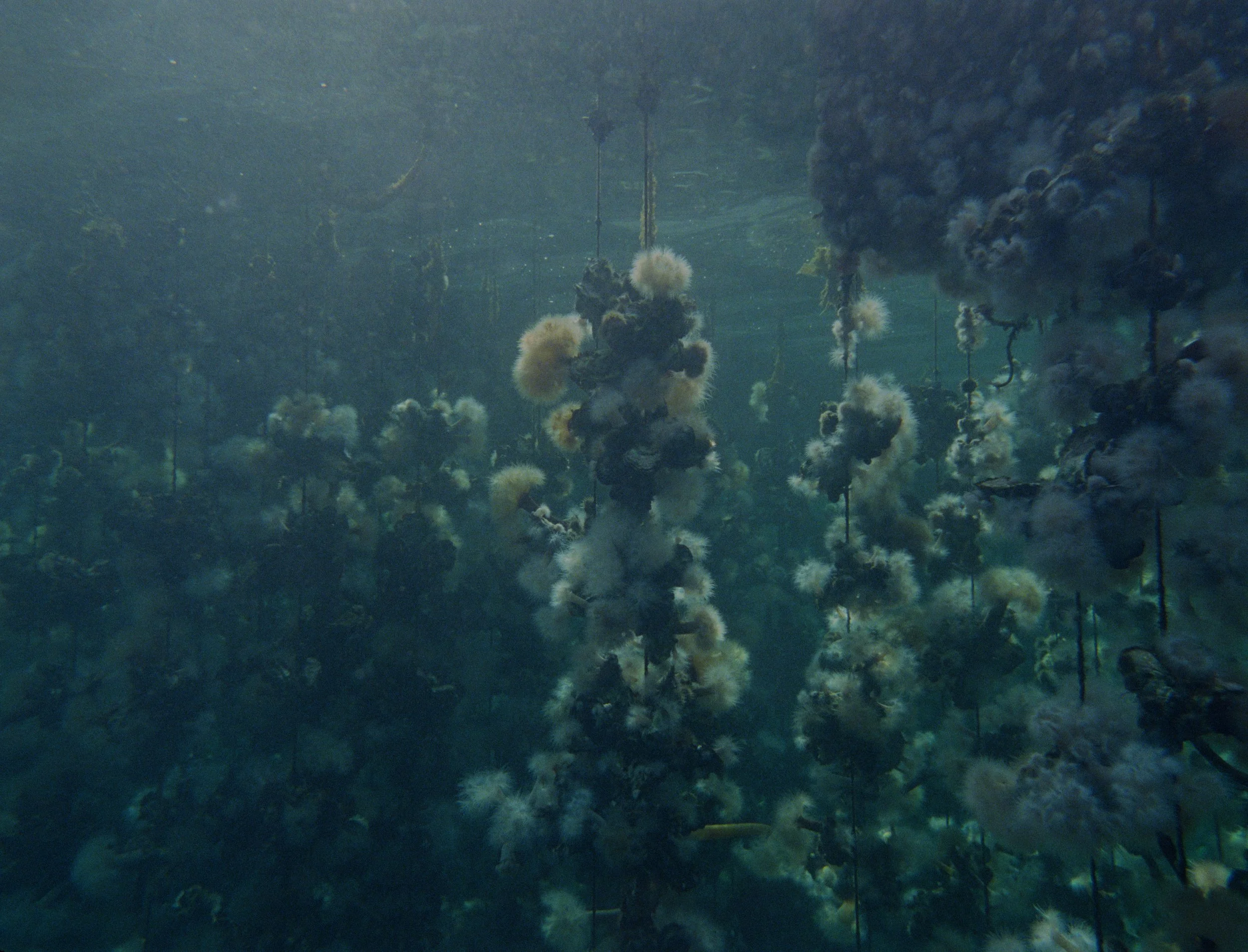
THERE ARE IMAGES in Concrete Turned to Sand that could have been captured by the Hubble Telescope. Are we looking at a vast, shimmering stretch of deep space overpopulated with stars? An incomprehensibly ancient galaxy spiralling out from its hot centre?
Neither, it turns out. What we see is the frigid black waters and intertidal oyster beds of Cortes Island, here on the West Coast, captured at night on vivid 35mm film and rendered into something cosmically disorienting and beautiful.
“We were always thinking about this as more than just an observational film about the current landscape of Cortes,” says co-director Ryan Ermacora, calling Stir from his home in Strathcona. “We were kinda thinking about it almost as a sci-fi film.”
The illusion isn’t just spatial. “We’re also trying to think about deep time,” he continues. “Are we looking at the intertidal zone from 100,000 years ago or 100,000 years in the future? When you’re in that zone, you can’t really know the timescale. We really wanted to lean into that.”
Joining her filmmaking partner on the call, Jessica Johnson recalls nights spent with headlamps trying to capture the departing tide from a lagoon carpeted into infinity with oysters. “I don’t think we intended to make it look like outer space,” she says with a laugh. “But it was so great. We were thinking about it as a concept, but it also just sort of happened.”
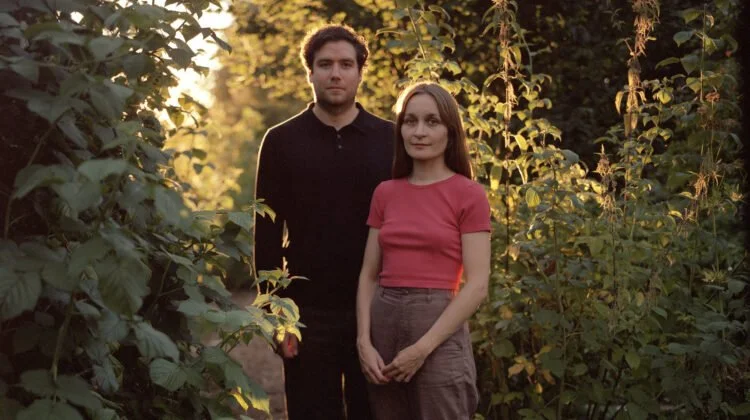
Just sort of happened might describe the larger filmmaking strategy of Ryan Ermacora and Jessica Johnson. Their “process-driven”, 11-year collaboration stretches back to film school at SFU and has already been the subject of a 2023 Cinematheque retrospective.
Ryan Ermacora and Jessica Johnson
As with all of their work, including 2022’s acclaimed Anyox, which took the duo to an abandoned mining town north of Prince Rupert, Concrete Turned to Sand strikes a contemplative, immersive tone as it observes the lives of a small handful of Northern Gulf Island oyster farmers—a community whose existence barely registers with mainlanders.
“We’re interested in how people make a living for themselves in relation to a landscape,” says Ermacora. “With Cortes, people ended up there for various reasons. But the situation that they’re in, in which oysters or animals that build shells are kind of dying off more frequently than they used to, this is new to this larger historical or economical circumstance, which is climate change, which is making the ocean more acidic, and it’s affecting these people’s lives.”
Notwithstanding the contribution of research scientist Wiley Evans, who talks about warming trends and events like the freak nearshore die-off of “a billion organisms” in June 2021, Concrete Turned to Sand doesn’t overstate the question of climate emergency. It’s an evocative experimental film about people, location, cycles of life, the micro and the macro in permanent dialogue and imperfect harmony—not to mention depthless mystery.
“Rather than thinking about how ecological systems should be preserved or cared for because they’re beautiful or because we love them,” says Ermacora, “it’s also maybe worth considering that we understand so little about this system, and that’s part of appreciating the strangeness, appreciating the weirdness, and the scariness of it, and reckoning with that.”
Indeed, Concrete Turned to Sand begins with a haunting if seemingly incongruous quote lifted from Ursula K. Le Guin’s novel The Dispossessed, which Ermacora happened to be reading during production, and which then insinuated itself into the film’s POV. It sets the tone for a film that operates in an associative realm. As Johnson puts it, once all the research and scouting is done—Concrete Turned to Sand was made over four separate trips to Cortes—serendipity takes over.
“It’s the moment where our interest in structure goes out the window,” she says. “It’s more about trying to pull in what that experience is, to have it unfold for the viewer.”
Given its remoteness, there’s an unexpected scale to the operation on Cortes, gradually revealed by the team’s camera (cinematographer Jeremy Cox is their third regular collaborator) and given a hefty experiential kick by the sound department (in this case Johnson, who gushes about the oyster basin’s “incredible reverb” and its transporting effect in the final product).
Microscopic images of scurrying sea life sit beside intimate and lingering images of this small community at work, principally Erik Lyon, who immediately grokked that the filmmakers were chasing “that ’70s NFB sort of deal”. If there’s an ambient sense that we’re observing a lifestyle at mortal risk, Concrete Turned to Sand remains an “art film” (Lyon’s term) wedded to a work of social ethnography in the manner of Lucien Castaing-Taylor’s 2009 doc Sweetgrass—which the duo name-check alongside the work of James Benning and Sharon Lockhart. It’s heartening to see this kind of work in a field that profits from a more direct kind of polemic.
“I think that there’s this kind of trend or requirement,” says Ermacora, “there are these market elements to festivals where people are trying to pitch documentary projects and the thing that people are always encouraging is a really strong story, and I think films that do not follow a single character and are more tentacular, like our film is—it’s a bunch of little pieces, it’s like we’ve collected a bunch of pieces, it doesn’t have one straight narrative through line—that’s a lot less marketable. And the stuff that is marketable ends up being very clear, didactic documentary work that has a clear storyline, because it sells. And I think when you end up making work that is for the market, you’re likely doing a disservice to an audience learning anything or developing a political consciousness around it, because it exists within this dominant form of ownership of a story.”
“It’s also where the money is right now,” Johnson adds, rather succinctly, with a chuckle. “It’s what people are interested in, it’s what people are buying. There’s something a little bit sus there, right?” 

Related Articles