Ahead of Vetta Chamber Music’s season finale, violist Hung-Wei Huang prepares to take the organization’s reins
Taiwanese-born artist reflects on learning the ropes from long-time artistic director Joan Blackman, and on performing as a soloist in upcoming concert Celebration
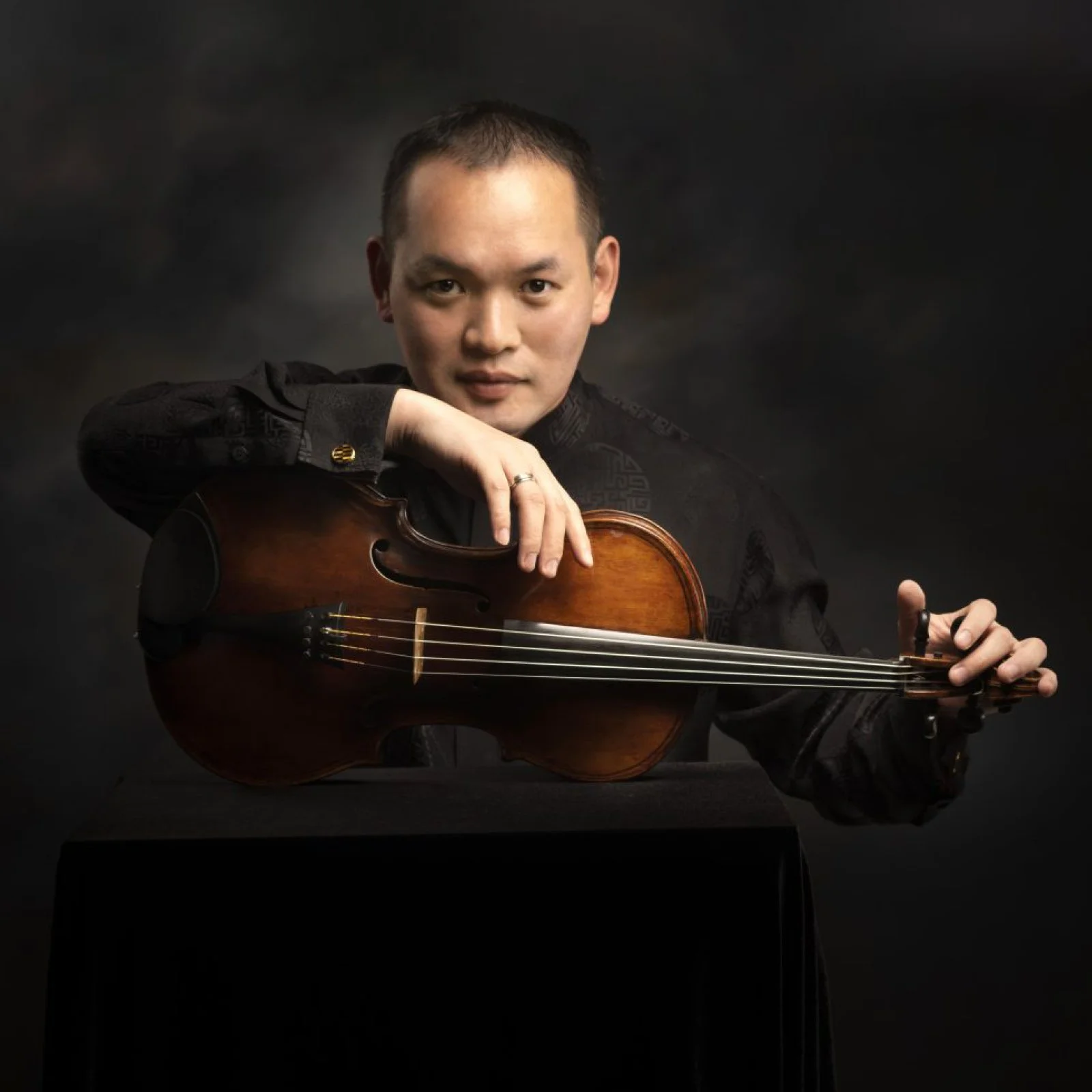
Hung-Wei Huang
Vetta Chamber Music presents Celebration at West Point Grey United Church on May 1 at 2 pm, West Vancouver United Church on May 2 at 7:30 pm, Pyatt Hall on May 3 at 2 pm, and ArtSpring on Salt Spring Island on May 4 at 2:30 pm
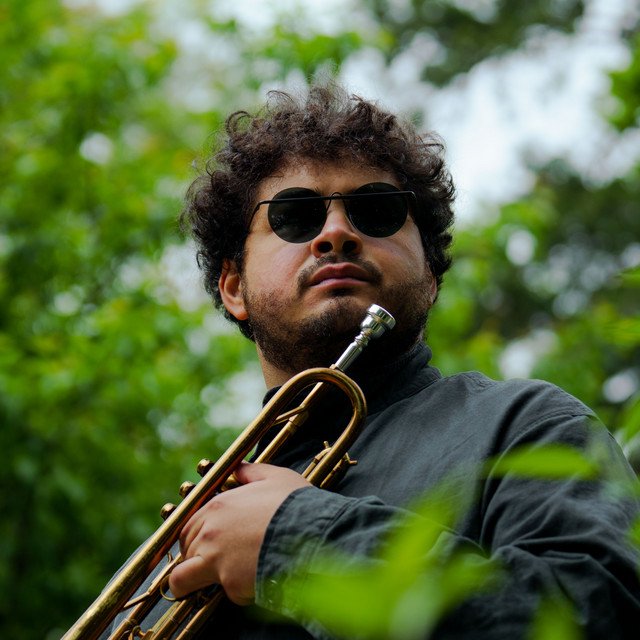
VIOLIST HUNG-WEI HUANG always thought he’d be a chamber musician. The idea of being part of a small formation of string players, performing at intimate venues around the world, held a special appeal for him. But the Taiwanese-born musician’s career took him somewhere grander when, in 2002, he was named principal viola of the Hong Kong Philharmonic Orchestra. He became the youngest artist to hold the title with the internationally renowned company, the foremost of its kind in Asia, which nowadays presents around 150 concerts annually.
From there, Huang found his footing in the world’s vast orchestral scene. He played for large crowds with two more highly respected organizations, the Seoul Philharmonic Orchestra and the New York Philharmonic, and has appeared as a guest principal violist throughout the U.K. He moved to Canada in 2021 to become principal viola of the Vancouver Symphony Orchestra, and has been here ever since.
But it came as a shock when Vetta Chamber Music’s long-time artistic director, Joan Blackman, emailed Huang to ask if he would be interested in taking over her position.
“When I saw that offer, what went through my mind was ‘I don’t know how to do this,’” Huang tells Stir by Zoom from Taipei, where he’s visiting his family. The in-demand artist has a packed concert schedule while he’s there, with three shows lined up over a five-day period. “I’ve never been an artistic director of any sort of festival. I don’t even think I was ever asked to program a concert. People have asked me, ‘What repertoire would you like to play?’ Or ‘What do you think would be nice to put in this concert? This is what we have. Do you have something that you can suggest to match?’ That’s the most I’ve been asked to do in the past.
“But to schedule five programs and then put them together? That I’ve never done,” Huang says with a smile. “So I was a little hesitant and a little scared to say yes. Of course, very soon I told myself I would be a complete fool to say no. So anyway, I told her, ‘Yes, it would be my honour to take this festival from you—but please, let me start shadowing you as soon as possible.’”
Huang has been doing just that since last September, and he’ll officially take the reins from Blackman on June 1. Before then, he’ll be performing as a viola soloist during Celebration, the final concert of Vetta’s 40th season, taking place May 1 to 4. As usual, the musicians will be hitting three Lower Mainland venues—West Point Grey United Church, West Vancouver United Church, and Pyatt Hall—as well as ArtSpring on Salt Spring Island.
The soon-to-be artistic director will be playing Canadian composer Marjan Mozetich’s Baroque Diversions for solo viola, a four-movement suite that combines Baroque influences with contemporary sounds.
“You can hear metal squeaking, extra air,” Huang shares. “Sometimes, on the strings I’m playing what we call a ponticello. It’s just a style that you play very close to the bridge, and then the sound becomes very—I wouldn’t say squeaky, but it sounds very icy. It’s almost too sharp to listen to. But since it’s so close to the bridge, the sound doesn’t project so clearly, so you only hear a hint of that pitch. But there’s a lot of high-pitched noise. And that’s usually followed by a very gentle, Baroque style of playing. And then, boom—something changes.”
Those icy notes, as Huang describes them, are contrasted wonderfully with the pleasant warmth of Bach influences. Sometimes, though, a sound emerges that’s altogether unique.
“When the music is not calling me to do certain styles specifically, I play just the way I want,” Huang says. “Usually, that means very romantic, and a very full, sweet, and warm sound quality, which I like to do. When that happens, I feel the instrument and the stage become so that everything is blending and shaking with resonance.”
Celebration, which was programmed by Blackman, will be rounded out with two more compositions: a Franck sonata and a Brahms piano quartet, featuring pianist Angela Cheng, cellist Zoltan Rozsnyai, and Blackman on violin.
Vetta’s 2026–27 season has been programmed entirely by Huang. Though the concerts have yet to be announced, audiences can expect Blackman to be featured in the first show of the season. Another concert features one of Huang’s long-time collaborators, VSO associate principal viola Jacob van der Sloot. And the final show of the season is set to combine visual art and music, with piano compositions inspired by famous paintings.
For Huang, part of becoming an artistic director has been learning to shift his focus to new appreciations.
“I’m a Christian,” Huang shares. “So, of course, the most beautiful place in my mind has to be heaven, right? For me, music has to be heaven. And playing concerts, making music, that’s on the way there. So, of course, heaven is beautiful—but the way to heaven sometimes can be just as beautiful.”
Blackman, who has led Vetta since 2007, recently moved to Vancouver Island, where she accepted a position as concertmaster of Nanaimo’s Vancouver Island Symphony. During her 19 years leading the chamber-music organization, she cultivated several opportunities for young and emerging musicians to play onstage, namely through an all-women mentorship ensemble. It’s initiatives like that which Huang hopes to keep fostering as he steps into the leadership role.
“This experience is incredibly, incredibly valuable for me at the moment,” Huang concludes of his months shadowing Blackman. “I’m just very thankful and grateful to have someone like her to learn from.” 

Related Articles