At the Eastside Arts Festival, 360 Riot Walk creates a new path through the site of a historic injustice
Multimedia artist Henry Tsang’s project allows Vancouverites to see how the city looked in 1907, when an act of anti-Asian violence occurred
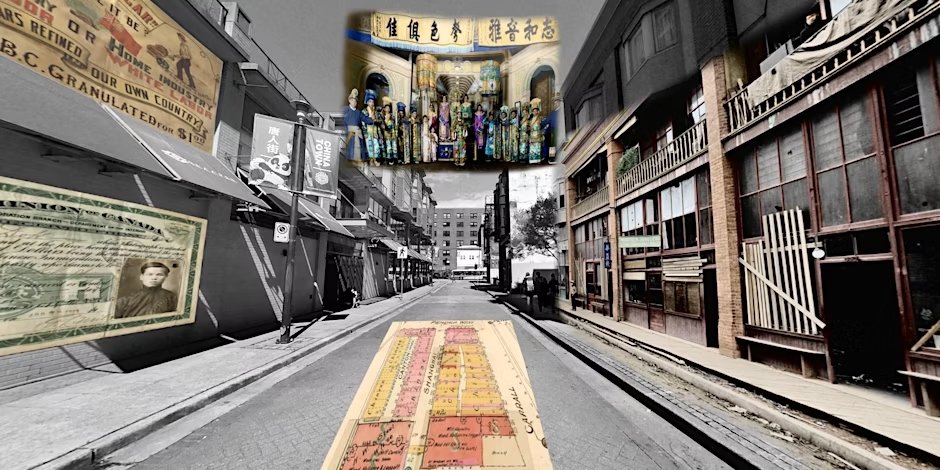
360 Riot Walk.
The Eastside Arts Festival presents 360 Riot Walk in partnership with the Powell Street Festival Society on July 19 and 20 at 11 am, starting at the Vancouver Japanese Language School and Japanese Hall
NOT EVERYONE WHO PASSES through the Downtown Eastside is aware that over a century ago, it was the site of a widespread anti-Asian riot.
In 1907, the Asiatic Exclusion League—a group that included Vancouver mayor Alexander Bethune and several city council members—organized a rally to promote racist values. On September 7, a parade made its way to the old Vancouver City Hall (a market building that once stood on Main Street next to where Carnegie Community Centre now sits), with marching bands playing “Rule Britannia” and participants holding banners that read “Stand for a White Canada”. When the parade reached its destination, the crowd of approximately nine thousand people that had gathered quickly grew violent.
The angry mob rampaged through Chinatown, all the way to the Japanese neighbourhood at Powell Street, smashing store windows and destroying homes. White nationalists engaged in hand-to-hand combat with the Chinese and Japanese people defending their property. Thousands of dollars of damage was caused over the course of two days.
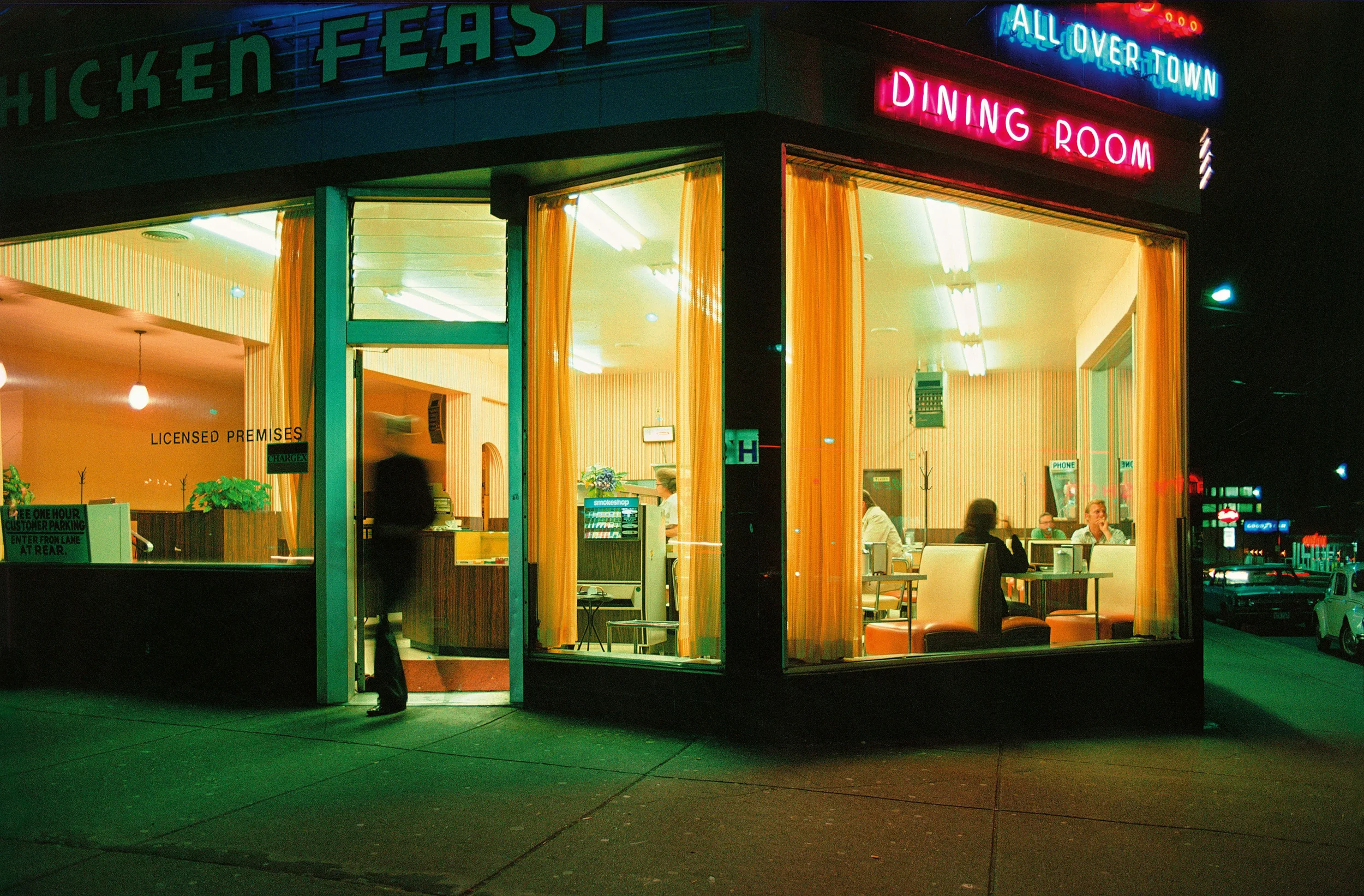
Henry Tsang, an East Vancouver visual and media artist, is offering a new perspective on what happened in 1907 with his 360 Riot Walk project, an interactive walking tour through the site of the riot that uses digital technology to show what the area looked like when it occurred. Participants use phones or tablets to follow a planned route, stopping at 13 points along the way to observe superimposed historic images and listen to a recorded soundtrack.
A tour guide will lead participants through the walk on July 19 and 20 as part of this year’s Eastside Arts Festival.
“You’re actually going to be at the very same location where this stuff happened in 1907, with images of the past superimposed over the images of the city around you right now,” Tsang tells Stir by phone before the festival. “Hopefully, you’ll make more of a direct connection to what happened, and hopefully you’ll reflect on how things have changed—and in some ways, how eerily, uncannily, and really, really alarmingly, there are still people who would like to inflict that kind of violence against some people. Whether it’s Chinese people again, or maybe it’s Muslims, or maybe it’s people who have a different way of being alive in the world which they find threatening—scapegoating those people, trying to take away rights that they have.
“I’m hoping it’ll bring up some of those questions about what’s just,” he continues. “What’s appropriate? What kind of society do we want to work towards? What kind of negative values do we want to resist and really just push into the past so we can move beyond and be a more inclusive society—a fairer society?”
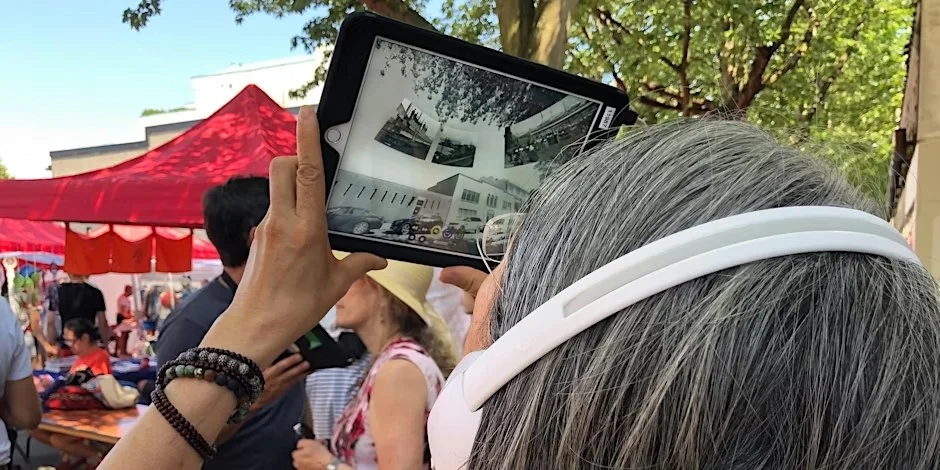
360 Riot Walk participant. Photo by Henry Tsang
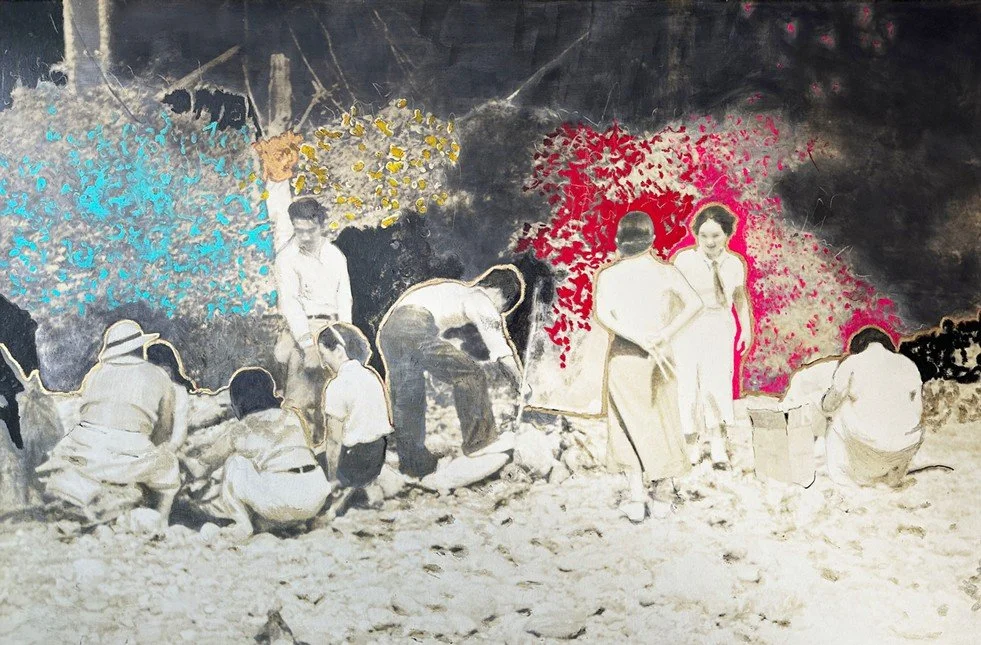
Tsang covers history, language, and community in his artistic practice. His series Hastings Park uses infrared photography and projection to depict the four Vancouver buildings that once served as relocation and processing centres for more than eight thousand Japanese Canadians before they were sent to labour and internment camps during the Second World War. For his public-art piece Welcome to the Land of Light, meanwhile, aluminum letters and fibre-optic cable lighting were installed across a hundred metres of the handrail along the False Creek seawall to explain how English replaced the 19th-century trade language Chinook Jargon.
The 360 Walking Tour came about in 2019. It was inspired by a pop-up piece Tsang created the year before called RIOT FOOD HERE, which involved author Michael Barnholden leading a walking tour along the path of the 1907 riot. Chef Kris Barnholden prepared dishes from five cuisines present in Vancouver during that time—European, Chinese, Japanese, Indigenous, and Punjabi—and participants tasted the food along the way, as a means of connecting to the moment in history on a more personal level.
Tsang recalls that as he watched Barnholden leading a tour one day, he thought, “Wouldn’t it be great if this was self-guided?” Digitizing the tour would allow it to be completed much more frequently than a physically guided walk—and Tsang had been wanting to experiment with 360 technology for quite some time at that point. Thus, 360 Riot Walk was born. His subsequent 2023 book White Riot: The 1907 Anti-Asian Riots in Vancouver details the historical context of the riots with images from the walking tour and insightful essays.
But Vancouver’s streetscape has changed plenty over the last century. Matching archival imagery with the current buildings to create the tour proved to be challenging at times for Tsang.
“In some cases it’s pretty obvious, because some of the buildings are still there,” he says. “And then there’s entire blocks where nothing exists anymore, especially around the 100 to 300 block of Powell Street.”
Though no survivors of the riots are still alive, Tsang’s research led him to track down and speak to two individuals whose fathers lived through them. As it turns out, one of the men was so nervous about the anti-Asian activism swirling around the city at the time that he left Vancouver just before the riots occurred, anxious that they were imminent.
That undercurrent of fear is represented in 360 Riot Walk. Anti-Asian posters from the 19th and early-20th centuries are placed in the digital streetscape as if they’re billboards, which Tsang says was done to “daylight the kind of sentiments that were prevalent at that time.” Many include racist phrases and depictions of violence.
A local ambassador with connections to the Downtown Eastside will accompany the 360 Riot Walk group at the Eastside Arts Festival, to ensure mindfulness of the neighbourhood and the people who live there. Afterwards, the tour participants will meet up with Tsang for a facilitated discussion about the experience. The artist has noticed various reactions from the people who’ve witnessed the project; folks perceive it differently based on their own lived experiences and connection to the events. But at the end of the day, it’s of equal importance for all Vancouverites to learn about what happened here in 1907.
“I’m not a descendant from anybody who lived in Vancouver in that time, but definitely I’ve experienced racism growing up here,” Tsang says. “And it’s not like it’s gone away, especially given the evidence of what happened with COVID and the rise of anti-Asian and anti-Chinese sentiment. So there are definitely emotions involved….It’s a matter of how aware one is—and whether or not one identifies with power imbalances or identifies with injustice.” 

Related Articles