Marika Swan ƛ̓upinup meditates on balance and transformation in A Circle Strong Enough to Carry Both Sides
The artist’s solo exhibition of prints at the Burnaby Art Gallery looks back on years immersed in the creative and philosophical view of interdependence in Nuu-chah-nulth culture
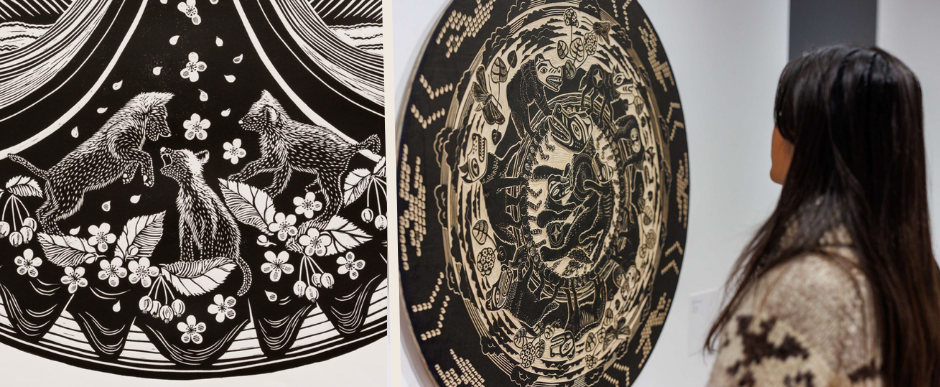
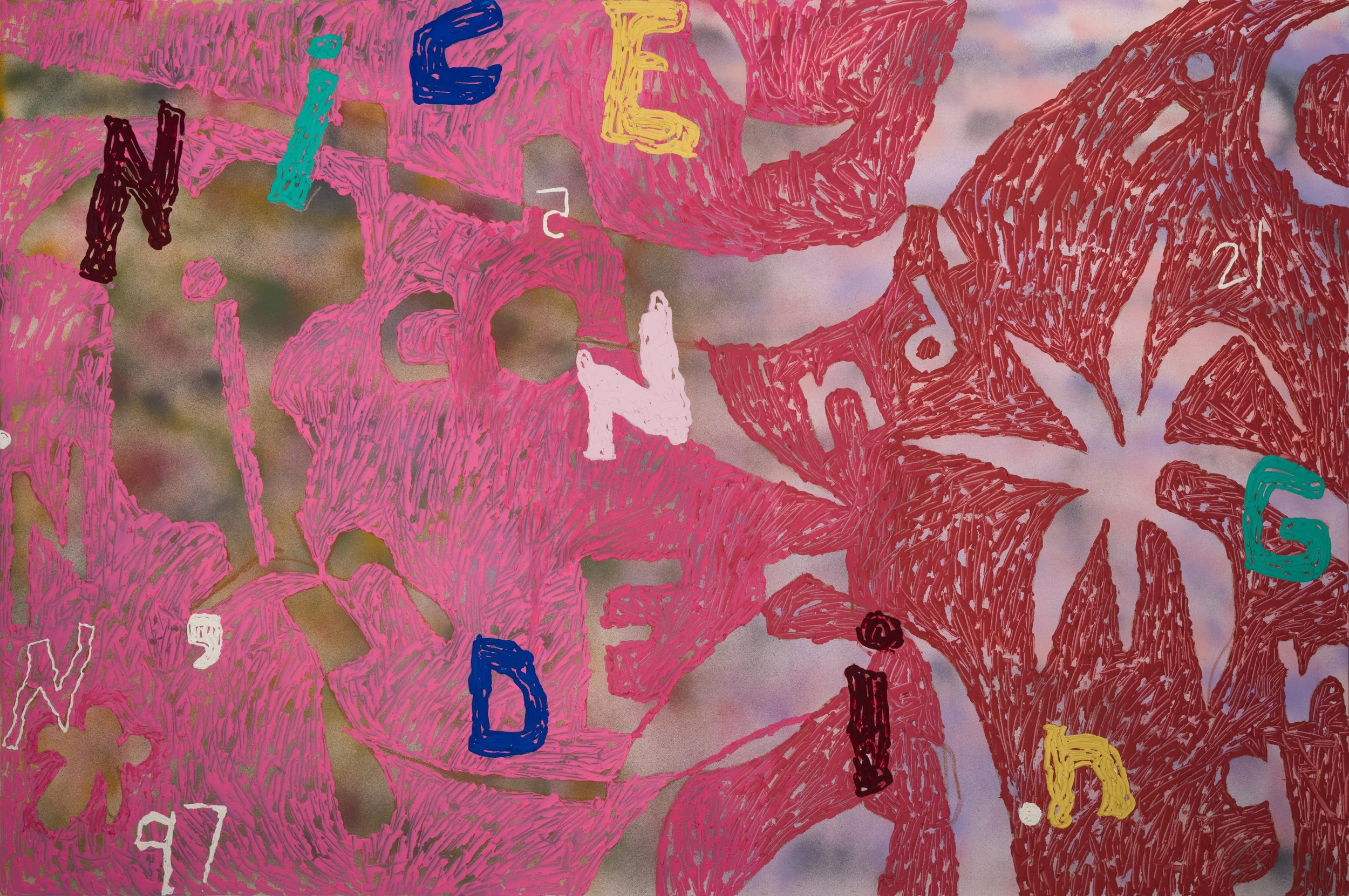
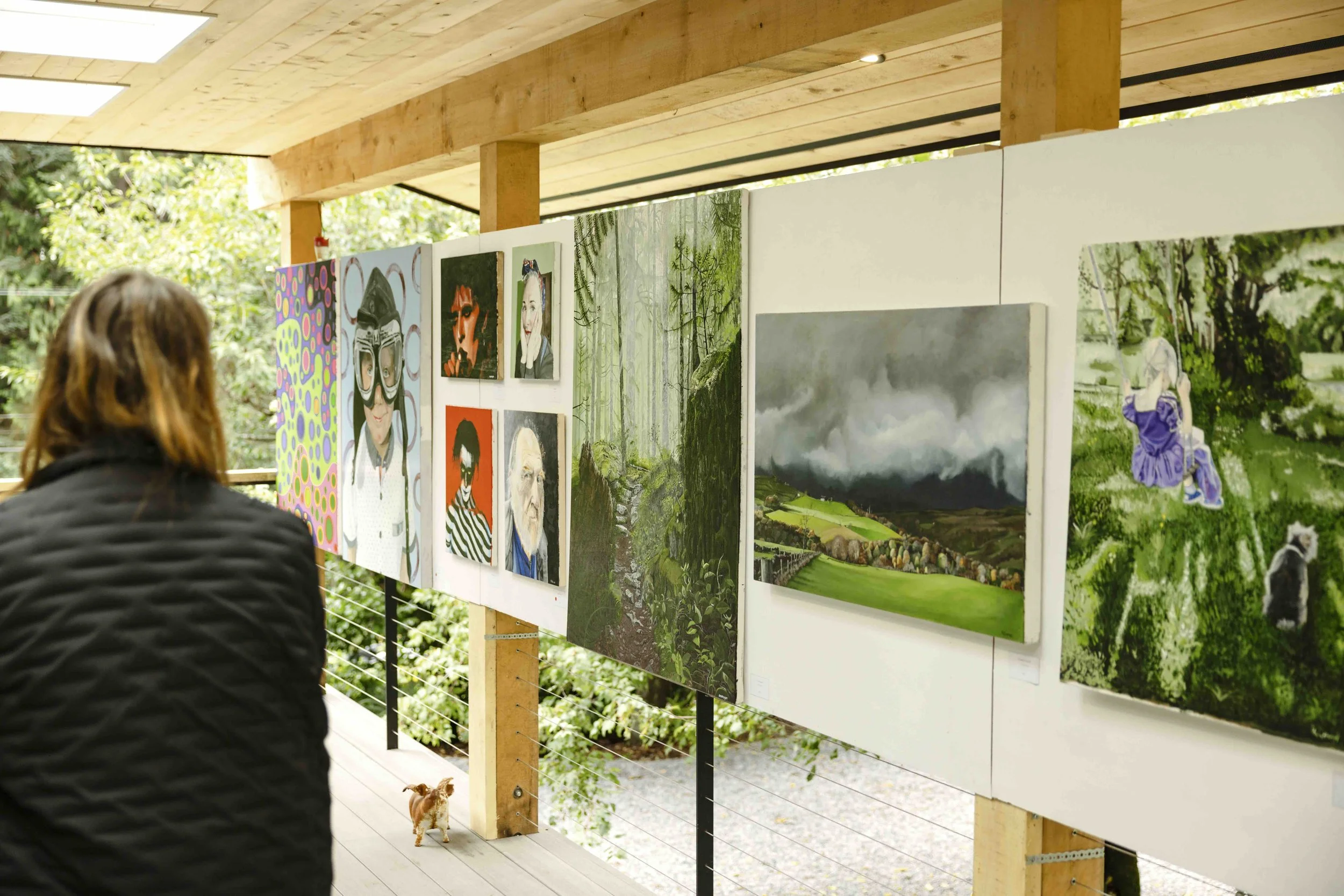
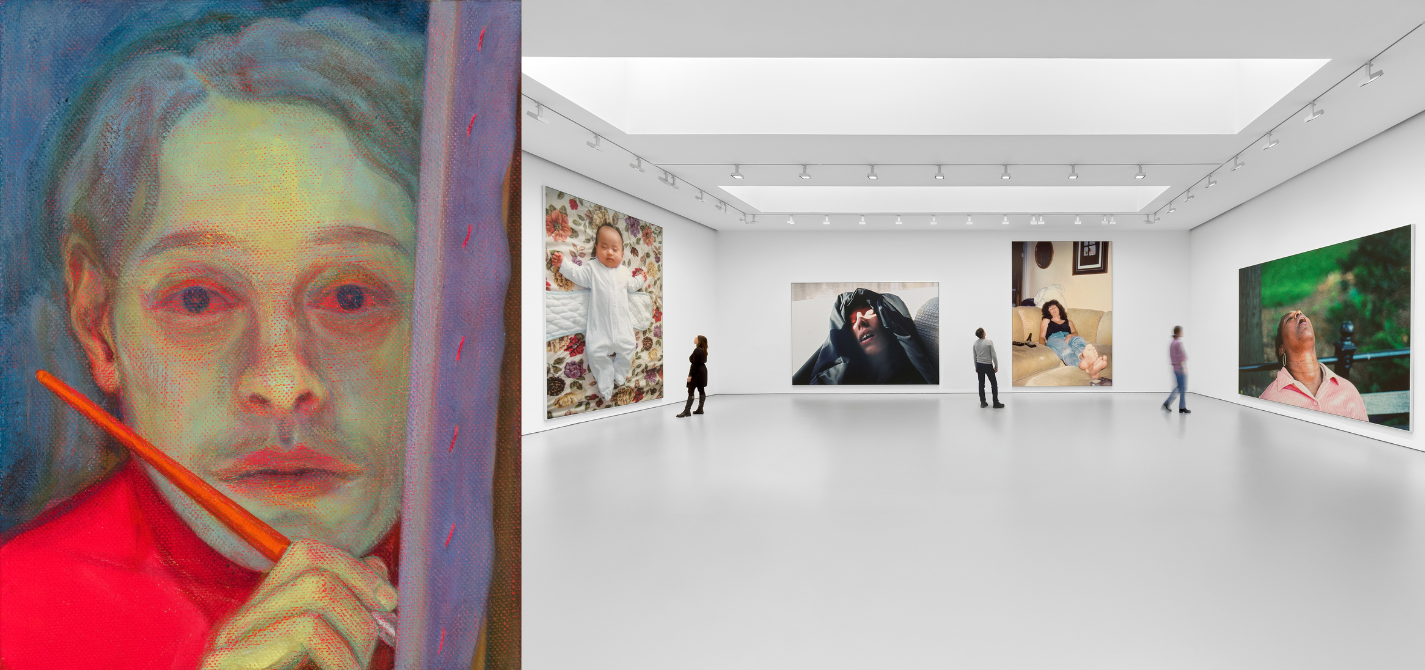
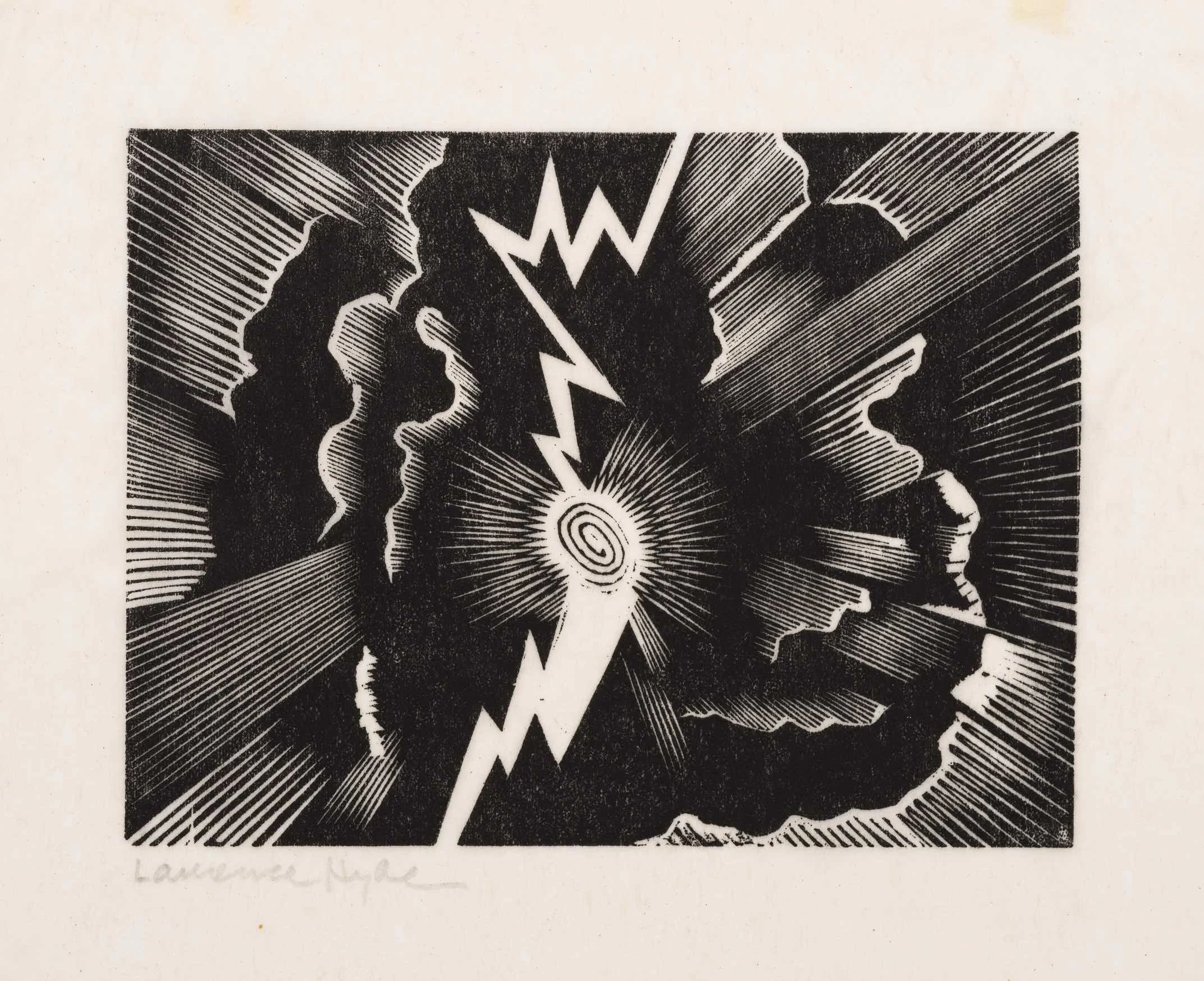
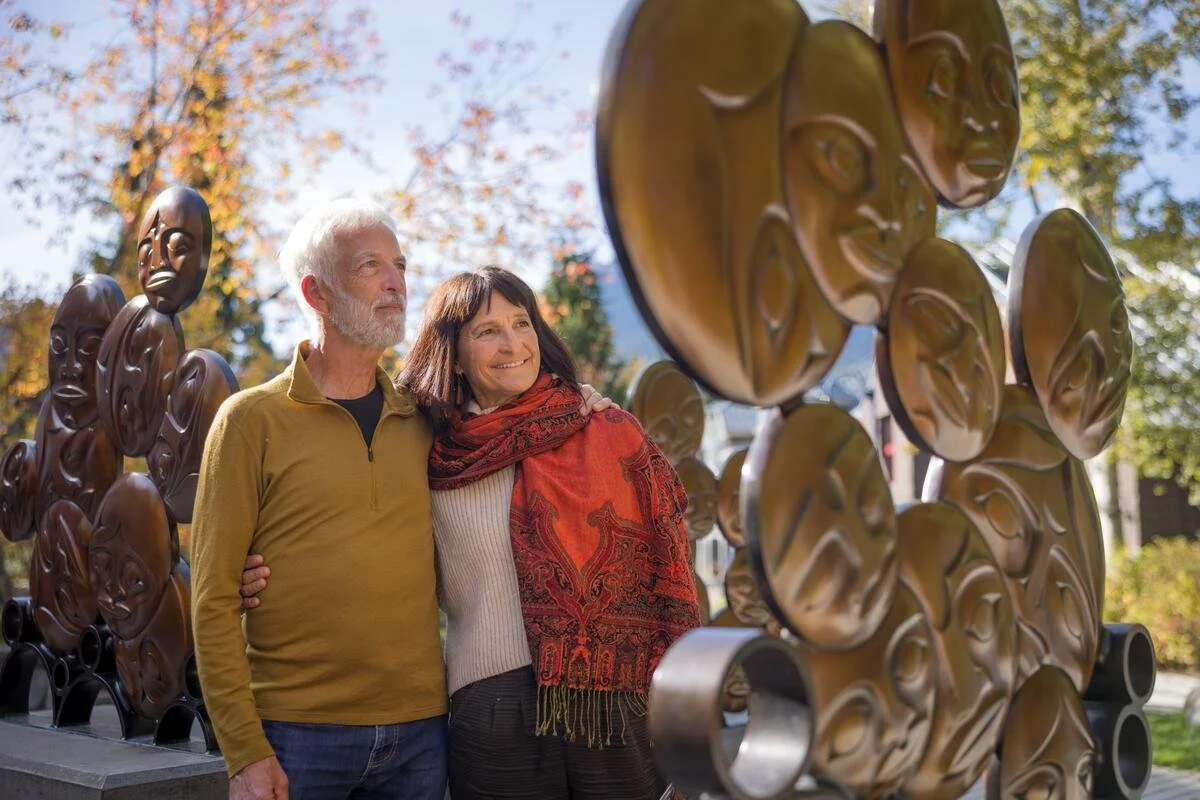
Left, Marika Swan, Surrender (detail), 2025, woodblock on paper, photo by Blaine Campbell; right, opening of A Circle Strong Enough to Carry Both Sides, photo by Sarah Race
The Burnaby Art Gallery presents A Circle Strong Enough to Carry Both Sides to January 25, 2026
AT THE BURNABY ART GALLERY, A Circle Strong Enough to Carry Both Sides marks the first solo exhibition by Tla-o-qui-aht artist Marika Swan ƛ̓upinup. Through a series of woodblock prints, Swan’s striking style and visual imagery draw the viewer into a dreamscape that explores the rich lineage of Nuu-chah-nulth storytelling and philosophy, as well as the artists’ personal meditations.
Raised in a family of carvers, Swan grew up surrounded by Nuu-chah-nulth culture and artistic practice. Through mentorship, self-study, and experimentation, Swan has developed a distinct approach to Nuu-chah-nulth aesthetics and cultural practice that is completely her own, developing a voice that explores the coalescence of ancient wisdom and the modern world. Using woodblock printing as her primary medium, Swan’s large, intricate imagery features clean lines and stark contrasts, while retaining a soft, organic quality, layered with her use of acrylic paint and pencil crayon.
“In my 20s, I took a printmaking workshop with Tania Willard, and we explored a few different printing techniques, including woodblock relief,” Swan says, referring to the Sobey Art Award–winning B.C. artist. “At the time, I was working in print media and I was really drawn to the hands-on process of printmaking. I started exploring linocut printing but eventually was drawn back to working primarily with wood. Having grown up around carvers, I like the connection you are able to build with the material you are working with.”
Swan draws on her 15 years of studying Nuu-chah-nulth cultural belongings. Through her work with the Carving on the Edge Festival, she developed a community-led research project called the Nuu-chah-nulth Living Archive, locating and documenting ancestral belongings now held in museums and institutions around the world.
“The Nuu-chah-nulth land base is actually quite large, spanning the west coast of Vancouver Island and into the Olympic Peninsula, so there is a lot of diversity and nuance to our weaving, painting, and carving traditions,” she says. “On a very basic level, I am referencing shapes and design elements common in my ancestral lineage, but more importantly, I am drawing from teachings of natural law and our deep philosophical understandings of the universe. Our cultural lifeways are deeply rooted in the natural and supernatural realms, so our art forms are reflections of that intelligence.”
Swan’s introspective journey of study and creation has culminated in A Circle Strong Enough to Carry Both Sides, an investigation of the dual nature of reality and the interdependent relationship between all things—foundational concepts in the Nuu-chah-nulth spiritual worldview. Amid imagery that speaks to the human and the sacred, she carves arcing ocean waves, open skies, wolves, and birds in flight.
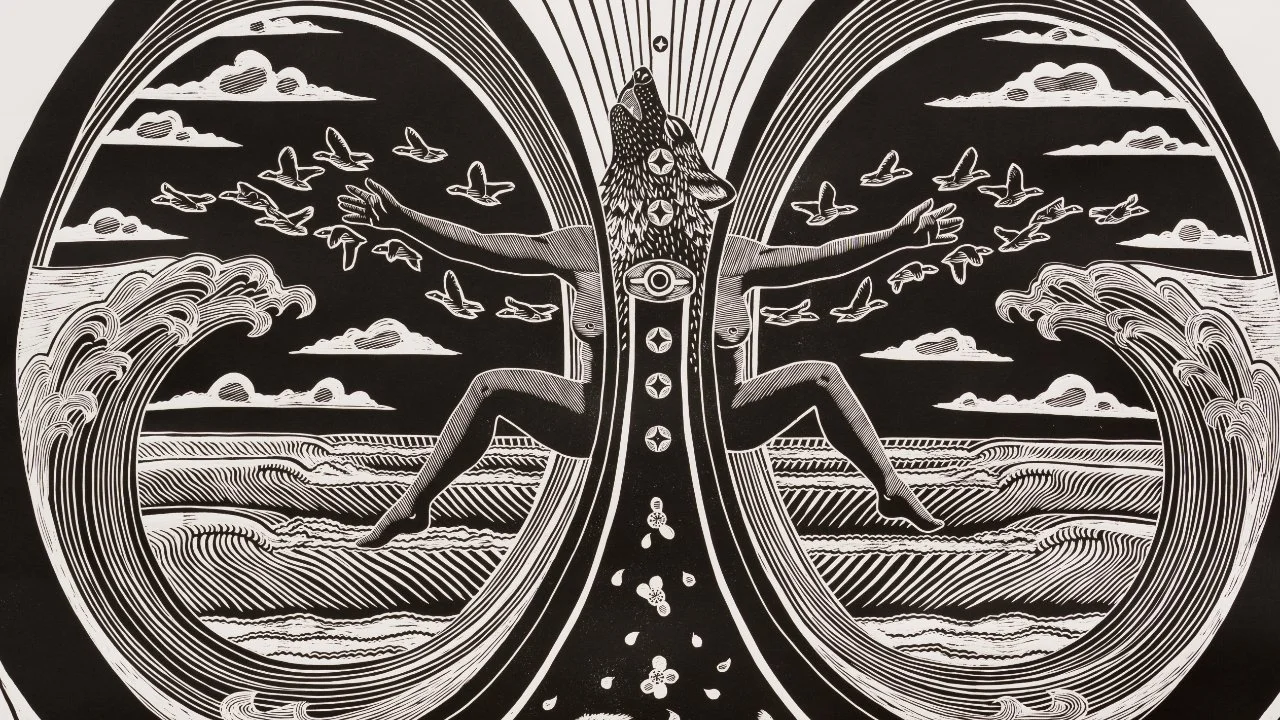
Marika Swan, Surrender (detail), 2025, woodblock on paper. Photo by Blaine Campbell
“A Circle Strong Enough to Carry Both Sides is a contemplation on a series of teachings that have come to me from a variety of directions, including aspects of our Nuu-chah-nulth worldview,” Swan explains. “Often, when I am creating work, it is a form of meditation and time spent considering greater truths in my life. This teaching—that all good things also carry struggle and challenge, and vice versa—is an interesting principle to consider.
“Having an expectation that no matter the choices we make in life, we will inevitably go through great periods of grief, loss, and transformation, is a powerful confrontation to the shallow storyline that the mainstream media pushes out about the fantasy of modern life,” she adds. “What if we instead embraced our shame and pain as teachers? A Circle Strong Enough to Carry Both Sides is building the capacity to hold both sides as a tool for understanding reality as it is, rather than flip-flopping between our fear or fantasy of it.”
A related principle that deeply interests Swan is the law of reciprocity, an understanding that the energy connecting us to the world is always in a state of give-and-take. “We each have gifts that we have to share, and by cultivating these offerings, we are able to create space to also receive,” she says. “We need to understand both sides of this exchange to be in right relationship with others. This allows for the transformative quality of energy to flow through us.”
The extensive collection in A Circle Strong Enough to Carry Both Sides documents Swan’s artistic evolution. By sharing her works, she intends to share the fruits of her practice and personal quest with others, delivering a powerful collective message. The artist points out that the exhibition covers about 20 years of her work, spanning many transformative times in her life, with more recent imagery taking on an urgent political message.
“The focus of my new work explores core principles intended to support us in navigating the extremely challenging future we are facing,” she explains. “We are being shaken out of the numbing inertia of capitalism, and being forced to consider great shifts in our way of being. This includes moving away from thinking of ourselves as isolated islands that need to hoard resources, and instead remembering our ways of living in connection.
Transformation is a central part of the Nuu-chah-nulth cosmology and worldview, Swan notes—beings are constantly changed by adversity and challenge. “This is a central storyline in our stories,” the artist says. “Being able to sit with and contemplate these principles has been a great gift to me this year, and I’m looking forward to hearing how people respond to the exhibition and the themes I’m exploring.” 

Related Articles