Edge Effects bridges realms at SFU Burnaby's new Marianne and Edward Gibson Art Museum
Recently opened gallery’s first exhibition features works by 15 artists, including Germaine Koh, Liz Magor, Cindy Mochizuki, and Jin-me Yoon
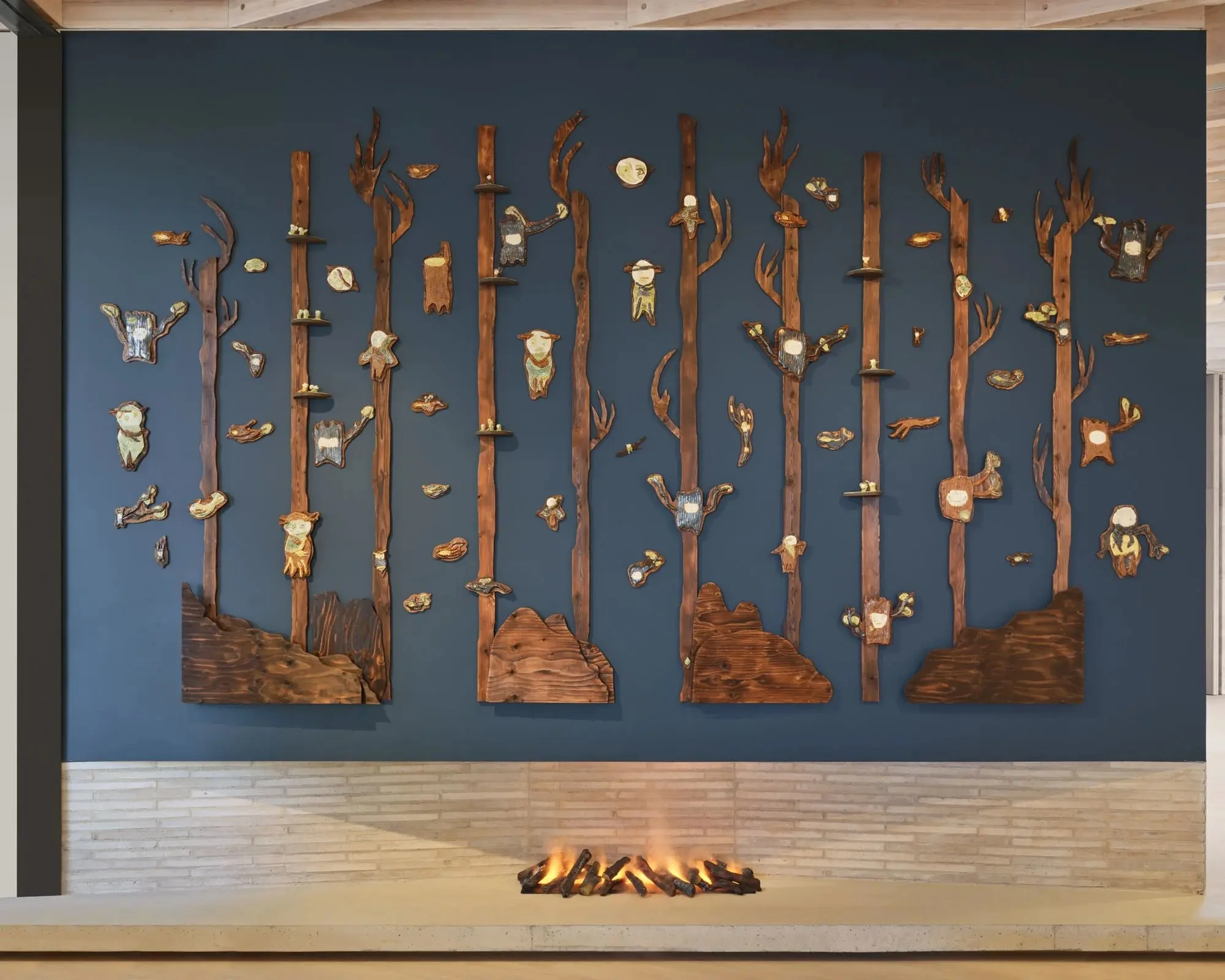
Cindy Mochizuki’s Arboreal Time in Edge Effects at the Gibson. Photo by Rachel Topham
The Marianne and Edward Gibson Art Museum presents Edge Effects until February 15, with a special presentation of Germaine Koh’s Soupson on December 4 and Open Studio Saturdays on December 6
IN ECOLOGY, THE TERM “edge effect” refers to the change in biodiversity that happens in the area where two different ecosystems meet. An example is the space where a dense forest and open plain border each other; you might find such plant species as the Douglas fir, which requires plenty of sunlight to grow, or animals like elk, which need both grass to graze on and trees for shelter.
The new Marianne and Edward Gibson Art Museum, situated atop Burnaby Mountain on the Simon Fraser University campus, was designed with those edge effects in mind. The museum bridges an academic institution with the surrounding forest, giving students a place to gather that feels both artistically inspiring and connected to nature.
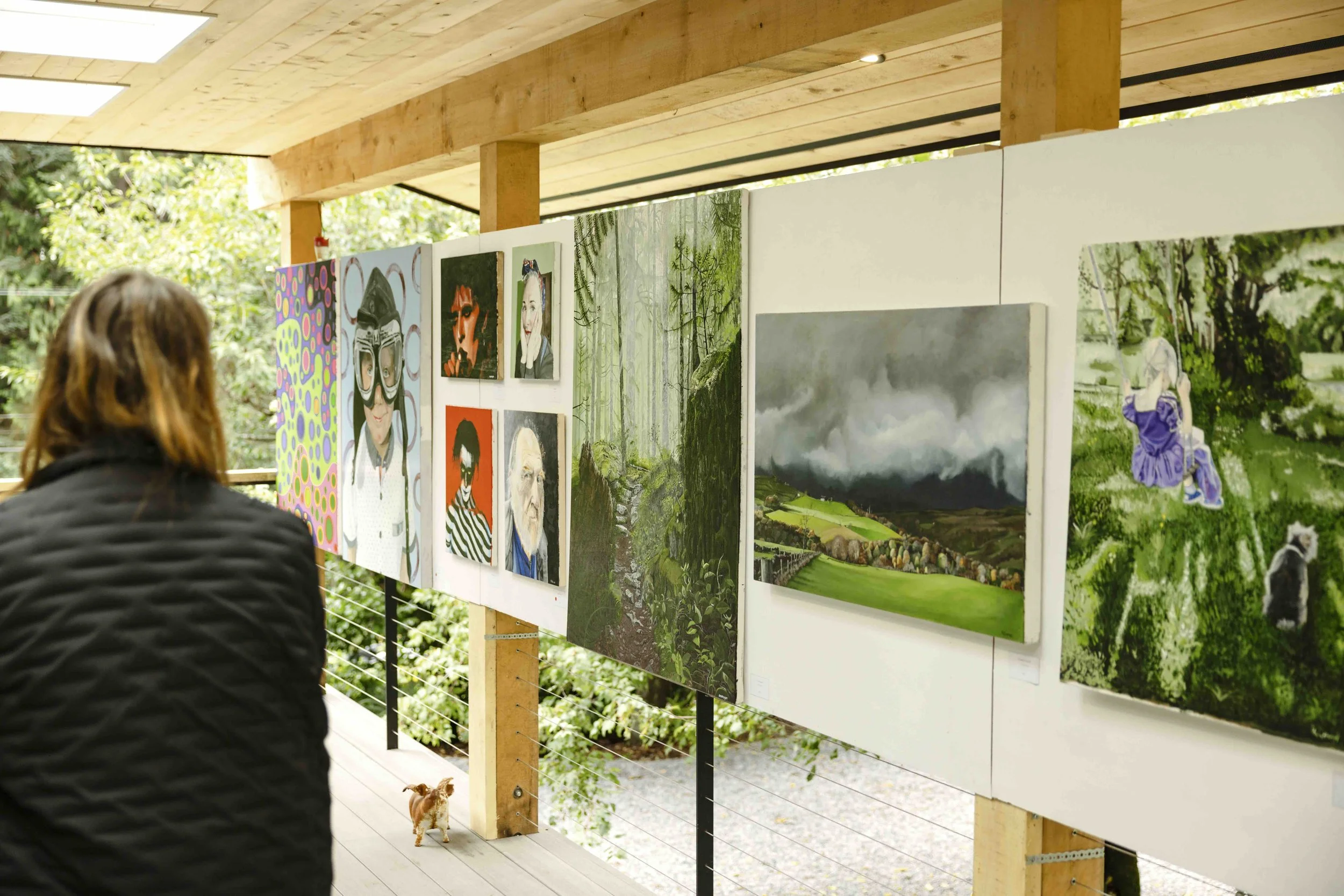
So it’s only fitting that the Gibson’s inaugural exhibition is called Edge Effects. Fifteen artists—Lorna Brown, Justine A. Chambers, Patrick Cruz, Lucien Durey, Sameer Farooq, Jared Stanley, Elisa Ferrari, Germaine Koh, Helena Krobath, Liz Magor, Cindy Mochizuki, Pietro Sammarco, Debra Sparrow, Liz Toohey-Wiese, and Jin-me Yoon—have interpreted the concept within each of their unique practices.
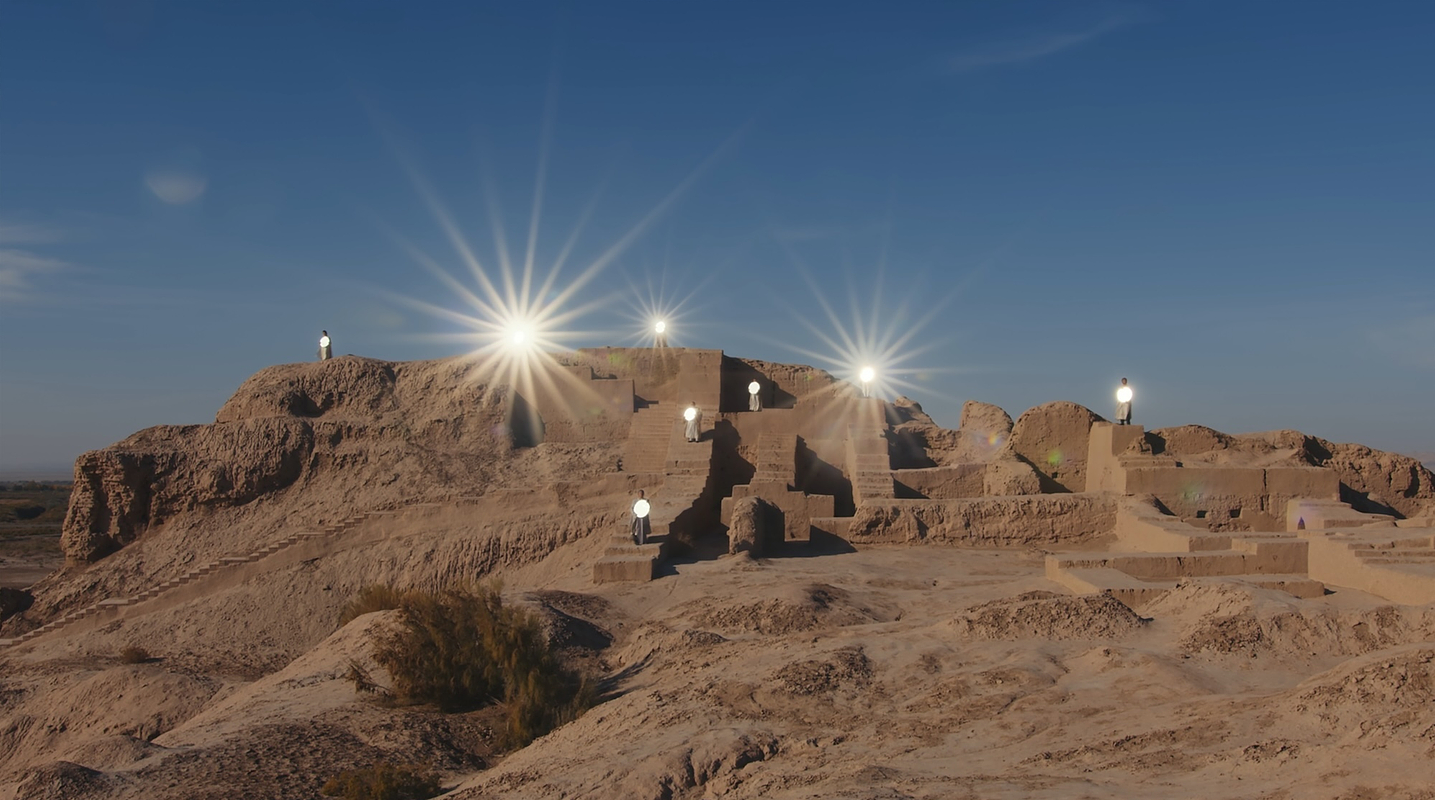
Magor’s Blue Students/Alumnos en azul, for instance, is made up of several cyanotype-photo portraits of students from along the San Diego-Tijuana border, prompting reflections around how place affects a person’s circumstances. Elsewhere, a three-channel video installation by Yoon shows an old military-training bunker near the demilitarized zone between North and South Korea; two drummers begin to play at the site, which is overgrown with tropical plant life, as a thermal camera captures their heat signatures.
“Artists themselves produce these edge conditions, right?” the Gibson’s director Kimberly Phillips tells Stir. “They open up spaces that haven’t existed before—that wouldn’t exist unless they created them. And I think most of the artists that I’m interested in have inquiry-driven practices. They ask questions about the world, and they often use different methodologies in order to pursue those questions, so they draw the world into their work. So it felt like an appropriate way to open the Gibson was to ponder the kinds of possibilities that can be created when you attend to the edges of things.”
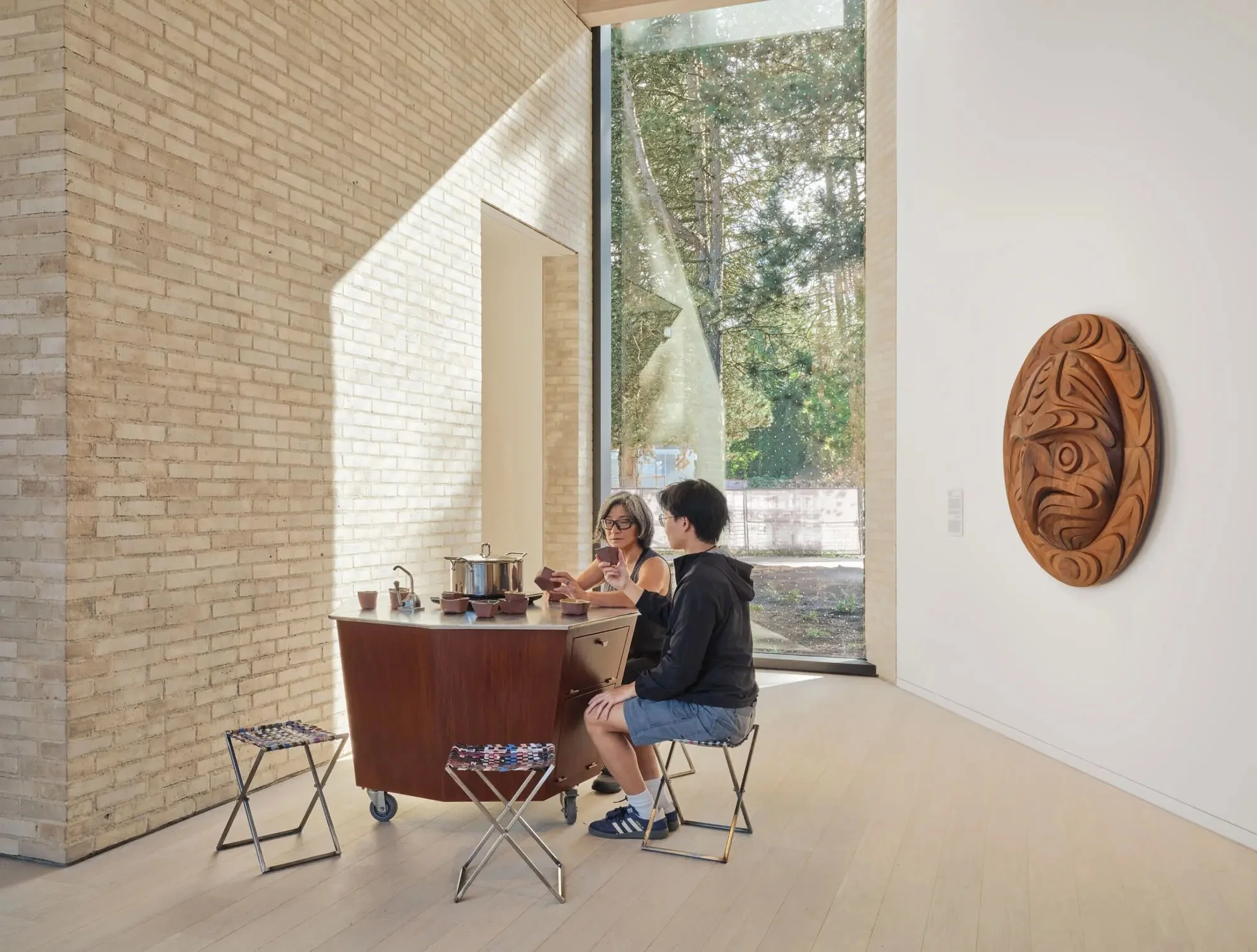
Germaine Koh’s Soupson in Edge Effects at the Gibson. Photo by Rachel Topham
Admission to the Gibson is free, and as Stir covered at the art museum’s opening, it has been designed to be as welcoming as possible for students. For instance, in the Arya and Hamis Eshghi Forum—the first space you see upon entering—a long, sturdy wooden table spans the entirety of the room, with 28 matching chairs lining either side of it. People are welcome to sit at the table to study, chat, or eat. (Magor’s Blue Students hangs above the table, an interesting setup that allows present-day students to gaze up at their counterparts from the past.)
Phillips notes that in discussing how to foster more community connection at the Gibson, a café was proposed, but there simply wasn’t room in the budget to build one onsite. Malaysian-born conceptual artist Koh came up with a way to rectify that in Edge Effects: on the first Thursday of every month at noon, Koh’s Soupson activates. Essentially a mobile food cart, the irregularly shaped, seven-sided metal kiosk holds a hot plate, sink, pot, and a collection of stoneware bowls. During the special monthly event, Koh serves homemade soup out of the bowls until the pot is empty, and folks can sit on upcycled stools while they enjoy the hot meal together. The next edition of Soupson’s activation is December 4 at 12 pm.
“Normally in art museums, you don’t really encourage food around artwork,” Phillips says. “But in this case, the food is the artwork. And it asks us to ask really important questions: How far are we willing to go to have people feel welcome? What does it mean to offer food for people? Somebody may need the food—somebody who’s coming in may have food-security issues, and things like that, right? So I think in terms of edges, those are institutional edges that are being pushed a little bit.”
Over in the museum’s North Gallery, Durey’s works also revolve around food. His archival inkjet print Layla Cake with Watermelon Radishes, Nasturtiums and Yellow Beets shows a savoury sandwich cake layered with toppings, from cucumber strips to bright-orange flower blossoms. Next to the image, there’s a dish-drying rack lined with massive ceramic plates. The series is a callback to an SFU classmate of Durey’s that would make similar sandwich cakes for events as a means of bridging academia and casual gatherings. Durey is an artist who straddles edges in terms of mediums, Phillips says, as he works across photography, sculpture, installation, and song.
All throughout the Gibson, there are spots for visitors to stop for a rest. Some chairs are semi-permanent—for instance, a semicircle of grey sofas have been placed in front of a hearth, with Mochizuki’s Arboreal Time installation on the wall above it.
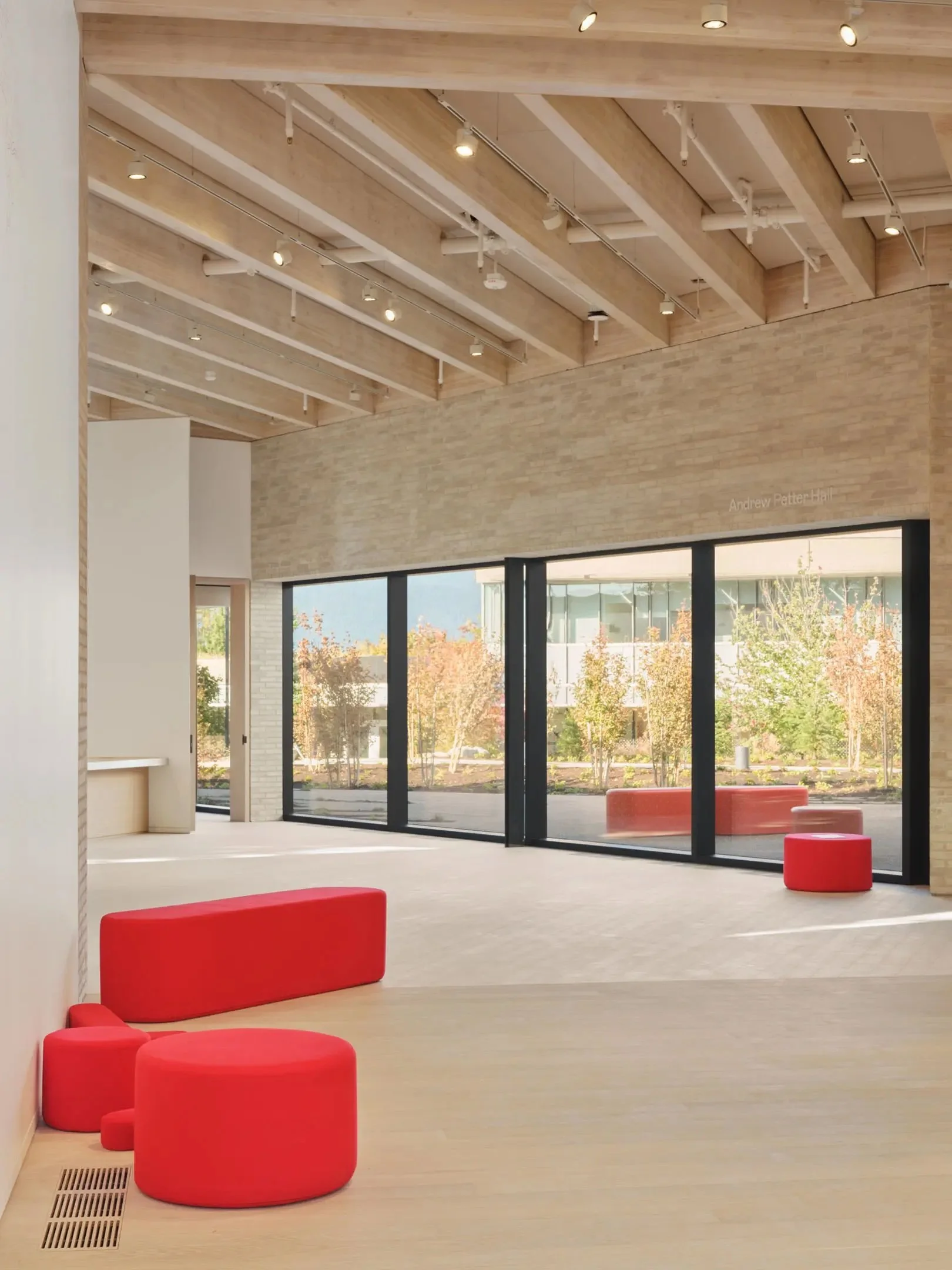
Lorna Brown’s Easements traverse the walls of the Gibson as part of Edge Effects. Photo by Rachel Topham
“We wanted a site at the heart of the museum that offered people a place to slow down and be in a different kind of time,” Phillips says. “And so she took that and ran with it, and thought about the forest that surrounds the campus and was here long before the rest of us, and the geology of the mountain, and the kind of ancient, deep time that is present with us here.”
If you take a seat there, you can gaze up at more than 50 of Mochizuki’s sculpted porcelain kodama, little tree spirits of Japanese folkloric origins. They are said to carry messages or warnings for those who are lucky enough to see them. Here, Mochuzuki has glazed them in muted earth tones; some sport tree-branch limbs and wide eyes, while others are much more abstract, mere wisps of colour.
Every weekend, the Gibson hosts a free series called Open Studio Saturdays, during which kids and their families can engage in craft-making that responds to the current exhibition at the art museum. At one of the sessions at the Tuey Art Studio onsite, folks got to make their own kodama with Mochizuki. The next edition of the drop-in event is on December 6.
Other resting points at the Gibson, like Lorna Brown’s Easements, are part of Edge Effects. Her bright-red ottomans are all different shapes and sizes—some small and circular, others more oblong. Each one is a scaled-down replica of a Vancouver easement, which is a real-estate term for a portion of another person’s land that people are allowed to cross. Brown’s installation considers what defines the edge of public space—the bulk of the ottomans are in the main gallery, and then trickle across the window-lined Andrew Petter Hall and outside into the Audain and Karasawa Courtyard. The indoor Easements ottomans are upholstered foam, and their weatherproof counterparts outdoors are made of epoxied resin.
“What’s interesting about that, for me, is the easements sort of transgress the architecture of the museum and pay no attention to it,” Phillips said. “They just kind of move through in the way that you move through an easement across a property.”
There are QR codes next to Brown’s ottomans that you can scan to listen to audio components that accompany each easement. Some are more quiet, driven by birdsong and similar sounds of nature, while others feature the rush-hour traffic noise of busy thoroughfares like Boundary Road.
Ultimately, Edge Effects has captured the spirit of the Gibson flawlessly. With all 15 artists delivering completely different takes on the concept, there is a refreshing variety of pieces to take in while wandering the new art museum. Yes, there are places to rest if needed—but it’s doubtful you’ll grow tired of looking at this fantastic array of works. 

Related Articles