Vetta Chamber Music kicks off its 40th anniversary season by exploring the cosmos
Artistic director and violinist Joan Blackman says Canadian composer Kelly-Marie Murphy’s interstellar Dark Energy is challenging but worth the effort
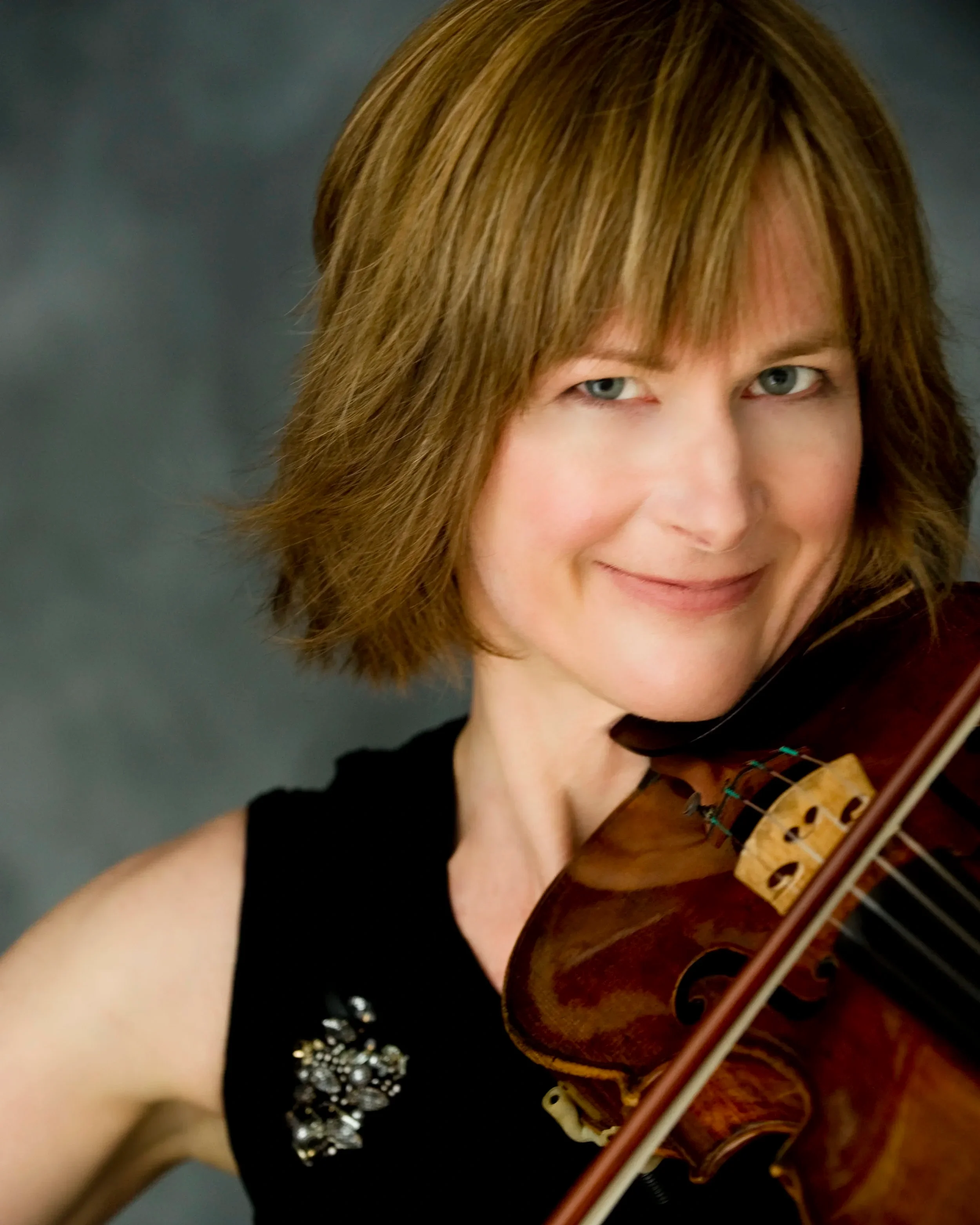
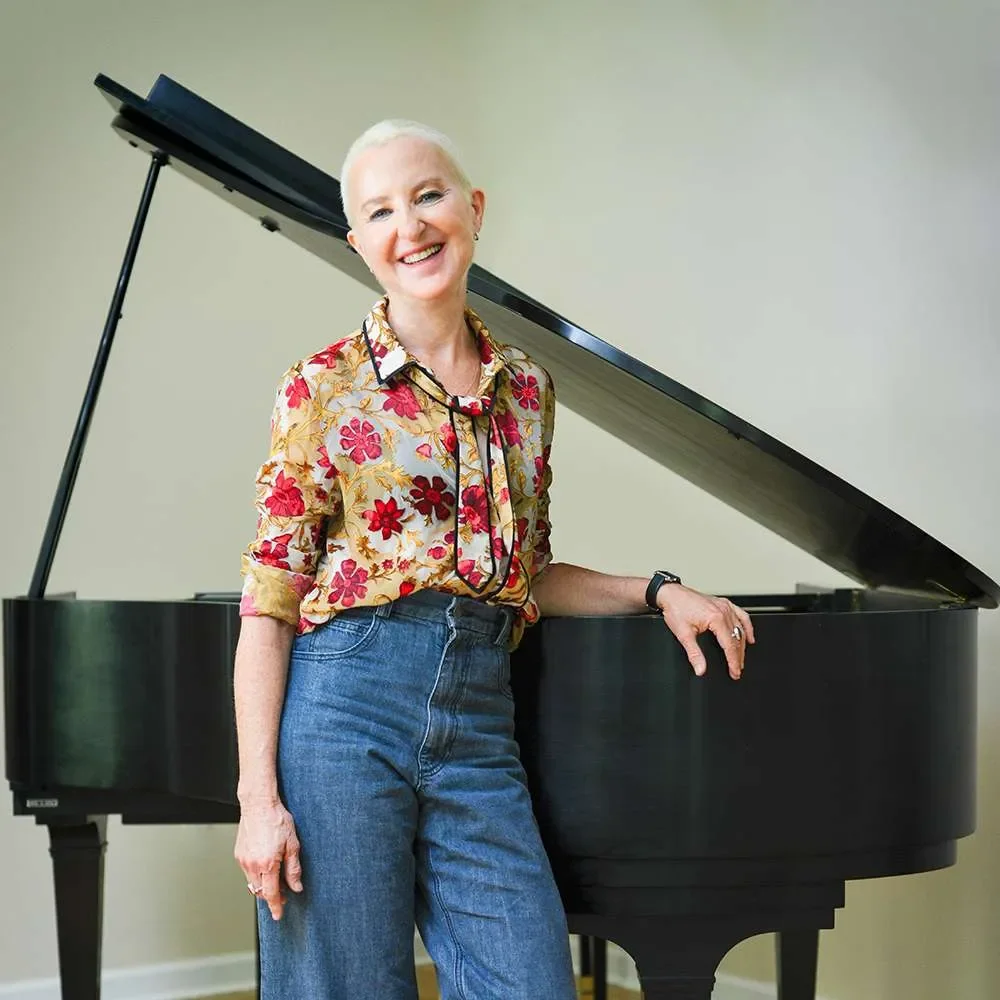
Joan Blackman
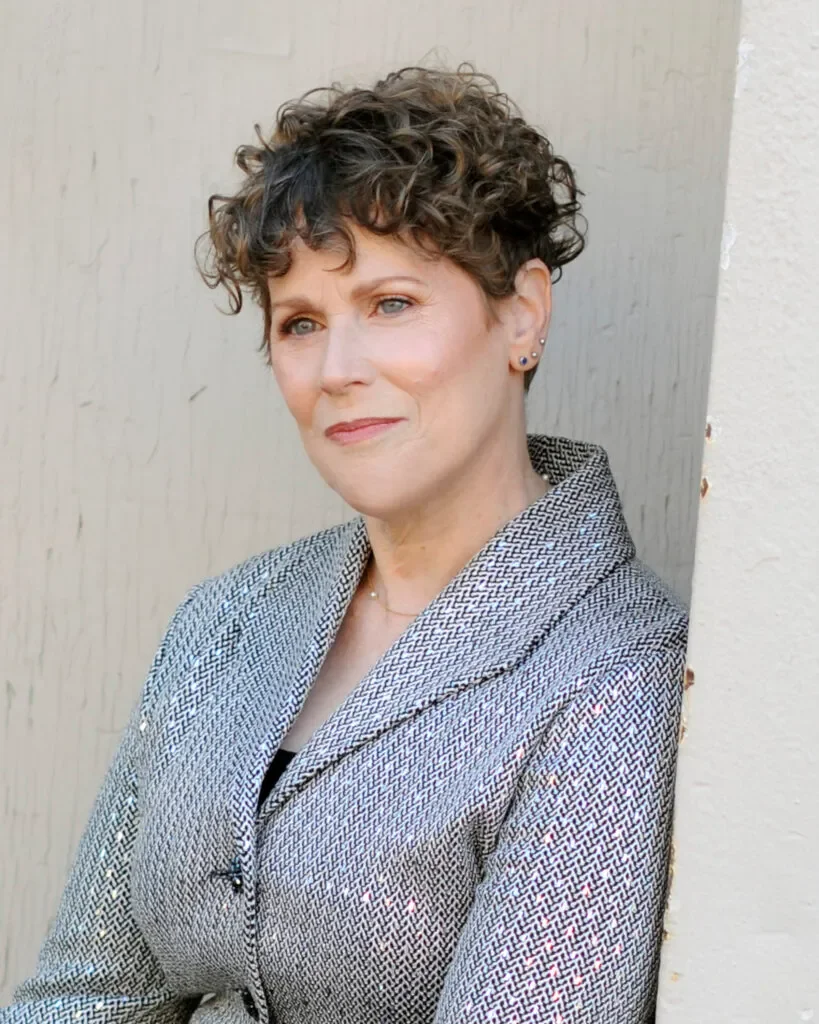
Kelly-Marie Murphy
Vetta Chamber Music presents Concert One: Beginnings on September 26 at 2 pm at West Point Grey United Church; September 27 at 7:30 pm at West Vancouver United Church; September 28 at 2 pm at Pyatt Hall; and September 29 at 2:30 pm at ArtSpring on Salt Spring Island
FOR FOUR DECADES, Vetta Chamber Music has done a stellar job of delighting audiences in Vancouver and elsewhere with high-level musicianship, thoughtful programming, and cross-cultural initiatives. But for the organization’s 40th anniversary, “stellar” isn’t good enough. Interstellar is Vetta’s new watchword, and chamber-music enthusiasts can look forward to an unusually expansive series of five concerts that span everything from new Canadian commissions to ensemble favourites revived from Vetta’s past.
Opening concert Beginnings exemplifies this blend. But so, too, do the photographs illustrating Vetta’s 2025-26 programs and website. Taken by artistic director Joan Blackman’s father, a retired nuclear physicist turned astrophotographer, they peer deep into the night sky to show sprawling nebulae, wheeling star paths, and the phases of the moon—and though they’re far removed from music’s earthly plane, they do very much suggest art’s limitless expanses.
So, too, does the first piece that will be played this season: Kelly-Marie Murphy’s Dark Energy. Like much of Murphy’s output, it emerged from the Ottawa-based composer’s contemplation of the mysteries of the universe, specifically the formless chaos that led to the Big Bang some five billion years ago. “Recently,” Murphy has written, “a group of astronomers using the Hubble Space Telescope observed that billions of years before this antigravity sent the galaxies flying apart, it was already present in space and affecting the evolution of the cosmos.” Naturally, her work moves from enigmatic simplicity to entangled skeins of sound, and not only does it fit well with astrophotography, it’s an apt metaphor for Vetta’s growth as an organization.
“When I listened to it, it really reminded me of that potential energy,” Blackman explains in a telephone interview from her home on Vancouver Island. “Then what she does with that is that she just whips it into a frenzy—and I could say that my life with Vetta has been a little bit like that! So programming this was a philosophical choice, in a way. But I also remember playing Kelly-Marie Murphy’s work with the VSO, and really, really liking its energy. I remember thinking ‘This is pretty difficult, but worth it.’ And I think our audience will find it worth it, too.”
Following Dark Energy with Dmitri Shostakovich’s String Quartet No. 8 in C minor is both an inspired choice, and an obvious one. Written in 1960 and “dedicated to the victims of fascism and the war”, it is no less timely now than it was then. Beyond that, however, its inclusion is a nod to how Shostakovich paved the way for today’s composers of string-quartet music, and to the importance of his work during Vetta’s early days. The society’s co-founder, cellist Eugene Osadchy, was a noted Shostakovich interpreter—and, as a Russian émigré, a direct link to Shostakovich’s world, a world that, in fact, was often driven by very dark energies indeed. (Osadchy died in 2020, but Vetta’s other co-founder, the violinist Victor Costanzi, will speak as part of Beginnings’ anniversary celebration.)
“Shostakovich has a special meaning for Vetta,” Blackman says. “Eugene was quite a mentor of mine, and I learned more than just about the music, playing it with him. There was almost a sacredness to the way he would describe the emotions that we cannot express with words.”
Beginnings will conclude with a perennial Vetta favourite: Ludwig van Beethoven’s String Quartet No. 8 in C minor. As with Murphy, Beethoven took inspiration from the night sky, but his was starry and comforting—at least according to Blackman, who notes that although there is a darkness in this work, there is also warmth to be found.
“It has a way of expressing pure joy, and in my mind the craftsmanship is part of the joy,” the violinist explains. “Beethoven, to me, does go pretty deep, but this one is not an angry one. So, yeah, I wanted to end with something hopeful—and if Beethoven can be hopeful, that’s as good as you can get.”
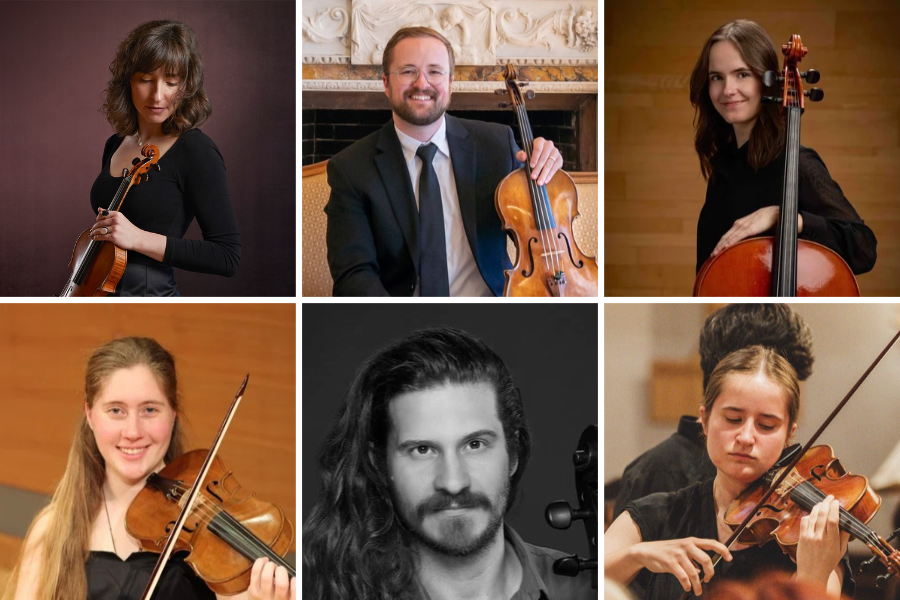
After Beginnings, Vetta’s season cycles through Stirrings, Music to Warm the Heart, A Look to the Future, and Celebration, with the penultimate show holding a special place in Blackman’s heart. A Look to the Future features a relatively large ensemble, and in this case the Mentorship Orchestra draws on a gifted pool of long-time Vetta associates and participants in the organization’s mentorship program, which provides advanced training for female musicians.
“I think we started it just after the pandemic, so that would have been 2021, in the fall.” says Blackman, who is now in her 19th year as Vetta’s leader. “And it’s grown basically into a women’s orchestra: all women; no conductor. Half of us are seasoned professionals, and the others are just coming into the world of professional music. Chamber music is a really good chance for people to learn leadership and collaboration and rehearsal techniques—a lot of things that don’t get passed on when you join an orchestra and you’ve finished university and you’re on your own!
“I feel that I can encourage young women to become leaders in the musical community,” she continues, noting that Vetta has also recently engaged in cross-cultural partnerships with Coast Salish and Sahtu Dene storyteller Rosemary Georgeson, alongside other community-outreach programs such as concert series in Pender Harbour, Comox, and on Salt Spring Island.
“What hasn’t changed is that we remain obstinately committed to presenting chamber-music concerts that are very intimate, and not packaged in some kind of marketing way,” Blackman adds. “We talk directly to the audience, and audience members feel that the quality is very high, and they trust my programming. So I think our connection with the audience is really strong.” 

Related Articles