Marianne and Edward Gibson Art Museum opens at SFU Burnaby campus
The 12,100-square-foot building features timber and glass, bridging art and the surrounding forest and opening with an inaugural exhibition called Edge Effects
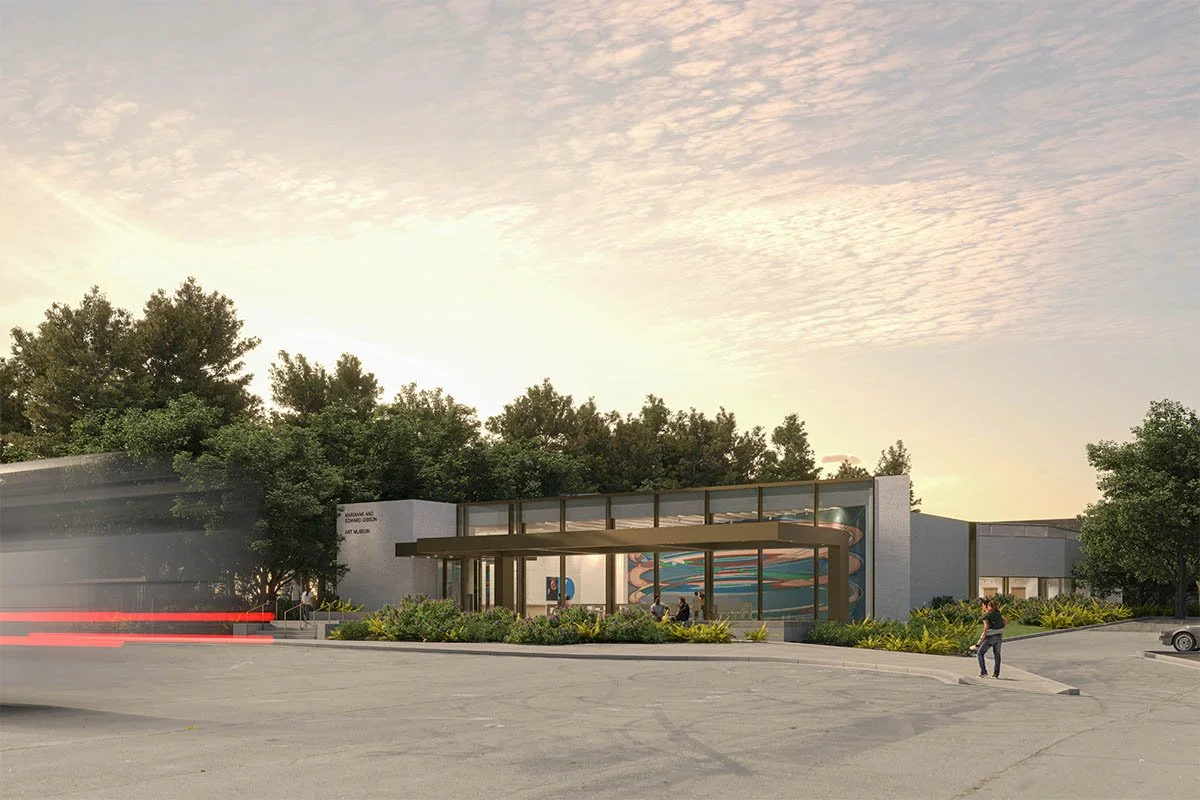
Rendering by Hariri Pontarini Architects of the Marianne and Edward Gibson Art Museum. Photo courtesy of The Mirage Studio and SFU Galleries
THE MARIANNE AND EDWARD Gibson Art Museum, a new 12,100-square-foot facility on the Simon Fraser University Burnaby campus, is officially opening its doors to the public this weekend.
Designed by Siamak Hariri of Hariri Pontarini Architects, the museum—colloquially known as the Gibson—is made primarily from B.C.–sourced mass timber beams and features floor-to-ceiling windows. It’s a sleek, expansive one-level space, putting it in line stylistically with the original vision that architects Arthur Erickson and Geoffrey Massey had of the Burnaby Mountain campus.
The Gibson is made up of several gallery spaces that are sectioned off with window-lined halls; outside, there are courtyard areas with chairs, tables, and freshly planted saplings. Kimberly Phillips, the museum’s director, shared during a tour before its opening that a big intention behind the design was to bridge the gallery with the surrounding forest in the hopes of making visitors feel at ease.
“There are many, many art museums on university campuses that feel very exclusionary, that are intimidating spaces,” Phillips said. “You have students—thousands and thousands of students who attend classes—who can go through their whole degrees without setting foot in spaces like this. So right off the bat, we wanted to make sure that we were trying to listen to people who feel barriers…in order to create a space that feels as welcoming as possible.”
That vision is evident upon stepping into the museum. Just inside the front doors is the Arya and Hamis Eshghi Forum, an open area that is part exhibition space, part gathering space. A long, sturdy wooden table spans the entirety of the room, with 28 matching chairs tucked beneath its top. Sunlight streams in through the tall windows, casting shadows off the open-beam ceiling. It’s a bright, inviting room.
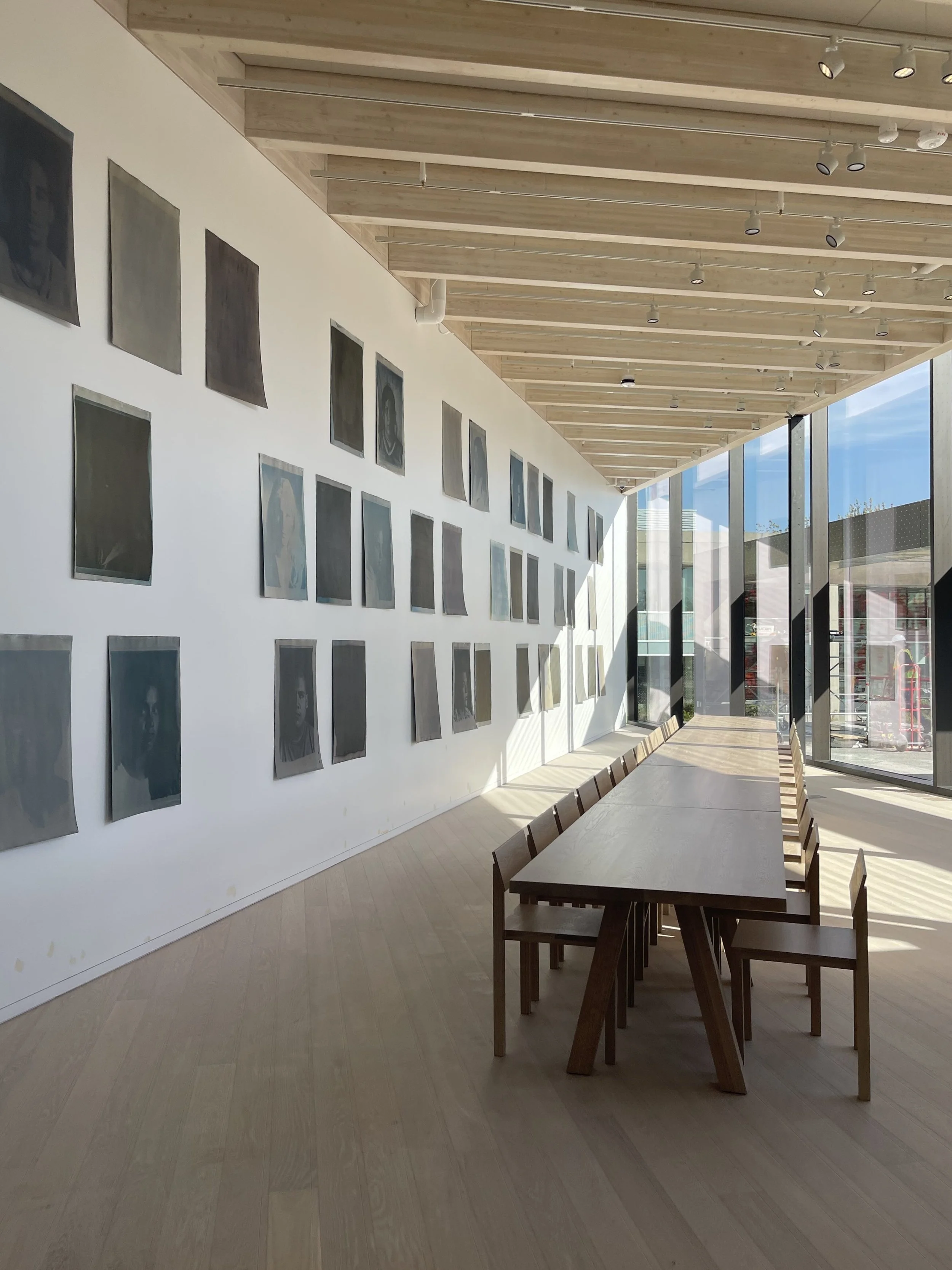
Arya and Hamis Eshghi Forum inside the Gibson. Photo by Emily Lyth
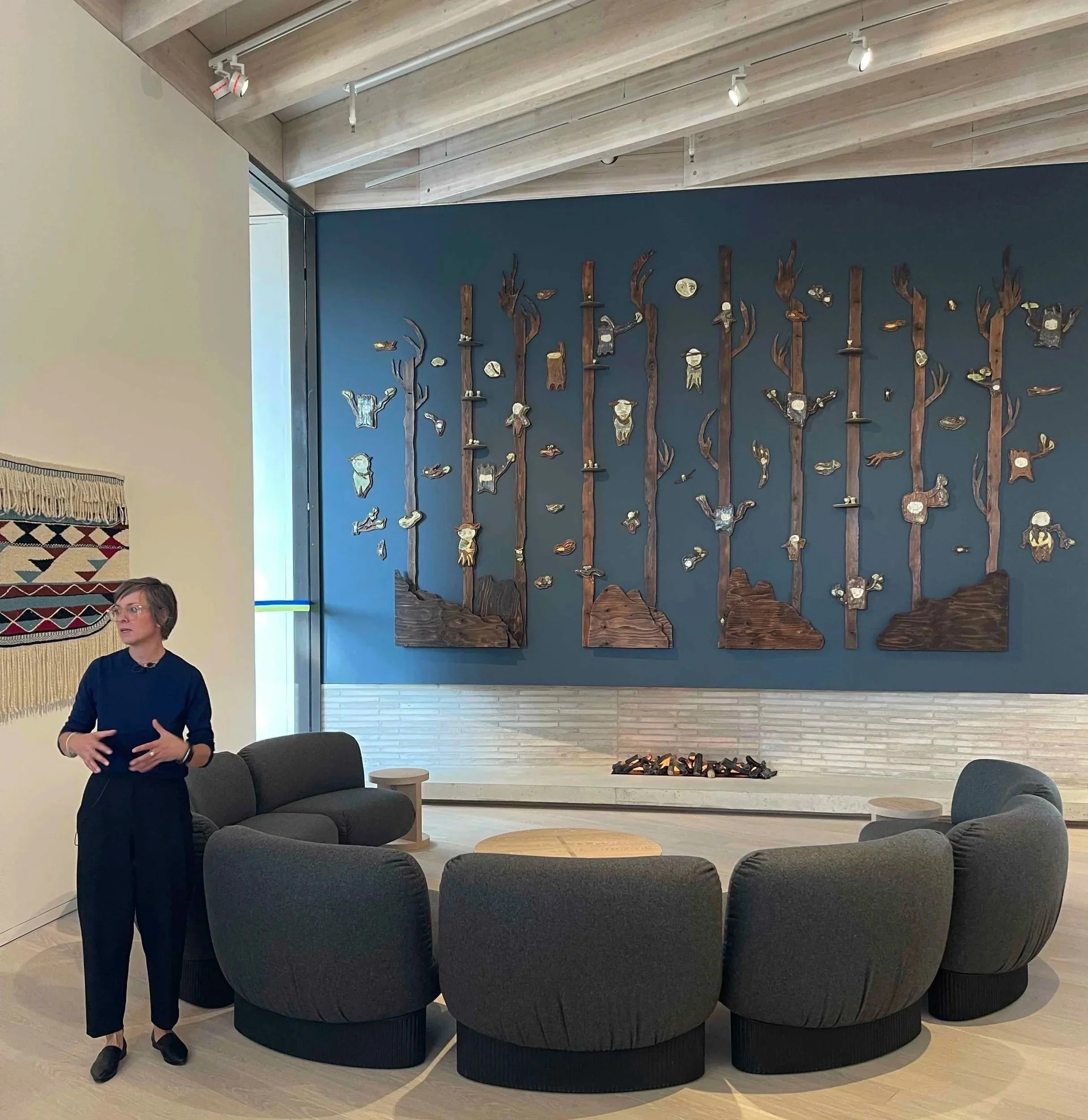
Kimberly Phillips during a tour of the Gibson. Photo by Emily Lyth
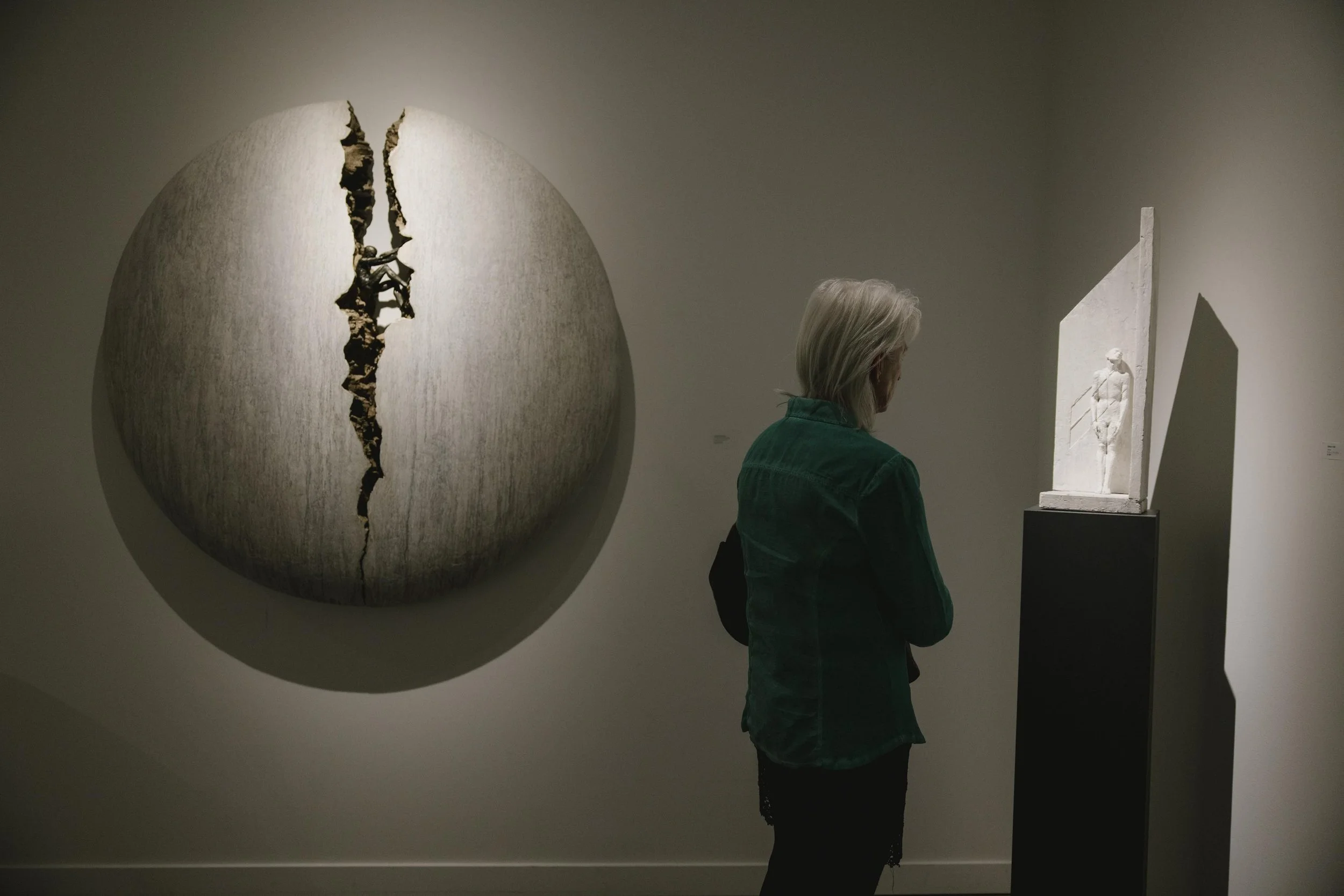
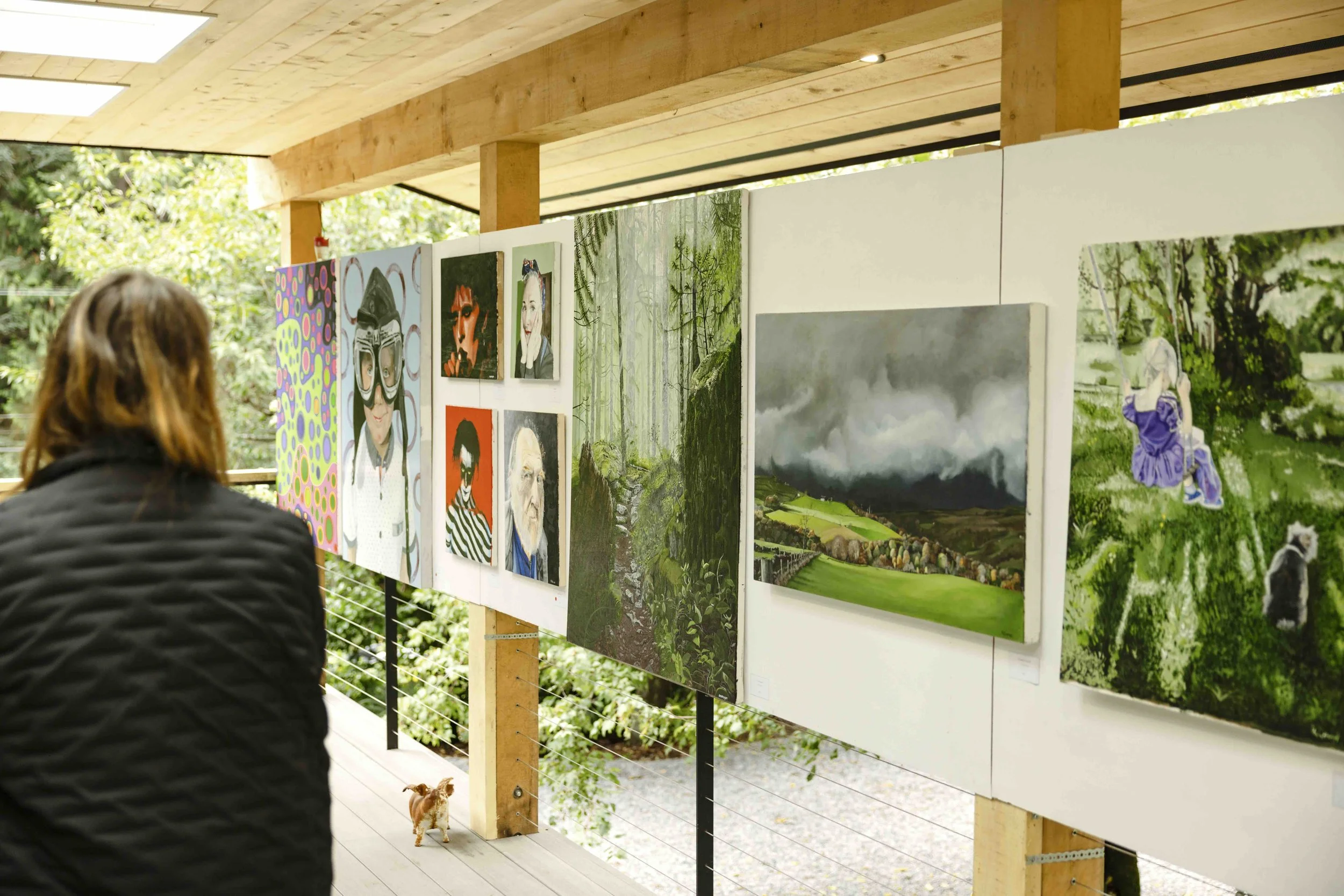
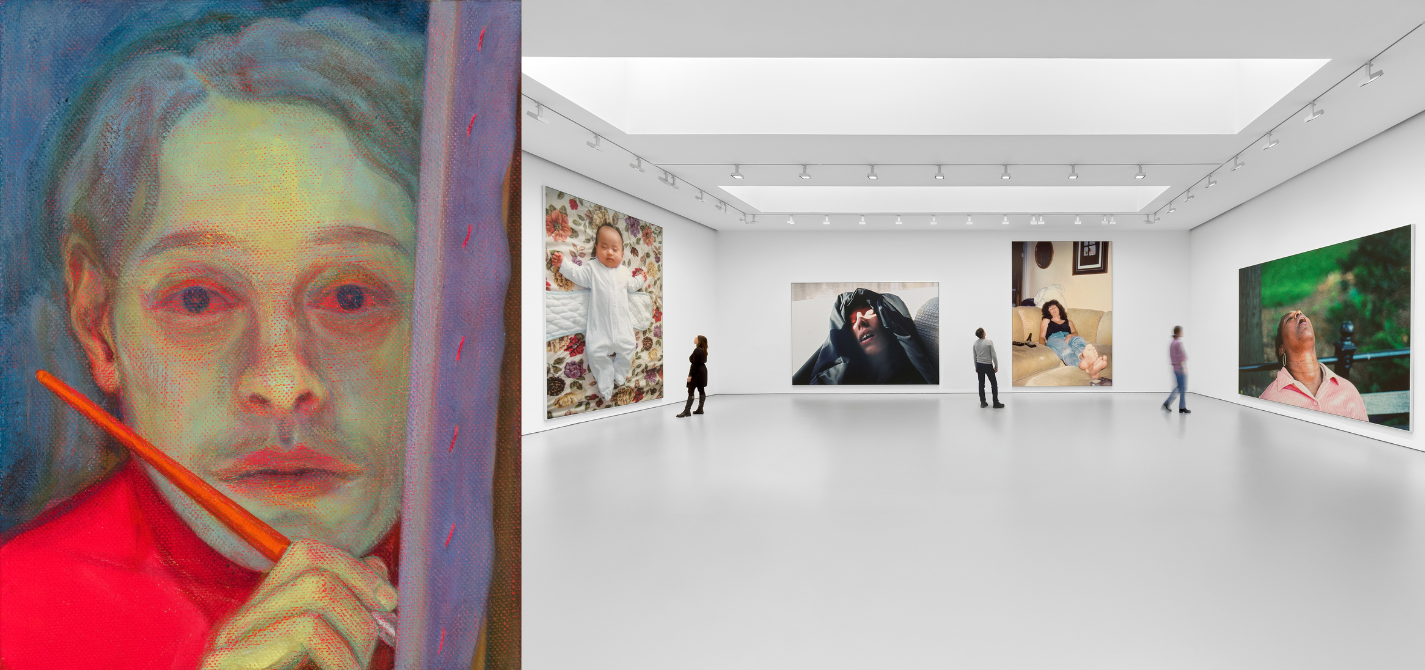
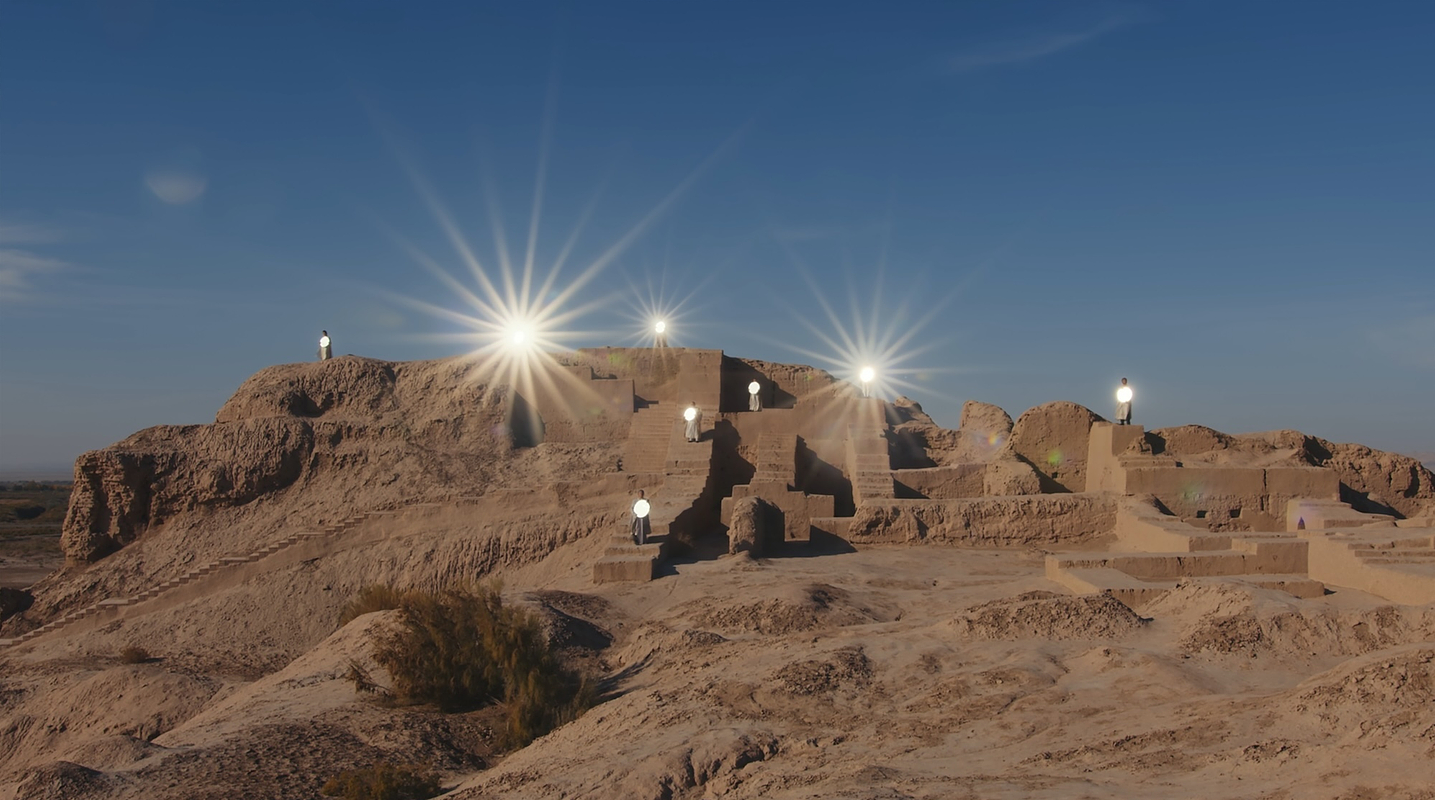
Hung on the wall directly behind the table is Blue Students/Alumnos en azul, a project by Liz Magor that features several cyanotype-photo portraits of students along the San Diego-Tijuana border. It’s on display as part of Edge Effects, the Gibson’s inaugural exhibition, which unites works by Debra Sparrow, Cindy Mochizuki, Patrick Cruz, Lorna Brown, Jin-me Yoon, and more.
The Gibson will also house some 5,900 works from the Simon Fraser University Art Collection that were previously stored elsewhere within SFU Galleries, including modern and contemporary paintings, photographs, sculptures, works on paper, and public installations.
Another of the gallery spaces features a hearth and a semicircle of grey sofas for relaxing on while museum visitors gaze at artwork. From an architectural standpoint, Hariri added during the tour that the team’s goal was to create a space where students can “hang out and rub shoulders with really good art”.
“The building should feel as though it’s intimate,” he said. “It hugs you. It connects you to the trees everywhere you go.”
Added Phillips: “We want people to feel like they can slow down—they can sit and hang out in spaces. They don’t have to sort of wander through and then just exit because there’s nothing else for you to do or nowhere for you to make yourself comfortable.”
The design was mapped out by drawing a circle of trees before carving out the main gallery spaces, then connecting those spaces with hallways so it feels like the trees envelop the nooks and crannies of the museum. A total of 99 saplings were planted around the building.
The Gibson has two entrances—one situated directly in front of the SFU Transit Exchange bus loop, the other facing the university’s main campus. Also of note is that the museum has a fully electric operational system, making it LEED Gold certified (a title that is given to buildings which demonstrate sustainable design, construction, and operation).
Regular hours at the Gibson are Wednesdays through Sundays from 11 am to 5 pm, and admission is free. An opening event will take place on September 20 from 2 pm to 5 pm; space is limited and registration is required. Weekly programming at the museum includes a series called Open Studio Saturdays, during which families can engage in different art-making activities onsite.
Edge Effects will be on display until February 15, 2026. Keep an eye on the Stir site for more coverage. 

Related Articles