Compagnie Catherine Gaudet’s ODE explores the relentless push for happiness
Dancers perform an increasingly surreal and unsettling ritual when the Montreal troupe brings its latest work to the DanceHouse program
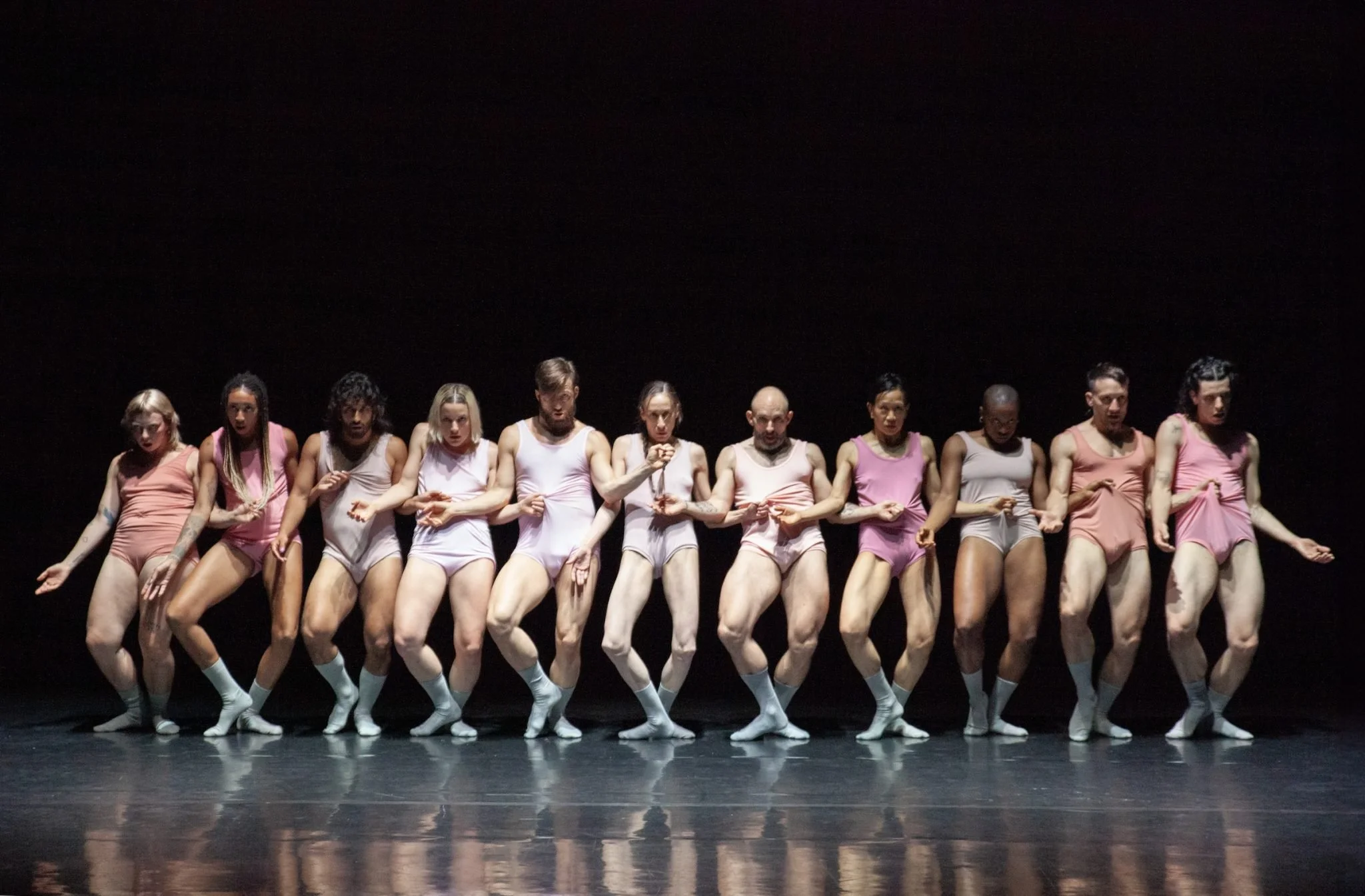
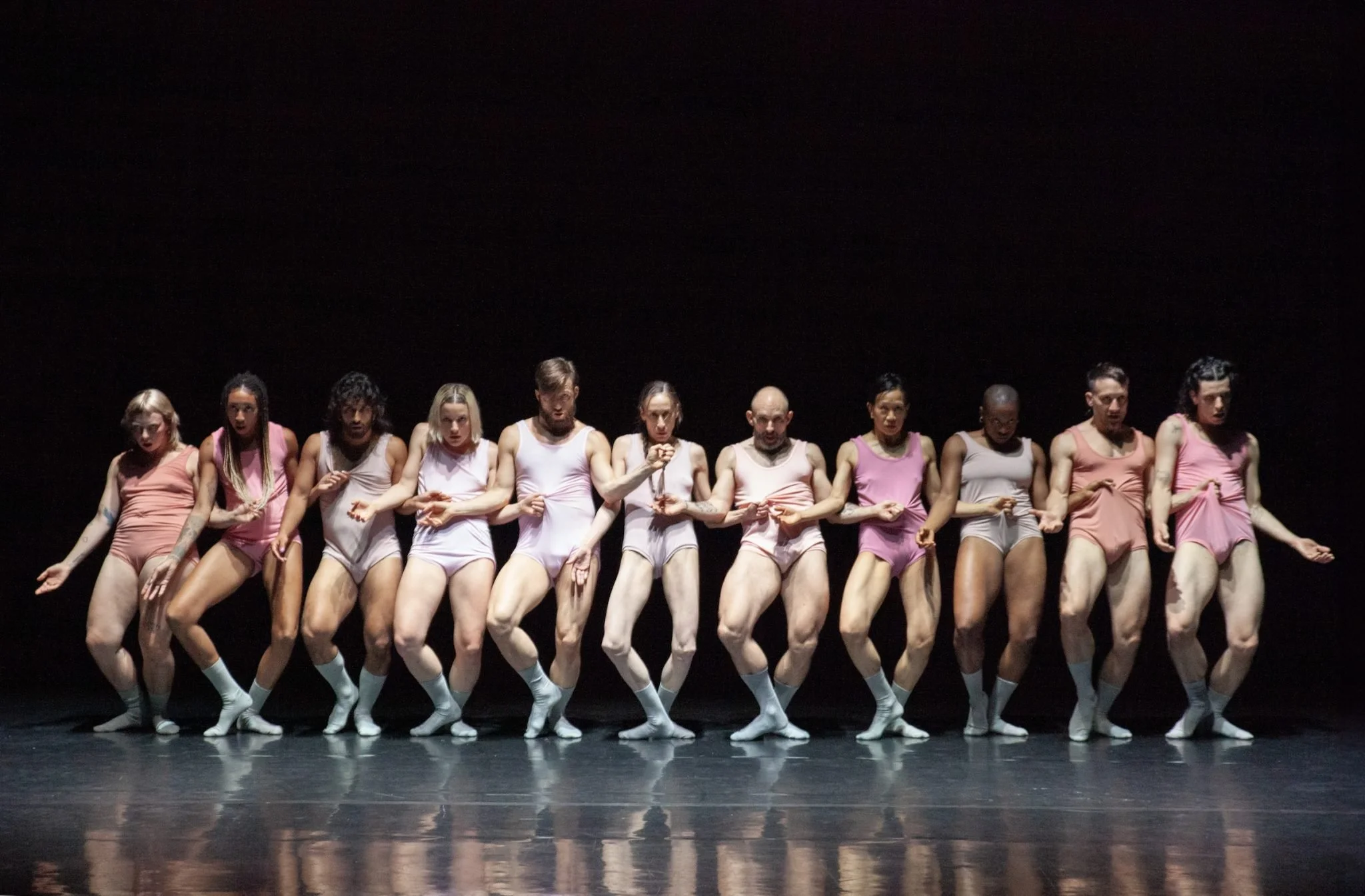
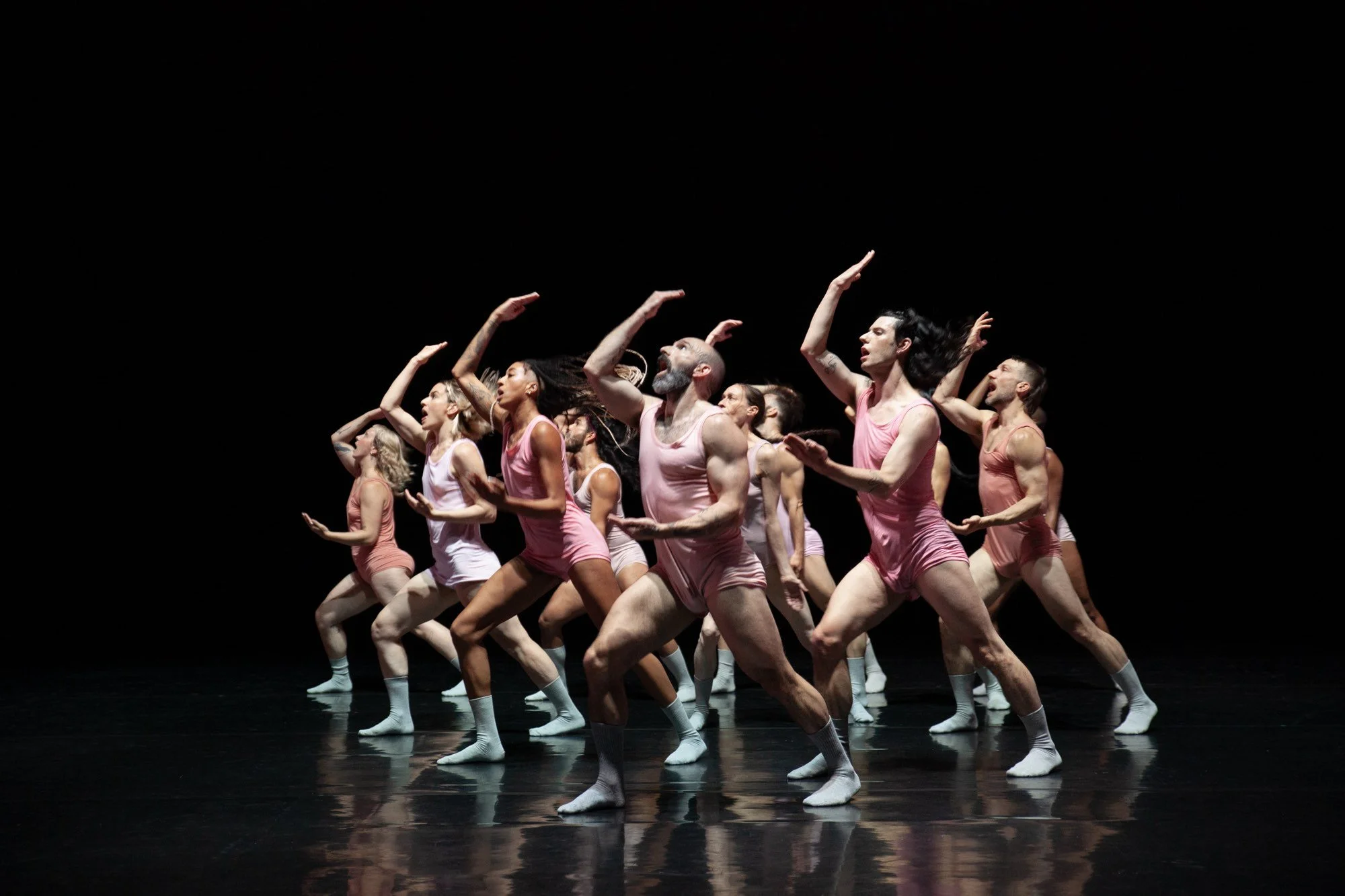
Compagnie Catherine Gaudet’s ODE. Photo by Mathieu Doyon
DanceHouse presents Compagnie Catherine Gaudet’s ODE at the Vancouver Playhouse on October 23 and 24
WHEN MONTREAL CHOREOGRAPHER Catherine Gaudet began creating ODE, she was determined to make a light, unabashedly happy piece—but it soon evolved into something more unsettling.
Gaudet noticed the change when one of her dancers semi-jokingly compared the rehearsal atmosphere to a cult, even invoking the folk-horror film Midsommar, where flower-crowned followers turn sinister. The dance artist suddenly realized the work was veering toward an artificial cheeriness—albeit by accident.
“I wanted so hard for the process to be joyful that it was a bit fake,” the affable Gaudet admits to Stir over the phone from Montreal before bringing ODE to the DanceHouse program here. “And when I saw that movie, I realized that, oh my God, it’s true that I act like a cult leader, where I put the dancers in a situation where I want them to be happy, but actually we cannot be happy all the time. You know, I was kind of pushing it a bit too much.”
It made Gaudet think of the pressures of the happiness industrial complex—that vast, profit-driven system that sells us well-being, whether through mindfulness apps, self-improvement classes, or motivational podcasts.
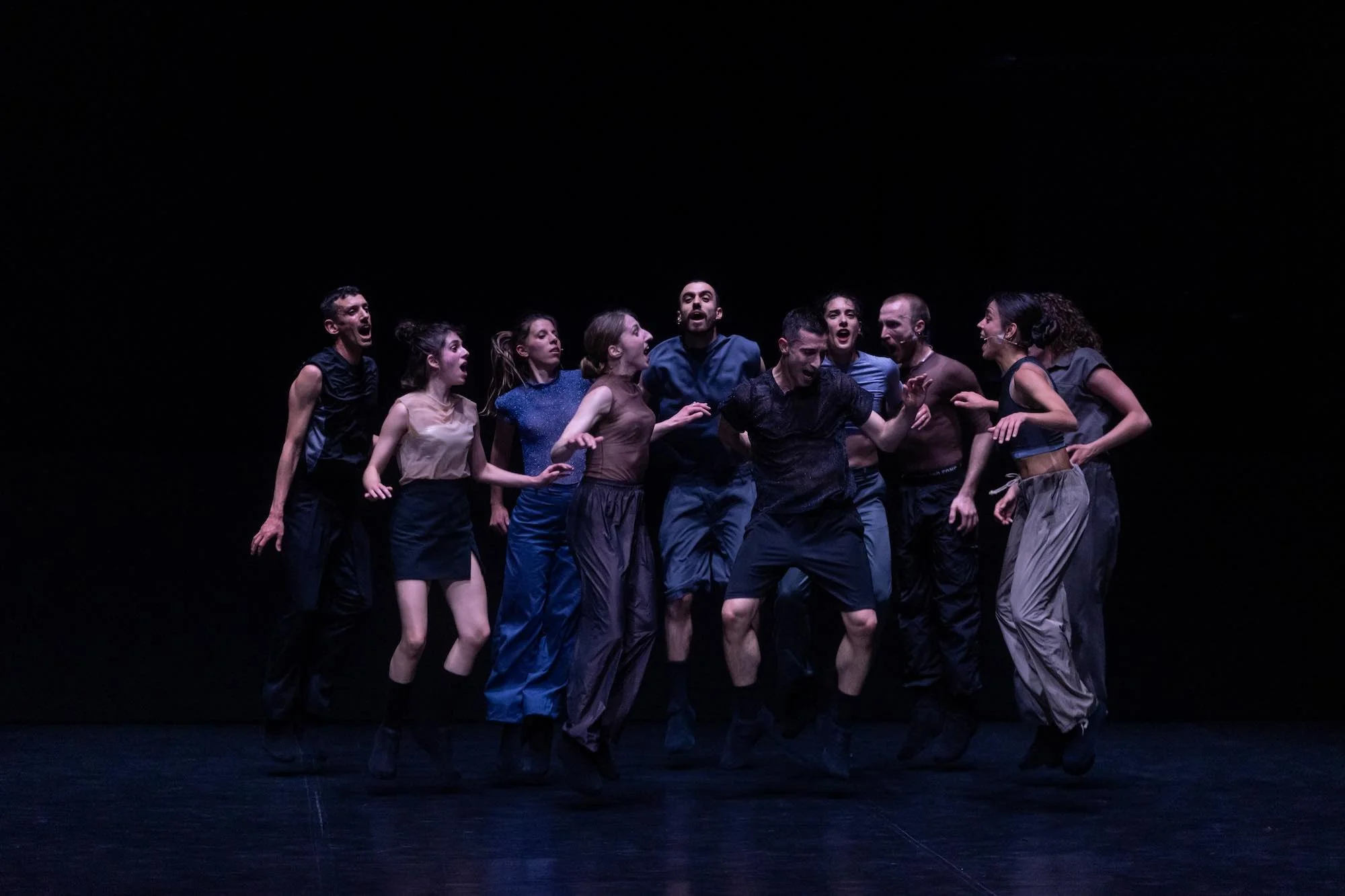
Audiences who saw Compagnie Catherine Gaudet’s buzzed-about Les jolies choses (The Pretty Things) here with DanceHouse in 2024 know the artist has a knack for stripping her works to their intense essence, a talent that has made her a strong, singular voice on the Montreal scene. Initially, in the studio, ODE drew on various threads in Midsommar and pagan ritual and pop-wellness, but Gaudet took a break and then came back to carve away any excess. What emerged was one not-so-simple word: “love”. In the piece, 11 dancers now repeat it out loud with looping, rhythmic movements that build to hallucinogenic heights, moving in lockstep and often looking the audience disconcertingly in the eye.
“They’re repeating that word over and over again, like they want this word to be real, and it’s like a prayer,” Gaudet explains. “It’s like a mantra, and they try to convince themselves and convince the public that it’s real. But the more they repeat it, the more inconsistent, or fake, it becomes.”
In ODE, the “love” mantra ends up fluctuating in its authenticity and its meaning. “It goes from the most important thing in the world through to something that feels empty or commercial,” Gaudet says.
As with Les jolies choses, amazing things reveal themselves through complex, detailed repetition in Gaudet’s work. She says she’s not interested in the exhaustion that arises from the nonstop, evolving motion that goes on; instead, she’s fascinated by the ritualistic state it triggers, and how the dancers can come together, going through a kind of cleansing as a group.
“Sometimes we say that we are doing a Mass,” she allows. “Like in church, it demands a lot from us, but at the end, it reveals something.”

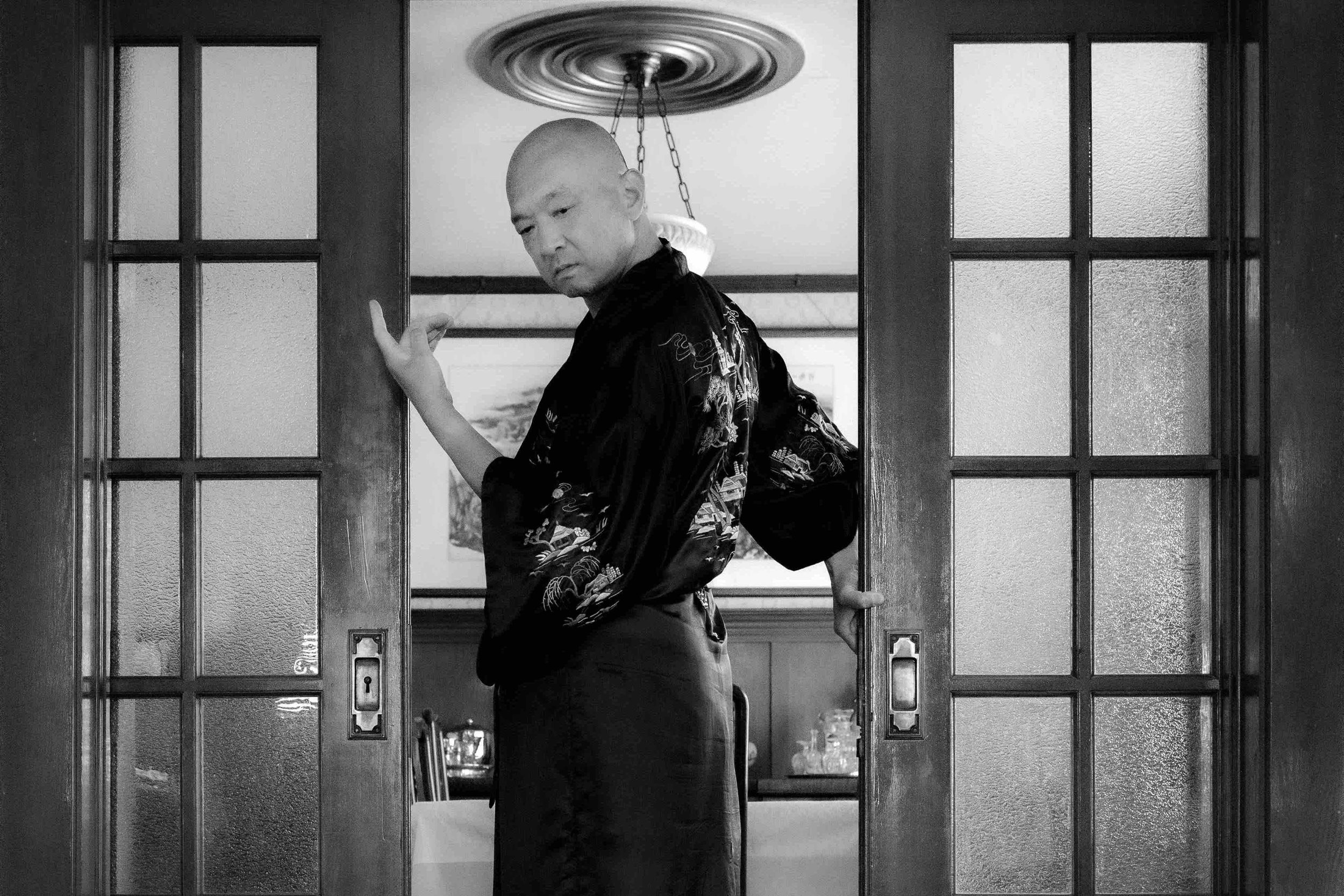
Catherine Gaudet. Photo by Julie Artacho
And this is part of the magic of Gaudet’s work: she and her close-knit troupe of dancers discover unexpected things in the studio (she never knows what she’s going to create when she steps into a process), and the audience can experience the same surprises watching the work.
ODE has grown organically out of the camaraderie and safety Gaudet builds into her creations—and we mean that in the least cultlike way possible.
“It’s very real in the studio, and we have to be super careful—with the bodies, with respecting boundaries also,” she explains. “There’s consequences to this word ‘love’—it means a lot to most people, so yeah, it can create a lot of emotions in the studio. It’s charged. So we have to do a lot of talking, and back and forth, and caring.”
In the work, the dancers, in pink bodysuits, face the audience, by turns inviting, seducing, evangelizing, and succumbing to group think. As the chanting repeats, and the movement rhythmically loops, the situation becomes surreal. Over and over they offer “love”—but, as we all know, love can be exhausting,
“I don’t want to give a message with this piece. I don't want to say that ‘Love is all you need’—even though, actually, I think that’s right! But it’s not the message that I want to bring,” Gaudet emphasizes. “For me, as a witness of work, when I go to see shows, I like to stay in a certain uncertainty. I like to stay in an ambiguous state where I’m not really sure exactly what the message was, because it leaves my mind open, my imagination open. I can continue to ask some questions about what I just saw. So I want to apply that in my own work.
“Love is really important, but in the piece I think you can see that the pretext of loving can also be destructive," she adds. "Eros and Thanatos are always close together, and that’s where the falseness or mask appears—when you want to push it too hard or when you want to possess something, you can do the opposite in love.” 

Related Articles