Otani Workshop’s Monsters in My Head transcends cuteness at the VAG
In Japanese ceramicist and painter Shigeru Otani’s work, adorable bunnies and sea monsters tell deeper truths
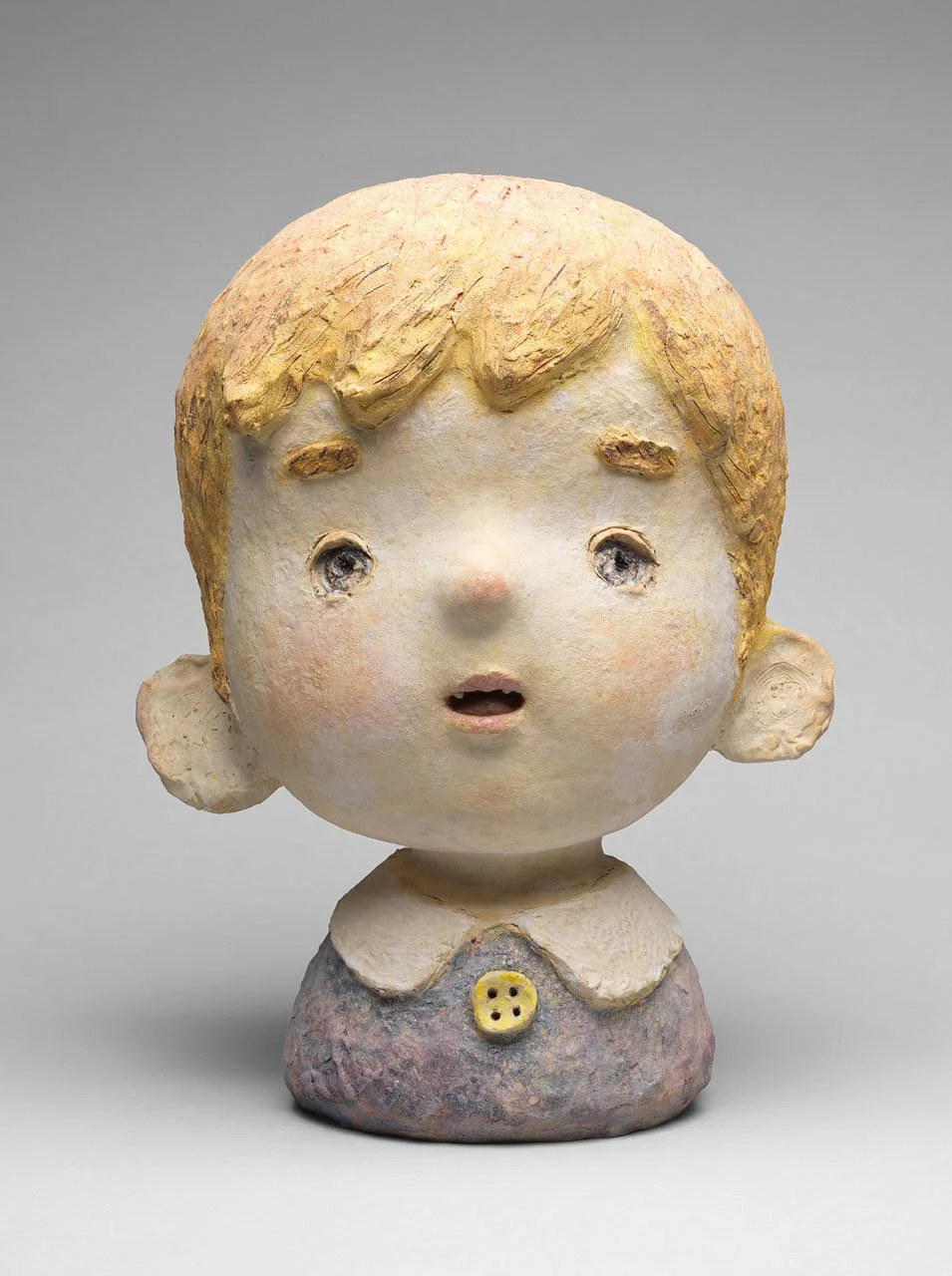
Otani Workshop, A Boy With a Yellow Button, 2024, ceramic. Courtesy of the artist, Kaikai Kiki, and Perrotin, Photo by Vancouver Art Gallery, ©2025 Otani Workshop/Kaikai Kiki Co., Ltd. All Rights Reserved.
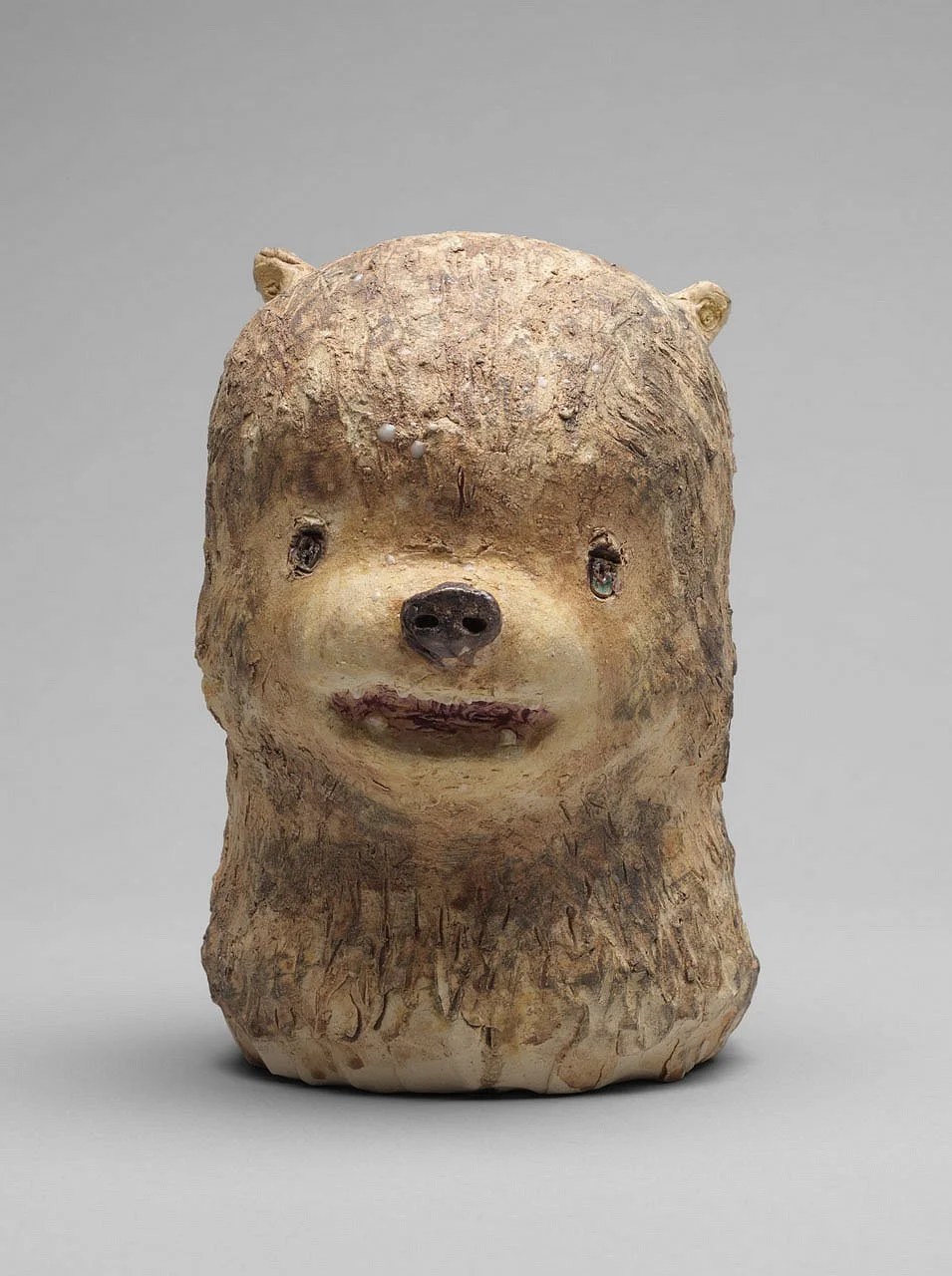
Otani Workshop, Bear, 2024, ceramic. Courtesy of the artist, Kaikai Kiki, and Perrotin, Photo by Vancouver Art Gallery, ©2025 Otani Workshop/Kaikai Kiki Co., Ltd. All Rights Reserved.
The Vancouver Art Gallery presents Otani Workshop: Monsters in My Head to November 9
CONSIDER YOURSELF FOREWARNED if you visit the Otani Workshop exhibition currently on at the Vancouver Art Gallery: you will see cute things. Among Japanese ceramicist and painter Shigeru Otani’s subjects are bunnies, teddy bears, little kids, baby-faced caterpillars, and a sleepy little sea monster named Tanilla.
In contrast to the prevailing Japanese veneration of all things kawaii, however, there is nothing slick or mass-produced-looking about Otani’s work. The hand of the artist is evident in every one of these pieces. With their rough textures and visible brushstrokes, they vibrate with life, cute not for the sake of being cute but because, well, bunnies and bears are inherently adorable.
The first section of the show highlights ceramic works Otani produced during a six-week residency at the Shadbolt Centre for the Arts in Burnaby, using local clays and glazes. Drawing inspiration from the verdant surroundings of Deer Lake Park, the pieces are displayed amid an array of stumps, soil, and other natural elements.
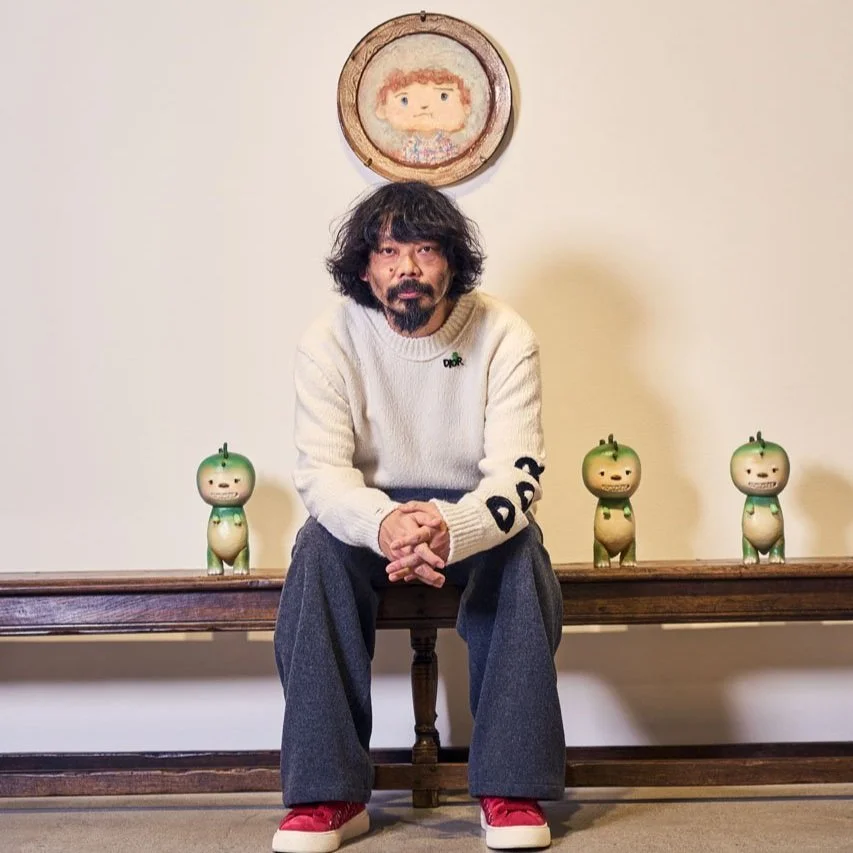
Shigeru Otani (a.k.a. Otani Workshop). Photo by Tomohiko Tagawa, ©Otani Workshop/Kaikai Kiki Co., Ltd. All Rights Reserved.
One of these works truly pushed the limits of his host’s ceramics studio: a stylized human skull in as monumental a scale as the Shadbolt’s kiln could accommodate. The number of cracks in the cranium suggests that the piece might have proven to be just a little too big. Rather than attempt to smooth over the fissures, Otani repaired them kintsugi-style by filling them with gold lacquer, which imparts a further layer of meaning to the work by drawing the viewer’s attention not only to the fragility of kiln-fired clay, but also to the frailty of human flesh and bone.
The second room of the exhibition includes works that Otani produced in his studio on Awaji Island, located on the Seto Inland Sea of Japan. These include sculptures in fibre-reinforced polymer and bronze, along with the original illustrations from Monsters in My Head, a children’s book that tells the story of Otani’s artistic journey from childhood to the present; Bob Ross makes a memorable cameo as a surprisingly influential figure.
It’s very charming and, yes, cute. As VAG senior curator Diana Freundl pointed out during a media preview of the exhibition, however, Otani’s body of work rewards those who care to take a deeper look.
“It’s really easy to think about these works as being cute,” she said. “They are cute.” Beyond that, though, they are honest and real, and they represent a distinct artistic point of view that’s worlds away from Hello Kitty.
Otani’s ultimate aim, Freundl argued, is to transport viewers from their quotidian existence to “a place beyond”: “For him, it’s about this connection between the real world and this world in which he lives and creates.” 

Related Articles