Canadian soprano Sarah Dufresne finds Gilda’s strength in Vancouver Opera’s Rigoletto
Rising star embraces the complexity of Verdi’s tragic daughter figure, and follows with another debut in Fauré’s Requiem with the VSO
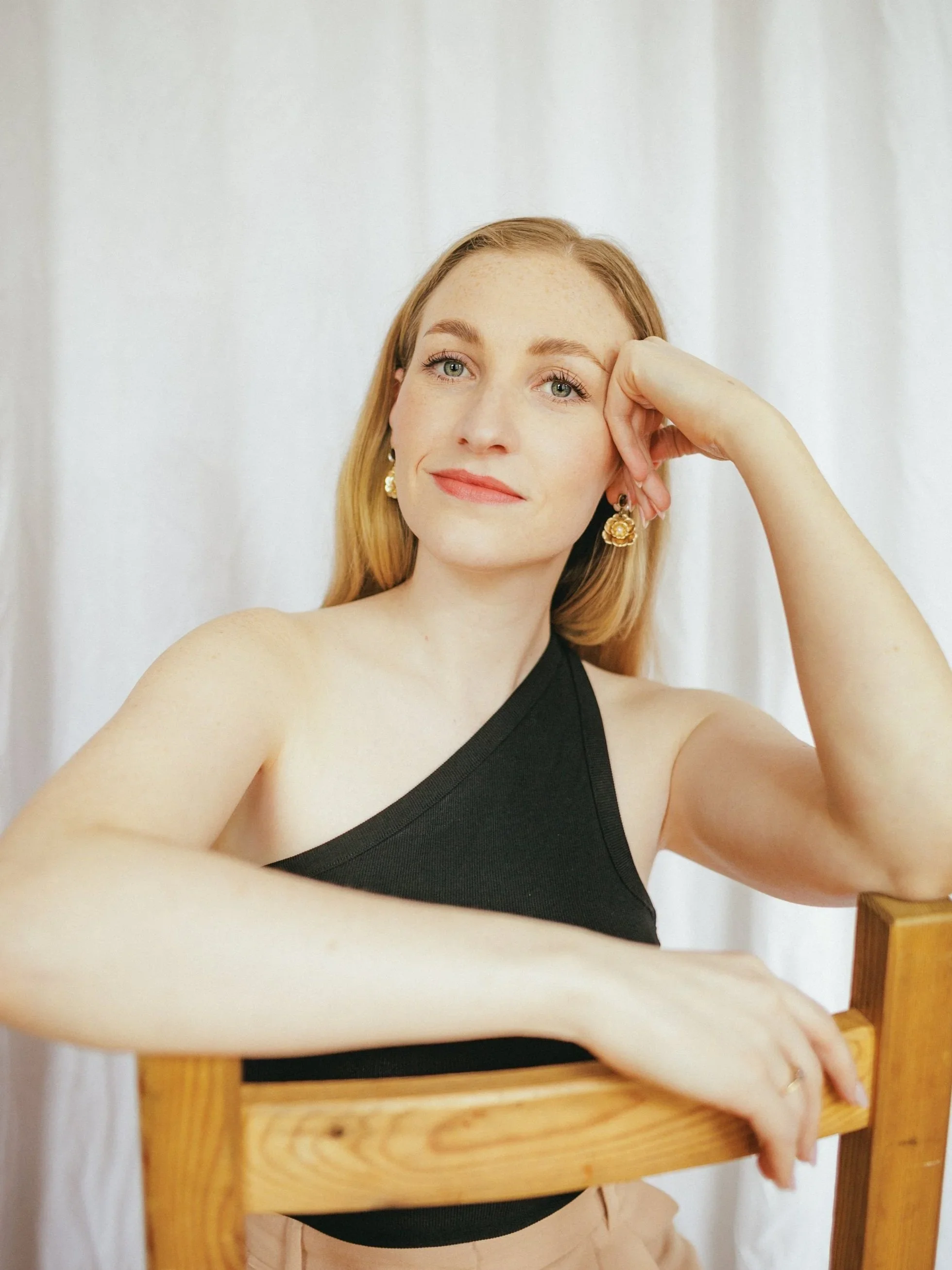
Sarah Dufresne
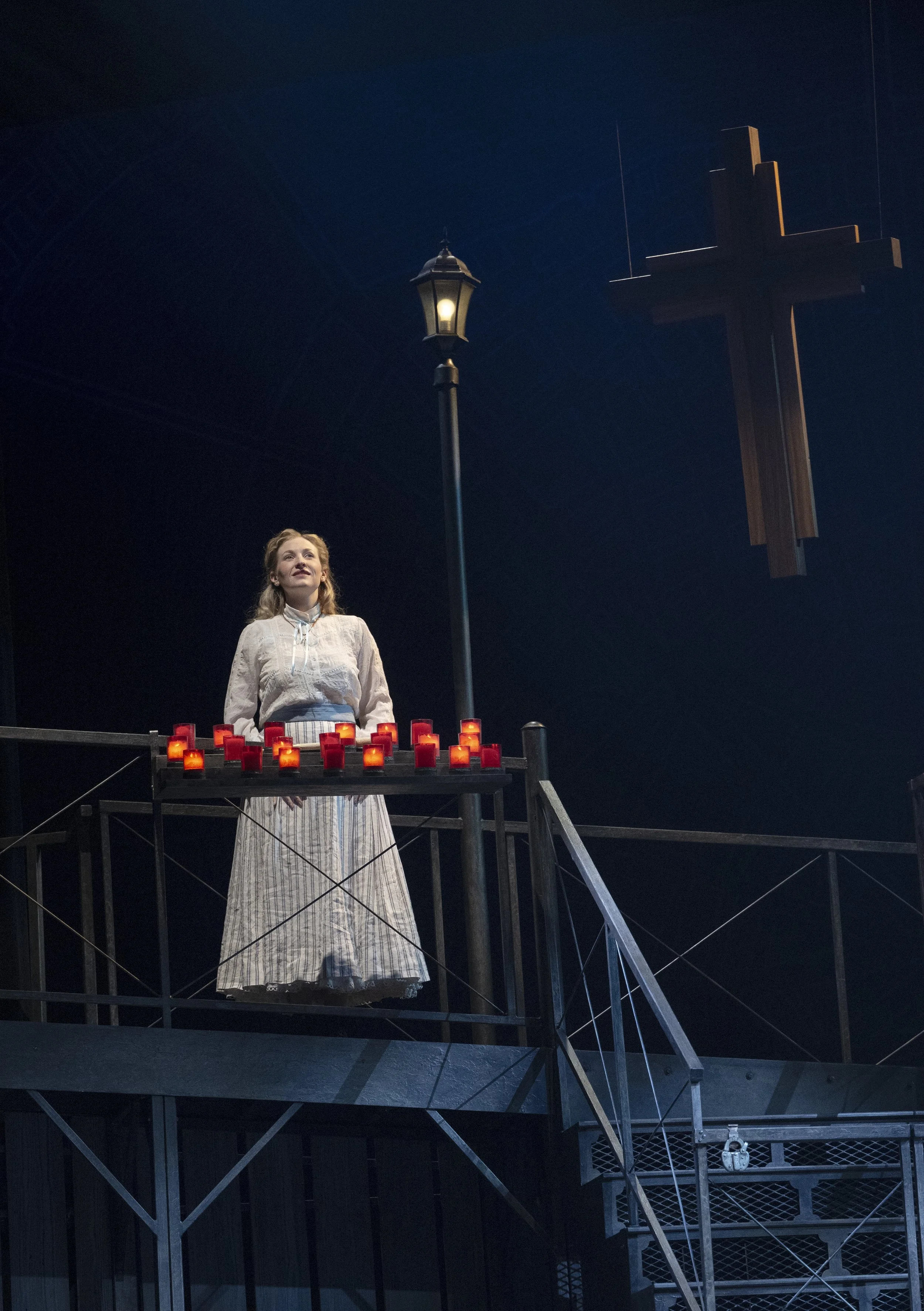
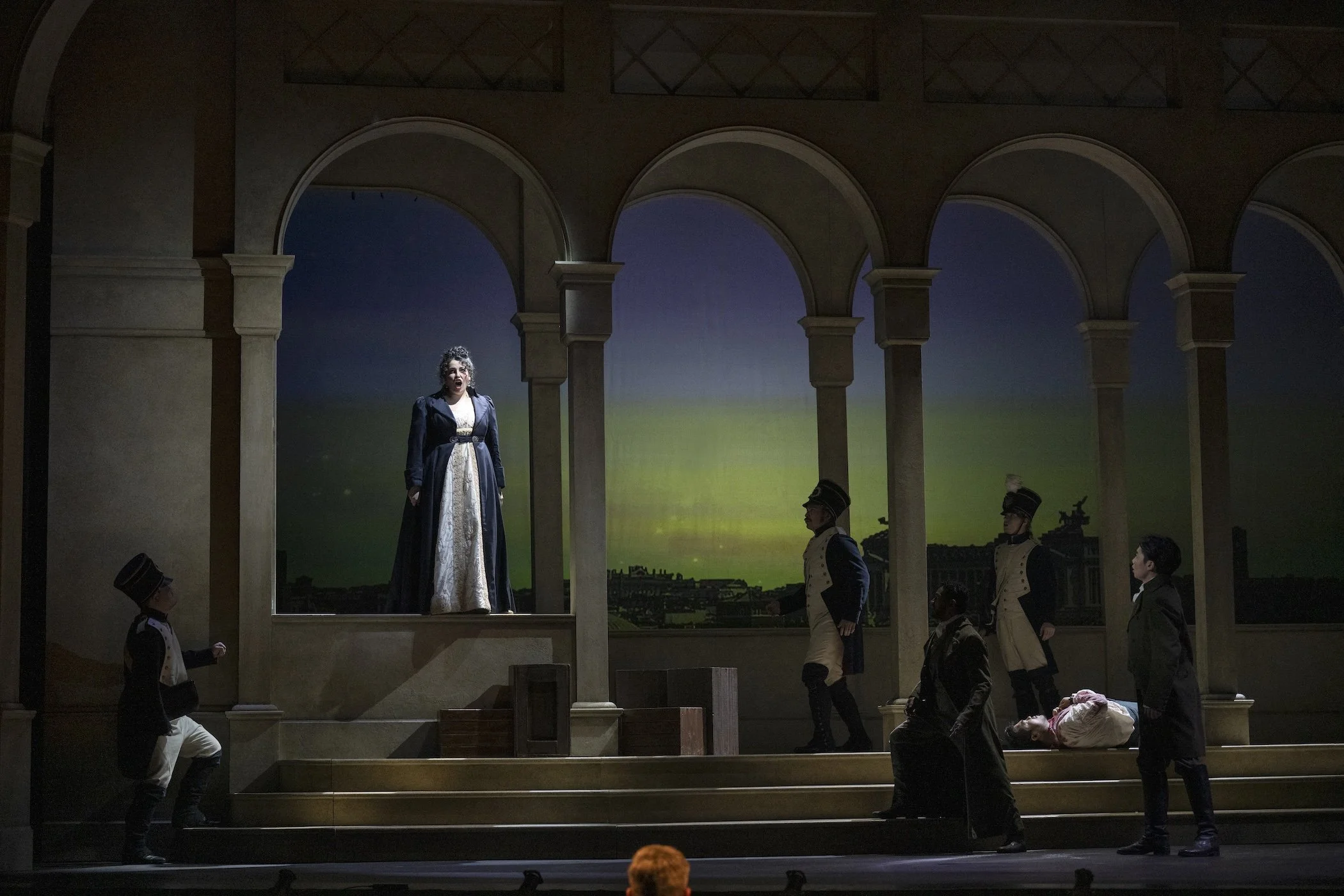
Sarah Dufresne as Gilda in Pacific Opera Victoria’s Rigoletto. Photo by David Cooper
Vancouver Opera presents Rigoletto at the Queen Elizabeth Theatre on October 25, October 30, and November 2. The Vancouver Symphony Orchestra presents Fauré’s Requiem on November 7 and 8 at the Orpheum and November 9 at the Bell Performing Arts Centre in Surrey
CRYSTALLINE, SILVERY, ANGELIC, pure, with “astonishing clarity” and “glittering coloratura”: those are just some of the terms that writers have used to describe Canadian soprano Sarah Dufresne’s remarkable voice. Last spring, in her debut as Gilda in Giuseppe Verdi’s Rigoletto at Pacific Opera Victoria, Opera Canada said, “She is a major talent, and the audience, electrified, knew it.”
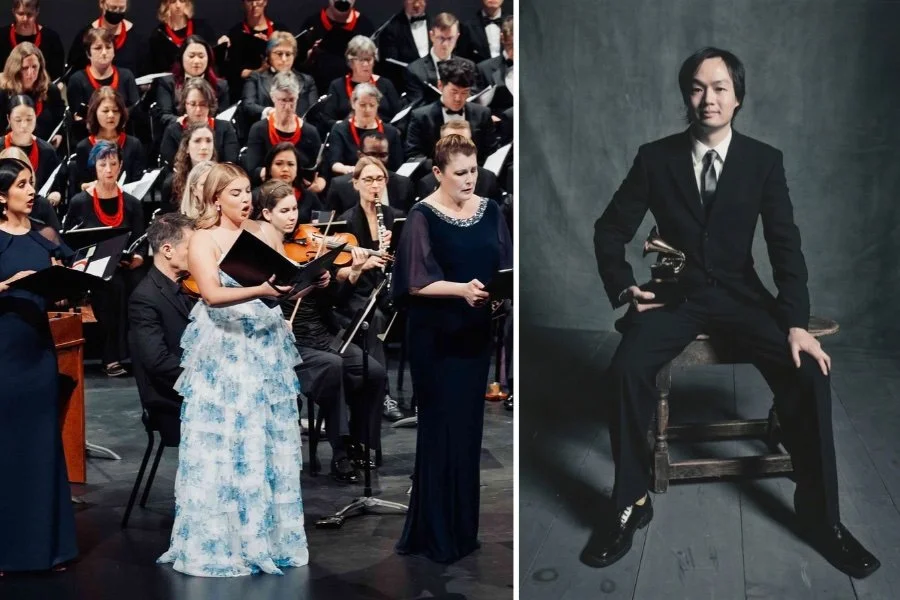
Now Vancouverites get several chances to hear the rising, Montreal-based star live. Rigoletto, which drew standing Os on the Island, is ready to open at Vancouver Opera under the same creative team, with Dufresne reprising her lead role. Then, from November 7 to 9, she’ll put her elegant instrument to Gabriel Fauré’s Requiem with the Vancouver Symphony Orchestra and the Vancouver Chamber Choir.
Other than her natural gift for singing, little in the Niagara Falls–raised star’s background could have helped predict her operatic success. No one else in her family is a musician. But her parents recognized her passion and talent early on, enrolling her in a church choir as a 10-year-old.
“A couple years ago, my dad actually found a cassette tape recorder, where I recorded four or five Christmas songs when I was maybe six,” she recalls on the phone with Stir before rehearsal. “He found the tape of me singing ‘Rudolph, the Red-Nosed Reindeer’ and all of these other Christmas songs. And so it’s funny, because I obviously don’t have a memory of doing that, but I see why my parents kind of put me in the choir and singing lessons eventually, because I just really loved it and I wanted to do it. I guess they followed my lead!”
Those lessons would eventually evolve into studying voice at Waterloo’s Wilfrid Laurier University—where she would see her first opera, The Marriage of Figaro, at 17. “When you're in the theatre watching it, the voice kind of hits you,” she says of her initial experience of live opera. “So, for me, that was the big light bulb of ‘Oh, this is so cool. I want to do this.’”
Frequent road trips with her classmates to see the Canadian Opera Company followed—as did a master’s in voice and opera at McGill University. Fast-forward a few years to 2022, and she was being tagged as one of CBC’s “30 Hot Canadian Classical Musicians Under 30”. Today, she moves regularly between opera houses in Canada and Europe, with upcoming engagements everywhere from London’s Covent Garden to her debut at Italy’s legendary La Scala. Dufresne’s wide range of roles has spanned Ophélie in Ambroise Thomas’s Hamlet, Papagena in Mozart’s The Magic Flute, and Rebecca Marshall in their production of Nicole Lizée’s new No One’s Safe.
Amid that journey, Dufresne’s performance in Rigoletto marks a huge step forward. Gilda is one of the big, demanding soprano roles in opera. Her high-flying coloratura in the opera’s famous aria “Caro nome” is delicate and light, while the second, tragic act brings considerable dramatic heft.
“It’s very different to sing true, Italian, big, big repertoire,” says the artist, who is clearly loving the role. “So I think it definitely has pushed me—and already I feel how much it’s continuing to grow. It’s really exciting, actually, because it feels so good to sing Verdi when you are in the flow of the show, and you’re just singing. You get to sing some of the greatest melodies ever written.”
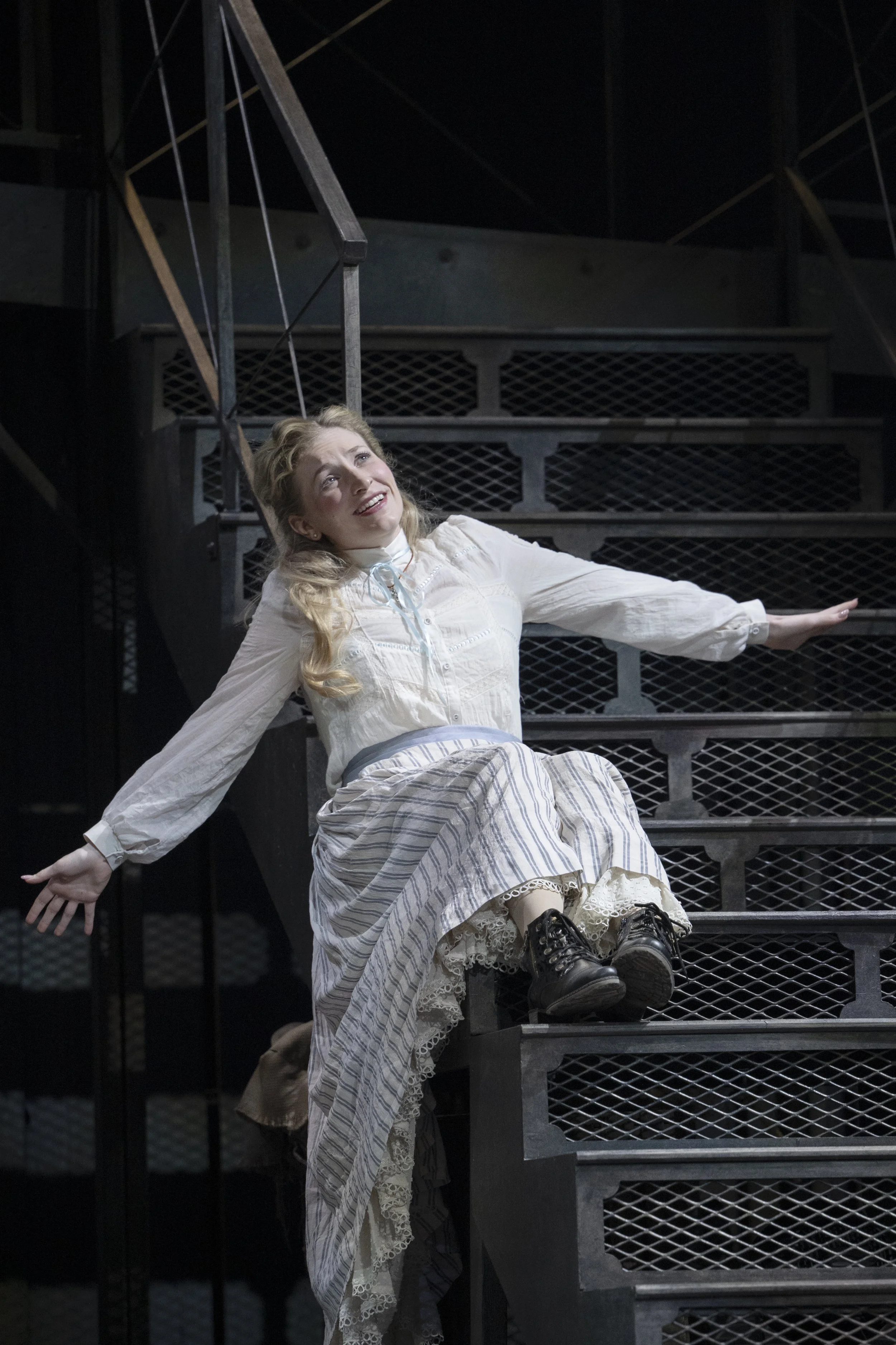
Sarah Dufresne as Gilda in Pacific Opera Victoria’s Rigoletto. Photo by David Cooper
Young Gilda is key to Rigoletto’s tragic arc, her naive love for the devious Duke of Mantua leading to disaster for her and her protective father, Rigoletto—traditionally a court jester, but in this striking Victorian-era setting built in partnership with Pacific Opera, a men’s club janitor—and sets him on a path of seething vengeance. In the production, helmed by B.C. stage veteran Glynis Leyshon, Gilda has a steely core beneath her innocence—and Dufresne has been enjoying digging into that complexity.
“I think she is very strong-headed,” the singer begins. “I think, in this production, she’s not just sort of a sad, lost puppy—and I’m so thankful that she’s so much more than that. She’s very smart, she’s strong-willed, and she knows what she wants. She’s hungry to know more about the world….And unfortunately, because of that innocence, she’s not really realizing that the world is actually not a very nice place.
“Thinking back to when I was 14, 15, 16 gives me really good perspective, because I can look back on some of the decisions that I made in that time, when I fully just believed that I was making the best decision,” she continues. “You don’t have the right experience, necessarily, at that time to be able to think ahead. So I play her a bit as the teenage version of myself. And I have never met a teenage girl that wasn't a little feisty, who wasn’t starting to push back against their parents a bit—and really beginning to understand, even, how to manipulate people a little bit to get the information that you want.”
The opera hinges on the relationship between Gilda and Rigoletto—performed in this rendition by Michael Chioldi (Grant Youngblood played opposite her in Pacific Opera’s version). And he brings a different energy to the show, Dufresne observes—one that’s strong and protective.
“I feel very physically protected and that he really cares for his daughter,” she explains. “He needs to really shield her from these things in a strong way, like ‘I don't want you to feel that,’ like ‘I don't want you to experience that, so you’re not going to experience that.’ And unfortunately, we know that she experiences it anyways.”
Rigoletto has marked a major debut for Dufresne—just as her soprano part will be in Fauré’s Requiem, the French composer’s serene choral and orchestral setting of the Roman Catholic Mass for the dead. It’s a piece Dufresne says she’s always wanted to perform. And it should be stunning to hear her put her refined soprano to the famous solo that takes place in the movement “Pie Jesu”—a transcendent plea for eternal peace. Still, Dufresne admits it’s slightly less taxing than taking the lead in a Verdi opera.
“It’s not like Gilda, where she’s onstage singing almost all the time,” she says with a laugh. “For this one, you sort of just get to do your thing, and then you can sit back and actually enjoy the music.” 

Related Articles