Ariel Barnes brings nomadic spirit and intense curiosity to classic and contemporary cello works
The adventurous artist sees his upcoming program with Vetta Chamber Music as a way of expressing music’s power to console and cheer, even in dark times
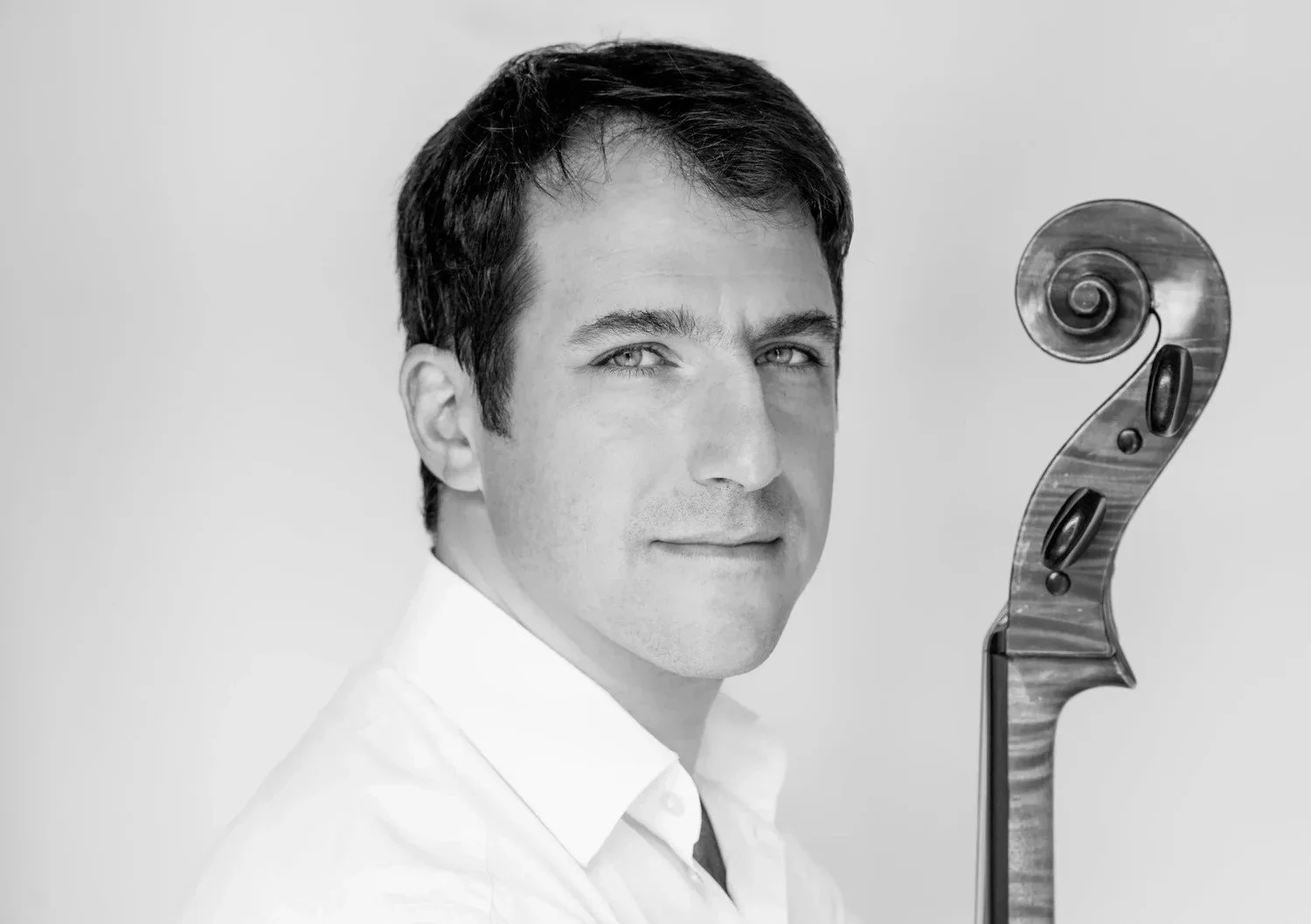
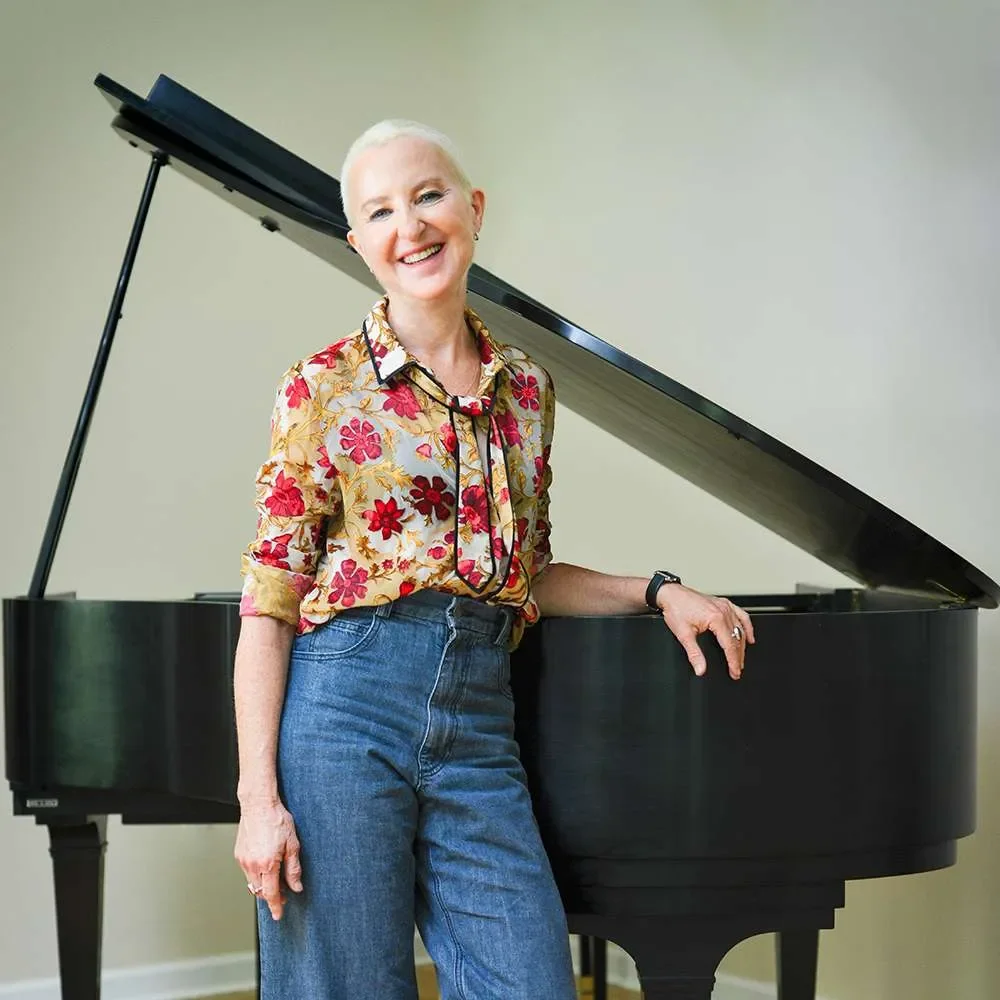
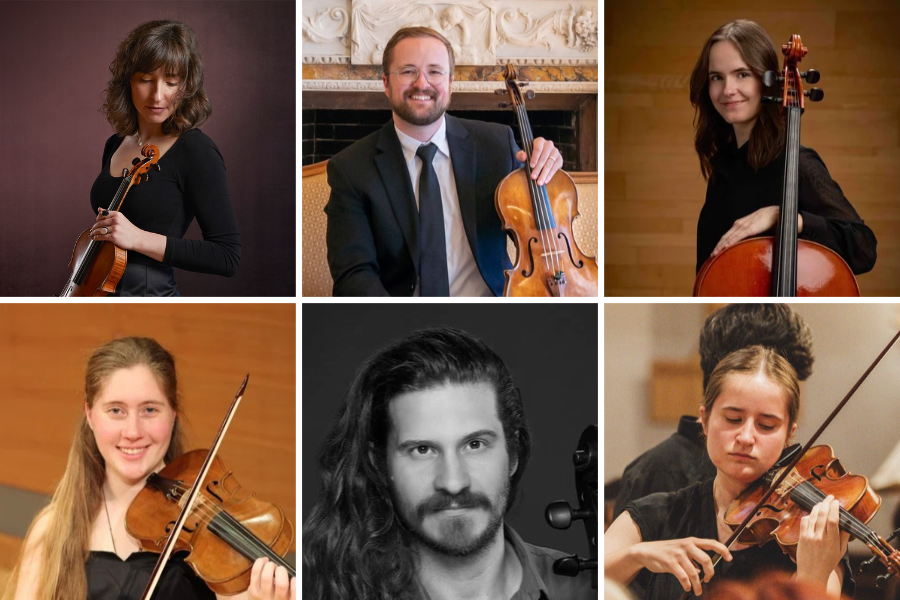
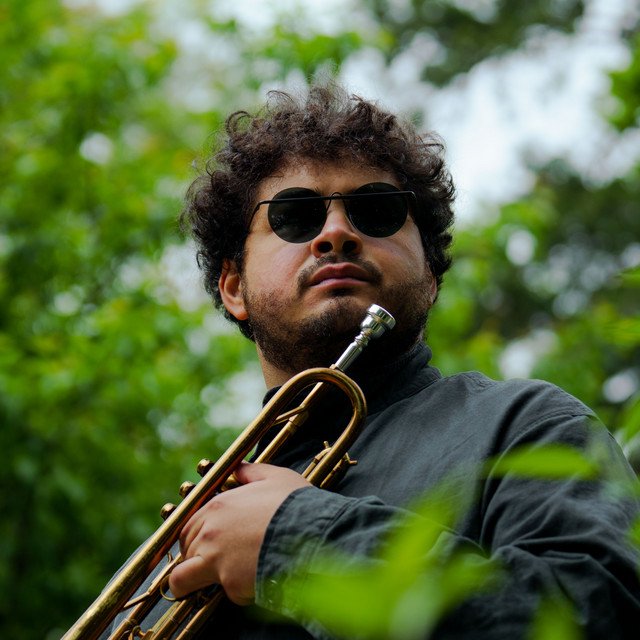
Ariel Barnes. Photo by Anna Reszniak
Vetta Chamber Music presents Music to Warm the Heart at West Point Grey United Church on January 23, West Vancouver United Church on January 24, and the VSO School of Music’s Pyatt Hall on January 25
THERE’S PROBABLY NOT A more appropriate title for a January concert than Music to Warm the Heart, unless it’s Music to Warm the Whole Body, something this listener would sign up for quite happily. Short days, long nights, and global chaos certainly call for heartwarming sounds, and it’s telling that Vetta Chamber Music artistic director Joan Blackman is opting to close the third instalment of her troupe’s 2025–26 season with Felix Mendelssohn’s Piano Trio in C minor.
That’s the one, you may remember, that ends by quoting a sixteenth-century Genevan psalter tune, often used as the setting for the Old Testament’s Psalm 100.
“Make a joyful noise unto the Lord,” it begins.
Being a devoutly secular soul, I prefer to hear Mendelssohn’s use of the hymn as a way of expressing his faith in music’s ability to console and cheer, even in the darkest of days, and Ariel Barnes does not disagree. “Let’s hope it’s a call for faith in humanity, or the good that is represented in humanity,” says the cellist, who will join violinist Blackman and pianist Jane Coop in matinee concerts at West Point Grey United Church on January 23 and Pyatt Hall on January 25, with an evening performance scheduled for West Vancouver United Church on Saturday (January 24). “We need a lot of that right now, don’t we?”
For Barnes, a former Vancouver Symphony Orchestra principal cellist now living in Nuremberg, Germany, playing the Piano Trio in C minor is also a way of fulfilling a long-held ambition. “I’ve wanted to play it since I heard it live at the Banff Centre in the summer of ’99 or 2000, when I was studying there,” he says. “It left a great impression on me, but I’ve somehow never gotten around to playing it. So when Joan mentioned the C minor trio, I just went, ‘Yeah! Perfect!’”
The work certainly combines emotional heft with technical difficulty; even Mendelssohn described its impassioned scherzo as “a trifle nasty to play”. That, however, is the kind of challenge Barnes relishes. “The scherzo has kind of a mischievous quality,” he explains. “I think of Mendelssohn’s scherzos as being iconic, somehow. They kind of set the tone for what a scherzo should be: truly playful, and highly virtuosic, and really exciting. Everything’s very immediate—they’re almost like prestos, you know. And then with this trio there’s a bit of release of all that tension in the last movement.”
Barnes also appreciates Mendelssohn’s path to that release, citing the way that the Piano Trio in C minor moves through the “tumultuous inner struggle” of the first movement, the tenderness of the second movement, and the muscularity of the scherzo, into the fulfillment and peace of its fourth and last sequence.
“Mendelssohn has a very narrative style of writing in general,” he contends. “He deals with Romantic form through storyboarding, with the development of themes and tensions and then the release of it all. Of course, his incidental music, like A Midsummer Night’s Dream, is exemplary. It has a very strong program behind it that everyone can relate to, and it has characters—and I think the reason he was so obsessed with doing that is that he was very much a storyteller. Beethoven also did that extremely well, but it was a little bit more abstract, you know, whereas Mendelssohn’s works have very distinct characters. In his Opus 12 string quartet, for instance, there’s some very, very angelic writing, and the youthfulness of the writing really reflects the age at which he wrote it. The C minor trio is, of course, a much later work and expresses a lot more maturity. However, there is an extremely strong programmatic sense to the music, somehow, even if there aren’t any characters to negotiate through the writing.”
The two works for solo cello that Barnes will present as part of Music to Warm the Heart, which Coop and Blackman will round out with Johannes Brahms’s Violin Sonata in G major, also benefit from strong narrative arcs, albeit expressed in very different ways. One could easily see Frame by Frame as a form of sonic autobiography, “ghostwritten” by the German-Canadian composer Michael Oesterle. A Turning Point Ensemble commission from 2020, it’s essentially a collaboration, with Barnes guiding Oesterle into a playful examination of Baroque form that also mirrors the Toronto-born cellist’s 21st-century immersion in European culture.
“We talked about what the work would be or could be, and I said, ‘You know, I’m interested in something that has to do with German concepts of wandern, or wandering,’” Barnes explains. “I didn’t speak any German when I moved here, but early on in my exposure to the language there were certain words that I really enjoyed, and I found myself enamoured with certain expressions. Like, a word that that could encapsulate something that we couldn’t express in English would help me to understand why people who speak different languages actually think differently or behave differently. The language colours the way they think, or the language has developed certain ways of expressing things that another language doesn’t have, and that ends up developing character traits, personality traits, behavioural traits.
“That’s sort of a long-winded way of saying that one of those words for me, in German, was wandern. And wandern really means ‘Let’s go hiking.’ But it also expresses a nomadic spirit that was part of a romantic dream that I’ve had since I was in school: to come to this part of the world and experience all the different foods and languages and cultures and styles of living—the way people exist. The origins of so much of the music that I’ve been involved in making or studying or being a part of or expressing to people over the years. Wanting to understand it more; wanting to be closer to it. And I was doing that. By the time I talked to Michael I’d been in a number of countries—France, Austria, the Czech Republic, Croatia, Italy. I wanted to touch all these places, and so I told him that I’d love to have a piece for solo cello that reflects all these ideas. And that’s exactly where he went with it. He went to a sense of dancing, skipping, travelling, and moving, with the bow being used in kind of a free, folk-style nature.”
Folk elements also enter into La Rosa Variations, which Barnes’s late father, Milton, composed in 1992 to commemorate the 500th anniversary of Spain’s expulsion of its Jewish population. On a musical level, it’s an immediately accessible and thoroughly tonal work that draws on an ancient Ladino ballad, “La Rosa”, that describes a man’s yearning for an absent lover. But in performance, at least as performed by the composer’s son, other levels of absence, mourning, and reconciliation will enter the stage.
The cellist explains that he and his father were not close, although there was enough mutual respect that the older Barnes sent his son the La Rosa Variations score soon after its completion. Barnes didn’t play it in public, however, until his father’s memorial service in Toronto in 2007.
“It was a very significant moment for me as a young professional cellist,” he says. “And I somehow now carry something that I hadn’t really taken to heart: that my father was an influential Canadian composer, a Canadian composer who was well loved and worked with a lot of Canadian musicians from the previous generation.
“In some ways, due to a hugely complicated family history. I didn’t want to look too closely at all of that,” he adds. “But as a result of coming to La Rosa Variations and playing it at his memorial, I was kind of coming to terms with a lot of past experiences in my life, and it turned into a way for me to connect with who my father was a little more deeply—which, obviously, makes sense. With no exaggeration, playing his music is really the way that I try to talk to him a bit, clichéd as that might sound.”
Clichéd? Not in the least—but most definitely heartwarming. 

Related Articles