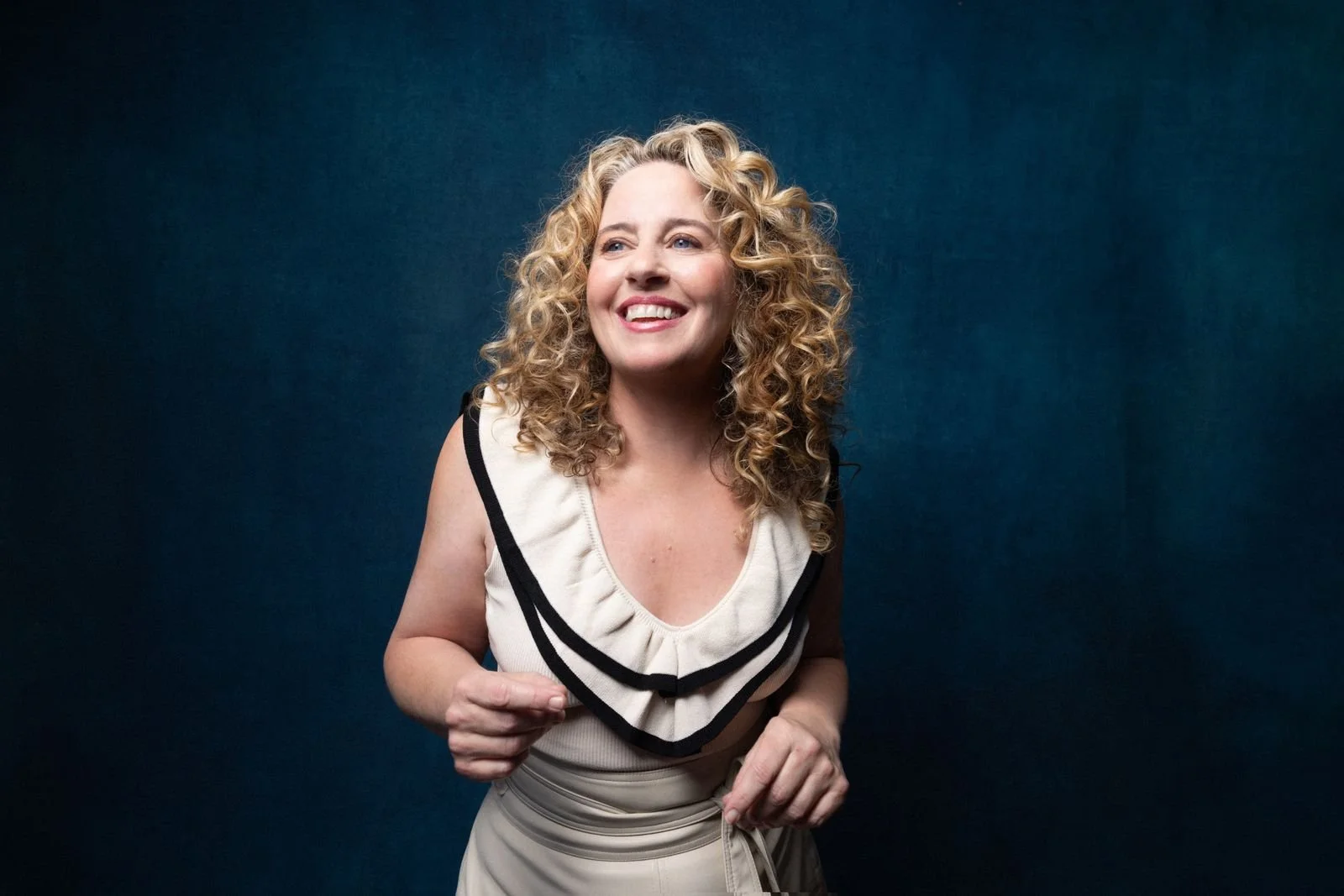
Franklinland takes an irreverent look at one of the Founding Fathers of the United States
Actor Brian Markinson says Lloyd Suh’s script takes artistic liberties with the life of Benjamin Franklin
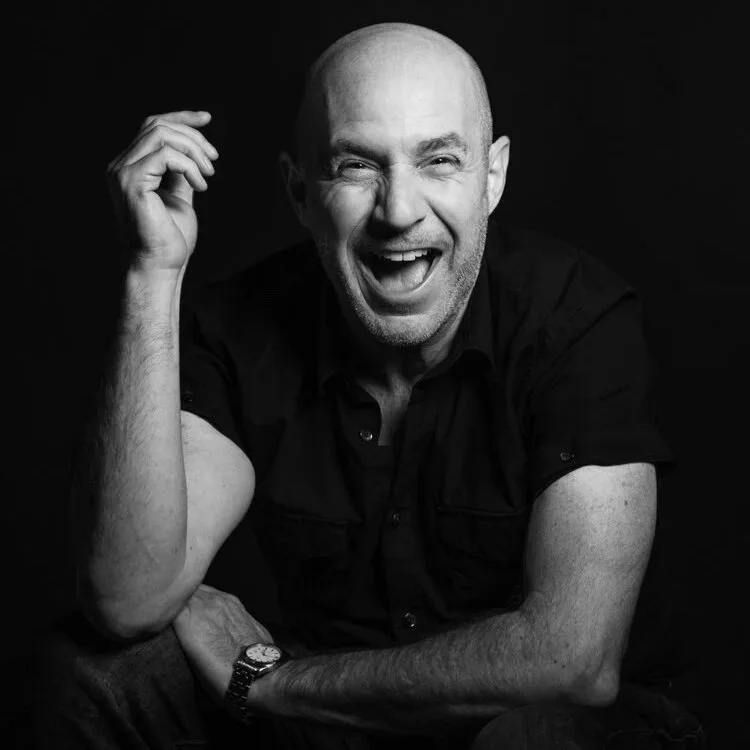
Brian Markinson
The Arts Club Theatre Company presents Franklinland at the Lindsay Family Stage from March 12 to April 5
FROM AN OUTSIDE perspective, it can seem as if nothing is truly sacred in the United States, especially in recent years. There are exceptions, of course. Woe betide anyone who questions the sanctity of the Founding Fathers, for example. Given the quasi-religious fervour of U.S. patriotism, it’s not too great a stretch to say that the likes of George Washington, John Adams, Thomas Jefferson, and Alexander Hamilton are the American equivalents of the Twelve Apostles.
Their deeds have become deeply ingrained in the American identity: Washington crossing the Delaware. Patrick Henry declaring “Give me liberty or give me death!” at the Second Virginia Convention. Paul Revere riding from town to town to warn the colonial militias of Massachusetts that the British Army was approaching. John Hancock inscribing his outsized, baroque signature on the Declaration of Independence. Benjamin Franklin venturing out into a storm to fly a kite with a metal key tied to the string in order to prove the electrical nature of lightning.
Considered the greatest polymath since Leonardo da Vinci, Franklin was a prolific writer, a publisher, an inventor, a statesman, and—perhaps most crucial to his sacrosanct status in the U.S.—a staunch proponent of American independence from Great Britain.
He was also, if playwright Lloyd Suh’s Franklinland is to be believed, an insufferable egotist and kind of a shitty dad to his first-born son, William.
U.S.–born actor Brian Markinson plays Ben Franklin in the Arts Club’s upcoming production of Franklinland. He acknowledges that Suh’s script is not especially flattering to the man who has been called “the first American”. “This Benjamin Franklin, as written, is myopic, narcissistic, driven—those things that seem to translate to the country of my birth rather well, and certainly these days it has a different resonance,” says Markinson, who moved to Vancouver in the late 1990s.
Omari Newton directs Markinson in Franklinland, which also stars Luc Roderique as William and Jakobe Jenkins as William’s own estranged son, William Temple Franklin (referred to in Suh’s script as simply “Temple”).
Markinson tells Stir that he has a personal interest in the historical era covered by the play, but he notes that all of the research in the world would not necessarily prepare him for Suh’s comedic retelling of events.
“It’s not a historically accurate piece,” the actor admits. “There are artistic liberties being taken. But mainly, the play’s the thing, so what’s on the page is the world. I have Ken Burns’s Revolutionary War documentary [The American Revolution], and now and then I’ll dip into a little bit of Franklin stuff, and it’s helpful and a hindrance. We’re trying to free ourselves from any bounds. It’s a big sandbox and we’re gonna play in it, and it’s gonna surprise some people.”
In Franklinland, Ben shows what kind of a paternal figure he is right from the start, seeming to give a 20-year-old William the benefit of the doubt while simultaneously undercutting his own apparent kindness with a dose of venom. “Despite all evidence to the contrary, there must be some small capacity for greatness within you,” he tells his son. “Even though your birth mother was a random prostitute, you are still my son.”
Some may characterize this as tough love, but most would see it as downright abusive. In reality, William grew up regarding Ben’s wife, Deborah Read, as his stepmother. Some historians have posited, however, that Read was, in fact, his mother, but that she gave birth to him before she became his father’s common-law wife. In colonial America, a man having an illegitimate son was less scandalous than the daughter of a well-respected Quaker couple bearing a child out of wedlock.
The biggest rift between father and son, however, was a political one. William served under King George III as the last colonial governor of New Jersey from 1763 to 1776, remaining loyal to the British Empire even as Ben became a key figure in the American Revolution. To most present-day Americans, this would make Ben the good guy and William something of a villain, but not in Franklinland.
“This character, in a lot of ways, is the antagonist of the piece,” Markinson says of Ben. “Everybody’s going to bring their own knowledge of what they know about them and that world and the United States. But for me, it’s very much about a father and son, and how we have to separate from our fathers and the pedestals that we put them on—and all of that you can add to the geopolitical chaos that’s going on in the world right now, and it makes for an interesting evening, I think.”
Ben and William never fully reconciled, but the elder Franklin did include his son in his last will and testament when he passed away in 1790. “Franklin died with a lot of money and left, ultimately, a worthless piece of land to his son, and that was it,” Markinson says.
There’s a Canadian connection there, as that land was an 8,000-hectare parcel in Nova Scotia, near where Enfield is today. Ben had purchased the land decades earlier, and according to the website Backyard History, bequeathing it to his son was not so much an act of love as a “passive aggressive slap in the face”: “He had never done anything with it, had never developed it, and wasn’t even entirely sure that he actually owned it anymore since the terms of his buying it was that he would move there within ten years of receiving the land.”
In Suh’s alt-historical version of things, Ben had bought the land with the intention of turning it into his very own colony, Franklinland, hence the play’s title.
Markinson was born in Brooklyn and is a product of the American public-school system. In spite of that, he says he has no particular reverence for Benjamin Franklin. He tells Stir that he is genuinely curious how an audience in Canada—where the Founding Fathers of the United States aren’t accorded the same near-sainthood that they are stateside—will respond to Suh’s cheeky take. He’ll get a chance to find out first-hand on March 31, at a special “Talkback Tuesday” performance of Franklinland.
“I’m really looking forward to that,” Markinson says. “It’s interesting. You don’t know; you’re in a vacuum until you bring an audience in, because they really are the last character, the catalyst of storytelling. Otherwise it’s just like smoke in a room until you open the doors and let people come in and give their reaction to it.” 

Related Articles