At the Vancouver Art Gallery, Lucy Raven: Murderers Bar chronicles the destruction of a century-old dam
In Capture Photography Festival presentation, moving-image installation shows a bird’s-eye view of Klamath River restoration
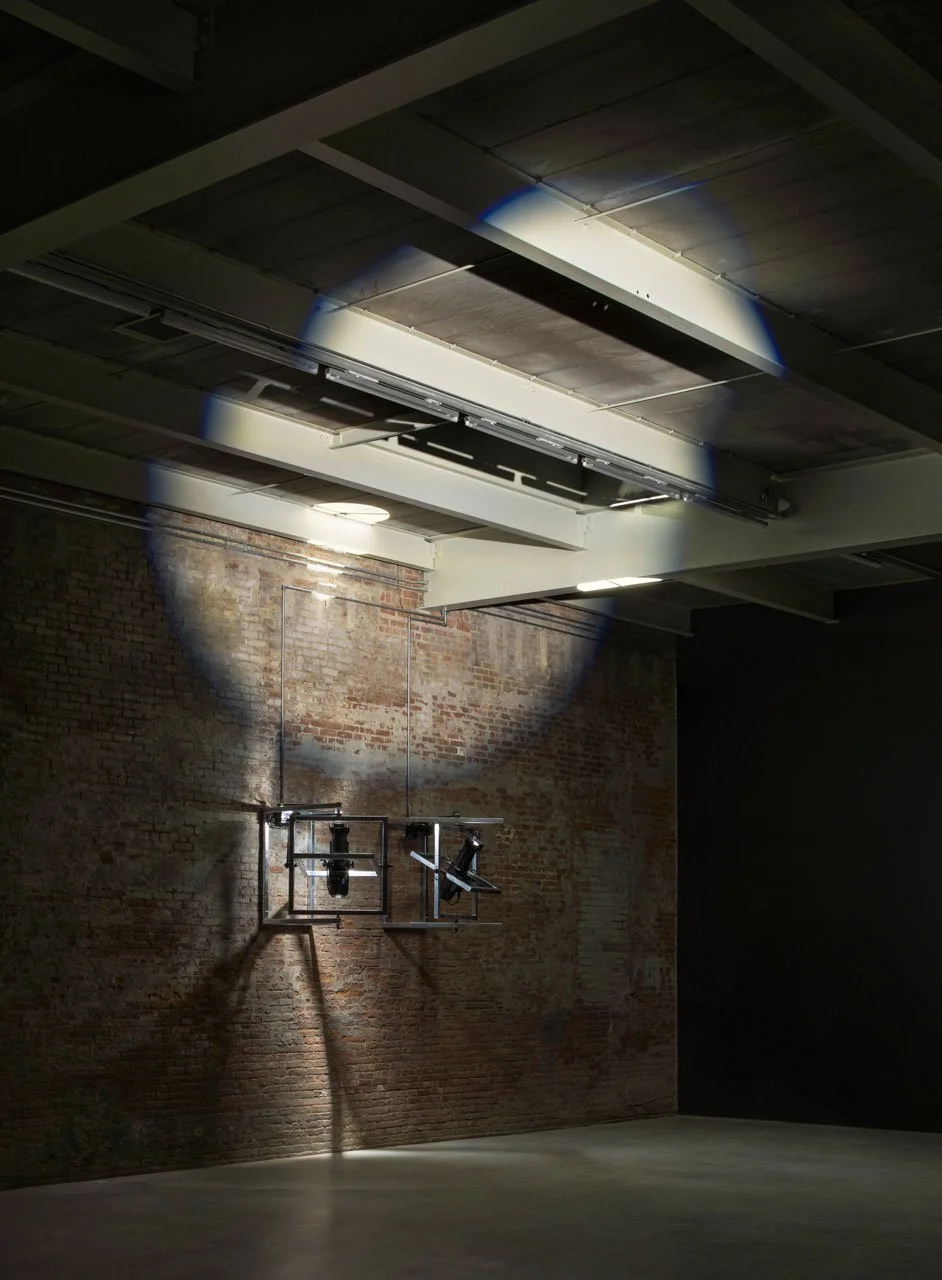
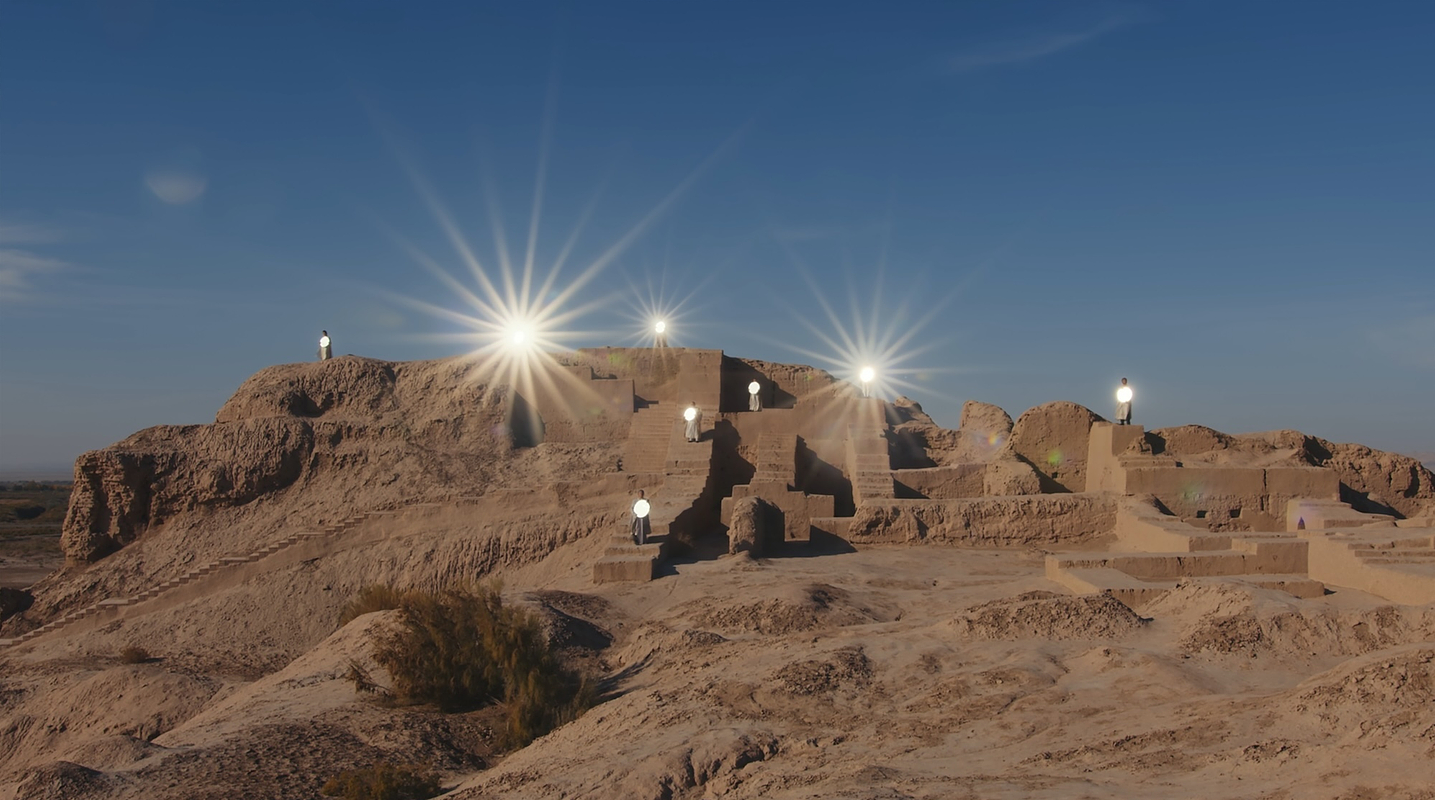
Lucy Raven’s Casters X-2 + X-3, 2021, installation view at Dia Chelsea in New York, galvanized steel frames, stage lights, motors, and control system. Courtesy of the artist and Lisson Gallery, © Lucy Raven. Photo by Bill Jacobson Studio, New York, courtesy Dia Art Foundation, New York
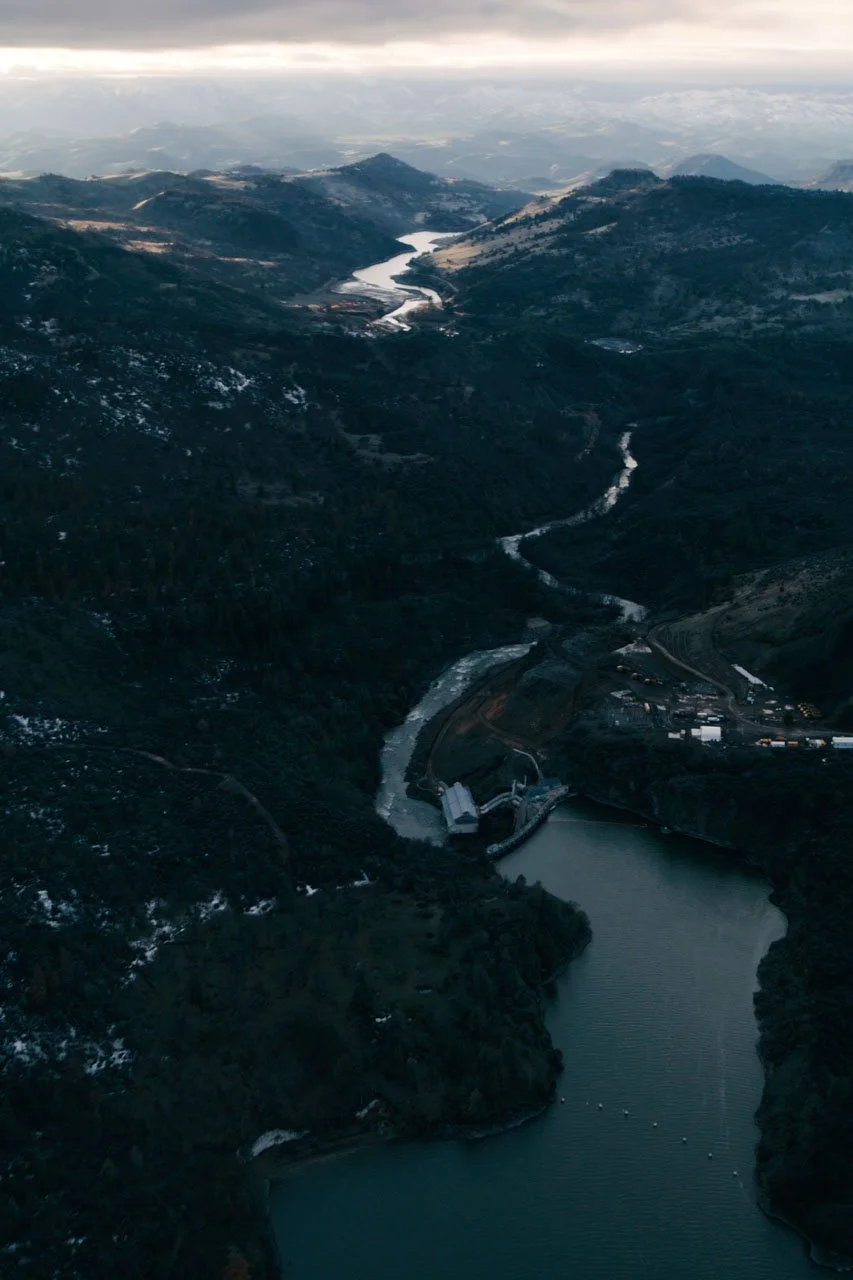
Lucy Raven’s Murderers Bar, 2025, production still from moving-image installation. Collection of the Vancouver Art Gallery and the Vega Foundation, purchased jointly with funds from the Vancouver Art Gallery General Acquisition Fund and the Vega Foundation. Courtesy of the artist and Lisson Gallery, © Lucy Raven
The Vancouver Art Gallery presents Lucy Raven: Murderers Bar to September 28, as part of the Capture Photography Festival
IT’S NO SECRET that dams are the backbone of British Columbia’s energy system. According to the Government of Canada, the province generates more than 85 percent of its electricity from hydro power each year.
But while dams are often lauded as an environmentally conscious alternative to fossil fuels like coal or gas, they come with some serious disadvantages. These range from floods that eliminate wildlife habitats to methane emissions caused by decaying plant material, to historic drops in salmon populations (as was the case with the Kenney Dam up north on the Nechako River).
Dams are the topic at hand in Murderers Bar, the titular work in a new Vancouver Art Gallery exhibition curated by former CEO and executive director Anthony Kiendl. The video installation by New York City–based multidisciplinary artist Lucy Raven shows the removal of a century-old hydroelectric dam along the Klamath River in northern California.
“I felt right away that there was a particular resonance with this region,” Kiendl noted during a tour of the exhibition at the VAG, adding that Murderers Bar addresses “issues of colonization of the West, industrialization, nature, hydroelectric power, and the impact of polluting on Indigenous communities.”
Raven, who was also present for the tour, said that Murderers Bar is the third installment in her moving-image trilogy “The Drumfire”, about the deformation and reformation of the Western U.S.—and that it’s by far the darkest of the three works.
Viewers funnel into an unlit room and sit on aluminum bleachers in front of a massive screen, where a vertical video plays on a 42-minute loop. The footage shows the dam from all angles. Cameras skim the surface of the water contained in its huge reservoir, pan over mossy concrete siding, and plunge into an underbelly of dark, rusty pipes. Meanwhile, a score by experimental musician Deantoni Parks builds in intensity, with foreboding strings and eerie rattling noises.
At one point, two workers in neon-yellow safety vests walk along the sediment-coated rocks of the river bed at the foot of the dam, mere specks compared with the wall that rises behind them. Later on, when the camera is placed above one of the workers’ headlamps, he uncoils red wire and slices yellow tubing with an X-Acto knife—and it becomes clear that we’re watching a first-person perspective on explosives being planted inside the dam.
What really comes as a shock is the explosion itself. Thunderously loud, the blast reverberates over the audience in the bleachers as they watch a hundred years of water pressure get unleashed onto the river bed. The sound is so immense, in fact, that you can hear it across the exhibition, from the winding staircases of the rotunda, where another work called Casters X-2 + X-3 is set up.
There, in two niches on either side of the darkened area, spotlights swivel on casters derived from a Second-World-War anti-aircraft artillery system, allowing them to turn freely without the nuisance of tangling cords. Two parallel circles of light are projected onto the walls, intersecting in the middle of the space and then diverging once more.
The patterns created here at the Vancouver Art Gallery are completely unique to the space—Raven originally designed Casters X-2 + X-3 for the New York art museum Dia Chelsea in 2021, but it can be reinstalled in any number of locations. For viewers entering the exhibition through the rotunda, it gives off the impression that a show is about to begin.
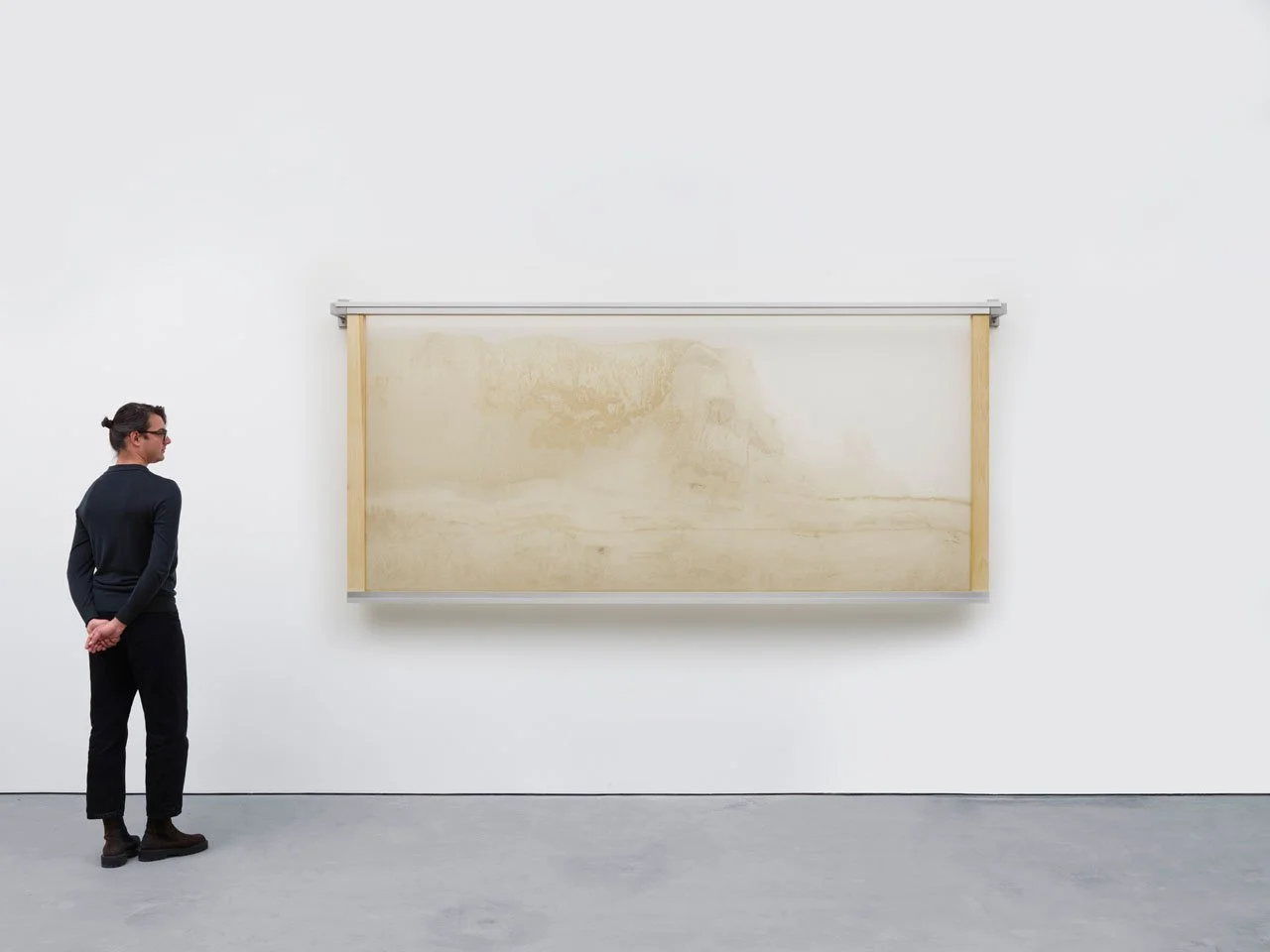
Lucy Raven’s Deposition, Dam Breach 13, 2024, sand, dirt, cement, salt water, silk, wood, and aluminum. Courtesy of the artist and Lisson Gallery, © Lucy Raven. Photo by Mark Waldhauser
And back in the screening room, the show is well under way. Muddy water surges from the reservoir through a tunnel at the foot of the dam’s exterior wall, rushing over dry rocks as the sun shines down, capturing a serene mist. For a moment, it feels as though nature is righting itself. But when the camera retreats into the shade, the scene suddenly looks ominous; at one point, two small birds are nearly engulfed in the flow of the water.
As Raven points out during the tour, much of Murderers Bar was filmed from a helicopter, offering a perspective on the sheer scale of the structure and helping viewers with “feeling the power of the river, but also its beauty.” All of those contrasting elements—light and dark, small and big, right and wrong—make the film infinitely captivating, even with its absence of dialogue. Raven’s choices as director and editor provide us with an intimate look at a historic event we may otherwise never have seen.
It’s an incredible 200 miles from the dam to the ocean. The dirty-brown water flows over dry rock, eventually meeting up with an icy turquoise tributary of the river flowing from elsewhere; the comparison shows just how much sediment the water from the dam is dislodging. Every so often, huge blasts rock the space as more explosives are detonated.
The Klamath dam was removed after years of activism and lawsuits from the Indigenous peoples in the region—including the Yurok Tribe, Karuk Tribe, Klamath Tribes, and Shasta Indian Nation—who fought to restore the habitat of the at-risk Chinook and Coho salmon. The project, considered the largest dam removal in American history, prompts reflection on the extent to which B.C.’s dams are impacting the wildlife here. And although Raven stresses that she isn’t a documentarian, she does say that her practice examines “violence in relation to the land.”
A few other works in the Murderers Bar exhibition give us more context to the footage of the dam. In the “Depositions” series, four variations of a piece Raven calls Dam Breach model the flooding of a small-scale dam. A variety of raw materials are used—sand, dirt, cement, salt water, silk, wood, and aluminum—to show the build-up and release of water that took place in a much larger way with the Klamath River dam. It’s a nice bit of context showing just how much pressure the structure contained.
While we don’t always bear witness to the devastating effects that dams have on the environment, Lucy Raven: Murderers Bar gives us a bird’s-eye view of the regeneration of life that’s possible with their destruction. Raven takes great artistic care to cover such a historic event in a way that at once captures mourning for what has been lost and celebration for what’s to come.
And as Vancouver audiences watch the Klamath River burst free from a century of confinement, they may very well be left with a sense of hope for environmental restoration. 

Related Articles