Ballet Jörgen gives Shakespeare’s A Midsummer Night’s Dream a ’50s Albertan twist
Fun riffs on the classic include a moose-headed Bottom wearing buffalo plaid and an appearance by a royal couple

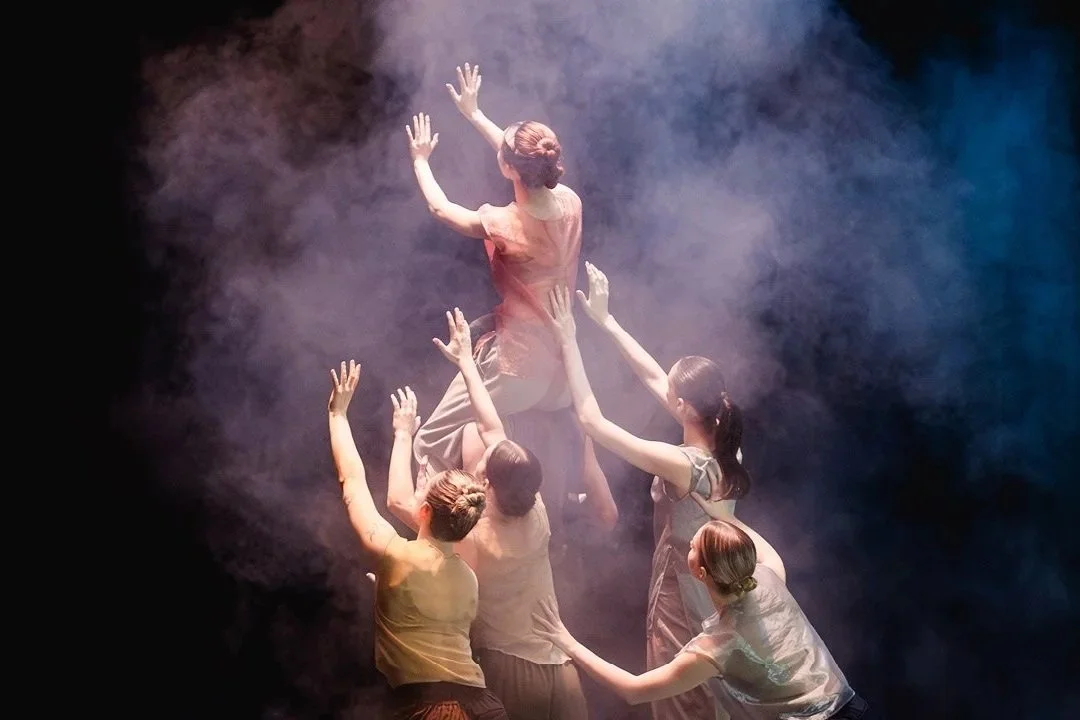
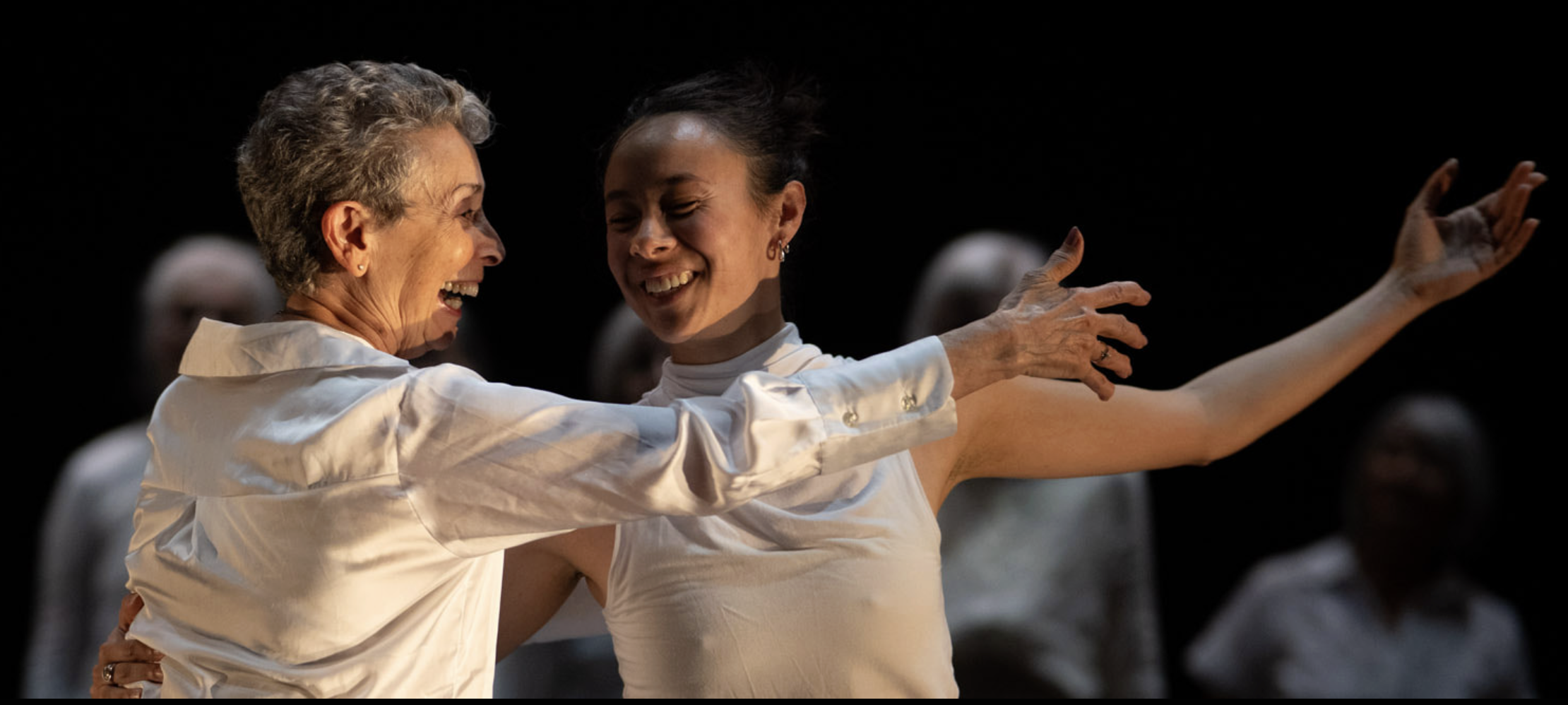
Akari Fujiwara and Omar Hernandez in Ballet Jörgen’s A Midsummer Night’s Dream. Photo by Tiffany Manankil
Ballet Jörgen presents A Midsummer Night’s Dream at the Massey Theatre on February 7 at 4 pm
CHOREOGRAPHER BENGT JÖRGEN is taking Shakespeare’s A Midsummer Night’s Dream from ancient Athens to a small town in northern Alberta.
In the brand-new Ballet Jörgen production, the year is 1951, and Princess Elizabeth and Prince Philip are on their first royal tour of Canada. While in Alberta, they encounter regular townsfolk (think farmers, mechanics, and the likes) and four small-town teenagers dealing with the messiness of young romance. For Shakespeare purists, that foursome is the equivalent of the love square between Hermia, Lysander, Helena, and Demetrius.
Speaking to Stir by Zoom, Jörgen posits that A Midsummer Night’s Dream is a timeless story because it reveals the folly of humankind—which, unsurprisingly, has stayed largely consistent throughout history, no matter where you’re from.
“Things haven’t changed, you know?” the choreographer reflects. “We’re petty, we fall in love, we fall out of love, and we make fools of ourselves. And I think that’s what makes this play so much fun is that we’re making fun of everybody.”
Much like the Princess Elizabeth and Prince Philip of this story, Ballet Jörgen is currently on a cross-Canada tour, bringing A Midsummer Night’s Dream to dozens of the country’s smallest and most underserved communities. For Vancouverites, the closest stop will be New Westminster’s Massey Theatre on February 7; other destinations in B.C. include Vernon, Campbell River, Duncan, Trail, Nelson, and Cranbrook.
The set design for A Midsummer Night’s Dream is fairly minimalistic to ensure that audiences experience the same production calibre across the board, whether they’re seeing the show at a stripped-down stage or bigger theatre. Sue LePage has crafted two main settings—a northern forest and a rustic townscape—to effectively tell the story. Having also designed Ballet Jörgen’s The Nutcracker: A Canadian Tradition, which transposes the original 1820s German-set story to 1912 northern Ontario, she’s familiar with what it takes to give a classic show a Canadiana twist. With a little magic, she’ll be setting this production beneath the twinkling stars and colourful northern lights.
LePage is also behind the costumes for A Midsummer Night’s Dream. Several dancers play animals, from a fluffy-eared lynx to an energetic rabbit. Then there are magical forest fairies in lilac leotards adorned with leaves and townsfolk wearing floral-patterned prairie dresses.
There will also be up to a dozen different youth dancers at each show playing roles like trainbearers, mice, bunnies, and little fairies. Ballet Jörgen works with dance schools across Canada, incorporating young local artists into the production through a free training program. It’s a special opportunity for the kids to perform onstage alongside the 20-odd professional dancers that tour with the company full-time.
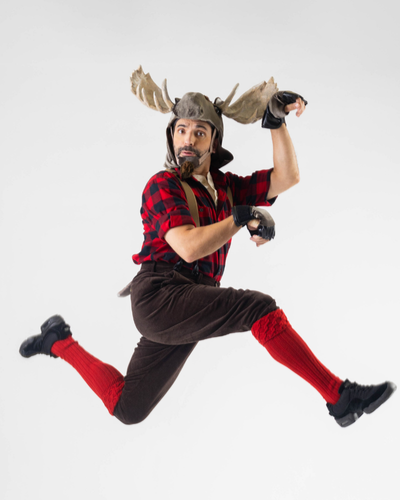
Daniel Da Silva as Bottom in A Midsummer Night’s Dream. Photo by Tiffany Manankil
Many people speculate that Shakespeare originally wrote A Midsummer Night’s Dream as a commentary on the aristocratic weddings of his time. But Jörgen notes that at the heart of it all, the Bard actually pokes fun at all those pretenses, which helps bring levity to the play—and thus to his ballet adaptation.
“You think about a Shakespearean play, and people go ‘Oh myyy, that’s heavy,’” says Jörgen with a smile. “But this is about making sure kids get it, too. So far we’ve done four shows, and the kids absolutely love it. Most of them say they want to see it again. And they get it. They understand the story just by watching it.”
Part of that is thanks to the sense of mischief in the production. Jörgen has amped that up with some Canadiana gags; for instance, donkey-headed Bottom—the play’s main comic relief—will be a moose wearing buffalo-plaid flannel instead, played by longtime company member Daniel Da Silva. It’s all set to Mendelssohn’s original score, which has romantic music at its core, while incorporating whimsical elements like scampering “fairy feet”.
If kids across Canada can understand A Midsummer Night’s Dream, says Jörgen, that’s the perfect indicator that the show is accessible to all viewers, whether they’re the most hardcore balletomanes or have never seen a full-length dance production before.
“Sometimes people are a little worried about dance,” the choreographer acknowledges. “They don’t think they’re going to understand what’s going on. And what we really try to do is make dance accessible in the sense that people understand. They don’t have to know what dance is. Basically just come and enjoy the show—and if you don’t get it, or you don’t have a good time, we haven’t done our job right. So I think that people don’t need to be scared.” 

Related Articles