New Mimosa String Quintet goes big on Boccherini at Early Music Vancouver
Acclaimed cellist Christina Mahler explains how she was captured by musical and technical innovations of the unjustly overlooked 18th-century composer
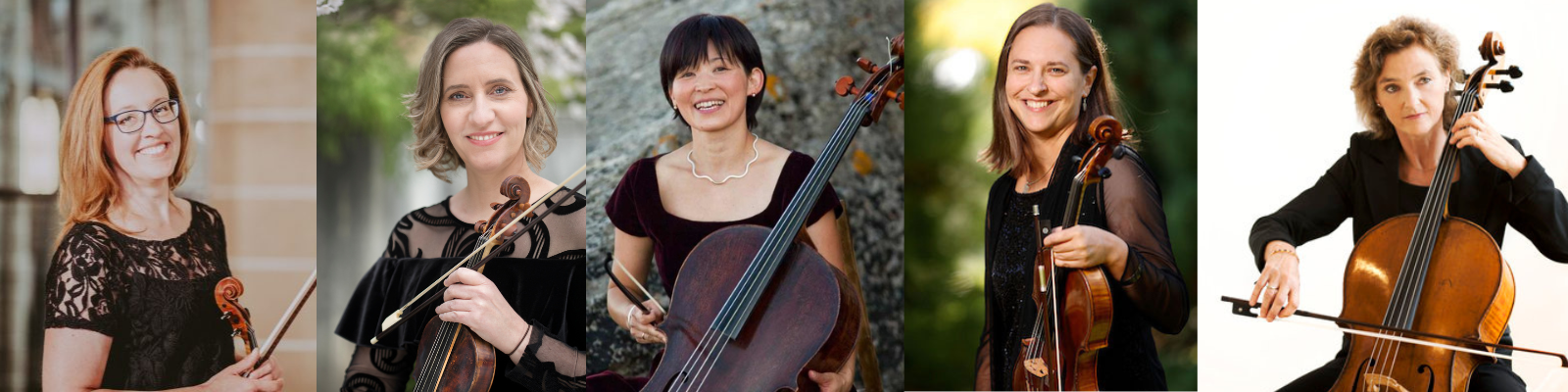
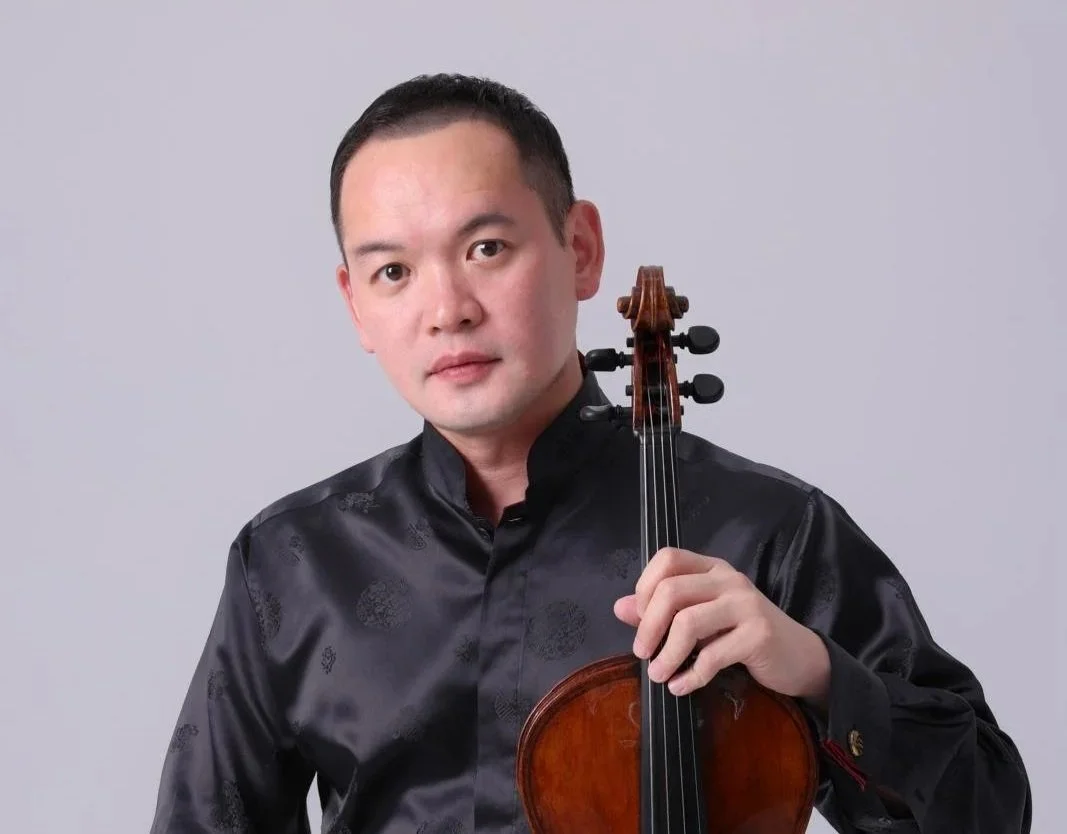
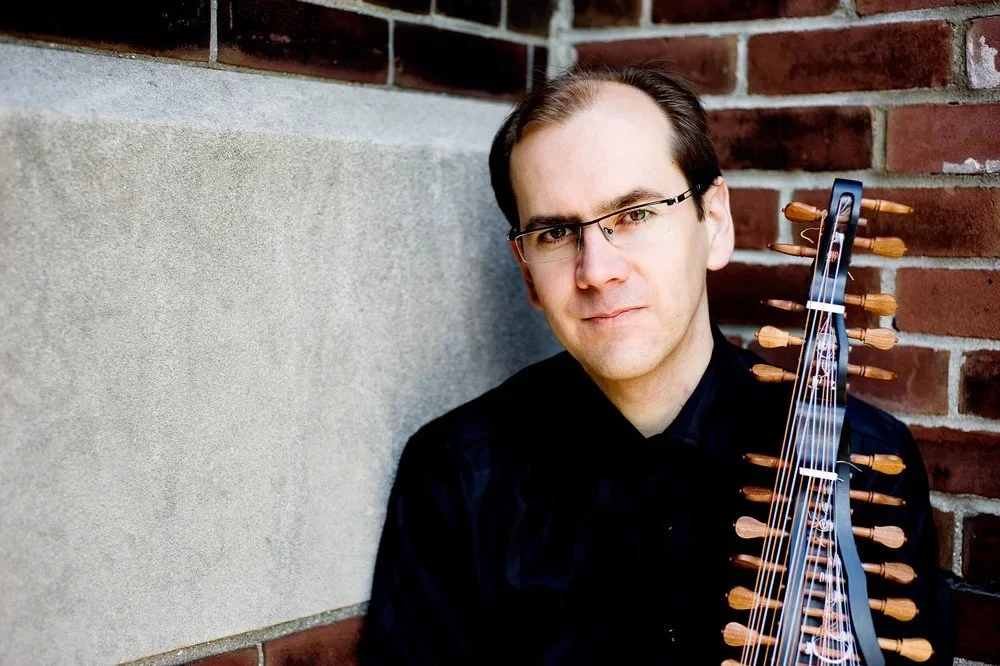
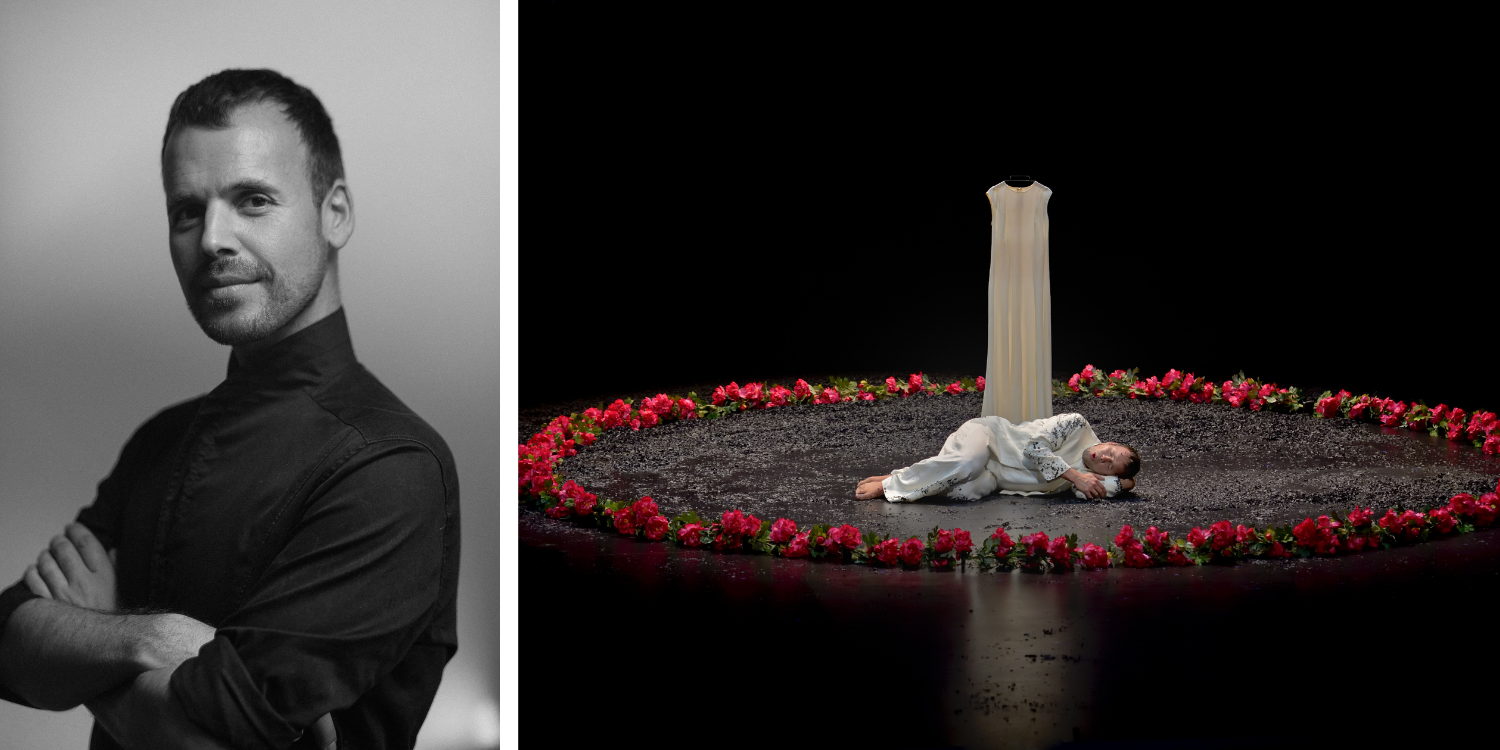
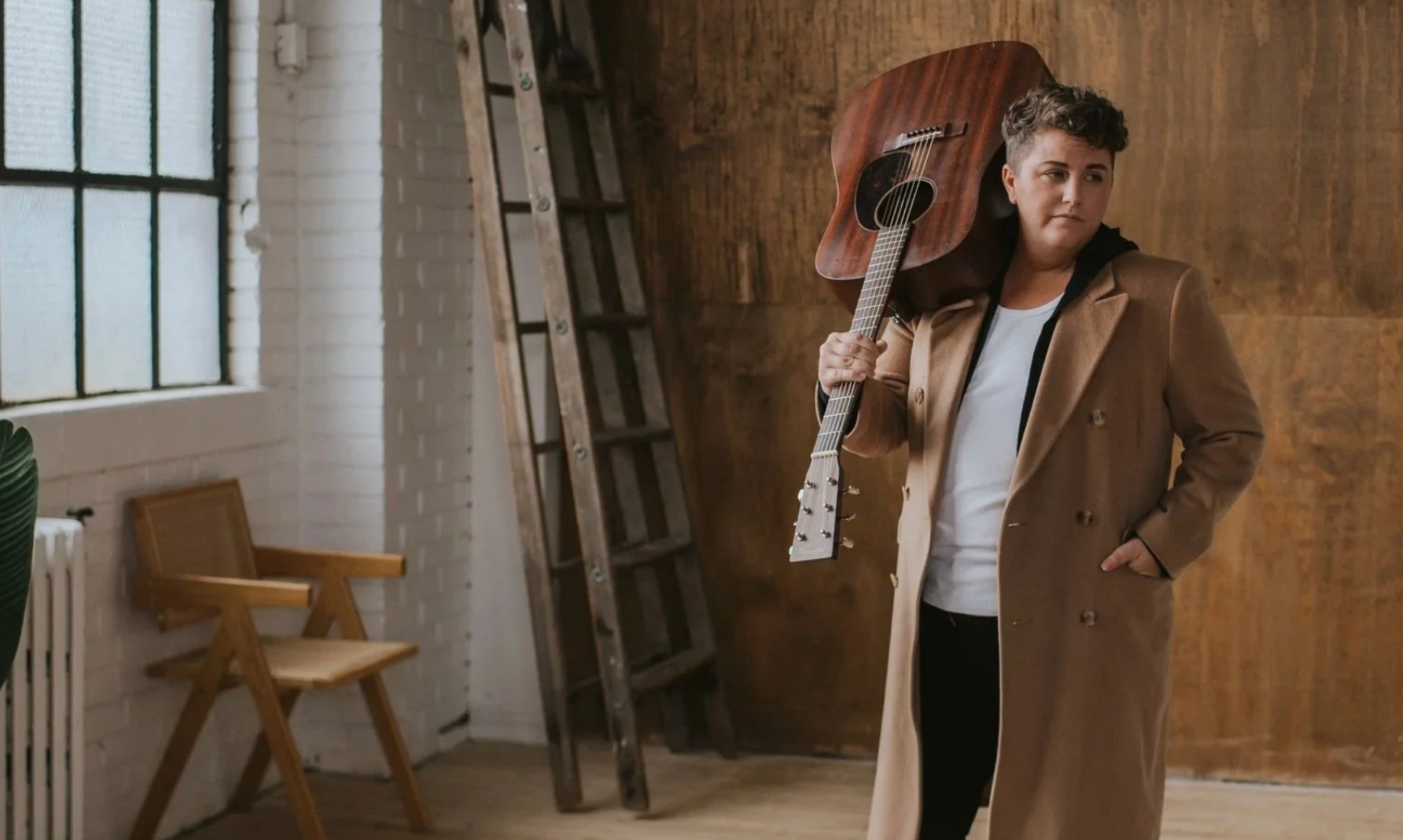
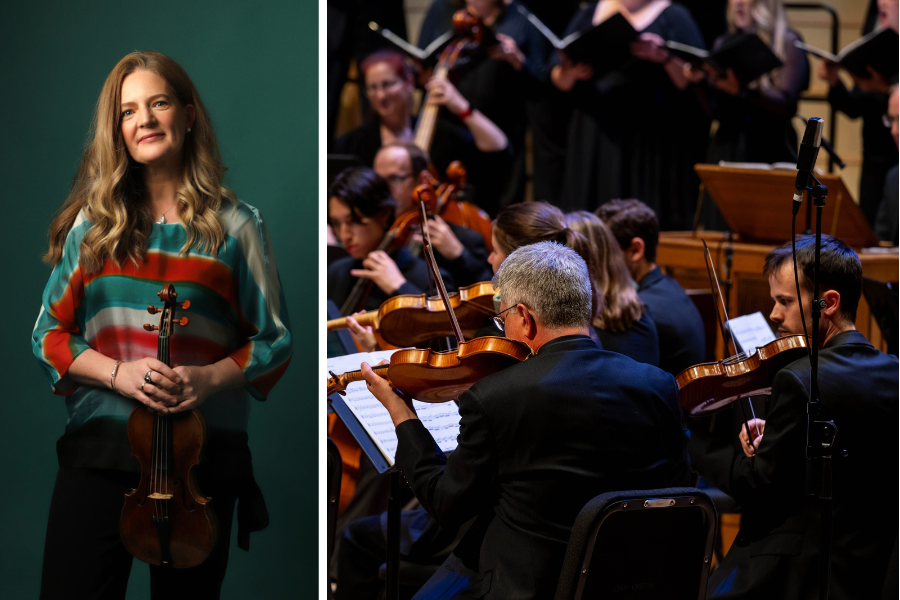
From left, Mimosa Quintet’s Christi Meyers, Chloe Meyers, special Swedish guest Mimé Yamahiro, Mieka Michaux, and Christina Mahler.
Early Music Vancouver presents Schubert & Boccherini: Mimosa String Quintet at Christ Church Cathedral on November 1
IT’S A FAIRLY SAFE bet to say that for most listeners, even most educated listeners, the string quintets of Luigi Boccherini remain terra incognita—and for good reason. For centuries, the string quartet has dominated the chamber-music world, both for its portability and for its perfectly balanced sound. Adding a second cello arguably skews that mix toward the dark side and complicates transportation considerably, at least in this age of compact cars and ever-shrinking overhead bins. In addition, one can search the sheet-music sections of libraries and music stores worldwide and find nary a score for the five-piece ensemble, with the possible exception of Franz Schubert’s final chamber-music work, the String Quintet in C major.
But we’ll get to that later. For now, what concerns us is the relative and in many ways continuing obscurity of the Boccherini quintets, a situation that’s all the more puzzling considering that the Italian composer has had his champions in the past. In fact, in 1798, seven years before Boccherini’s death, the esteemed violinist and critic Jean-Baptiste Cartier wrote that “if God wanted to speak to Man through music, He would do so through the works of Haydn; if He wished to listen to music Himself, He would choose Boccherini.”
Higher praise would be hard to imagine. No doubt, however, working in culturally conservative Spain rather than Paris, Venice, or Vienna held Boccherini back. His fondness for the unusual quintet format, necessitated by his own working ensemble, did not help. And perhaps his prolixity—he wrote more than 100 quintets, in addition to some 30 symphonies and a dozen cello concertos—added to an overall impression that his work was more facile than essential.
Fortunately, we are now discovering otherwise, and Christina Mahler, former principal cellist with Toronto’s esteemed Tafelmusik ensemble and now a Victoria resident, has become one of Boccherini’s leading apostles. So why, out of that vast body of work for string quintet, has she chosen to feature the String Quintet in G minor when the newly formed Mimosa String Quintet makes its local debut in an Early Music Vancouver–sponsored concert at Christ Church Cathedral on November 1?
“Just because it’s close to my heart,” she freely admits, in a telephone interview from her home. “That’s all. I love this piece, and it’s not that I don’t love the other pieces that he’s written, but this one just jumped out at me, and that’s why I wanted to do it.”
In general, she continues, the Boccherini quintets combine beautiful sonorities with stimulating technical challenges. The composer himself was one of the leading cellists of his era, and made full use of his considerable abilities. As Mahler notes, “He developed playing in a high register because he grew up with a father who played the double bass, and they were concertizing from a fairly young age, for Boccherini. And I think because of the double bass he just decided that therefore the cello would be better off in a higher register, and he started writing all this pretty high repertoire. He even developed a specific way of writing things down, so that you would know where you’d want to play it. He used the [left] thumb as a capo, and if he wanted you to, let’s say, put your thumb on an A and a D on the higher strings, he would write it in the violin clef. So you would always know where he would like you to shift to a different position, and play that whole passage in that position.”
Extended techniques, alternative notation systems: one could almost argue that Boccherini had a surprisingly modern sensibility, at least in his quest to extend the possibilities of his instrument. Ironically, however, Mahler argues that one of the reasons his music has been overlooked is that it does not sit well on modern instruments. “He has this gentle, warm, suave character in his writing, and that doesn’t work very well when you start playing on steel strings and you start playing with a much more sustained bow stroke,” she explains. “When you change these elements of the instrument, the music doesn’t speak anymore. It doesn’t come to life.”
The cellist has the perfect solution for this conundrum, however. With the Mimosa String Quintet, she’ll be playing with gut strings and her primary instrument: an 18th-century José Contreras cello made in Madrid. Although there’s no record of it ever passing through Boccherini’s hands during his 37-year tenure in Spain, it’s an ideal fit for his music. And when the Mimosa players switch over to the aforementioned Schubert quintet, Mahler’s second-best cello will come into play: she’s loaning her 19th-century French instrument to Japan-born, Sweden-based Mimé Yamahiro. The two will also switch roles, with Yamahiro handling first-cello duties for the Schubert. Sisters Christi and Chloe Meyers will also move between first and second violin during the intermission; violist Mieka Michaux rounds out the quintet.
It’s an apt approach for a program in which, as Mahler allows, the two featured works don’t have much in common apart from their instrumentation.
“The way I see it, Boccherini was from the Mediterranean. He grew up in Italy and he lived in Spain as an adult man, and that is such a different influence and climate,” she says. “Schubert was Austrian and spoke German; what a big difference right there! And it’s two generations later, we shouldn’t forget, because they were about 50 years apart, 54 years apart. So those elements by themselves make for quite a big difference. Schubert’s piece is profound and very much loved as chamber music of the 19th century, but in fact as music they don’t have very much in common, I find.
“The link is two cellos, and the high cello does quite a bit together with the first violin in both cases,” she adds. “They have that in common, for sure, but in terms of the feel of the pieces, I think they are two different worlds.” 

Related Articles