Other Light explores the power of light as a political and spiritual force, to November 28
The installation at the Western Front includes hourly screenings of Uzbekistani artist Saodat Ismailov’s films Melted into the Sun and To the Throat of the Sun
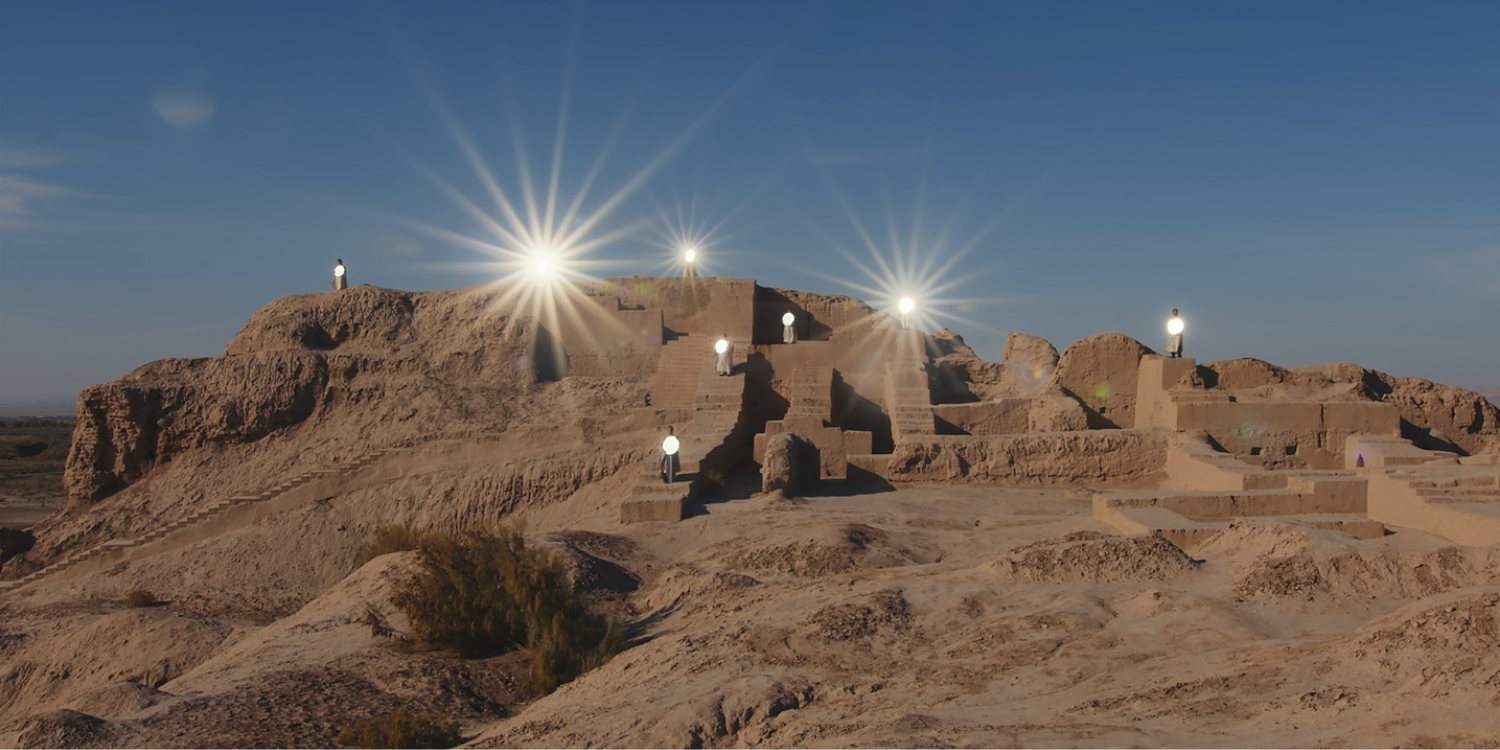
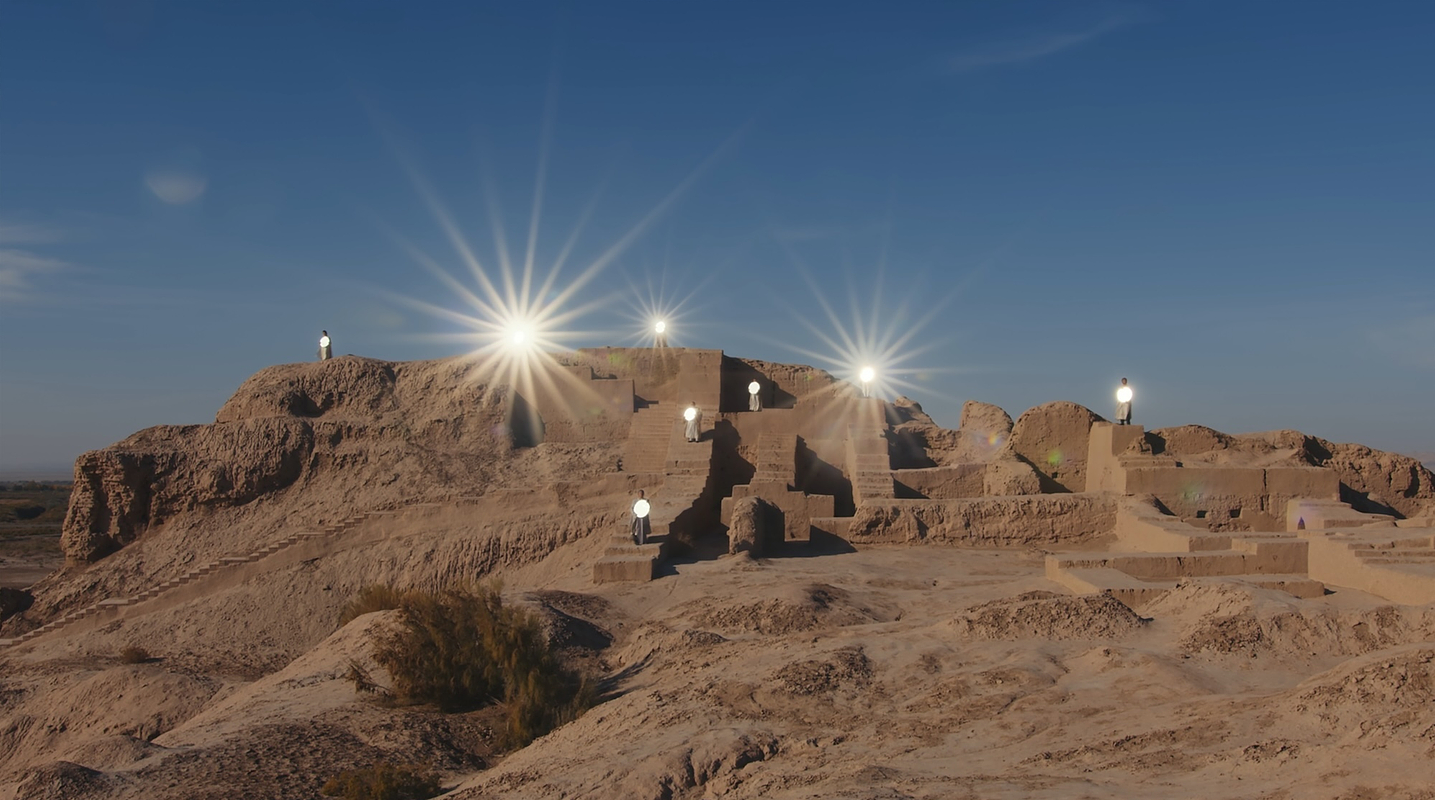
Still from Melted into the Sun
Saodat Ismailova’s installation Other Light is at the Western Front to November 28
IN SAODAT ISMAILOVA’S 2024 film Melted Into the Sun, a veiled man roams the desert landscapes of Central Asia. On the surrounding hillsides, distant figures brandish metallic discs that reflect the sun in brilliant starburst shapes.
The person behind the veil is al-Muqanna, an eighth-century Islamic prophet and revolutionary leader. As U.S. poet and critic Quinn Latimer writes in the brochure for Other Light, an installation of Ismailova’s work on now at the Western Front: “Faceless, without language, he is at once some deep and fathomless vessel for desires of surrender, and a burning screen for the projection of resistance and liberation.”
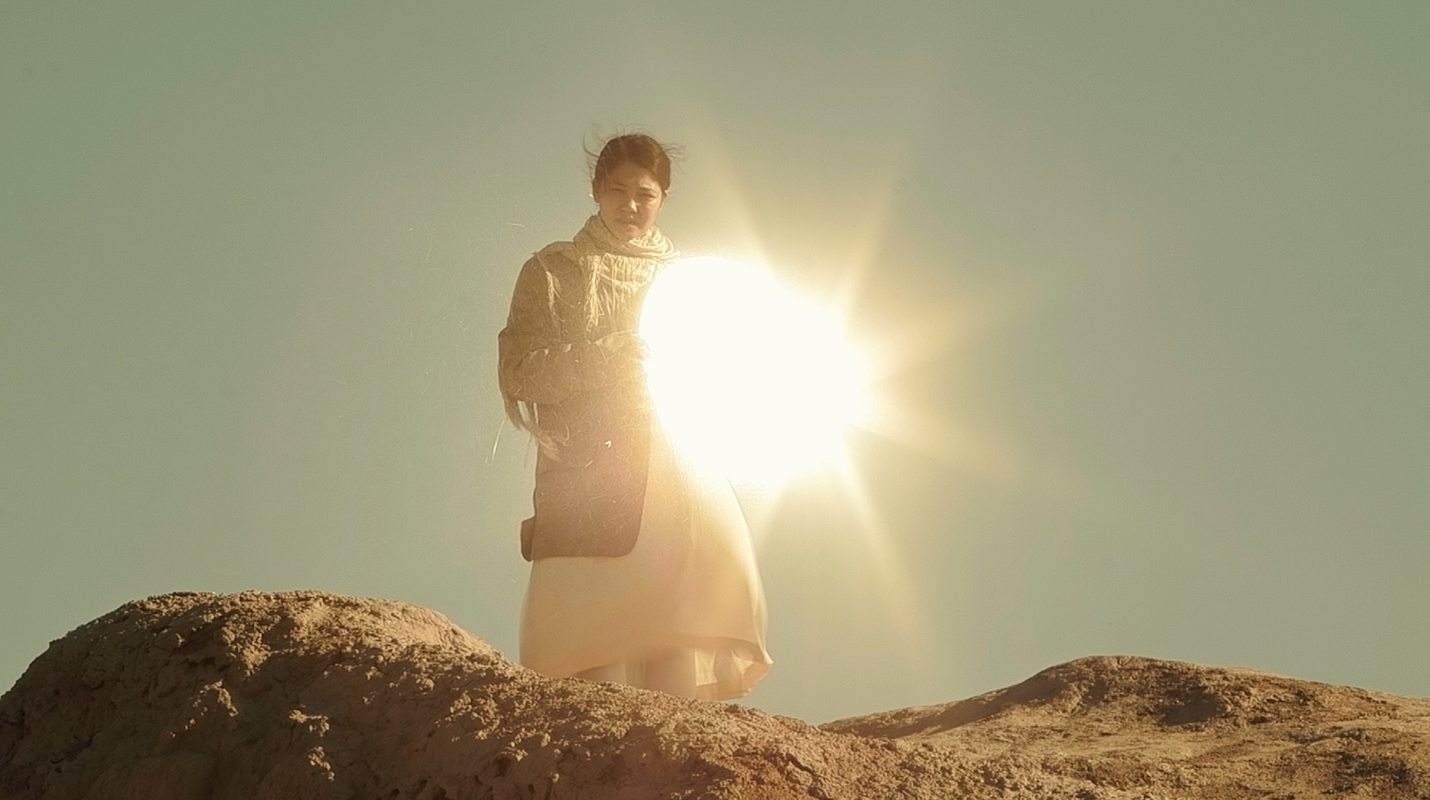
Still from Melted into the Sun
With Melted into the Sun, and its 2026 follow-up, To the Throat of the Sun, Uzbekistan-born filmmaker and artist Ismailova draws on the oral traditions of Central Asia, as well as the region’s cinematic traditions and the environmental legacy of Soviet nuclear testing, to explore light as a political and spiritual force. Legend holds that al-Muqanna wore a veil to conceal a radiant light emanating from his face.
Of the imagery contained in To the Throat of the Sun, Latimer writes:
The cloaked prophet crossing a river. Labour of its oars, his arms. Sunspot where his face should be. Not a black aperture but its opposite: a burning star. Images of veiled bodies sleeping on some hard ledge. Bodies blue as methane, solarized as film negatives, with white, blinded eyes. Hands on the forehead, blessing the face, lined as the landscape. Look away from the star, I think, light where the face should be, pale blue screen.
Both films are shown in full as part of Other Light, curated by Suzy Halajian in an ongoing collaboration with Ismailova. The installation also includes kurpachas, the traditional Central Asian quilted mattresses that accompany life from birth to death.
Admission is free, and the films screen every hour on the hour during the Western Front’s open hours, Wednesday through Saturday from 1 to 6 p.m. 

Related Articles