Music review: Vancouver Opera’s La Bohème pours its heart into a classic production that lives up to expectations
With glowing garret windows, lush orchestrations, and powerhouse singing, season closer is everything you imagine when you think of Giacomo Puccini’s tragic masterpiece
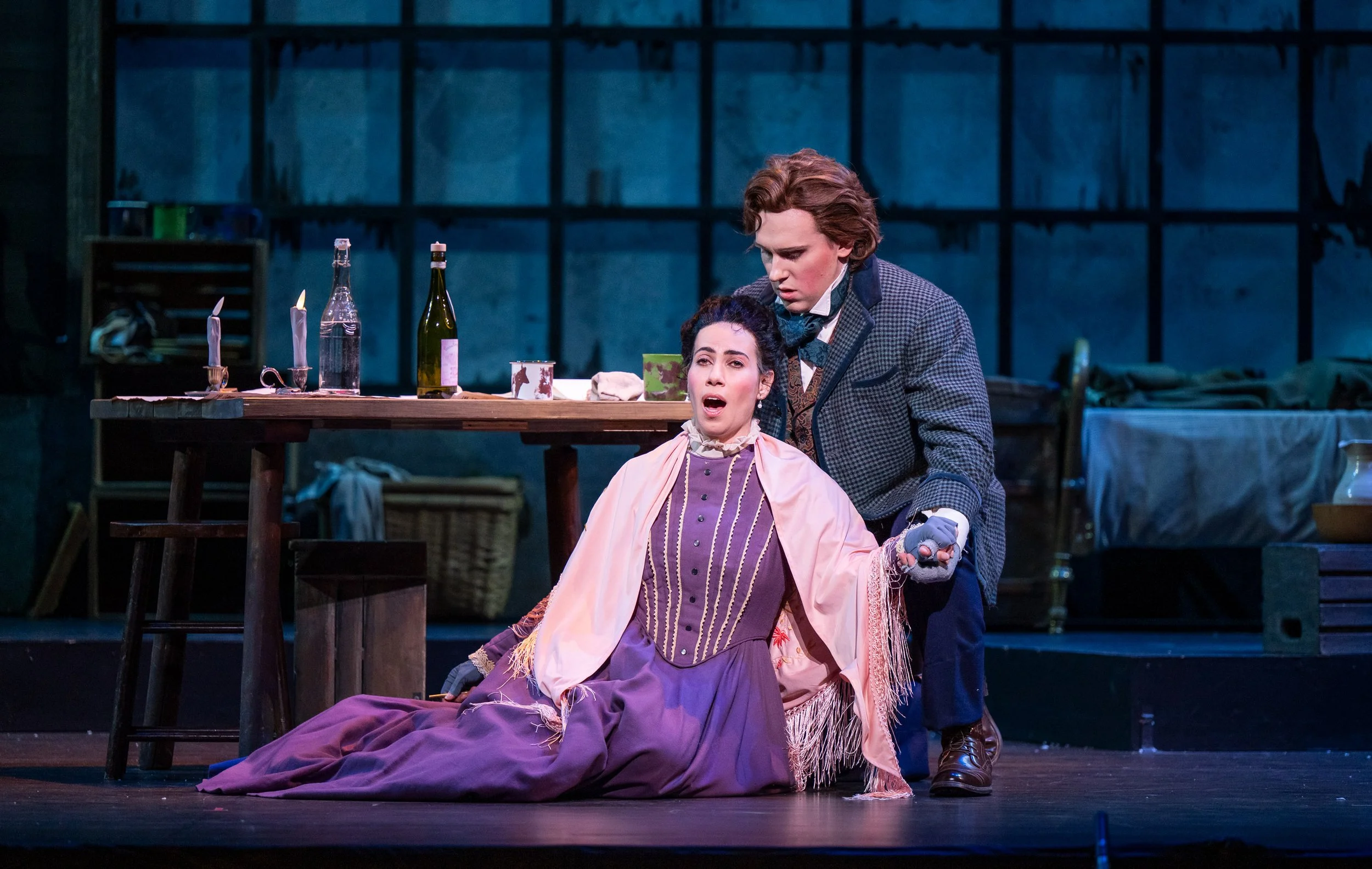
Lucia Cesaroni as Mimì and Zachary Rioux as Rodolfo in Vancouver Opera’s La Bohème. Photo by Emily Cooper
Vancouver Opera presents La Bohème at the Queen Elizabeth Theatre to May 3
FROM THE ATMOSPHERIC Latin Quarter sets to the yearning arias, Vancouver Opera has achieved peak La Bohème.
Expectations come high when you’re staging one of the world’s best-known and most iconic operas, and this radiant, classic rendition does not disappoint.
No contemporary updates or offbeat reimaginings here. Instead, the season-closing production is everything you imagine when you think of Giacomo Puccini’s tragic masterpiece.
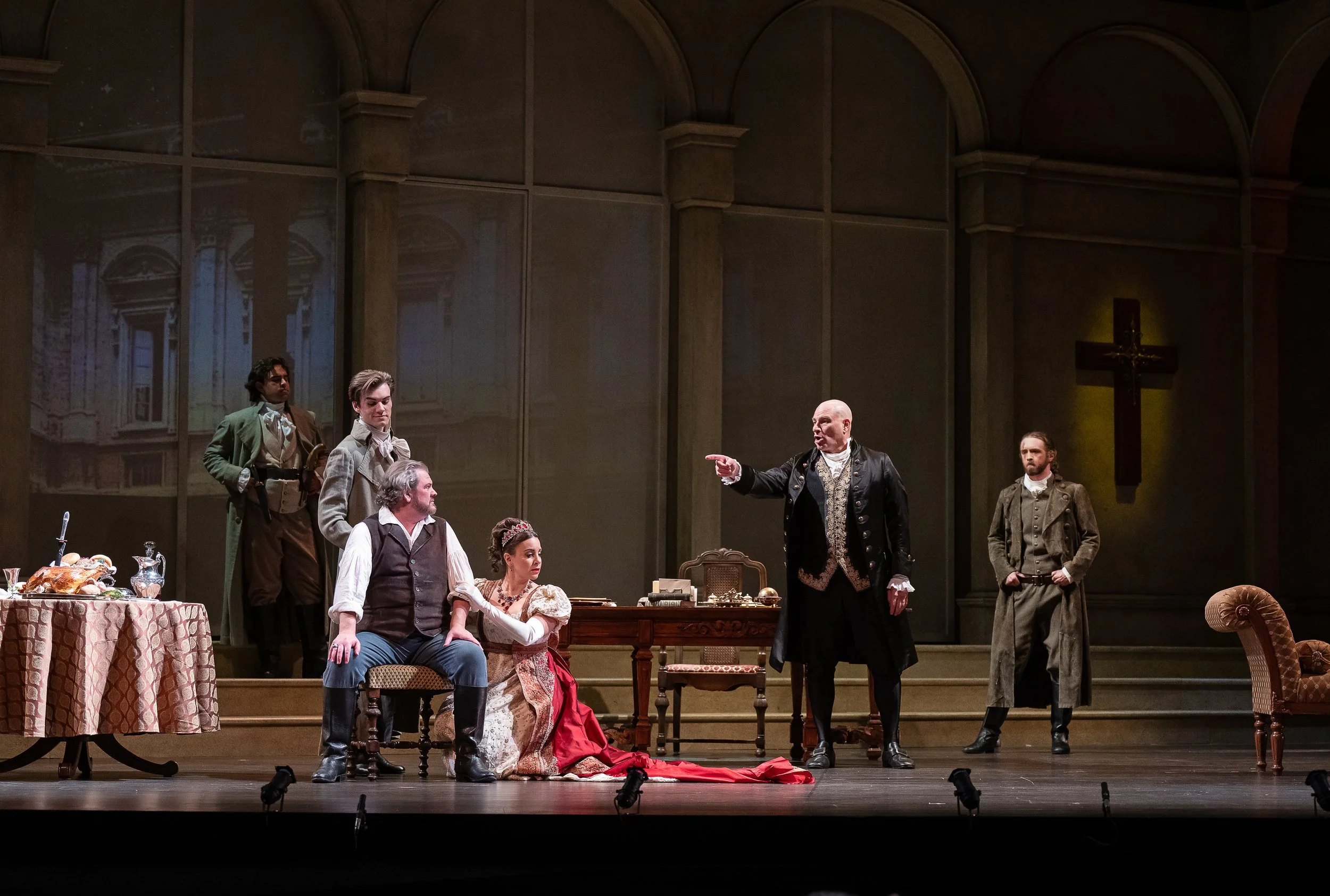
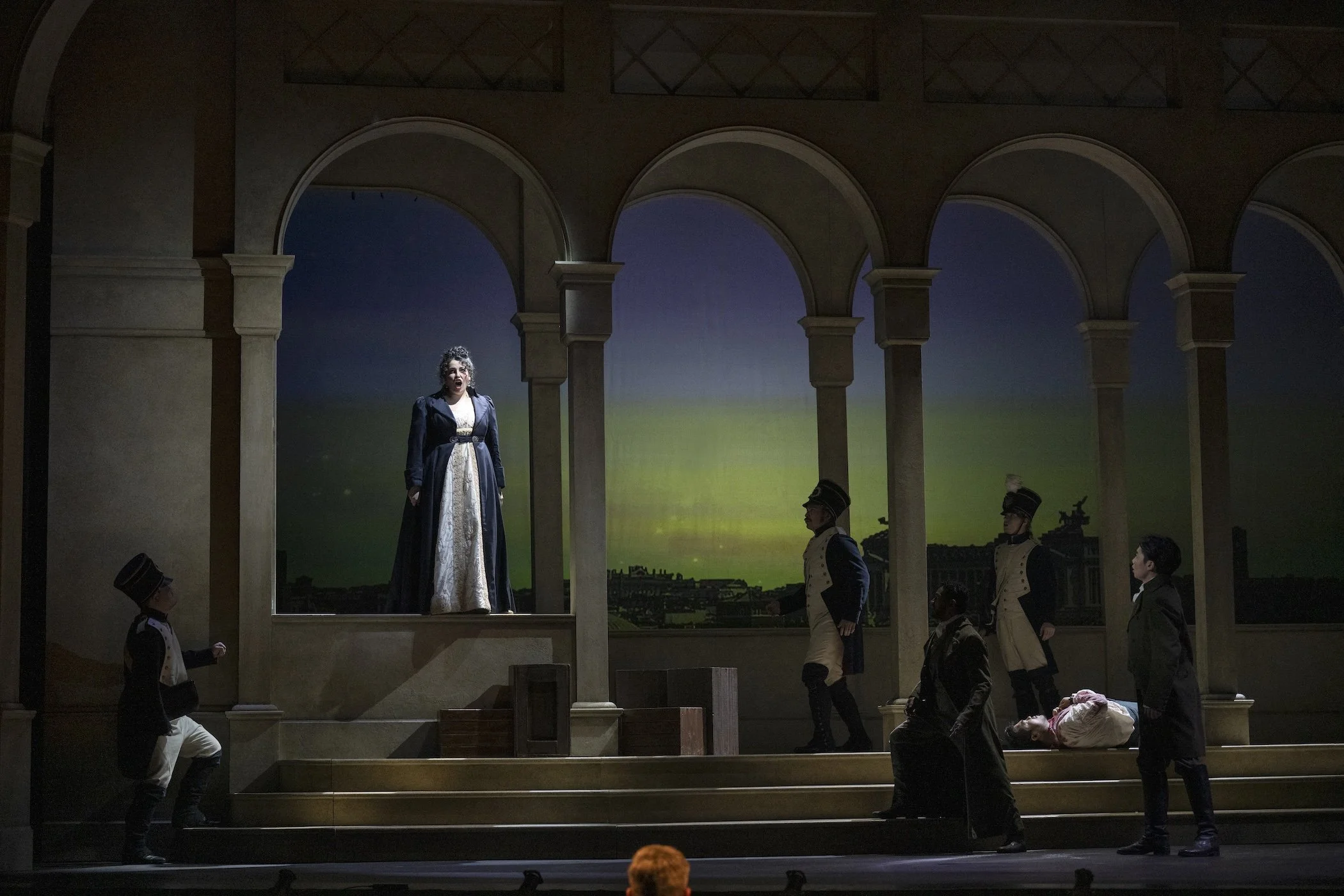
Let’s start with Steven C. Kemp’s artful period-true scenery, with its glowing garret windows, gently falling snow, postcard-Paris storefronts, and Impressionistic touches. The positives continue in the pit with the Vancouver Opera Orchestra, helmed by celebrated music director emeritus Jonathan Darlington, who adeptly oversees every delicate inflection and cinematic crescendo. And the pure Bohème-ness extends to the leads, whose expressive singing, romantic chemistry, and comedic skills give this production big Puccini heart.
It’s hard to think of another VO production where the Queen E. stage has felt quite so full, colourful, and alive as it does here in the Café Momus Christmas Eve scene. Flag-waving crowds bustle up the winding alleyway, children run about, ribbon-tossing gymnasts cavort, and the chorus vibrates with Puccini’s layered, kaleidoscopic music.
And yet, crucially, there’s an intimacy to the show’s overall staging that pulls you into the love story.
In a plot that has inspired everything from Rent to Moulin Rouge, the poet Rodolfo shares a drafty attic studio with three other artists in bohemian Paris. One freezing night, the frail seamstress Mimì knocks on their door, asking for someone to light her candle, and she and Rodolfo fall helplessly in love. But as she declines from tuberculosis, Rodolfo has to face the heartbreaking fact that he can’t properly provide for her.
Director Brenna Corner ups the lighthearted antics that make the tragedy all the more tear-jerking. The rowdy young bohemians wrestle over a blanket for warmth, and someone warms his butt by the pot-belly stove. And wait till you see Musetta (a fiery, suitably scene-stealing Lara Ciekiewicz) tease Marcello (VO favourite Gregory Dahl) in the town square while she dates a wealthy sugar daddy—tossing off her gloves, swishing her skirt, and kicking her legs like a can-can dancer when she feigns a sore foot.
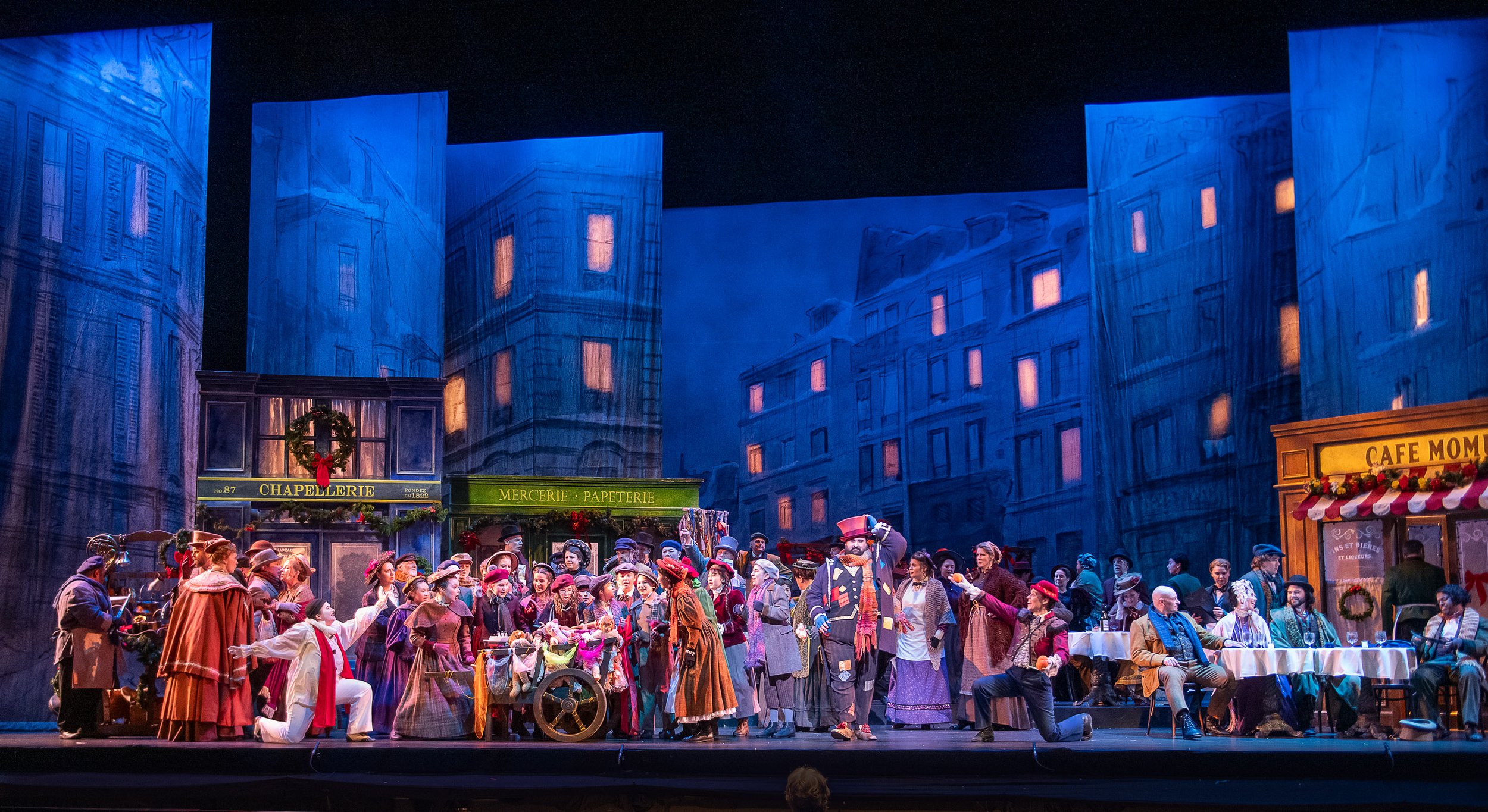
La Bohème. Photo by Emily Cooper
Still, Corner knows when to pull back and let Puccini’s music do its considerable stuff. This production is full of the lush sonic pleasures that audiences hope for at La Bohème. As the central couple, Zachary Rioux and Lucia Cesaroni are beautifully balanced (and word has it that Matthew White and Jonelle Sills, who alternate as Rodolfo and Mimi, are equally strong). Note the languorous, yearning quality Darlington and tenor Rioux give to the introductory aria “Che gelida manina”, and the effortlessness of Cesaroni’s following, famed “Si, mi chiamano Mimi”, in which she builds her exceptionally warm soprano from demure attraction into swells of love. Resistance is futile as Darlington invites you to luxuriate in their ensuing duet.
Other highlights include the emotional Act 4 duet between Rioux and powerhouse baritone Dahl—the latter funny, passionate, and mercurial (utterly transformed from previous roles such as his sinister Dutchman—a credit to his acting versatility). A shout-out must also go to Justin Welsh and Alex Halliday as Rodolfo’s fun-loving garret roommates.
What’s key here is that you believe in their friendship—and by the end, that everyone gathered to support each other through hardship is bonded for life. That’s the way Puccini, who thrived on the camaraderie of his bohemian youth in Milan and spent hours in cafés with his artistic buddies, would have wanted it.
All of it earned a rapturous, extended standing O at the weekend’s matinee. So if you are lucky enough to score a ticket, this is a production that will both please die-hards and hook opera rookies. And it’s a lesson in why La Bohème has been packing houses for well over a century. 
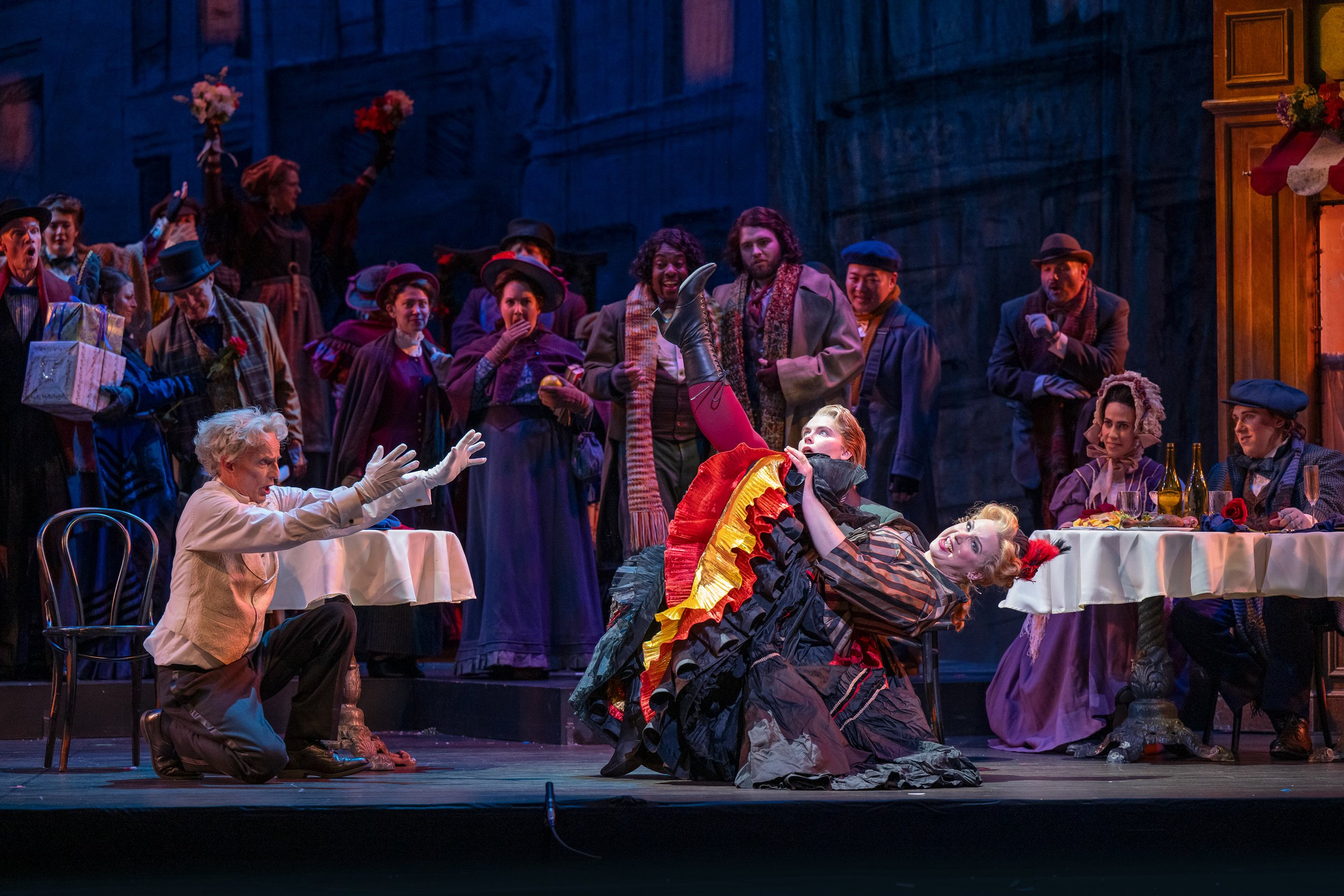
Lara Ciekiewicz in La Bohème. Photo by Emily Cooper

Related Articles