Theatre review: At the Arts Club, Louisa May Alcott’s Little Women celebrates complex bonds of sisterhood
Portrayals of the classic novel’s famously lively siblings shine brightest when all four are together onstage, capturing love for one another in quiet gestures
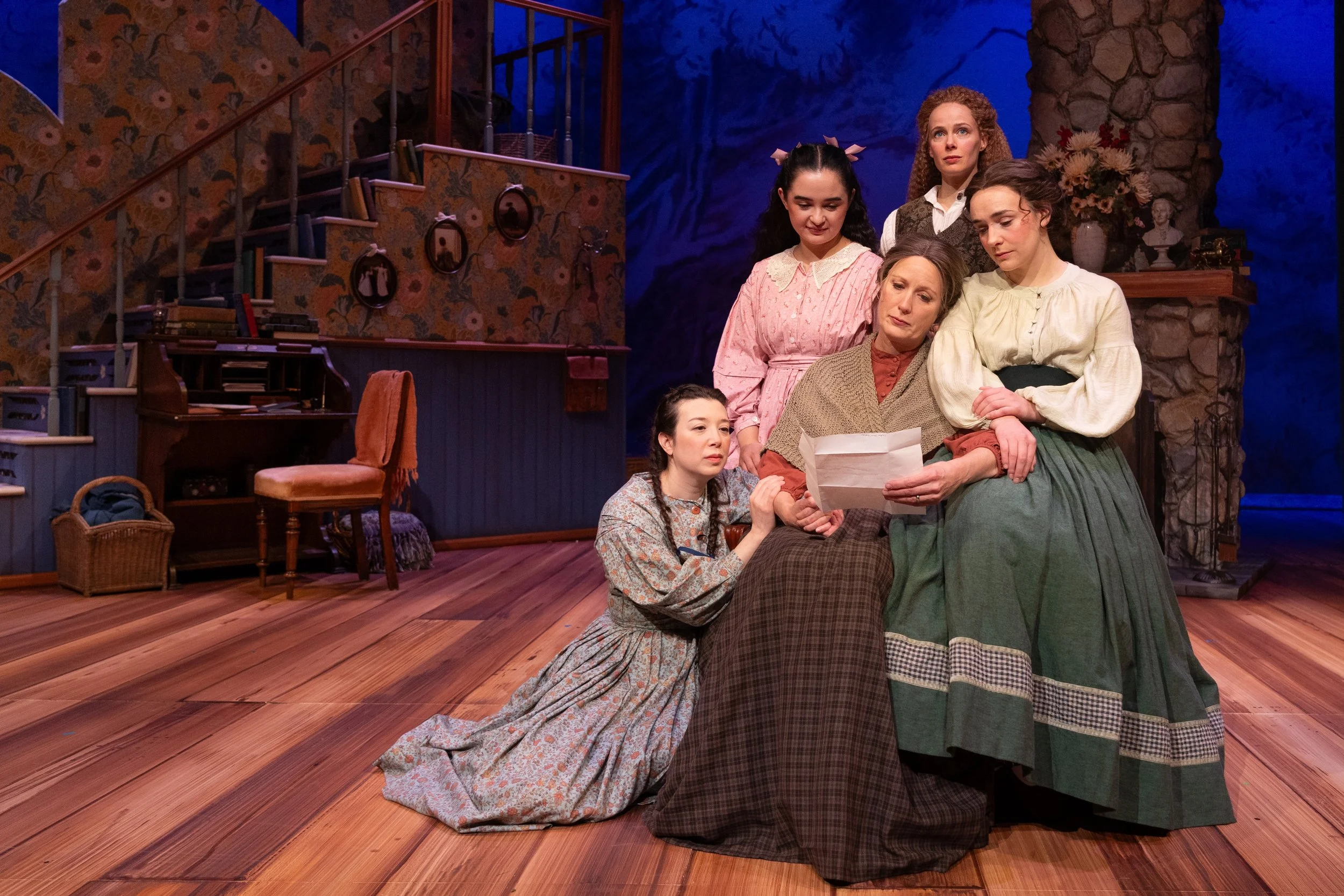
(From left) Ming Hudson, Kaitlyn Yott, Erin Ormond, Kate Besworth, and Elizabeth Barrett in Louisa May Alcott’s Little Women. Photo by Moonrider Productions
The Arts Club Theatre Company presents Louisa May Alcott’s Little Women at the Granville Island Stage to January 4, 2026
THERE ARE SOME things that feel like the holidays, even though they are not outright Christmas things: the first Harry Potter book and movie, Joni Mitchell’s discography (thanks, Love Actually), and taper candles, to name a few. Little Women, by Louisa May Alcott, also fits easily on that list.
Christmas scenes open and close the first volume of the classic 1868 novel, but years go by before we reach the end of Volume 2, and the festive season doesn’t become the priority again. Despite this, the themes of goodwill, generosity, and family—mixed with the healthy dose of nostalgia the story has picked up over the years—make it a favourite to revisit at Christmastime.
And so opening the Arts Club’s Granville Island Stage 2025–26 season with Louisa May Alcott’s Little Women by Lauren M. Gunderson was a stroke of holiday brilliance.
The play opens on Louisa May Alcott herself (played by Kate Besworth), explaining to the audience that she has been asked to write a book for girls. And while she doesn’t even really like girls—well, apart from her “wild, strange, wonderful” sisters—she’s encouraged to write about what she knows and begins to tell a tale loosely based on the events and the people of her childhood.
She reimagines herself and her sisters as characters in this new story: her eldest sister becomes beautiful and traditional Meg; her youngest sister becomes ambitious artist Amy; and her sister Elizabeth, who died early in their lives after contracting scarlet fever, becomes beloved Beth, shy, unfailingly kind, and musically talented. She writes herself as Jo—a tomboy-ish dreamer who hopes to become a writer.
The new characters take their places on the stage. Besworth transforms from Lou to Jo and grumbles, “Christmas won’t be Christmas without any presents!” and the old, familiar scene is set.
Besworth, who last appeared as Sherlock Holmes in Gateway’s production of Ms. Holmes & Ms. Watson—Apt. 2B, brings a lot of heart and confidence to both Jo and Louisa. For Jo, she balances her temper, ambition, protectiveness, and exasperation over her sisters expertly well; and as Lou, one can’t help but believe that Besworth’s own ambitions as a writer informed much of her portrayal of the iconic Gilded Age author. It makes for an endearing and credible performance the entire way through.
Elizabeth Barrett as Meg, Kaitlyn Yott as Amy, and Ming Hudson as Beth all excel as well, and shine brightest when they’re acting as a foursome. The production truly comes to life in the subtle moments that the sisters share. Secret winks across the stage to one another, feeding each other, the little thumb rubs that are included in their embraces—these moments are so small that they couldn’t have been included in the script and must be credited to the actors’ deep understanding of sisterhood.
In Act 1, the March sisters are giddy young girls, all squeals and scurrying about, huffing and puffing with dramatic flourishes and mischief in their eyes. By Act 2, the sisters are changed, shifting away from their whimsical childhood to the realities of womanhood: moving away from home, experiencing marriage and child-rearing, and finding their place in society.
The passing of time is shown through changes to the sisters’ wardrobe and different seasonal decorations adorning the mantle, and heard through a sweet chattering of birds.
As time moves on, Beth gets sicker; and even though you know it’s coming, Beth’s end can’t be watched without shedding a tear. MJ Coomber’s sound design is superb throughout the production (in the birdsong, the swelling of violin between scenes, and more), but it truly excels here, using the sound of gentle waves to create a poignant atmosphere when “as Beth had hoped, the tide went out easily.”
There was, however, one aspect of the production that felt a bit rushed. Even more than in the original novel, the love story between Amy and Laurie feels forced and hurried. At the end of the scene where Laurie declares his love to Jo and Jo rejects him, Laurie sets off for Europe—and here enters Amy. Gunderson rushes their meeting, spending little time on their growing closeness, forcing Amy into an awkward role as the rebound girl. Amy has long been the most disliked sister of the group, mainly because of her pairing with Laurie, and Gunderson’s script doesn’t help Amy’s case.
Still, both Yott and Conor Wylie, who balances Laurie’s flirtatious and earnest sides perfectly, are a delight to watch, and they play off of each other well. It just doesn’t feel earned.
Despite that (and, really, when you’re adapting a story over 150 years old and deeply beloved, there’s bound to be something that someone isn’t going to like), you can’t help but leave the theatre feeling like you just experienced something magical. It’s a tale of sisterhood, after all. What’s more magical than that?
In a recent interview with Stir, director Barbara Tomasic said that she wanted the show to offer a “sanctuary” for a full range of emotion—joy, grief, love, and everything in between. For me, sitting next to my own sister in the audience, the production certainly achieved that. 
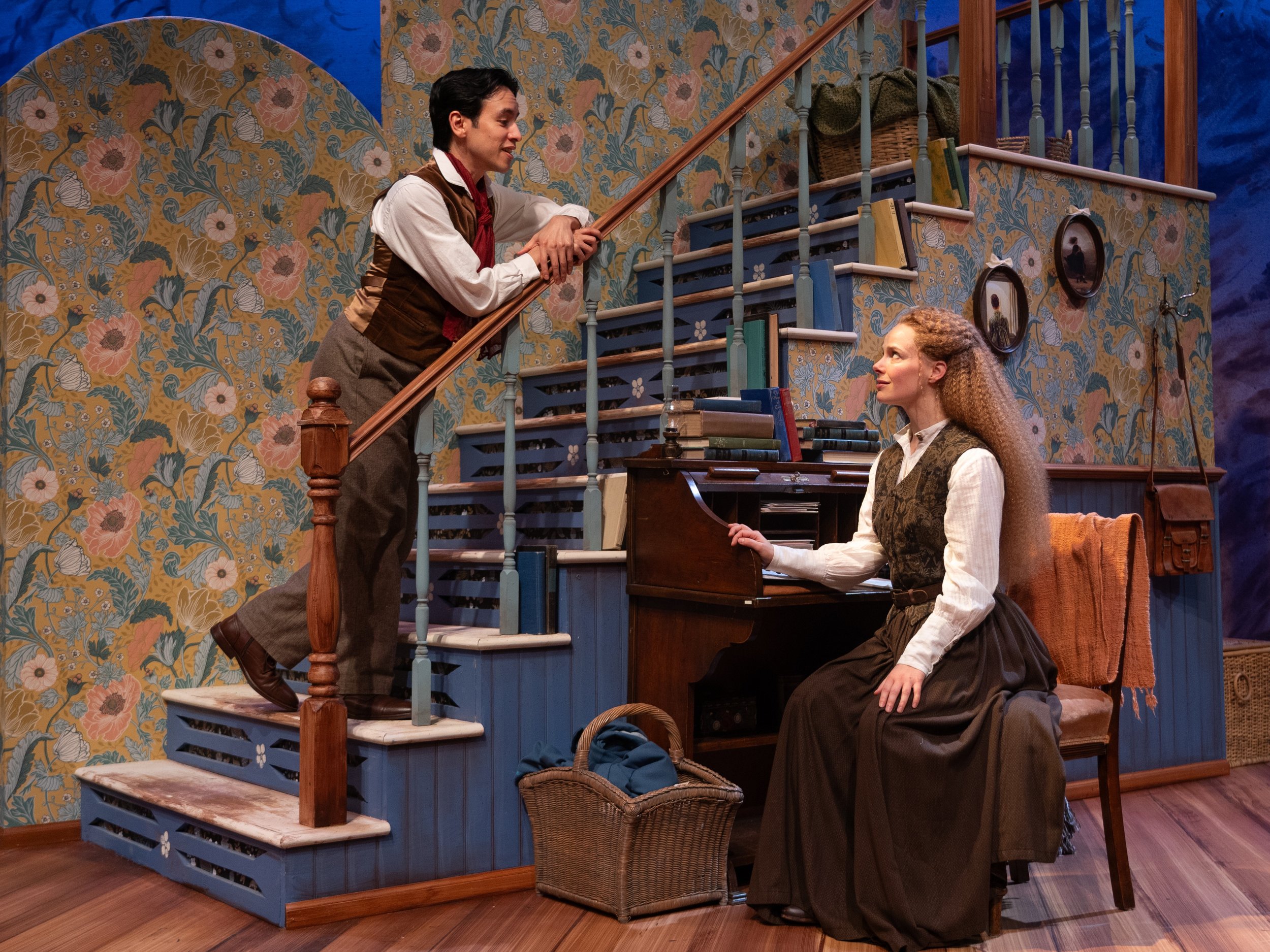
Conor Wylie and Kate Besworth in Louisa May Alcott’s Little Women. Photo by Moonrider Productions

Related Articles