Ayana V. Jackson expands a mythical undersea world in From the Deep: In the Wake of Drexciya
Making its Canadian premiere at the Museum of Anthropology at UBC, the U.S. artist’s striking collaborative project builds on decades of speculative fiction and art originating in the trauma of the slave trade
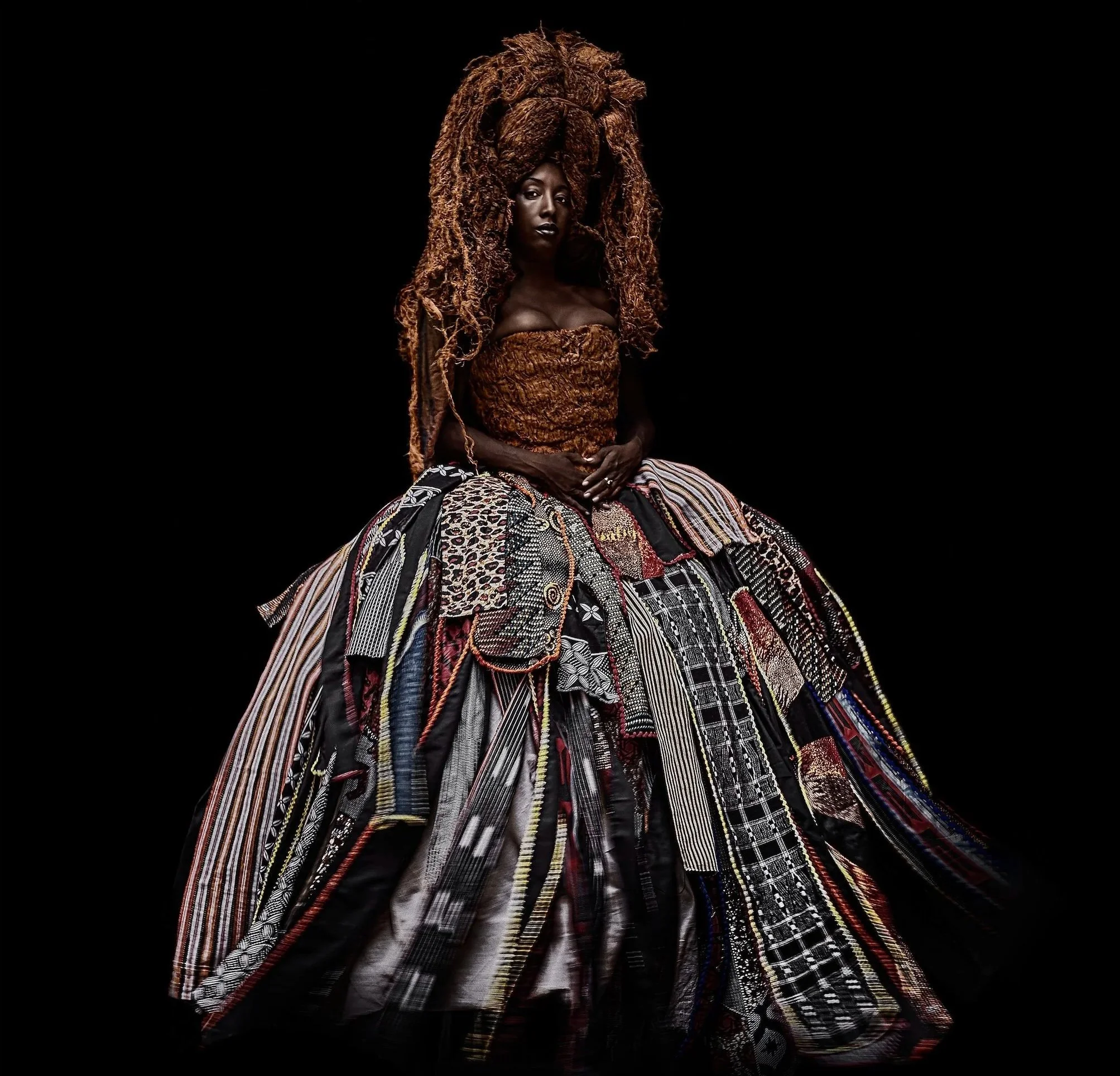
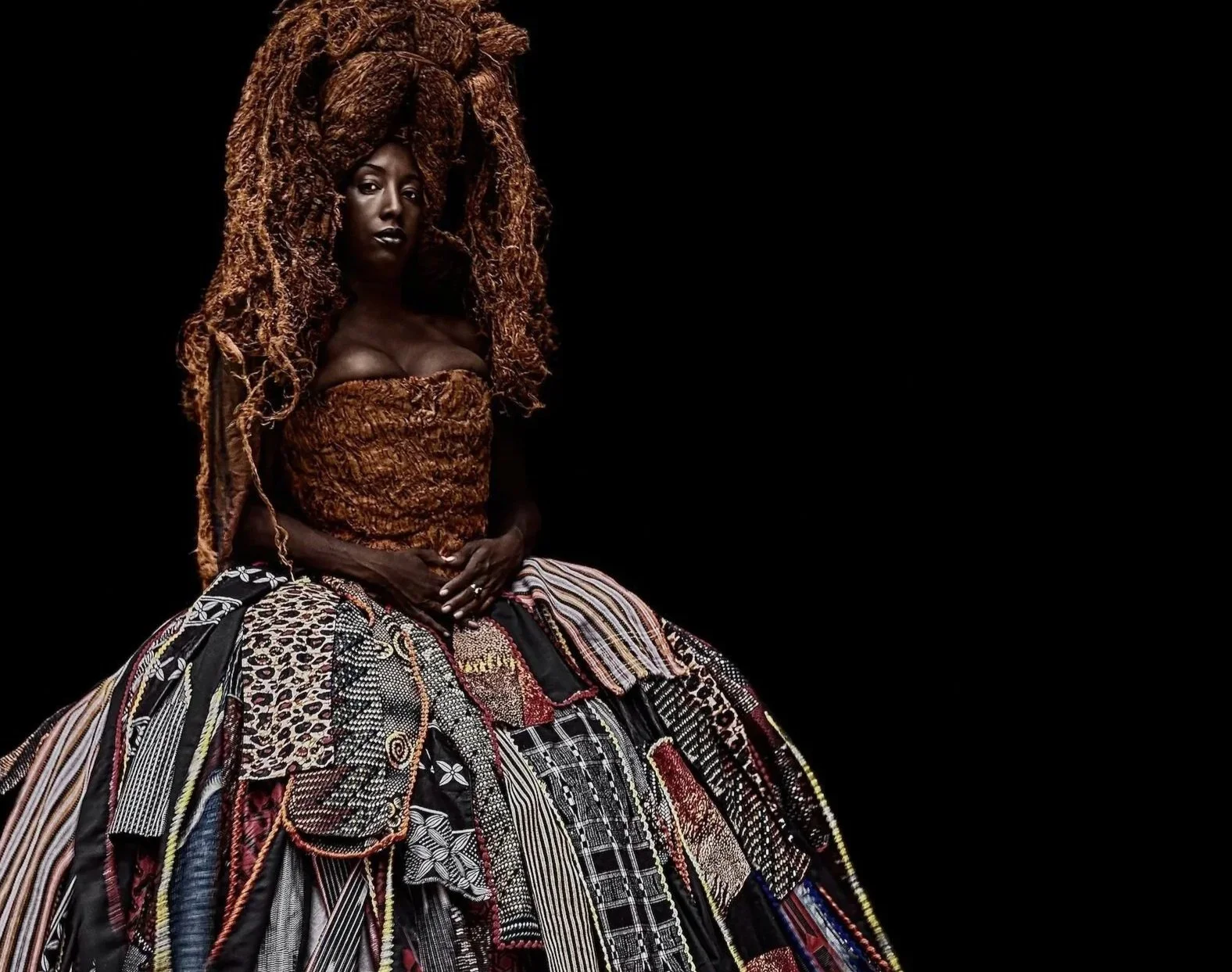
Ayana V. Jackson’s It is only when you lose your mother that she becomes myth, 2020. Courtesy of the artist and Mariane Ibrahim
The Museum of Anthropology at UBC presents From the Deep: In the Wake of Drexciya to March 29, 2027
IN 1992, THE DETROIT techno duo Drexciya began to rewrite the Atlantic slave trade. Over the course of their discography, James Stinson and Gerald Donald fashioned a sprawling aquatic mystery of liner notes and track titles surrounding the mythical undersea Afrotopia of the Drexciyans. Now American artist Ayana V. Jackson is bringing the Black Atlantis to Vancouver in her new exhibition From the Deep: In the Wake of Drexciya.
The mythos of Drexciya resists easy summary—Stinson and Donald scattered clues to the society’s identity across a decade of experimental techno releases—but the duo’s most influential world-building text is almost certainly the liner notes to their 1997 album The Quest. Among diagrams depicting the triangle trade and the birth of techno as a Black medium are the words of an Unknown Writer:
“During the greatest holocaust the world has ever known, pregnant America-bound African slaves were thrown overboard by the thousands during labor for being sick and disruptive cargo. Is it possible that they could have given birth at sea to babies that never needed air?”
That question went on to inspire decades of speculative fiction and art. Jackson’s From the Deep—at the Museum of Anthropology to March 29, 2027—is the latest in a long legacy.
The exhibition, which debuted at the Smithsonian Institution’s National Museum of African Art in 2023, is composed of photography and audiovisual installations featuring Jackson modelling garments inspired by the myths of Drexciya.
Jackson didn’t create these garments herself—the exhibition is an intensely collaborative project featuring the work of over a dozen artists from Africa and the United States. Jackson is the mind behind the idea, and her body acts as the unifying visual signifier between the materially diverse pieces.
“It [the process] was intentionally very collaborative,” Jackson says in an interview with Stir. “I brought my research, I’d bring a PDF and we would go through my mood board—stuff from the archives, stuff that I found online.”
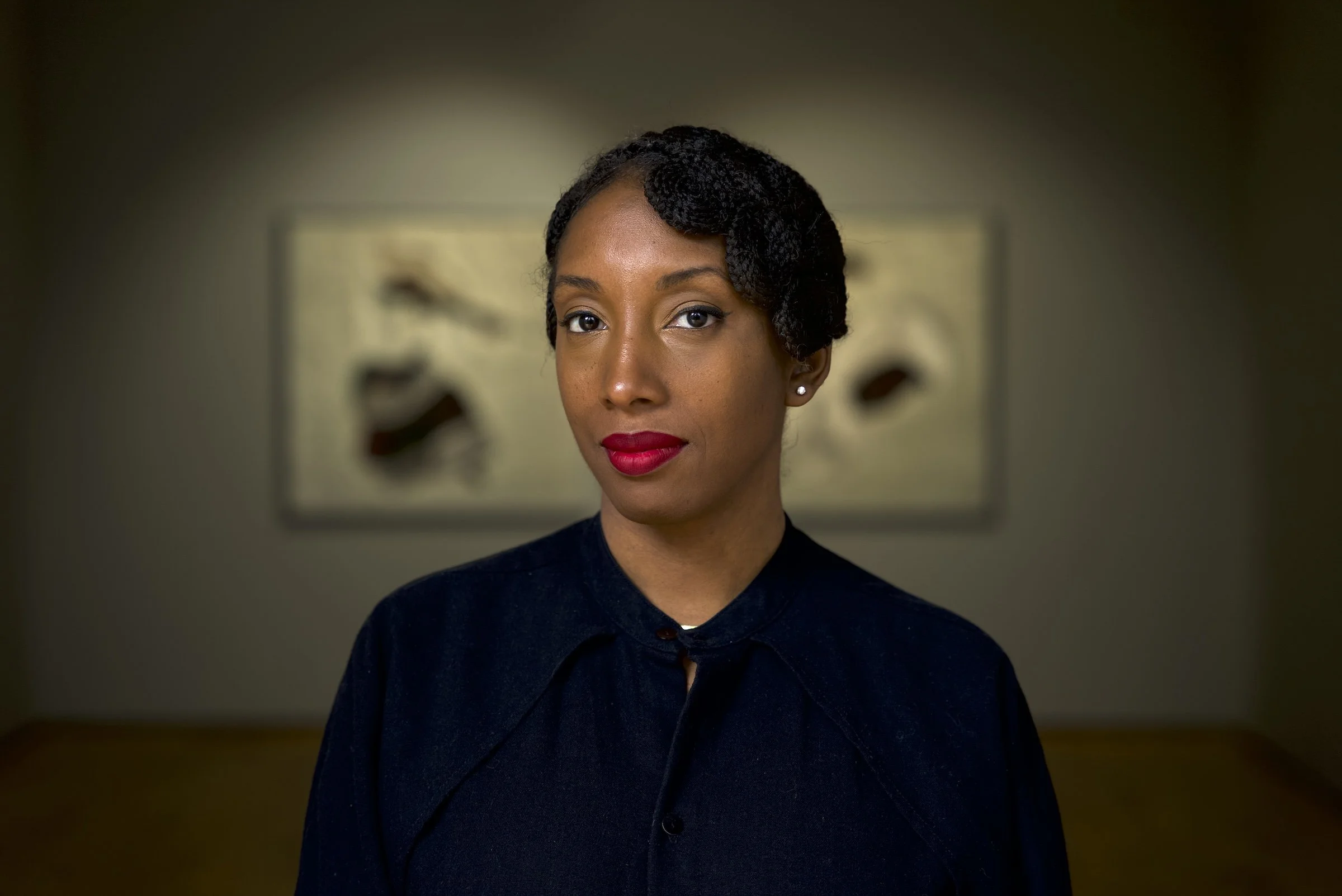
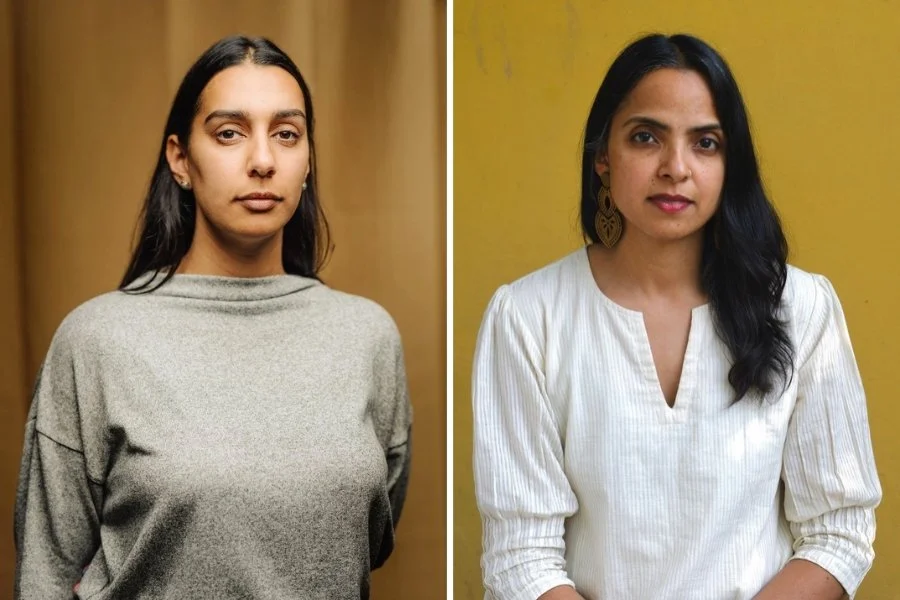
Ayana V. Jackson. Photo by Cali Cuesy. Courtesy of the artist and Mariane Ibrahim
From there, each artist created garments based on their own understanding of and relationship with Drexciya. The final products—several of which are displayed in MOA’s exhibition—are intricate, textured, and, as Jackson stresses in a media tour of the exhibition, deeply legible and imbued with layers of meaning.
Take, for example, the garment featured in It is only when you lose your mother that she becomes myth. The piece is beautiful on its face: a brown barkcloth bustier gives way around the waist to a skirt made up of dozens of strips of multicoloured, patterned fabric. But the form carries meaning that may pass below the notice of viewers unfamiliar with West African tradition.
Jackson says she and her collaborator, the Senegalese textile artist Rama Diaw, were inspired by the form of the Egungun, a figure from Yoruba masquerade that represents spirits of the dead. Jackson said Egungun garments are traditionally crafted with strips of cloth from the households of deceased community members and used in ceremonies of mourning or celebration. Jackson and Diaw’s garment also suggests the form of a squid—perhaps the most subtly aquatic of From the Deep’s collection.
Other pieces interface more overtly with Drexciya’s subaquatic source material. Jackson intentionally submerged many of the garments—such as the metal crown fashioned by Mwambi Wassaki for When the spirit of Kalundo comes so does Kianda—in seawater. Spots of rust adorn these items and enhance the realism of Jackson’s speculation.
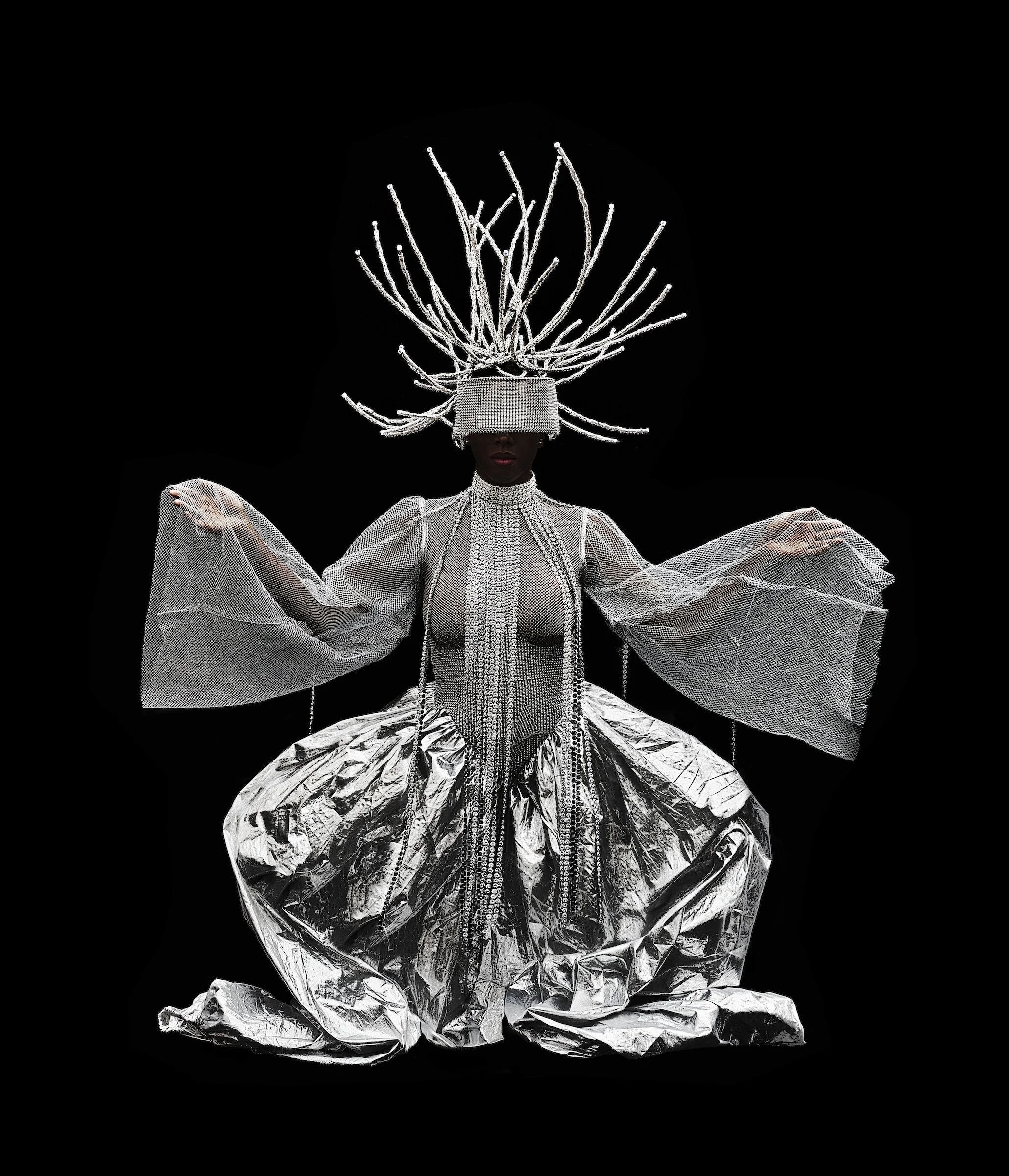
Ayana V. Jackson’s When the spirit of Kalundo comes so does Kianda, 2019.
From the Deep also features several audiovisual installations. The smell is still a work in progress—Jackson says the Smithsonian incarnation of the exhibition featured aromas of wood, salt, frankincense, and myrrh, but MOA’s centralized ventilation system and the fragility of other belongings in the collection make translating that a difficult prospect. The exhibition’s speaker systems, however, which play atmospheric ambience and vocalization designed by musician Nosisi Ngakane, are fully operational.
Ngakane’s sound design, which features recitations of Robert Hayden’s “The Middle Passage” and Alexis Pauline Gumbs’s Undrowned, is an effective companion piece to one of From the Deep’s most arresting installations, Journey of the Deep-Sea Dweller: Who Among Us Has Killed an Albatross.
The piece is a three-channel video projected on the walls of an annex in the exhibition space, in which Jackson is featured swimming underwater in a skeletal garment, her body adorned with white paint. The video’s production, which called for Jackson to swim up to 90 feet below surface level, required her to become a certified divemaster over the course of a 10-month training period. The product is eerie and haunting while maintaining a sense of realism, as if James Cameron had stumbled on a lone Drexciyan on his way to the Titanic.
Jackson hopes From the Deep can recontextualize the myth of Drexciya from a feminine perspective while continuing the duo’s legacy of interpreting the trauma of one of history’s most horrific atrocities. She remembers first hearing about Drexciya’s origin story at a party and moving from shock and horror to deliverance over the span of a few seconds.
“I wasn’t allowed to linger in the trauma for too long, and I think that that’s the most beautiful thing about the project,” she says. “A lot of artists are working from their trauma on many different levels and many points of departure of what those traumas are. We are processing our traumas often, in conversation with our medium, but also our audience, and I think that’s one of the most exciting things that the art world brings to us.” 

Related Articles