Film review: Dark and light combine as Ababouiné looks back on 1950s struggle for secular Quebec
Opening La Tournée Québec Cinéma, nostalgic comedy mixes with church abuse of power in a Montreal neighbourhood
Ababouiné takes place in Montreal’s storied working-class neighbourhood of Faubourg à m'lasse.
Visions Ouest screens Ababouiné at La Tournée Québec Cinéma on February 12 at the Alliance Française de Vancouver
VETERAN QUEBEC FILMMAKER André Forcier transports us back to the “Great Darkness” with a surprising amount of levity in the new movie Ababouiné.
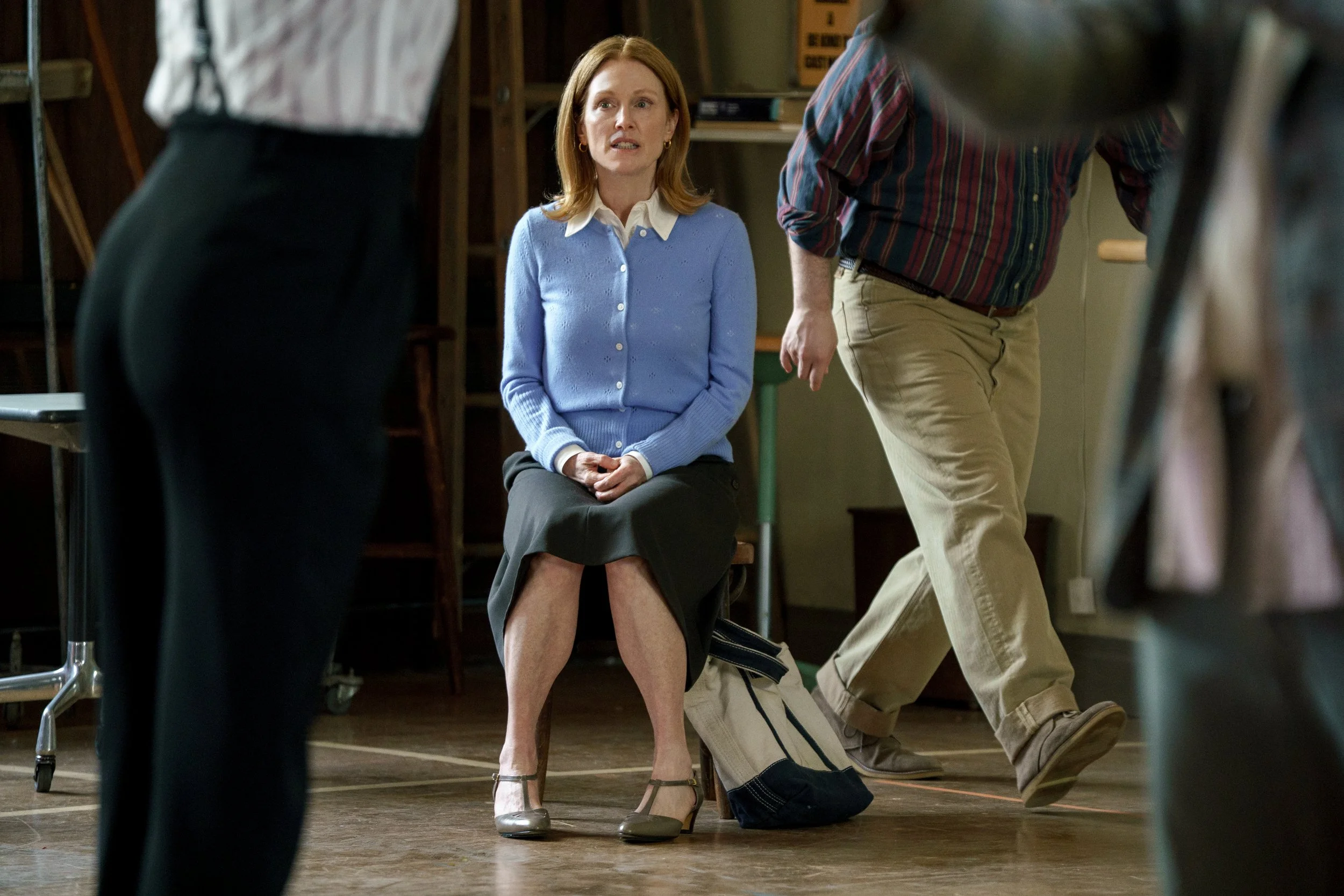
Set in 1957, a few years before Quebec’s Quiet Revolution, the film works on one hand as a nostalgic, raucously funny tribute to Montreal’s storied working-class neighbourhood of Faubourg à m’lasse. Forcier sets all the action amid its atmospheric alleyways, lined by board fences and brick houses, with laundry fluttering on lines overhead.
It centres on Michel Paquette (a beyond-charming Rémi Brideau), a boy who wears polio braces and uses crutches, who lives with his adoptive grandmère, and who prefers rereading secular manifesto Le Refus global and hanging out at the local print shop to going to Mass. He’s surrounded by colourful, comically exaggerated characters—including a pious student who tattles to the priest on her classmates; a baseball umpire who takes swigs from a bottle in a paper bag; and an eccentric, progressive French teacher (Martin Dubreuil) who’s obsessing over a dictionary of forgotten words (inspiring the Ababouiné title). There are even a few of Forcier’s signature surreal touches: a high-school hunk named Tom Cat has furry paws for hands—a detail that seems to fit in a slightly absurd world.
On the flipside, Ababouiné is a bitter reminder of the power the Catholic church once held over every aspect of Quebec life. It’s a chapter of Canadian history that feels like it’s slipping out of memory beyond La Belle Province, and this story serves as a potent reminder of why it still embraces such secular laws as banning religious symbols.
Ababouiné.
In the film, everything stops as bells start ringing—not for for children to rush home for dinner but for the mandatory family prayers that happen each late afternoon, to gather on their knees in front of the radio. When the cardinal visits, his speech is played over loudspeakers—in one rambunctious scene, drowned out by Michel calling the play-by-play on the local baseball diamond. At first the oppression is played for laughs: the cardinal (Rémy Girard) has a motorcycle-riding gang of costumed “zouaves” running interference for him, and the stern local priest Cotnoir (Éric Bruneau) gets a little too excited kissing his cardinal’s feet. For the most part, they’re buffoons that are the butt of jokes for Michel and his pals—a found family that defies the traditional one prescribed by the church.
Of course, Michel’s disability puts him in loaded territory with a religion known in Quebec for dangling crutches like his from the rafters; the running, blackly comic joke here is that if he were less of a heathen, he might be able to walk. That’s a hint that Forcier will take his film in a more biting direction—and in his last act, he bluntly addresses the violence that lurks behind closed doors as a direct result of the Catholic church’s corrupting power. It’s dark, shocking, and feels at odds with the subversive laughter and nostalgic feel of the rest of the film.
But perhaps Forcier wants to catch us offguard—to laugh at the abuse of power until it isn’t funny anymore. That bracing reality check gives way to Ababouiné’s strong finale, a flight of satirical fantasy, meatballs, and miracles that is pure, absurdist Forcier—the dark and the light combining in a big, final thumbing of the nose to religious dogma. ![]()

Janet Smith is founding partner and editorial director of Stir. She is an award-winning arts journalist who has spent more than two decades immersed in Vancouver’s dance, screen, design, theatre, music, opera, and gallery scenes. She sits on the Vancouver Film Critics’ Circle.
Related Articles
Chandler Levack’s love letter to Montreal and her early 20s offers a new kind of female heroine; Kurtis David Harder unveils a super-energetic sequel; and Wədzįh Nəne’ (Caribou Country) takes viewers to B.C.’s snow-dusted northern reaches
Vancouver visionary behind innovative thrillers like Longlegs and The Monkey is also helping to revive the Park Theatre as a hub for a new generation of cinemagoers
Criss-crossing the map from the Lithuanian countryside to a painful Maltese dinner party, this year’s program provokes both chills and laughs
Titles include Denmark’s The Land of Short Sentences, Ukraine solidarity screening Porcelain War, and more
From Everest Dark’s story of a sherpa’s heroic journey to an all-female project to tackle Spain’s La Rubia, docs dive into adventure
Out of 106 features, more than 60 percent are Canadian; plus, Jay Kelly, a new Knives Out, and more
Event screens The Nest, the writer’s form-pushing NFB documentary re-animating her childhood home’s past, co-directed with Chase Joynt
Featuring more than 70 percent Canadian films, 25th annual fest will close December 7 with The Choral
Filmmakers including Chris Ferguson back plan to save Cambie Street’s Art Deco cinema that Cineplex had shut down Sunday
One of the weirdest Hollywood films ever made helped bring local bandleader Scott McLeod back to shadowy instrumental soundscapes
Visions Ouest and Alliance Française present moving documentary on singer-songwriter behind Kashtin
Lon Chaney’s scary makeup, a vintage pipe organ, and a score by Andrew Downing bring eerie atmosphere to the Orpheum show
Films on offer include Yurii Illienko’s The Eve of Ivan Kupalo and Borys Ivchenko’s The Lost Letter
Her National Geographic Live event From Roots to Canopy lands in the Lower Mainland care of Vancouver Civic Theatres
Director Tod Browning’s 1927 film starring Lon Chaney is characterized by sadomasochistic obsession, deception, murder, and disfigurement
The Cinematheque program proves that digital filmmaking has a future beyond artificial intelligence
Attending VIFF, NFB chair Suzanne Guèvremont has a new strategic plan that strives to reach out to the next generation
Tree canopy ecologist Nalini Nadkarni leads audiences up into the clouds to see the fascinating world of Costa Rican branches with From Roots to Canopy
Quick takes on Dracula, Idiotka, Akashi, and Ma—Cry of Silence, plus documentaries about one family’s scattered heritage and the true cost of global capitalism
The Painted Life of E.J. Hughes reveals quiet life of a master who avoided spotlight; The Art of Adventure tracks a young Robert Bateman’s journey with Bristol Foster across the world in a Land Rover
Centenary screening features live music by seven-piece orchestra and 80-person choir, with Michael Dirk on Wurlitzer organ
Film veteran steps into the role as Shirley Vercruysse begins her retirement after an 11-year term
Kent Donguines’s new documentary journeys to Buscalan, where ancient Kalinga hand-tapped tattooing is thriving again
High-school hell meets a literal demon in the North Vancouver writer-director’s partly autobiographical feature
The artist also known as Neil Fraser will revisit his work with Massive Attack in a VIFF Live show at the Chan Centre
Visions Ouest screens a lighthearted Cannes entry that looks at family, connection, and fine art, bouncing between 1895 and 2025
Five boundary-pushing events mix audio and visual components at the festival, which takes place from October 2 to 12
Through intensely personal perspectives and sharp detail, audacious new features and short films throw light on culture-spanning issues
French videographer and activist Vincent Verzat reconnects with biodiversity in Visions Ouest presentation
Documentary at the Vancouver Queer Film Festival highlights peer-led groups working to overcome a long history of stigma and isolation by creating connection to the broader queer community