Dance review: Haunting reflection meets empowered energy at Ballet BC’s two-part Bodies & Voices
The van Opstal siblings’ I’m afraid to forget your smile grapples movingly with mortality amid haunting live choral music, while new Miriam taps a primal, mother-goddess force against driving rhythms
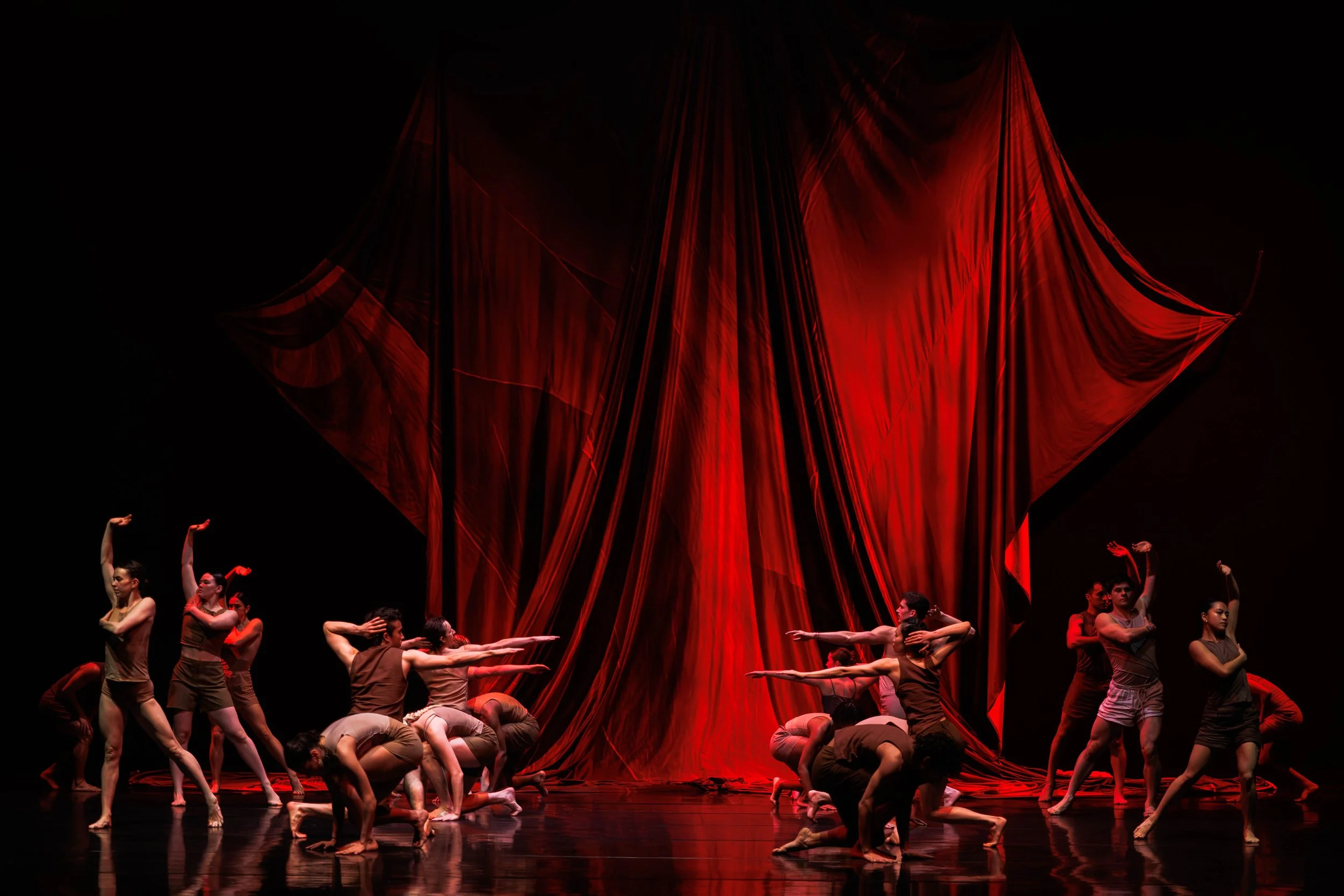
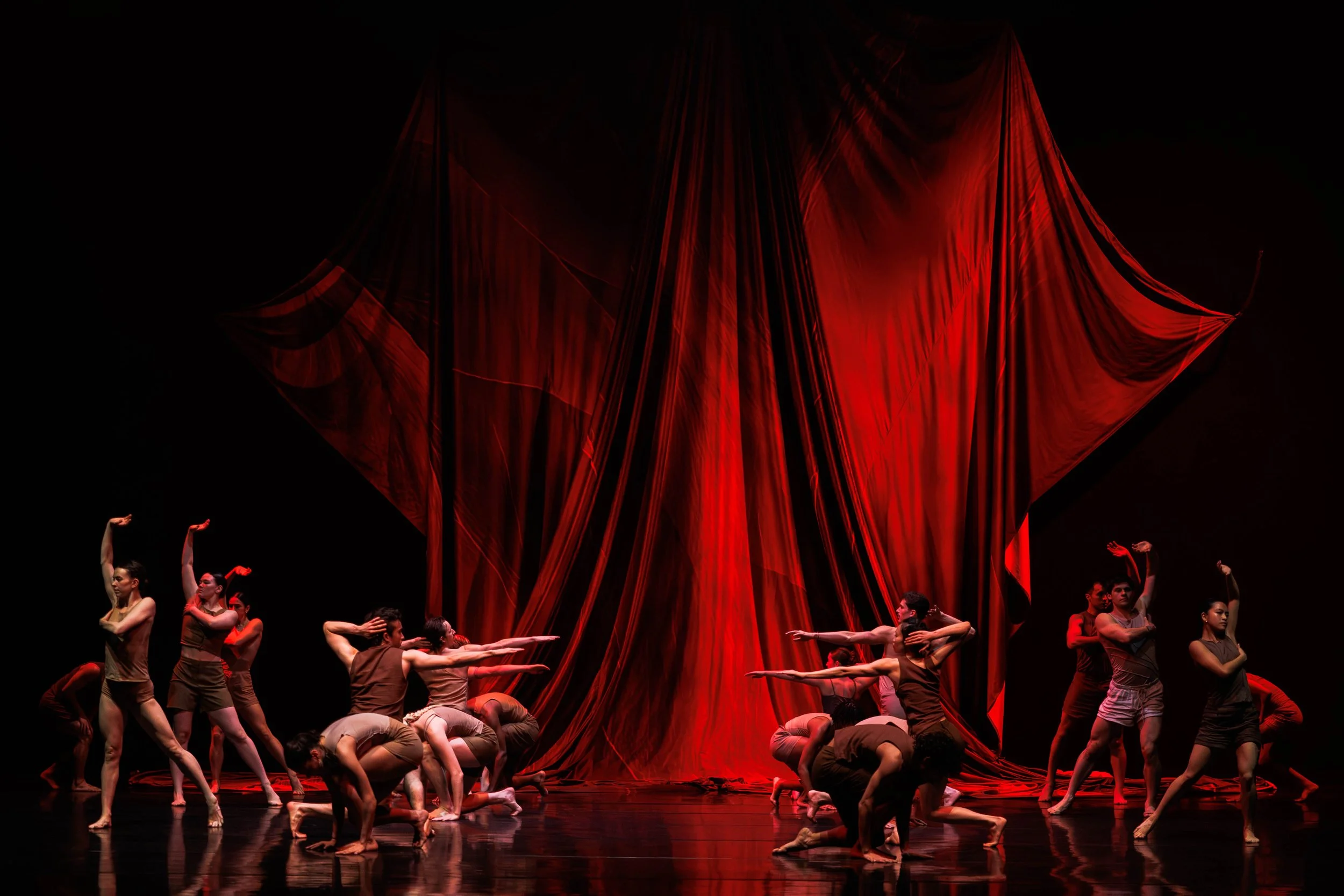
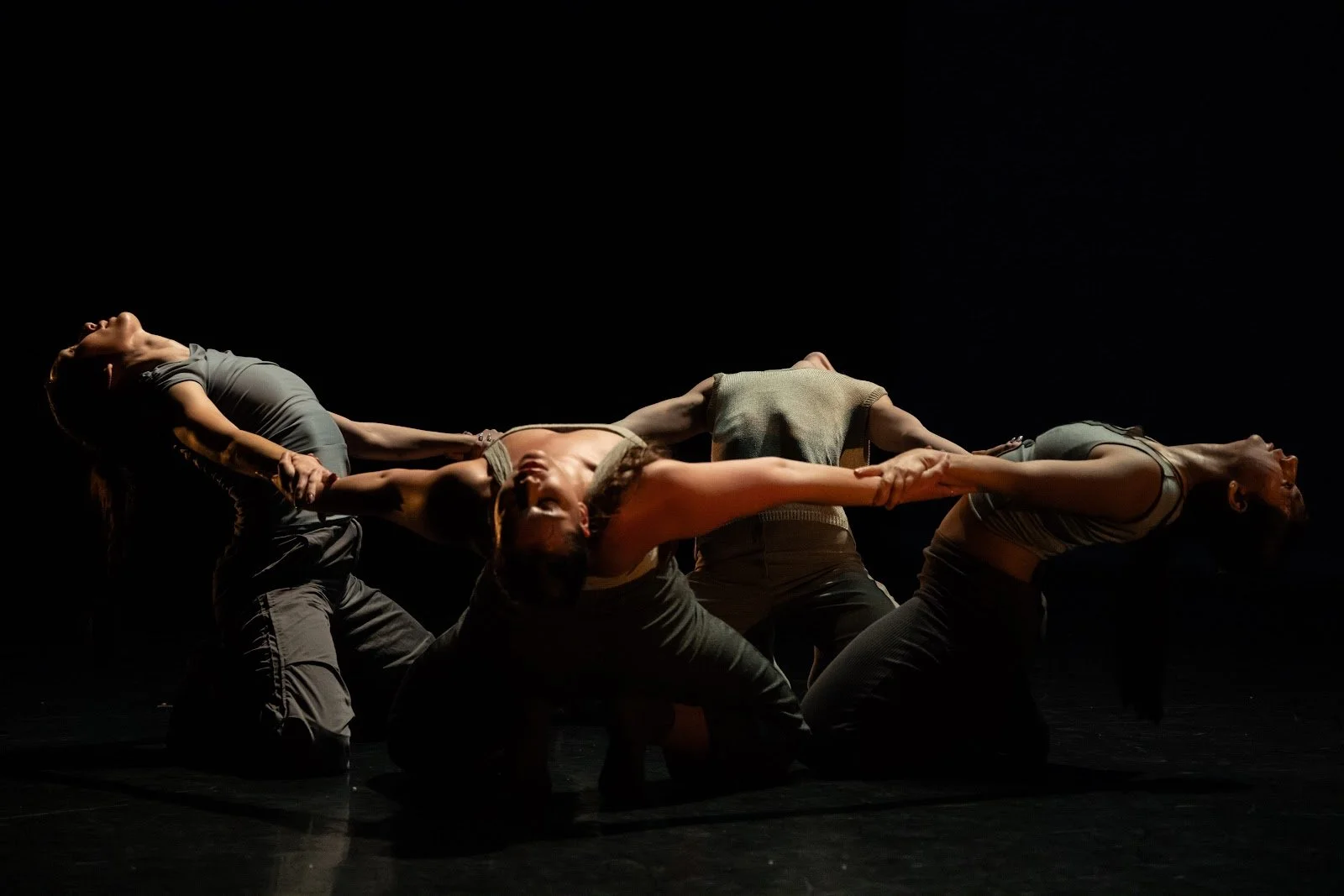
Artists of Ballet BC in Miriam ,by Imre and Marne van Opstal. Photo by Millissa Martin
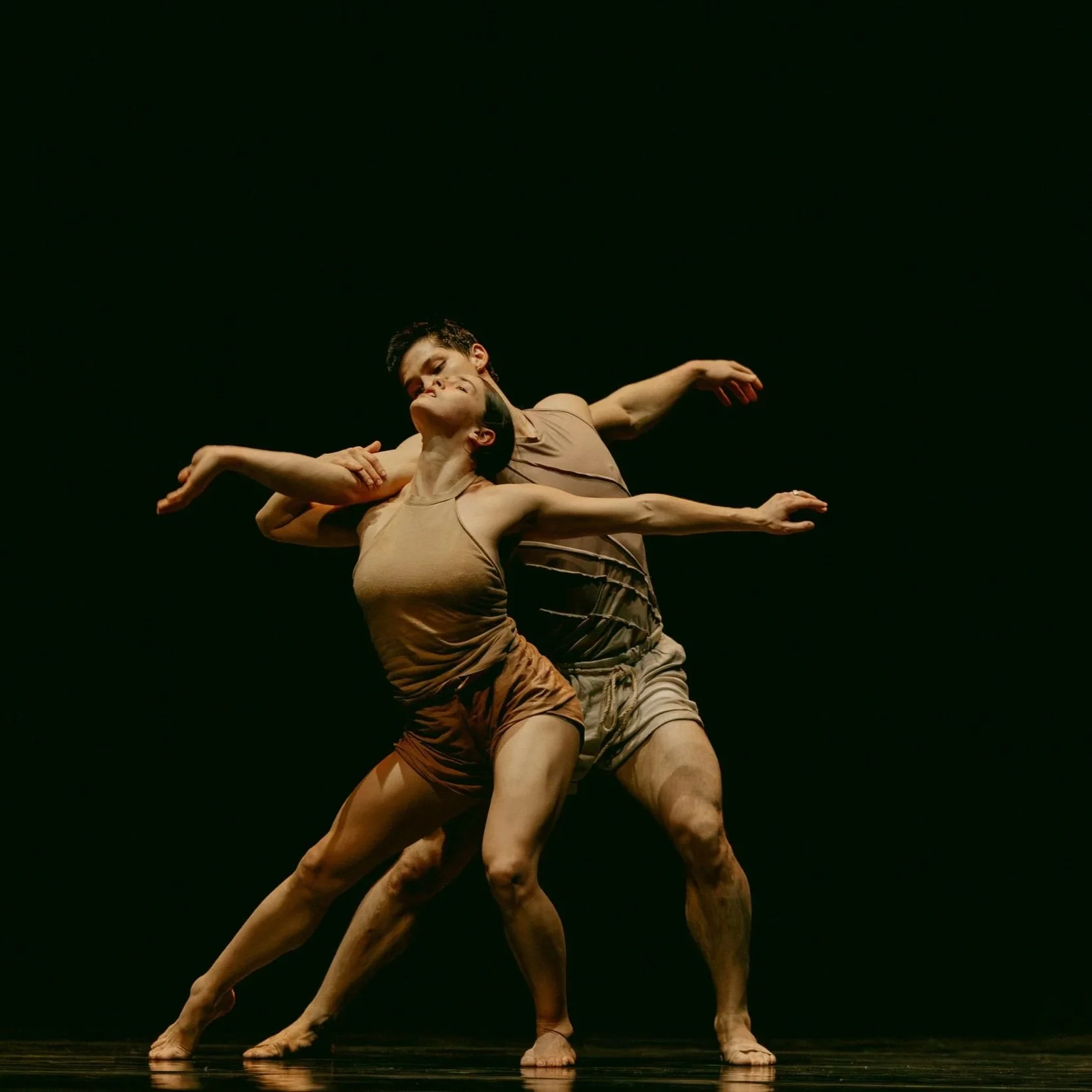
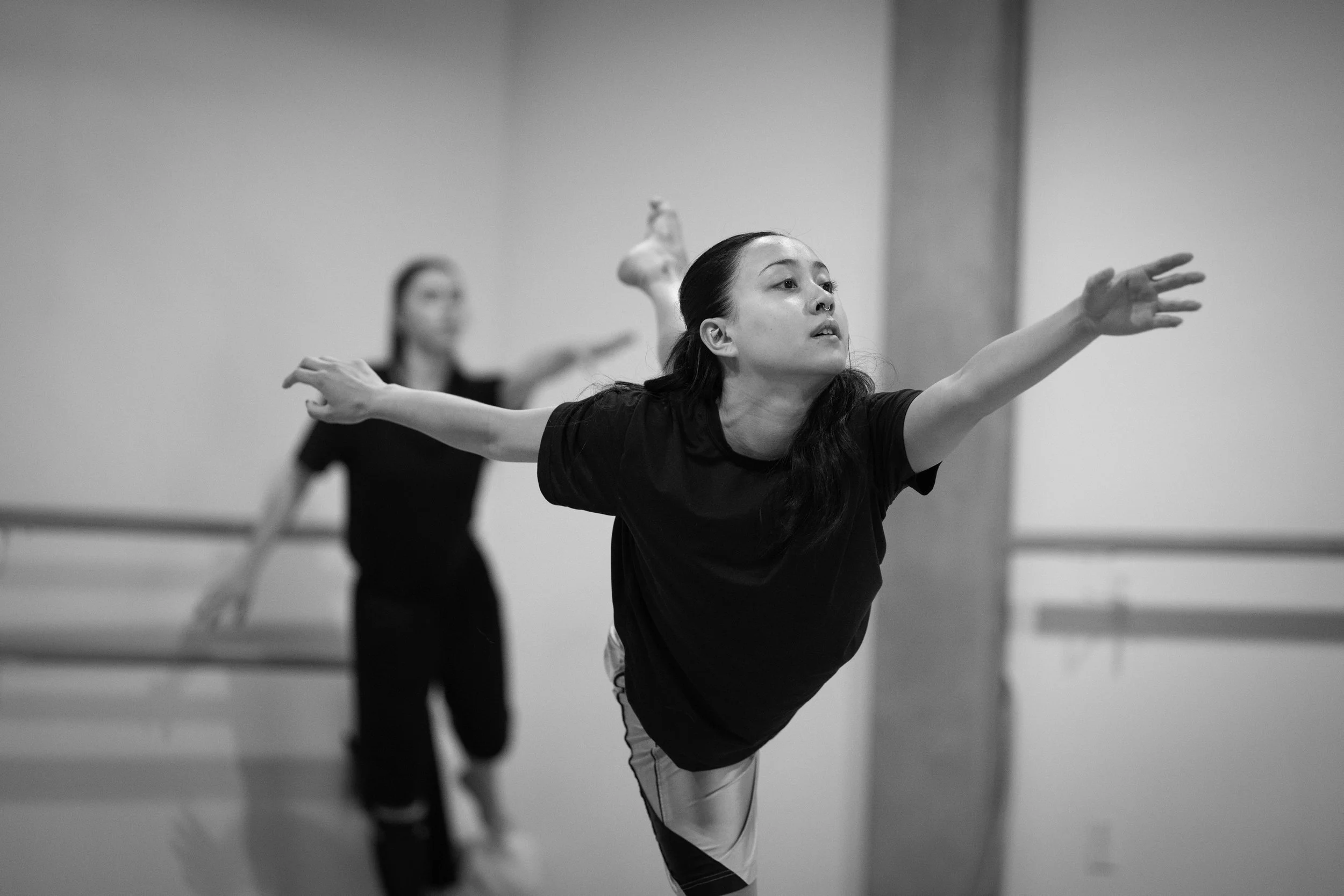
Ballet BC artists Jacalyn Tatro and Orlando Harbutt in Miriam Photo by Millissa Martin
Ballet BC presents Bodies & Voices at the Queen Elizabeth Theatre to November 7
BALLET BC’S 40TH-SEASON opener Bodies & Voices—a striking double bill by gifted Dutch siblings Imre and Marne van Opstal—is a study in how profound it can be when contemporary dance bypasses our brains’ linguistic and narrative filters.
On a surface level, I’m afraid to forget your smile is about facing mortality, while Miriam explores a strong mother-goddess energy. But each of the abstract pieces digs into more complex ideas as you experience the sensory, emotional, and kinetic elements. They express concepts far beyond words, leaving things unusually, but compellingly, enigmatic and open to interpretation. And, speaking to the van Opstals’ range, they feel markedly different from the duo’s harder-edged, erotically charged Heart Drive from a few years ago at Ballet BC.
Beyond the raw emotional effect, what’s so notable about the program is the way the dancers, featuring several new and recent additions, successfully tap into and express all that complexity.
Take the arresting opening of I’m afraid to forget your smile, making its North American premiere. Six half-naked dancers lie prostrate, lifeless, on the ground, then begin to beat their legs wildly against the floor as the voices of the Vancouver Chamber Choir—seated around them—start to rise in haunting music.
The piece exists in a strange limbo, bathed in a rectangle of softened lab light, the ethereal voices of the choir (singing works by such composers as Arvo Pärt and Jóhann Jóhannsson) frequently contrasting the frenzy and corporeality of the fragile humans.
At times, the dancers suggest mortal beings raging “against the dying of the light”, at others, resisting letting go of memories of a lost loved one.
The muscle and flesh of the dancers is carved out by white light beautifully, and sometimes eerily, in the dark. The performers commit to the strange mood, soloist Emanuel Dostine among those who hold the audience spellbound. Amid some of the stunning partnering, Orlando Harbutt lifts Vivian Ruiz upside down behind him, her legs reaching surreally upright. In another charged duet, Eduardo Jiménez Cabrera stabs his arms at Michael Garcia’s legs as he leaps out of the way. (When they aren’t performing, the dancers take meaningful rest on the benches amid the singers.)
By the end, the figures seem to have transitioned, turning their backs to the audience to gaze upon the choir, and, perhaps, reaching some state of acceptance.
I’m afraid to forget your smile invites different interpretations, and it’s impossible not to bring your own experiences of mortality to this waiting room or liminal space that seems to sit on the cusp between life and death, grief and acquiescence. The ethereal live music only adds to its profound power.
The new commission Miriam has a totally different energy. The large-scale piece opens on a giant, silky red-washed cloth—like the world’s biggest placenta—that’s dragged and raised to take on different symbolic importance. (The van Opstals and Tom Visser are credited with the simple yet dramatic set design.)
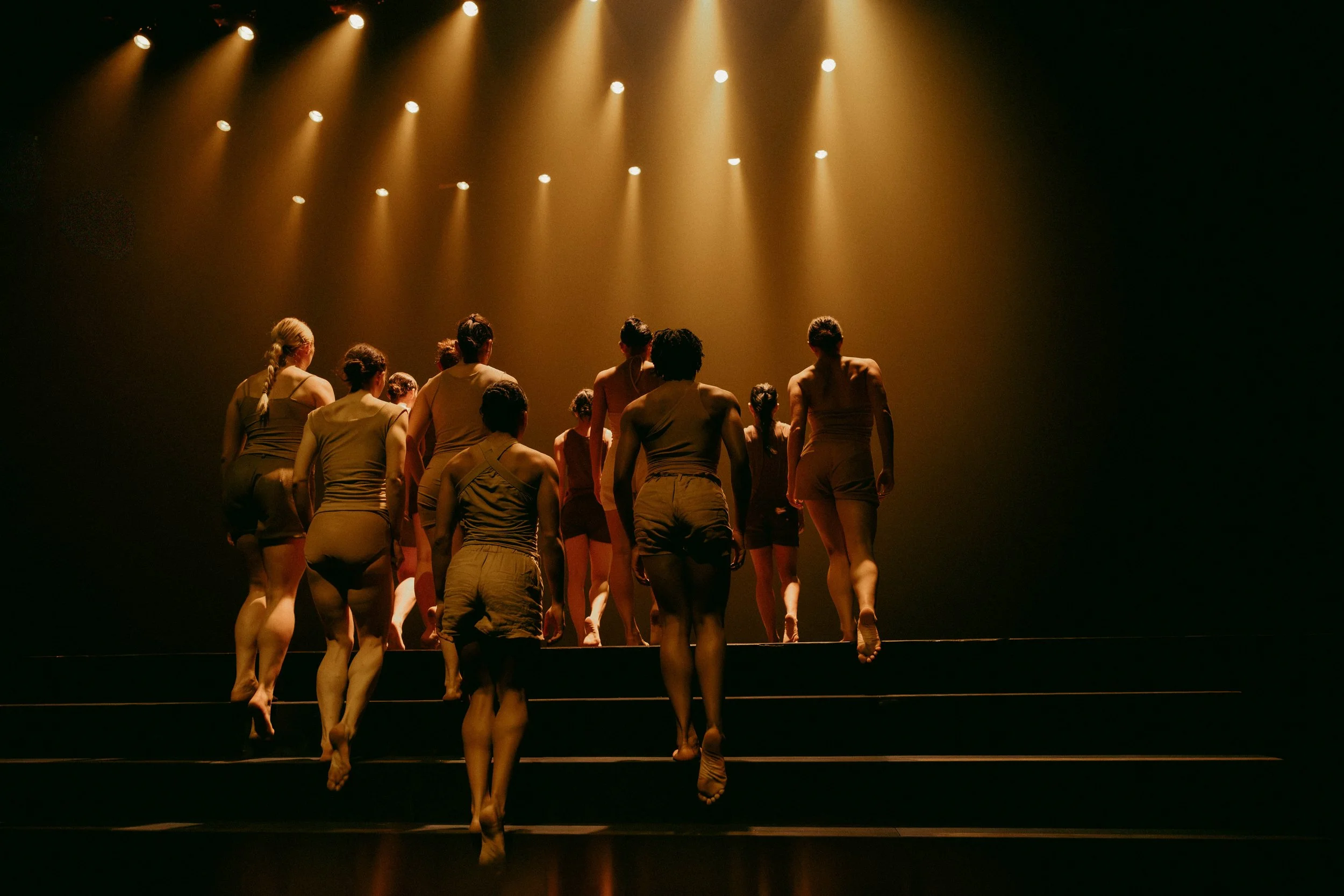
Artists of Ballet BC in Miriam by Imre and Marne van Opstal. Photo by Millissa Martin
Miriam begins with the company’s entire force of women dancing in earthy synchronicity to Amos Ben-Tal’s driving, rock-inflected score, incorporating drumbeats, guitars, and vocals.
We’re talking about women owning the stage, squatting low, rolling pelvises, swaying hips, pulling in the air with outstretched arms, and lunging with exhilarating force. The energy radiates off the stage like heat off a bonfire.
Miriam carves out space for company members to shine individually. Kylie Miller is utterly magnetic in one extended sequence, cutting ever-so-slowly through crouching figures, balancing on each leg, pointing and splaying her toes, and rippling her arms. It’s another mesmerizing display of the van Opstals’ unearthly touches.
Men arrive and the work builds into something that feels like a mother-goddess ritual, the rhythms pulsing through bodies, with more of the van Opstals’ intense and innovative partnering. Ruiz has a gorgeous, supercharged duet with Jiménez Cabrera, culminating in a tender moment where she comforts his head, motherlike, to her stomach. Miriam’s extended ending throws the spotlight on dancers Harbutt and Jacalyn Tatro—two powerful equals. There is softness, again, within all that goddess energy, Harbutt stopping to clutch her tightly, with all his life.
It would be too simple to describe Miriam as an ode to mothers or a celebration of the life-giving goddess figure: instead, the van Opstals have captured the complexity of womanhood on multiple emotional levels, encapsulating everything from its warm embrace to its steely internal strength.
If all that makes it sound challengingly abstract, that’s kind of the opposite of what Miriam presents: instead, as the exuberant response of the opening-night audience showed, it feels like something ancient, primal, earthy, and sacred that everyone instinctively can relate to—but again, might have trouble quite putting into words. 

Related Articles