Little Match Girl’s tale throws secular and sacred light on plight of the modern city
Collaboration between Belle Spirale Dance and Vancouver Chamber Choir finds galvanizing expression in the choreography of Kevin O’Day and the voices directed by Kari Turunen
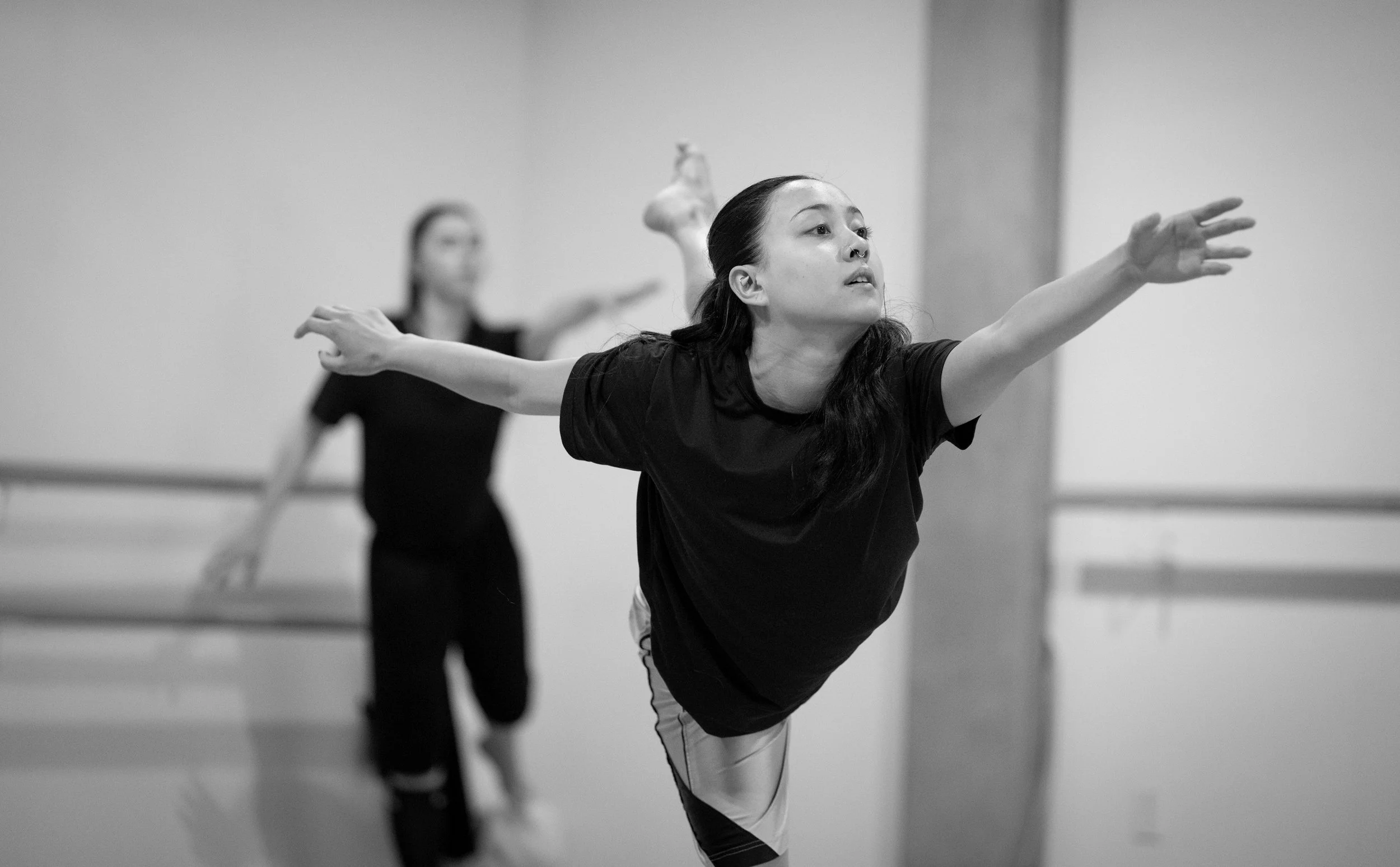
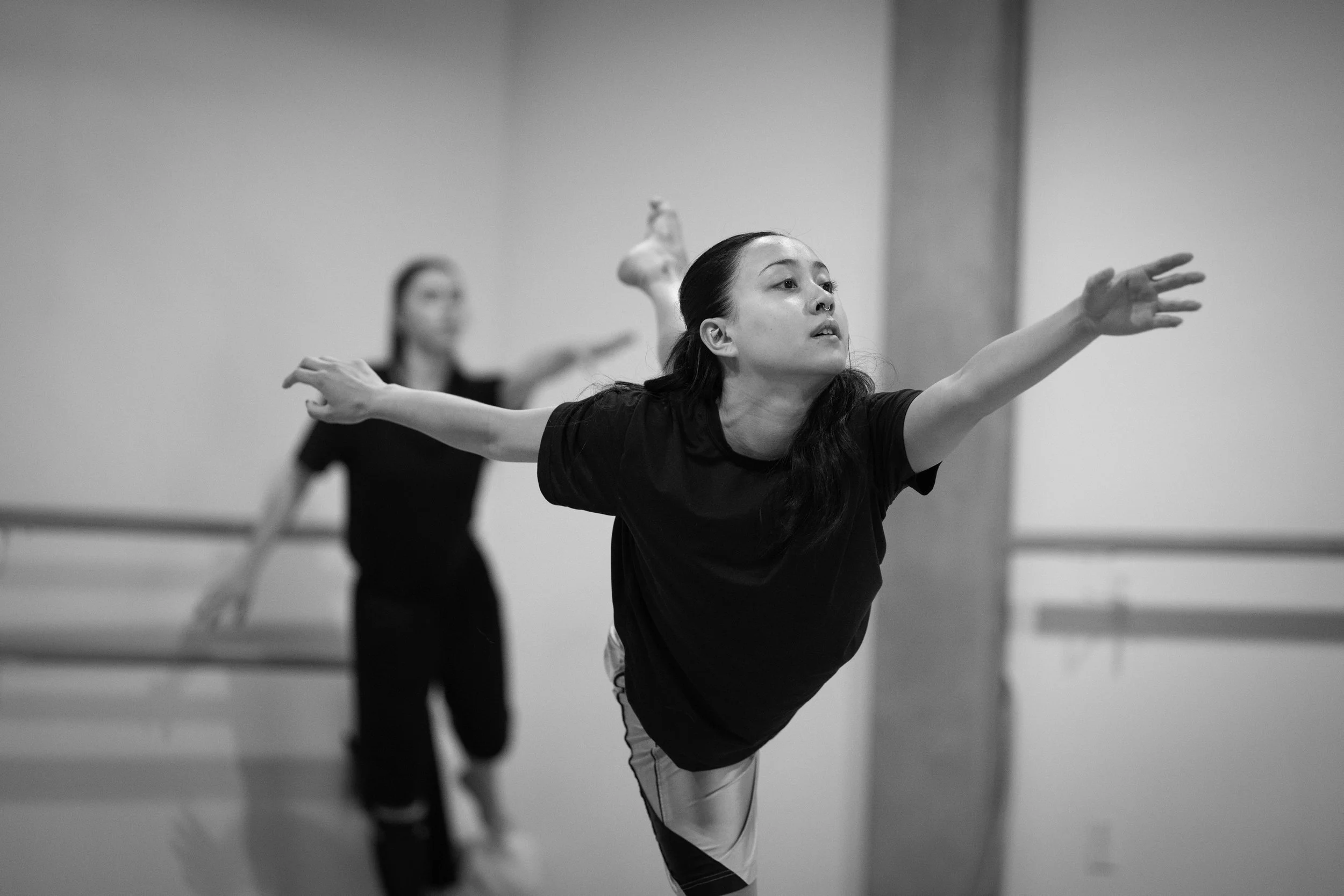
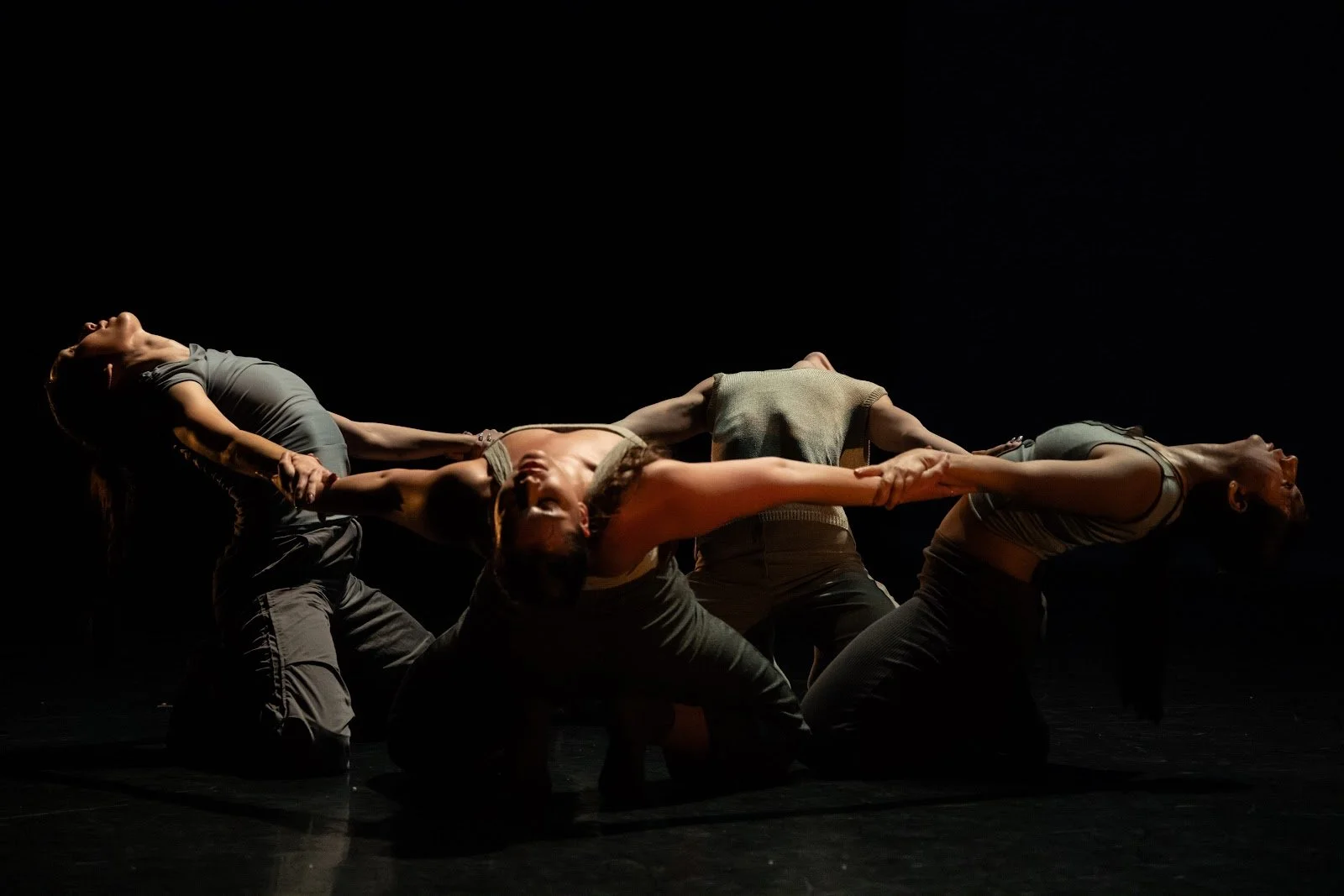
Emma Galvin in rehearsal for The Little Match Girl. Photo by David Cooper
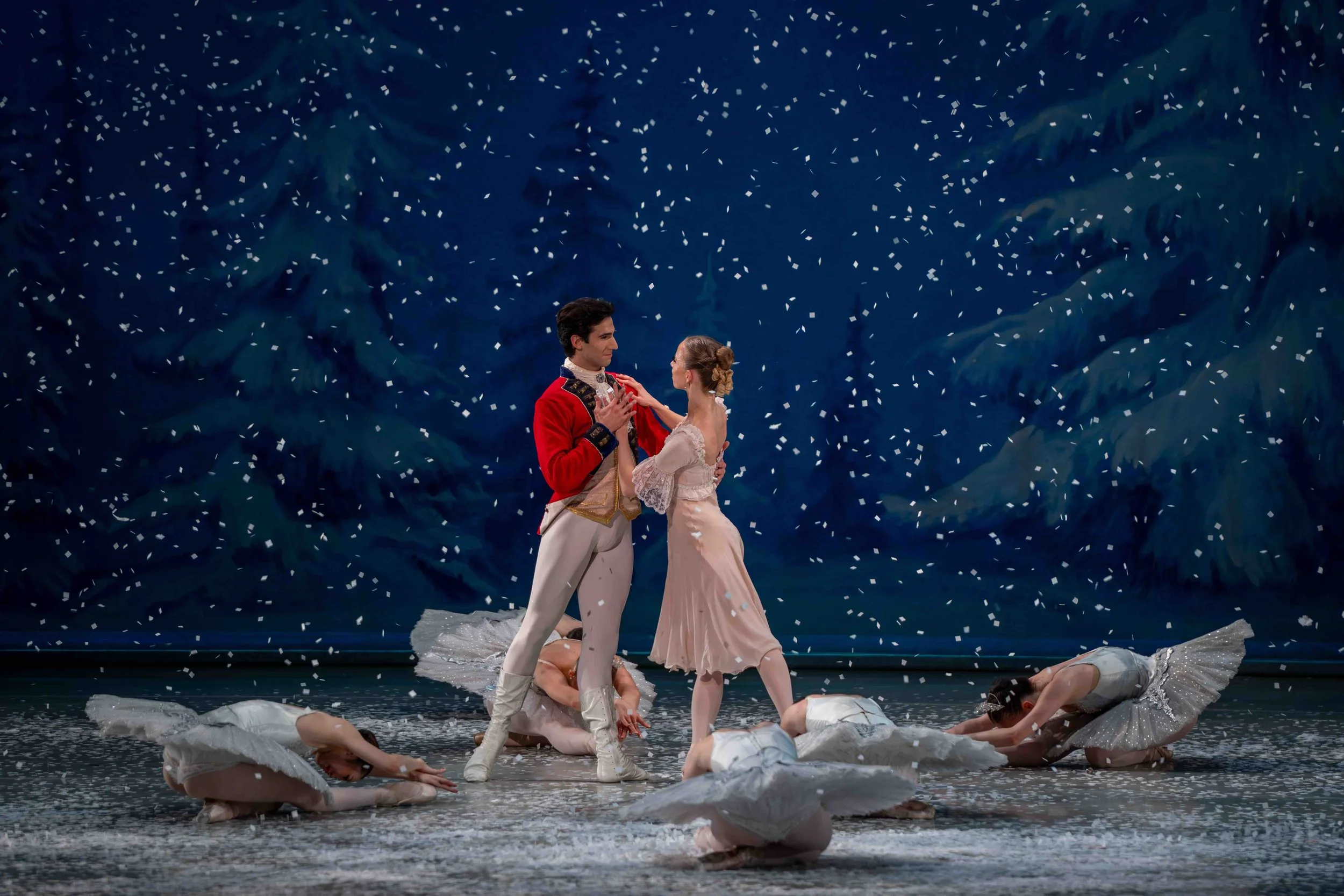
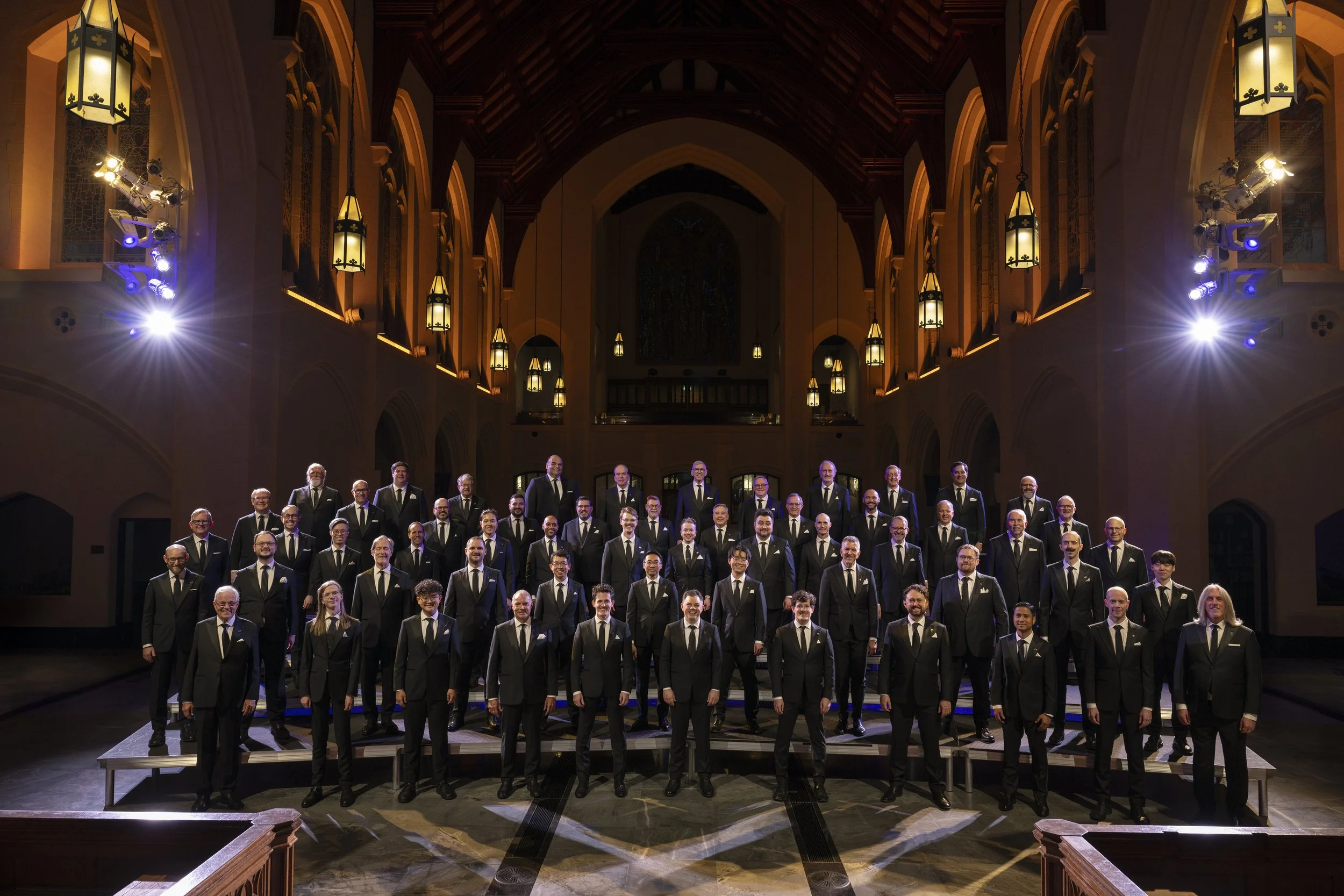
Belle Spirale Dance Projects and the Vancouver Chamber Choir present The Little Match Girl at the Vancouver Playhouse on November 13 and 14
SOMETIMES A WALL is a metaphor made concrete. The barriers that keep people apart are not just physical, but projections of will, of fear, of “othering”. Whether the builder is a Roman emperor on the Pictish border or a 21st-century Caligula on the Rio Grande, walls are built not only to exclude, but as symbolic gestures, however porous they turn out to be.
Other walls, however, can shelter, can block bitter winds or marauding beasts. Some, like the stone enclosures that surround Indigenous clam gardens or support espaliered fruit trees, can nurture and offer sustenance. And the wall that will be the primary set piece of Belle Spirale Dance Projects and the Vancouver Chamber Choir’s upcoming production of The Little Match Girl just might be all of these things.
“This character, her back is against the wall, literally,” says choreographer Kevin O’Day, referring to the preteen street peddler who gives the work its title. “And so the set is a wall, and it moves around her and gives her space….and in the end, when she wants space, the room completely collapses on her. So is the wall holding? And what comes from behind the wall? What is inside the wall? It’s something that she can’t get over. She can’t go beyond it or over it or through it; it just continually blocks her. So everything appears through this wall.”
Designer Thomas Mika’s set piece becomes a screen for the images that flash through the starving, dying Match Girl’s head: a table set with delectable roast meats; her loving grandmother’s face. At one point the wall turns into a giant block of ice, an obvious symbol of an uncaring society, whether in author Hans Christian Andersen’s Copenhagen or our own streets in this age of addiction and homelessness and precarity. And it’s not only an obstacle, but a container for potentials that will likely never be realized—a very apt metaphor, perhaps, for the artist’s life.
“Exactly,” says O’Day.
O’Day’s own position is far from precarious. The Arizona-born choreographer, who performed with the Joffrey Ballet, American Ballet Theatre, the Frankfurt Ballet, and Mikhail Baryshnikov’s White Oak Dance Project before beginning his second act as director of Mannheim, Germany’s Kevin O’Day Ballett NTM, is just one of several remarkable artists that Belle Spirale artistic directors Alexis Fletcher and Sylvain Senez have assembled for this project—from emerging stars Sophia Makarenko and Emma Galvin, who’ll embody different aspects of the Match Girl herself, to the experienced singers of the Vancouver Chamber Choir, who’ll be tasked with realizing New York composer David Lang’s haunting yet propulsive score.
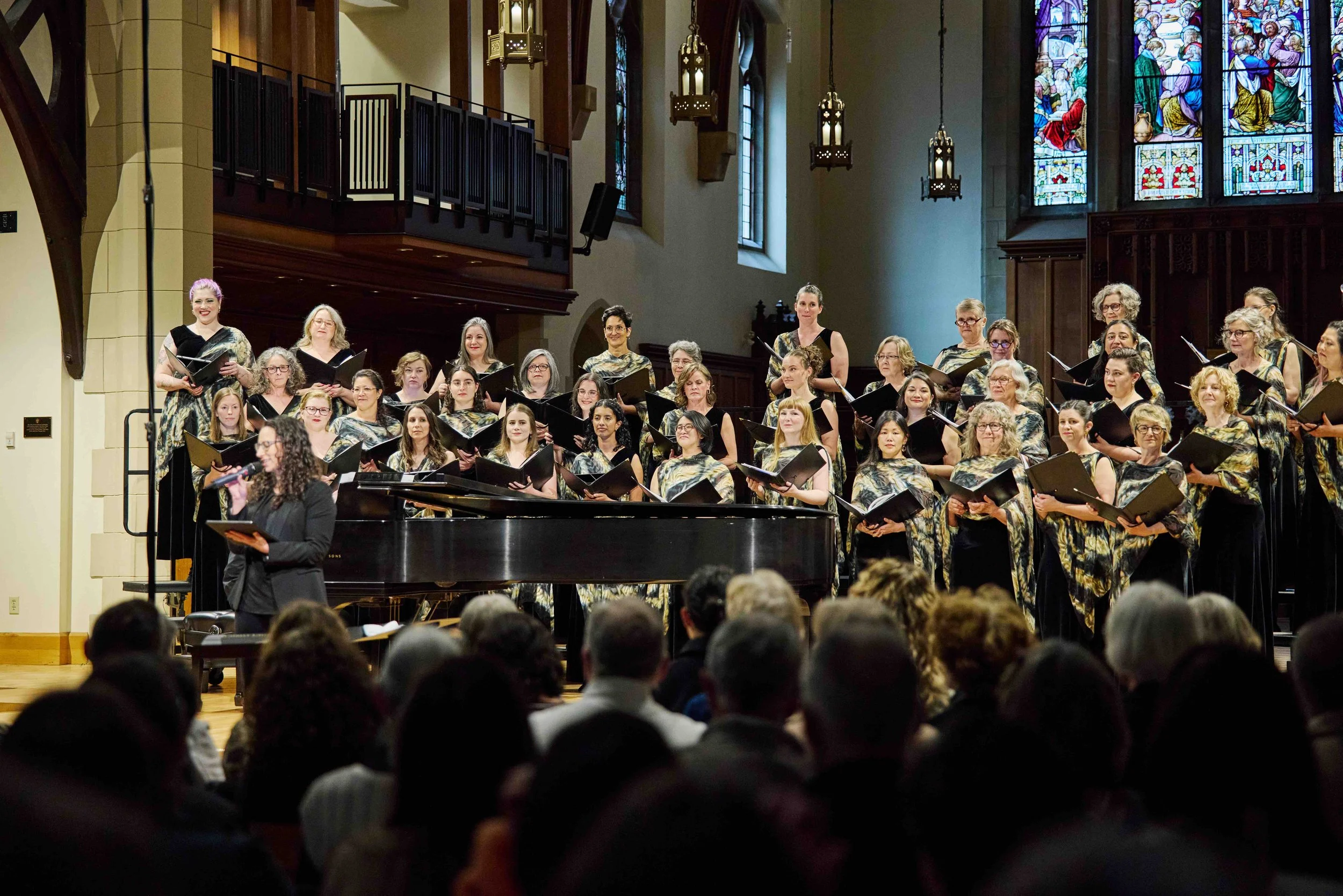
What we’ll hear and see at the Vancouver Playhouse on November 13 and 14 is considerably different from Lang’s vision. The original, Pulitzer Prize–winning Little Match Girl Passion was a 35-minute choral composition, while this hour-long Belle Spirale/Chamber Choir coproduction will incorporate several other examples of Lang’s choral writing, as well as passages of dance set to silence.

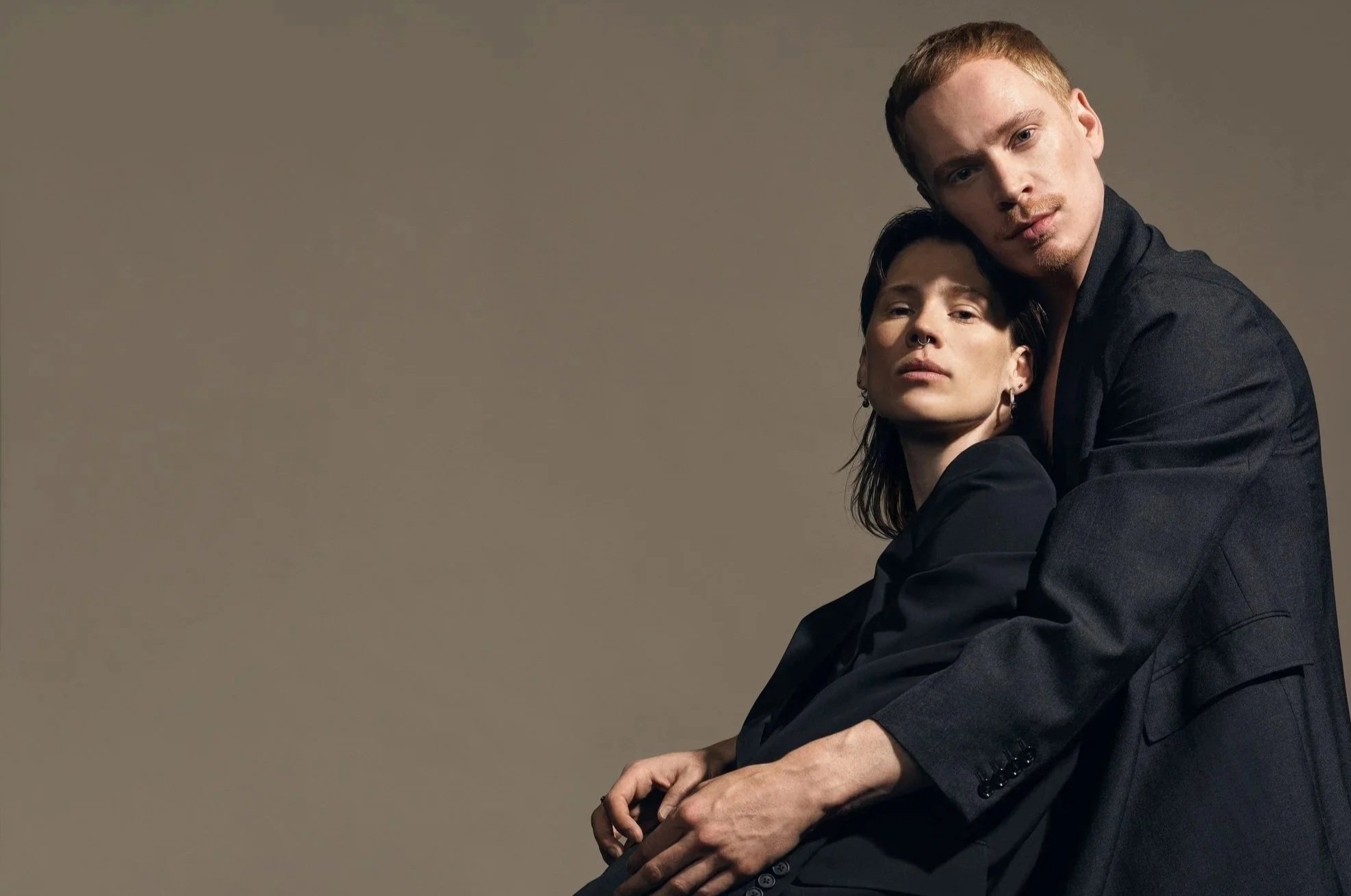
Choreographer Kevin O’Day. Photo by David Cooper
Retained, however, will be the emotional weight of the original score, which pivots between contemporary minimalism and tropes drawn from medieval plainsong as it retells Andersen’s 1845 story, originally published as “Den Lille Pige med Svovlstikkerne”.
The Danish author’s intent was to draw attention to the real-life waifs dying, unloved and abandoned, on Copenhagen’s streets, and in choosing it as a choral theme Lang clearly saw parallels between the Match Girl’s story and the defining myth of the Christian religion, Christ’s torture and death on the cross. His choice to include “Passion” in the work’s title explicitly references two of the greatest liturgical compositions of Western culture, Johann Sebastian Bach’s St. John Passion and St. Matthew Passion.
“Lang goes into this in his program notes,” Vancouver Chamber Choir artistic director Kari Turunen explains, noting that the composer takes pains to point out that “passion”, in a liturgical context, is far removed from our everyday conception of the word.
“He says the word ‘passion’ comes from the Latin word for ‘suffering’,” Turunen explains. “‘There is no Bach in my piece, and there is no Jesus. Rather, the suffering of the Little Match Girl has been substituted for Jesus’s, elevating (I hope) her sorrow to a higher plane.’

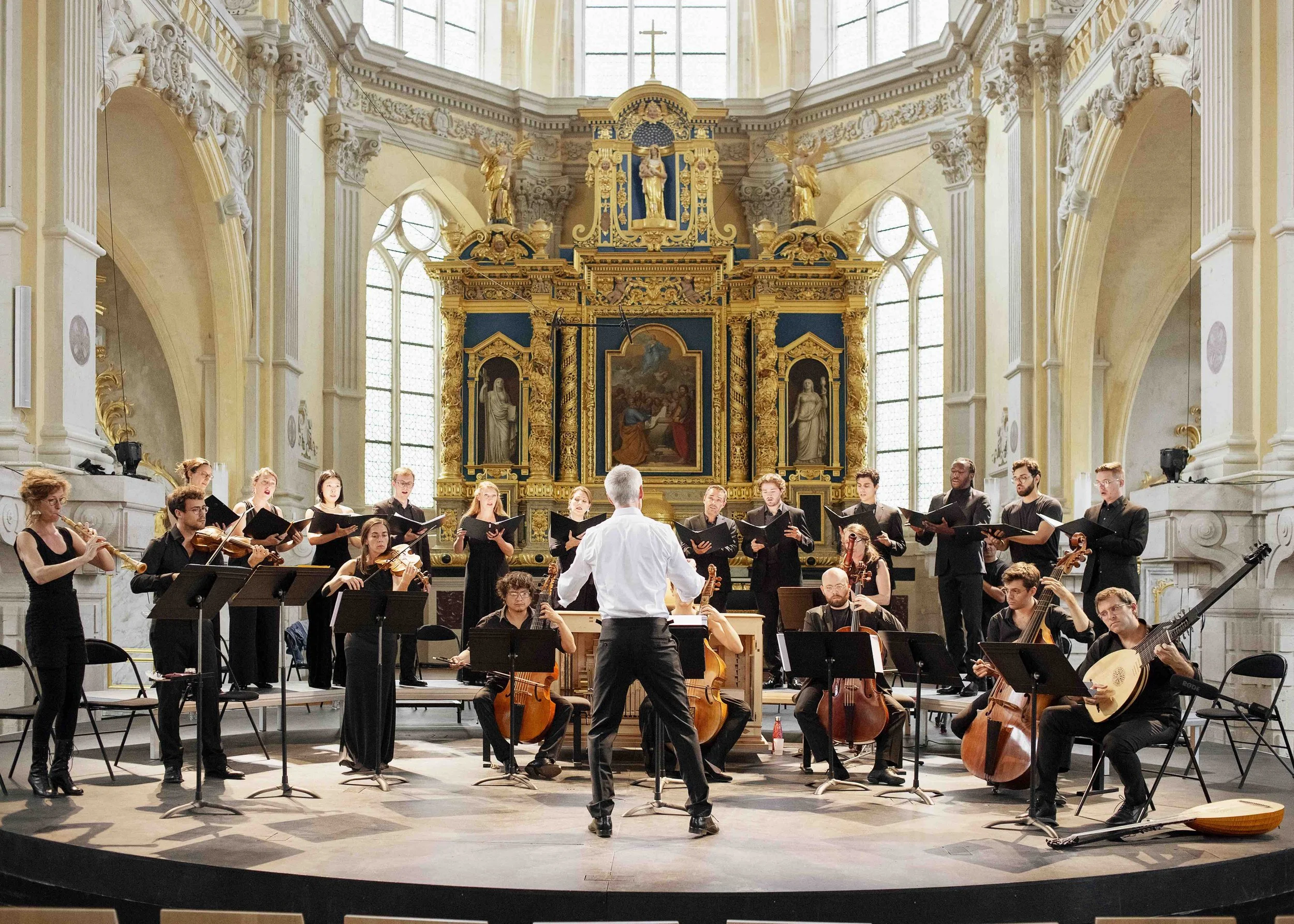
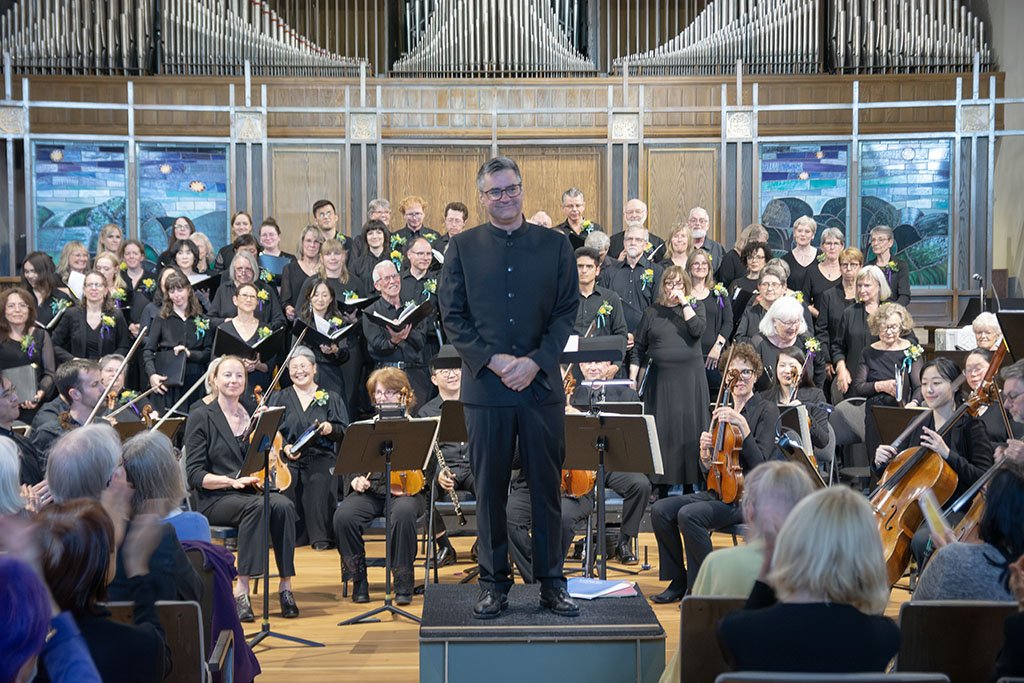
Kari Turunen. Photo by Diamond’s Edge Photography
“So he does definitely make the connection to the Easter-time Passions, and although it took me a little while [to see this], when you look at the movements, there are 15 of them and all the odd-numbered movements are actually riffs on the St. Matthew Passion. There’s always a connection in the titles: the first movement is ‘Come daughter, help me’, which is a direct reference to the opening movement of the St. Matthew Passion, which is ‘Kommt, ihr Töchter, helft mir klagen!’ [‘Come, ye daughters, help me lament’]. The third movement is ‘Dearest Heart’, which is a reference to the chorale ‘Herzliebster Jesu, was hast du verbrochen?’ [‘Beloved Jesus, what has thou done wrong?’]. So they’re always in some way connected to Bach. And then the even-numbered movements are from the fairy tale by Hans Christian Andersen, creating this really interesting secular/sacred passion, as it were.”
The Little Match Girl creators are well aware of the import of staging this work with winter settling in and thousands of people sleeping rough on the streets of Vancouver. “It’s something that we live amongst and see,” says Turunen, “and I’m sure I’m not the only one who’s pained by the visions of homelessness and substance abuse and so on. So I think it has a real relevance. And Lang himself says what he loves about the Match Girl fairy tale is that there’s always a counterbalance. When you talk about the most sad and dramatic things, there’s also the presence of the positive. So when she’s hungry, she imagines a feast and so on—which to me sounds like real life. We don’t live in a black-and-white world; we live in this fine balance between hope and despair, and they’re both present in the Andersen fairy tale, absolutely, and incredibly beautifully. I think that’s really the deepest starting point of this work, and of the music.”
Is Lang’s music itself the balm we need in this moment?
“I so agree with that,” Turunen says. “When you first look at the text of the choral work, you might be like, ‘Oh god, this is so dark.’ But when you hear the music, there is this flipside to it. Hope is infused in the music.”
Walls, in other words, are not only obstacles: they can also hold warmth. 

Related Articles