Opening Ballet BC’s 40th season, Dutch siblings Marne and Imre van Opstal return with two contrasting creations
At bodies & voices, star choreographers’ meditation on loss with live singing by the Vancouver Chamber Choir pairs with a world premiere about motherhood as a life-giving force
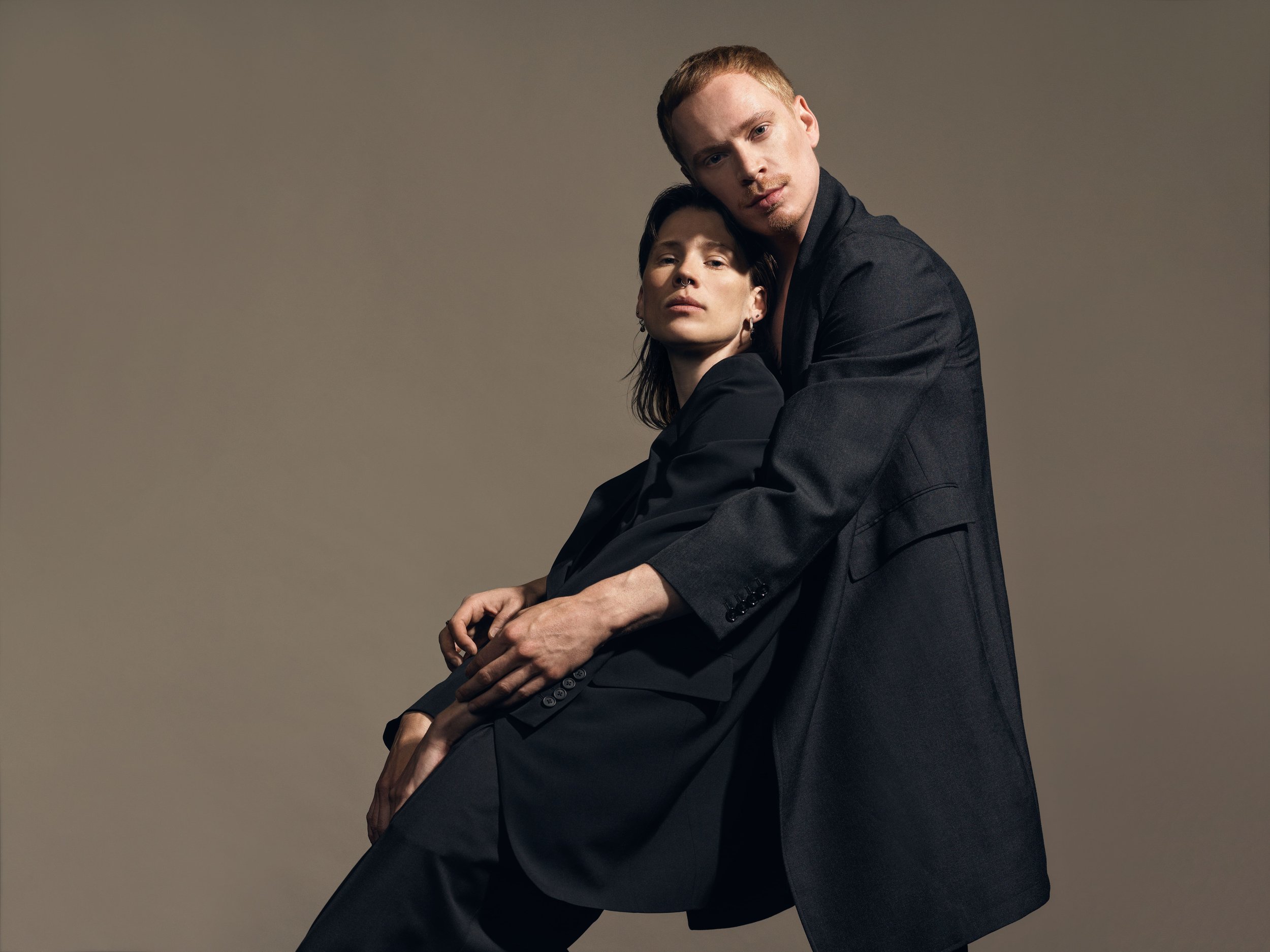
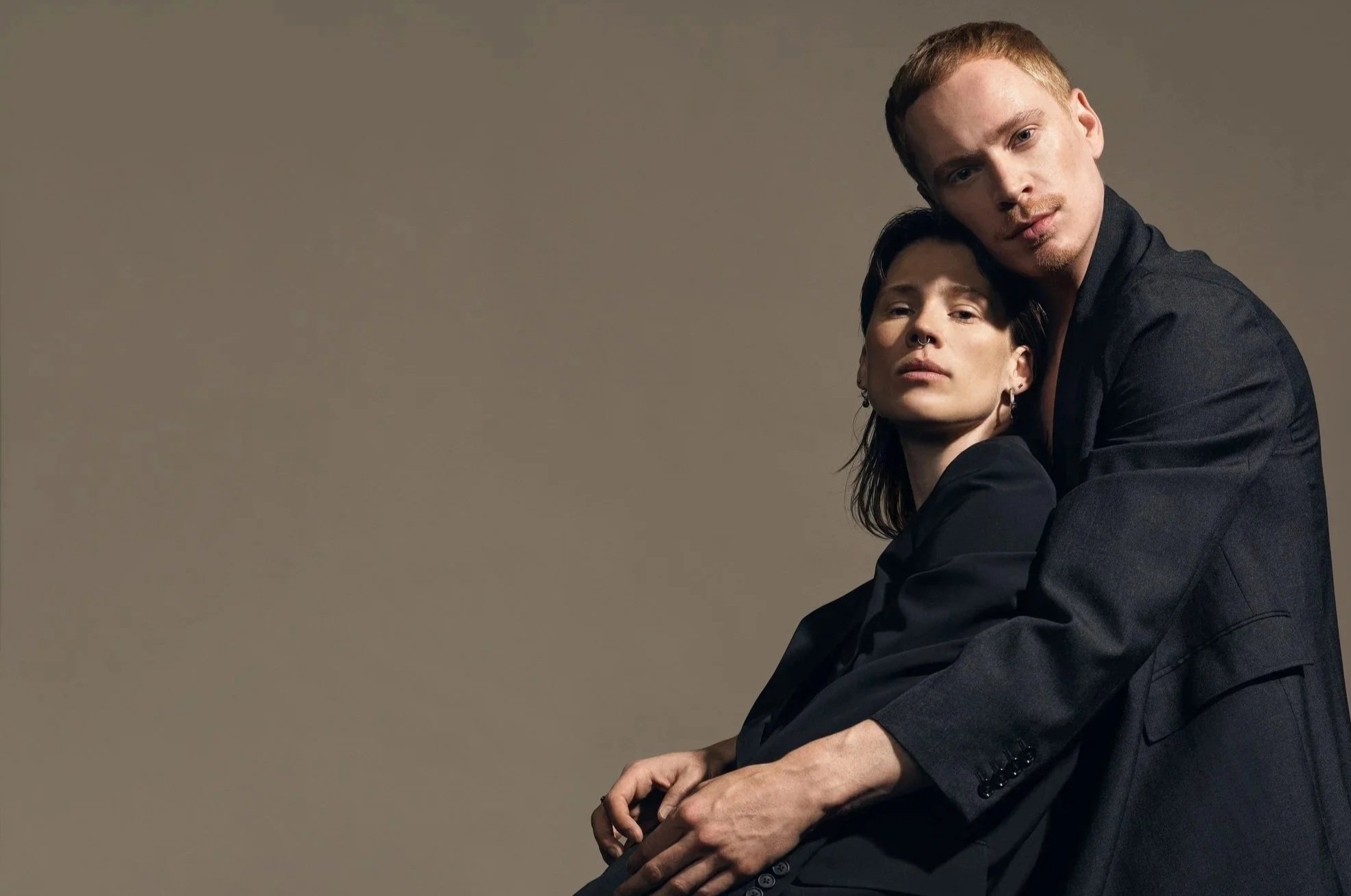
From left: Imre and Marne van Opstal. Photo by Hugo Thomassen
Ballet BC presents bodies & voices at the Queen Elizabeth Theatre from November 5 to 7
IN A REHEARSAL STUDIO on Granville Island, two Dutch superstar-sibling choreographers are grappling with life and death.
Marne and Imre van Opstal are fine-tuning a pair of contrasting pieces with Ballet BC: I’m afraid to forget your smile and Miriam. Both deal with the “full circle” of existence, as the duo puts it.
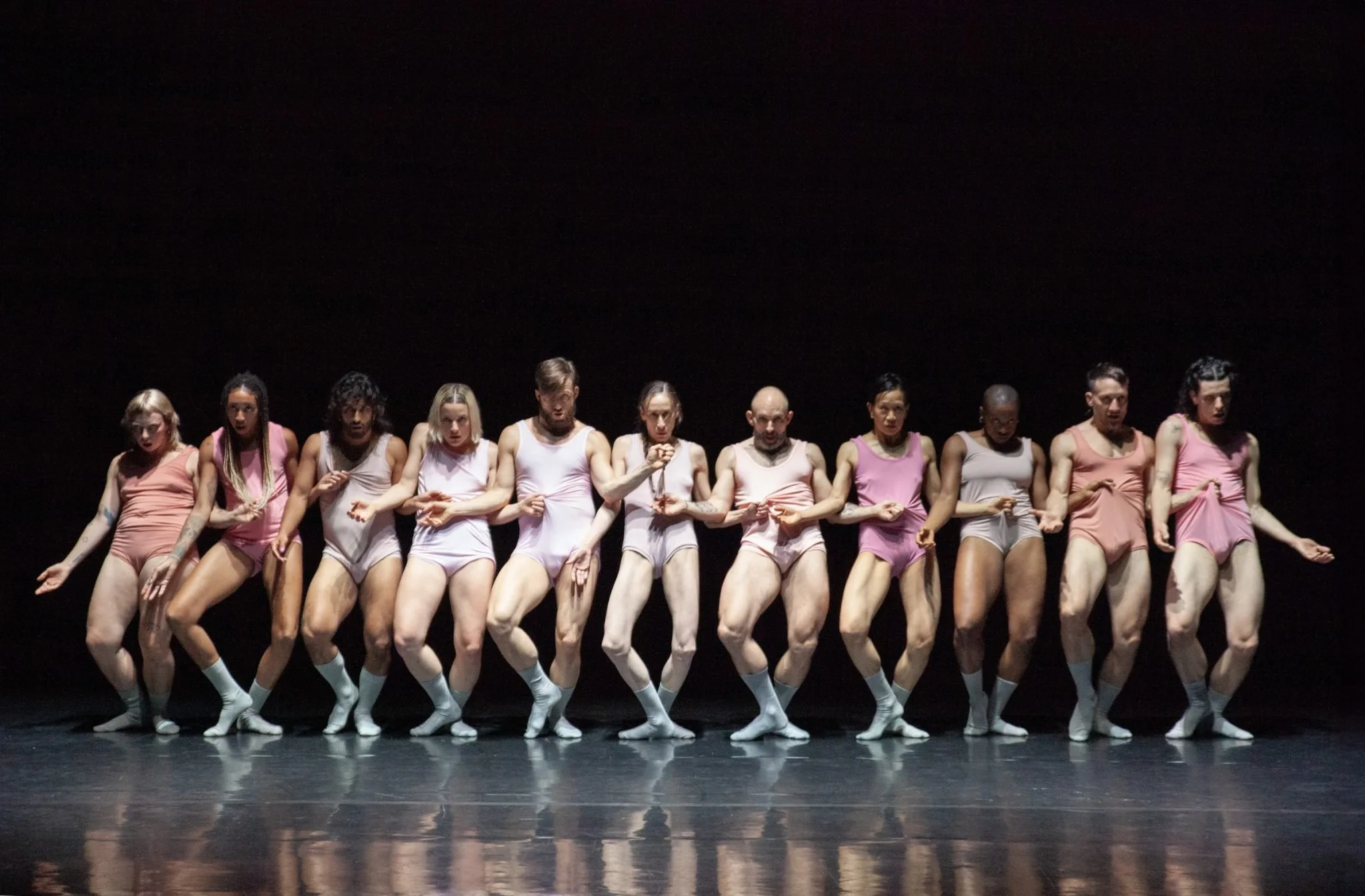
I’m afraid to forget your smile finds six dancers navigating loss and mortality to the soaring voices of an onstage choir. The world premiere Miriam, on the other hand, explores the life-giving force of motherhood, and features the full, 22-member company.
Both works—debuting at November’s body & voices program—mark the much-anticipated return of the brother-and-sister team, which first arrived here in 2022 with the raw, erotically charged Heart Drive. In the studio, their rehearsal process is about physical communication, movement, and feeling. As dancers lunge, squat, twist torsos, and carve the air in I’m afraid to forget your smile, the siblings take turns jumping up to demonstrate what they’re after—the way to snap back from falling backwards, or how to flick your hands in subtle invitation.
The van Opstals were world-class dancers in Nederlands Dans Theater, and Imre also performed at the renowned Batsheva Dance Company. Though they stopped performing almost six years ago, their perspective as dancers is still fresh.
“As long as we can still use our own body to show something, that is a great mirror for them, and then they can apply it to their own bodies,” Marne explains on a rehearsal break.
More than anything, Marne explains, communicating with the dancers through movement allows ideas to come from the body, as opposed to being dictated from the mind. That keeps the meaning open to personal interpretation—for dancers and audiences.
“It can be very dangerous when you think you know what you want to create,” asserts the artist, who with his sister works beyond dance across Paris runway shows, film, and large-scale concerts. “There’s a level in your creativity that is very fed through your intuition that you might lose because you start to overthink every decision you make. And you have to sort of hone in on this feeling, and then trust that things will emerge.”
Take the poignantly titled I’m afraid to forget your smile: the siblings reveal that the piece, originally created for Hessisches Staatsballett in 2022, was shaped by the profound memories that hit them after a personal loss.
“When someone goes to the other side, we want to hold on to the memories,” Imre says. “What was their laugh? What was their smile? What was their smell? But we hope also that the piece is not necessarily about that itself, but more about the transition to the other side. It’s almost like showing how fragile our existence is—you have it, and then you lose it.”

The van Opstals, working with Ballet BC dancers in the studio. Photo by Millissa Martin
In the creative process here, Marne relates, the pair was careful not to tie the piece too closely to their own story of loss, which they’re choosing not to describe specifically.
“We were conscious of the fact we were touching a subject, obviously, that everyone has a personal relationship to,” he explains. “When we were creating, we were interested to hear how the dancers look at the topic of mortality, and what was their first experience with death? We really wanted to allow them to have a personal connection to the piece.
“It’s almost like otherwise you’re overexplaining something, and it doesn’t leave room for other possibilities,” he adds. “So you want to be quite careful sometimes with what you share. That’s why we really had a physical approach into work.”
The van Opstals describe the set, with lighting by renowned designer Thomas Visser, as a purgatory- or limbo-like space that resembles a laboratory or waiting room. A huge component of the new piece is the presence of the soaring live voices, courtesy of 16 members of the Vancouver Chamber Choir, performing the transcendent work of composers like Eric Whitacre and Jóhann Jóhannsson while seated on benches that stretch along three sides of the stage.
“Everything you hear and see comes from the human body,” Marne says, “so it’s produced from the body, from our own mortal vessel. That’s also why we wanted to work with the choir. It is creating this ethereal layer, this sort of essence that is always around us, but that we might not always get our hands on. Maybe only in the end of our life, we’ll get a glimpse of what’s on the other side. That’s being portrayed through the voices of the singers, and then we have the mortal, the visceral, the real, which is the flesh of the dancers, in a way. So those were the two layers that we wanted to present.”
Adds Imre of the music: “It already is so dramatic, so encompassing and overwhelming. And so we wanted to be very careful to go in contradiction with that a little bit, by keeping the physicality alive, to keep it rich, to keep it also playful at times.”
Miriam also draws on some specific inspiration: the new commission is named for the pair’s own mother. But the full-company work has ended up drawing on a much more expansive idea of motherhood as a force, as Imre puts it, “that’s bigger than us”.
She says the piece centres around the wider idea of the mother figure as a source of creation.
“We all start inside someone else’s body. Before we even had an identity, or even a sense of self, or even have language, there was a presence, and there was warmth, and there was rhythm, and we heard sounds,” Imre explains. “That presence with a mother—that’s like your first home. It’s the first relationship you have with someone else.”
“It’s something that is ancient—we didn’t want to place it necessarily in the now,” adds Marne. “We want to get to an energy of something that is older.”
Both describe Miriam as energetic and powerful, with Amos Ben-Tal’s original music incorporating primal drum rhythms, guitars, and other acoustic instruments.
“We wanted to create a sort of warm environment—this encapsulated sensation of being held by something bigger,” Imre emphasizes. “I think it’s almost this feeling of maybe what we are all looking for as adults, unconsciously. Maybe we want to be held by something bigger again.”
For the van Opstals, the past year and a half has been a whirlwind of new creations at companies like Paris Opera Ballet, NDT, and Dresden’s Semperoper Ballett, not to mention choreography for a candlelit Cruise 2026 show by Dior in Rome.
In demand around the globe, they’re thrilled to be circling back to Ballet BC to open the company’s 40th season, with new works.
“They’ve grown so much within those four years,” remarks Imre, pointing to the performers. “That’s really a privilege, to have dancers that have already touched your work before. It’s like, you don't have to start all the way from zero. They already know what you’re looking for. They already understand your language, and so that saves a lot of energy also from our side—and just magnifies how they execute things.” 

Related Articles