Meera Sreenarayanan tells universal stories in wordless language of traditional dance
Performer’s lifelong immersion in the forms of Bharatanatyam will create space for new audience responses at Mandala Arts and Culture event
Meera Sreenarayanan
Mandala Arts and Culture Society, in partnership with the Roundhouse, presents Meera Sreenarayanan at the Roundhouse Community Arts and Recreation Centre on October 24
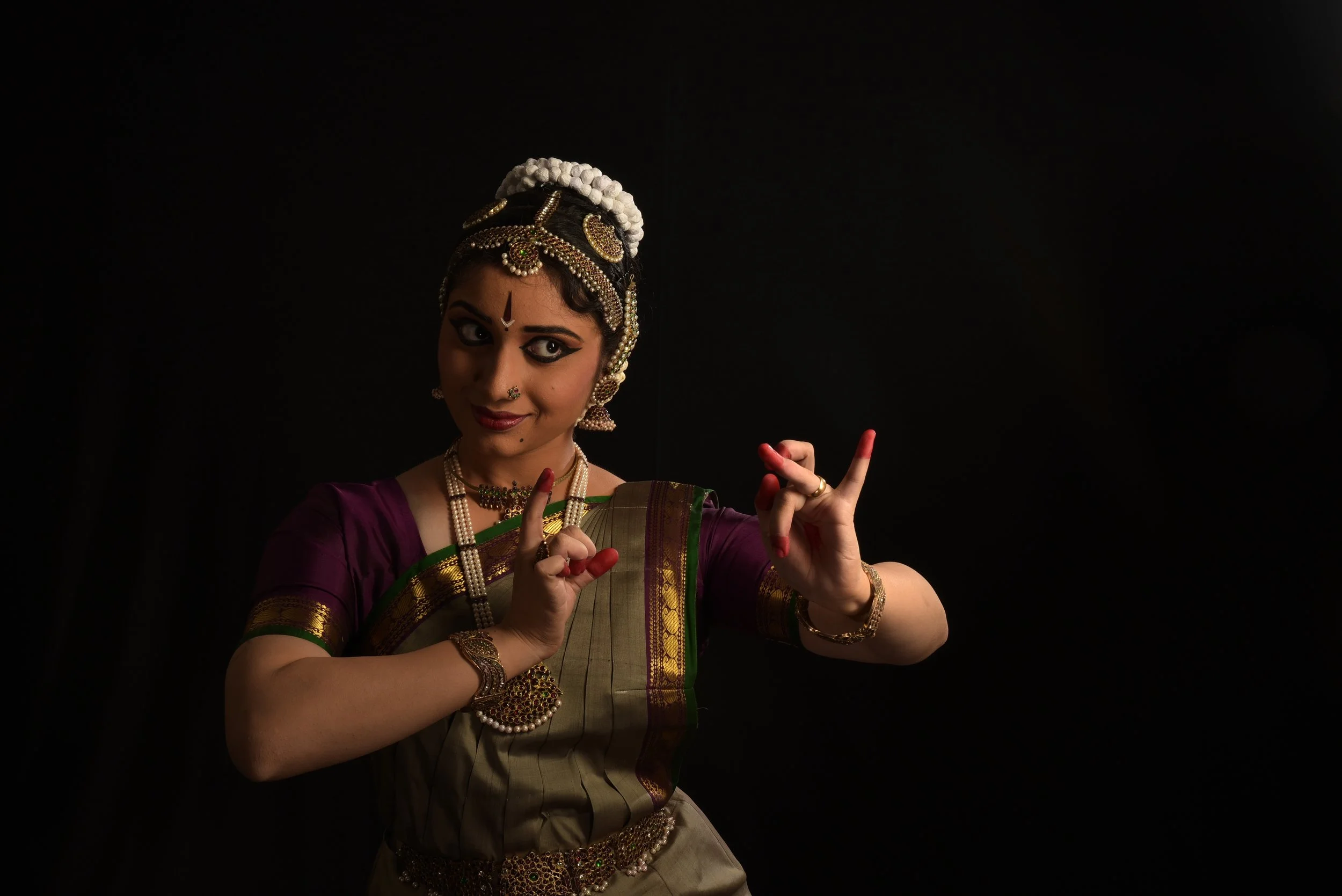
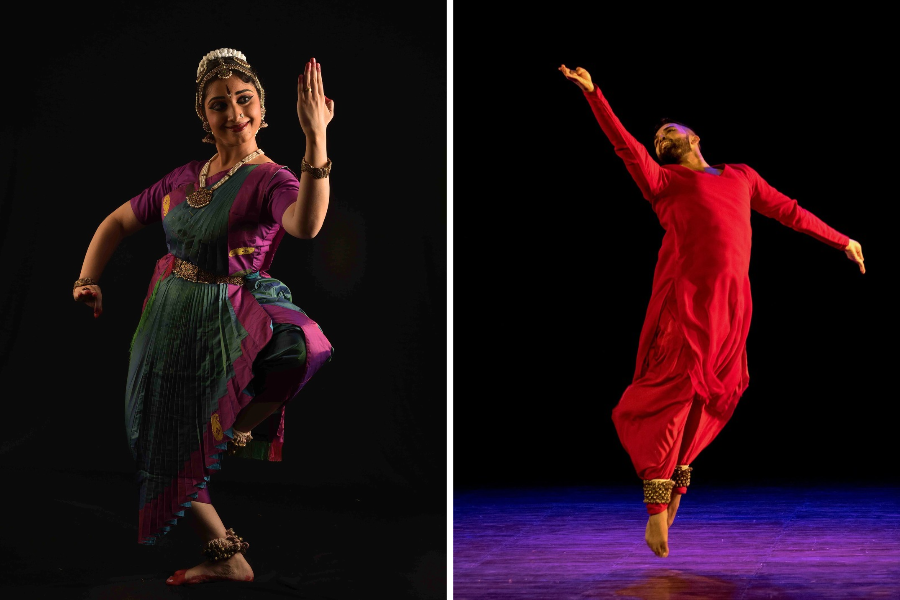
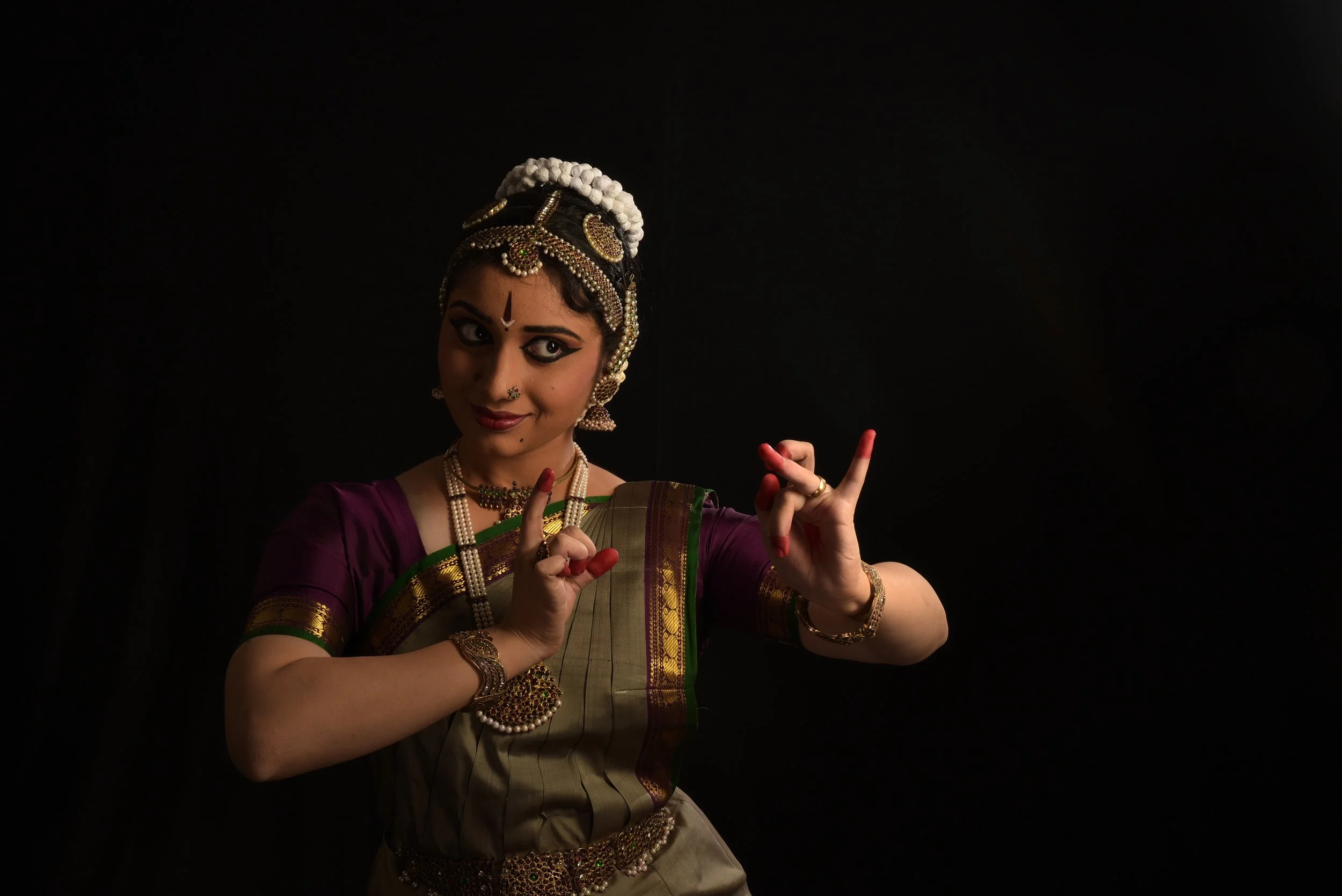
A HAND GESTURE, a glance, a slight movement can be enough to begin a story. On October 24, Meera Sreenarayanan will bring Bharatanatyam to Vancouver’s Roundhouse Performance Centre for her first solo performance in Canada, presented by Mandala Arts and Culture Society, in partnership with the Roundhouse.
The classical dance from South India combines strong, precise movements with intricate hand gestures and facial expressions that convey stories and emotion. Sreenarayanan’s relationship with it began early. At five, she was drawn in by the elaborate costumes and ornaments. Years later, standing backstage before her first full-length recital, it became clear.
“Somehow it dawned upon me that ‘Okay, this is what I want to do with my life,’” Sreenarayanan says.
Sreenarayanan, from Guruvayur, Kerala, has performed full-time since she was 19. Along the way, she has also pursued physics, completing postgraduate studies at Women’s Christian College in Chennai. She describes learning Bharatanatyam as learning a language. At first, dancers imitate their teachers, building a vocabulary of movements and gestures. As they become more fluent, they can begin using that vocabulary to create something of their own.
“Once you learn the language, then you can create magic,” she says. “You can create poetry, if you want.”
For Sreenarayanan, that means constructing entire worlds onstage. She gives the example of portraying a woman waiting for her lover. Before expressing the character’s emotions, she builds the world around her. Perhaps the woman is alone in her house, looking through a window, or waiting in a garden. The more familiar that imaginary world becomes, the more freedom Sreenarayanan has to play within it.
“The magic is this imaginary world that you have created in your head. The audience sees it,” she says, adding that this connection with audience members is what completes the performance.
Sreenarayanan now teaches Bharatanatyam herself, though she is hesitant to call herself a teacher. She prefers “co-learner”, describing her students’ questions as prompts to research, reconsider, and sometimes discover something she had not thought about before. That curiosity also shapes how Sreenarayanan approaches performance. Bharatanatyam asks a lot of the body at once. The hands gesture, the face carries emotion, and movement follows rhythm, all while the dancer is telling a story or stepping into a character. For Sreenarayanan, part of the challenge is holding all of it together without getting lost in the mechanics.
The upcoming Vancouver performance will move through various characters, stories, and emotions. Some of the characters are gods and goddesses, but Sreenarayanan is interested in finding something recognizably human in them.
“We are all bringing all these heavenly or otherworldly characters to this world and making them very relatable,” she says.
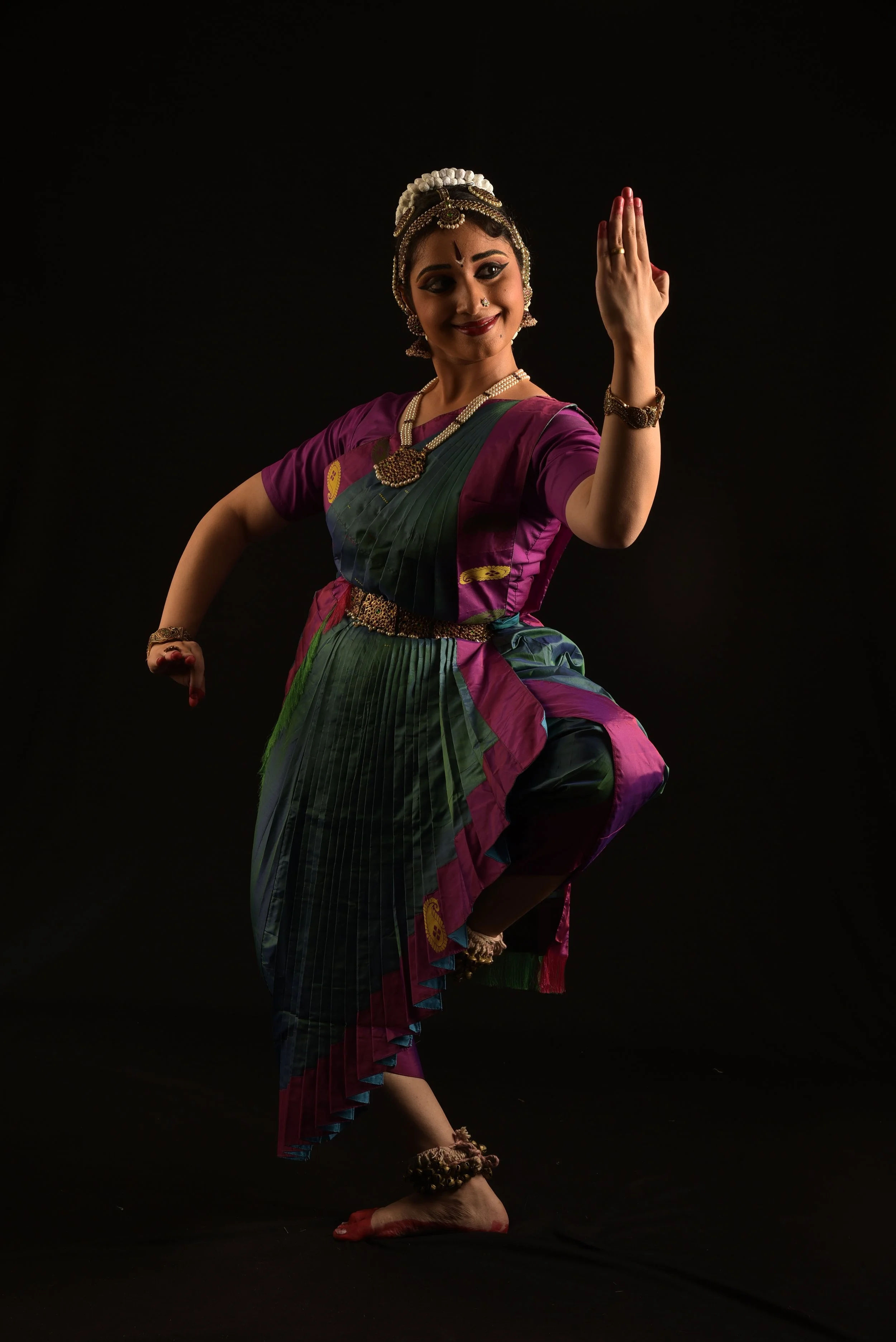
Meera Sreenarayanan
One part of the performance brings the Hindu deities Shiva and Parvati into a surprisingly familiar domestic moment. Shiva may have spent his day taking care of the whole world, but when he comes home, Parvati is exhausted too, worn out from taking care of their family. He sees it, tells her to rest, and offers to take over for a while.
It is the kind of moment that can resonate even without telling the story behind it. And for Sreenarayanan, that is part of the point. Some Vancouver audience members will know Bharatanatyam and its stories well, while others may be encountering the form for the first time. But no one is expected to arrive having done their homework. The experience can be similar to looking at a painting without understanding every stroke, or hearing unfamiliar music and nevertheless finding something in it that clicks.
“The purpose of art is just to move you,” Sreenarayanan says. “And for that, you just have to watch. You just have to watch with your whole heart.”
Nor does she want to prescribe what that experience should be. Age, background, upbringing, and individual taste all influence what someone sees in a performance. Audiences have even pointed out moments that resonated with them in ways that took the performer herself by surprise. It is part of what makes performing for new audiences interesting to her. Sreenarayanan has previously appeared in Toronto and Montreal, but October 24 will mark her first time performing in Vancouver.
As for which part of her upcoming Vancouver appearance she is most looking forward to, she doesn’t name a character, story, or moment in the evening.
“To be on the stage,” she says. “Just to be in that space.” 

Related Articles