Tawnie Olson’s Missa Brevis reflects light and hope in political darkness
Steeped in her faith, this new work by the Vancouver Chamber Choir’s composer in residence is a timely reminder of what human beings have endured and survived
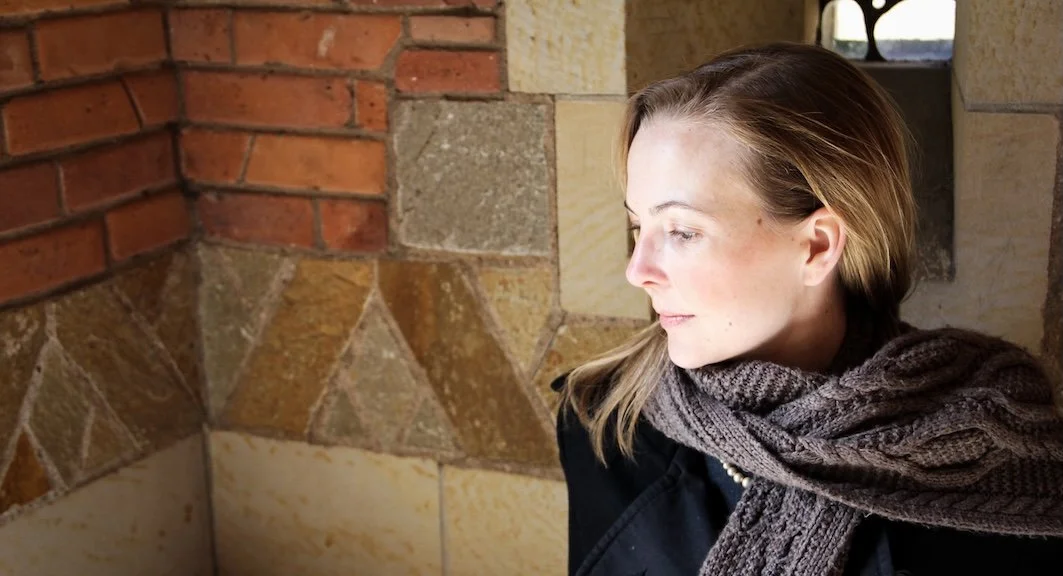
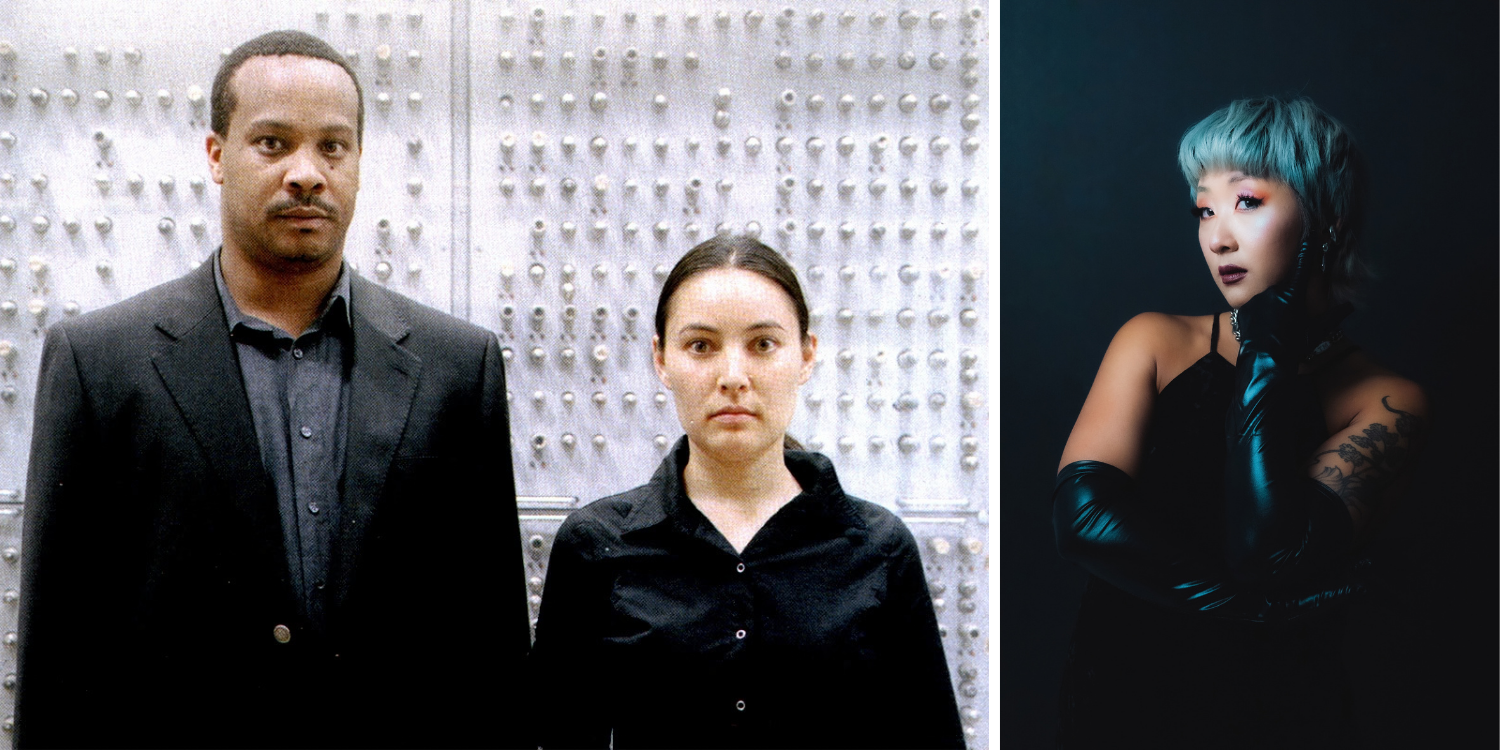
Tawnie Olson
The Vancouver Chamber Choir presents Beacon of Light at Pacific Spirit United Church on October 2
FOR COMPOSER TAWNIE OLSON, joining the Vancouver Chamber Choir as its composer in residence is “a dream gig”. And for the choir, which turns 56 this fall, Olson might well be a dream hire.
Olson does seem like a perfect fit. She’s won international acclaim for her choral and operatic compositions, weaves a strong sense of social justice into her works, is open to a wide array of unorthodox and/or non-European musical styles, and has been profoundly influenced by her encounters with the natural world—all assets for anyone writing choral music on the West Coast. And she also has prior history with Vancouver, the VCC, and its artistic director, Kari Turunen, all of it good.
“Two years ago I got a lovely email from Kari asking if I would be interested in being the composer in residence. ‘Of course!’ I said. “Yes, please,’” Olson enthuses in an interview from Connecticut, where she teaches composition at the Hartt School of performing arts. “But my association with Kari goes back a little bit further than that, in that there’s an amazing impresario named Debi Wong, who has a company called re:Naissance Opera in Vancouver. She commissioned an opera from me [Sanctuary & Storm] that was produced jointly with Vancouver Opera in 2023, and Debi knows Kari from Debi’s time studying in Finland. So the minute Debi heard that Kari was going to be in charge of Vancouver Chamber Choir, she introduced us, and he very kindly asked to see my scores.”
That led to the VCC performing the Canadian premiere of Olson’s Emily Carr–inspired Beloved of the Sky in 2025, after which members of the choir pushed for the 52-year-old composer to be given a larger showcase. Turunen didn’t need much persuading, and neither did Olson.
“I have been listening to the Vancouver Chamber Choir’s recordings—and to live performances I’d catch on CBC—since I was a teenager,” she points out. “And I own some of the choir’s recordings, so my admiration for them goes back decades. They’re an incredible ensemble.”
Over the course of Olson’s first year with the VCC, we’ll be treated to a survey of her choral works, as well as the world premiere of a new and as-yet-untitled composition built around a dramatic and long-suppressed episode in her own family’s history. First up, though, is her Missa Brevis, a short-form version of the Latin Mass commissioned in 2024 by San Francisco’s Grace Cathedral Choir.
It’s a modular piece, in a way: incorporating the “Kyrie”, “Gloria”, “Sanctus”, and “Agnus Dei” sections of the full-scale Mass, it’s not always sung in full in a liturgical setting. “The music can not take up a huge amount of time, because people don’t really want to go to a three-hour service, as a general rule,” Olson observes wryly. “They want to get in and get out in an hour and a half—max two hours, if it’s a special occasion.”
At Pacific Spirit United Church on October 2, however, we’ll hear the full four-movement composition. We’ll also hear how the composer’s faith inflects her writing, often in ways that many self-professed Christians might find unsettling.
“I am a very devout Christian,” Olson professes, “and I say that knowing that that will immediately cause people to make false assumptions about what my politics are. But as far as I can tell, when I look at what Jesus has to say, it does not line up with what I’m hearing from the far right in any way, shape, or form. I don’t want to get too deep into politics, but, yes, I love Jesus, and I think loving Jesus means loving all of my neighbours who disagree with me, who live differently from me, who look differently from me. My job is to love them as well as love God. And I don’t think I could be a Christian if I wasn’t trying to do those things.
“The Missa Brevis is influenced by [the acclaimed English composer] Jonathan Dove—and I say that with an asterisk, because I hope no one in the audience will come hoping to hear a new Jonathan Dove piece,” she continues. “I am not him, so you will not mistake this piece for one of his.…Another influence is that I wrote the piece from late 2024 into 2025, and the world just felt like a pretty dark place at that time. Thinking about the emotions the choir would be sitting with while singing this piece, I just could not bring myself to write something that was dark. I felt that I and most people I know were feeling angry and discouraged, and so I wanted to write a piece that was not that: a piece that was hopeful and that would be maybe a respite from the darker emotions everyone was going through—and also a reminder that human beings have lived through quite a lot over our history. We have endured and we have survived, and we still continue to create beauty and to love one another.”
The VCC’s two Christmas concerts, at the Kay Meek Arts Centre and Pacific Spirit United Church on December 13 and 18 respectively, will feature her setting of Mary Coleridge’s poem “I Saw a Stable”—with, Olson stresses, its unsettling last line, which is occasionally omitted by other, less conscientious composers.
In February, we’ll hear an excerpt from Olson’s The Call, and later that month the VCC will reprise Beloved of the Sky, a piece that’s of special significance to the composer, as a Canadian living and working in the United States.
“Beloved of the Sky is a setting of lines from Emily Carr’s journal, and it’s really a celebration and exploration of the creative process,” she explains. “I’m looking at the creative process through the lens of Emily Carr, but it’s not necessarily about her; it’s not trying to tell the story of her life or any of that. It’s just that she had such an incredible, distinctive prose style, and her journal entries are such a wonderful illumination of the ups and downs of the creative process. And I was writing that piece as a joint commission from three American choirs, and most Americans don’t know who she is. If I’d been writing for Canadian ensembles I don’t think I’d ever want to set those texts, because there are, like, dozens of pieces about Emily Carr in Canada. We all feel like we kind of know Emily Carr and who she was and what she was up to, but in the States it’s complete terra incognita for most people. So that was my way of bringing a little Canadian culture south of the border.
“It’s also me being feminist, because I’m setting a woman’s work about creativity, and classical music is just a little behind some of the other arts in terms of our politics. I feel that there is some lingering sense, still, among my colleagues, that men make the art, women make the babies. So I wanted to set a text by a woman who made art and not babies—although I would never say that as explicitly in my program notes!”
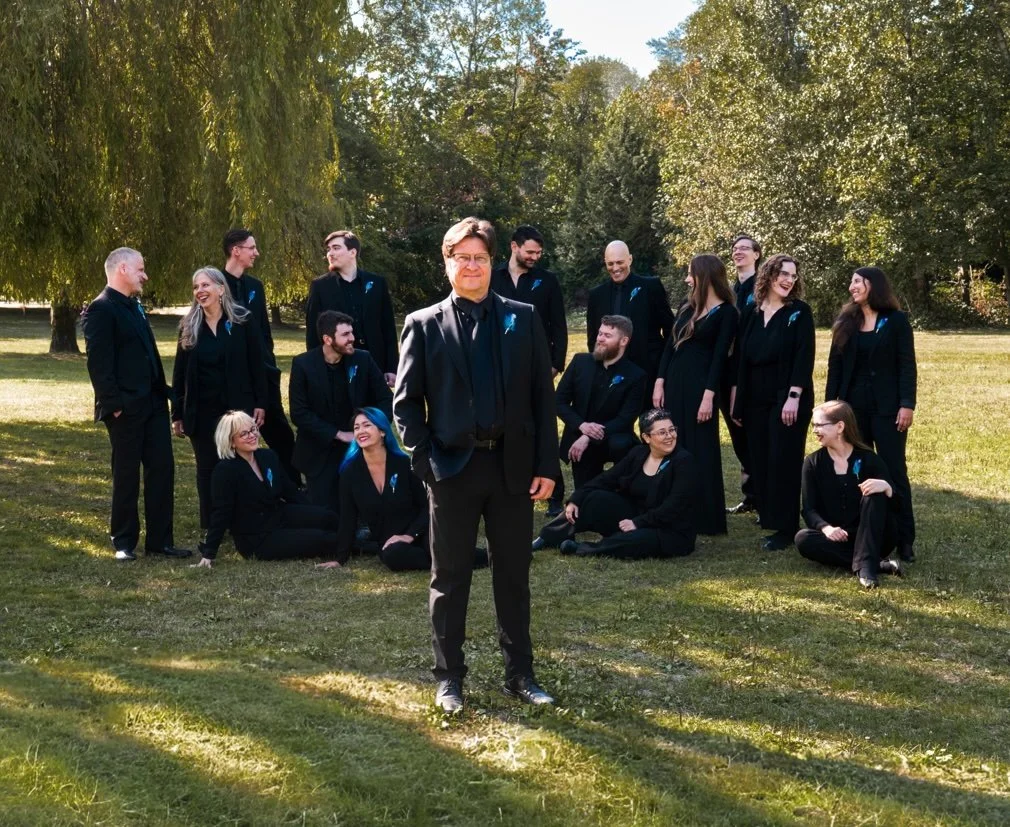
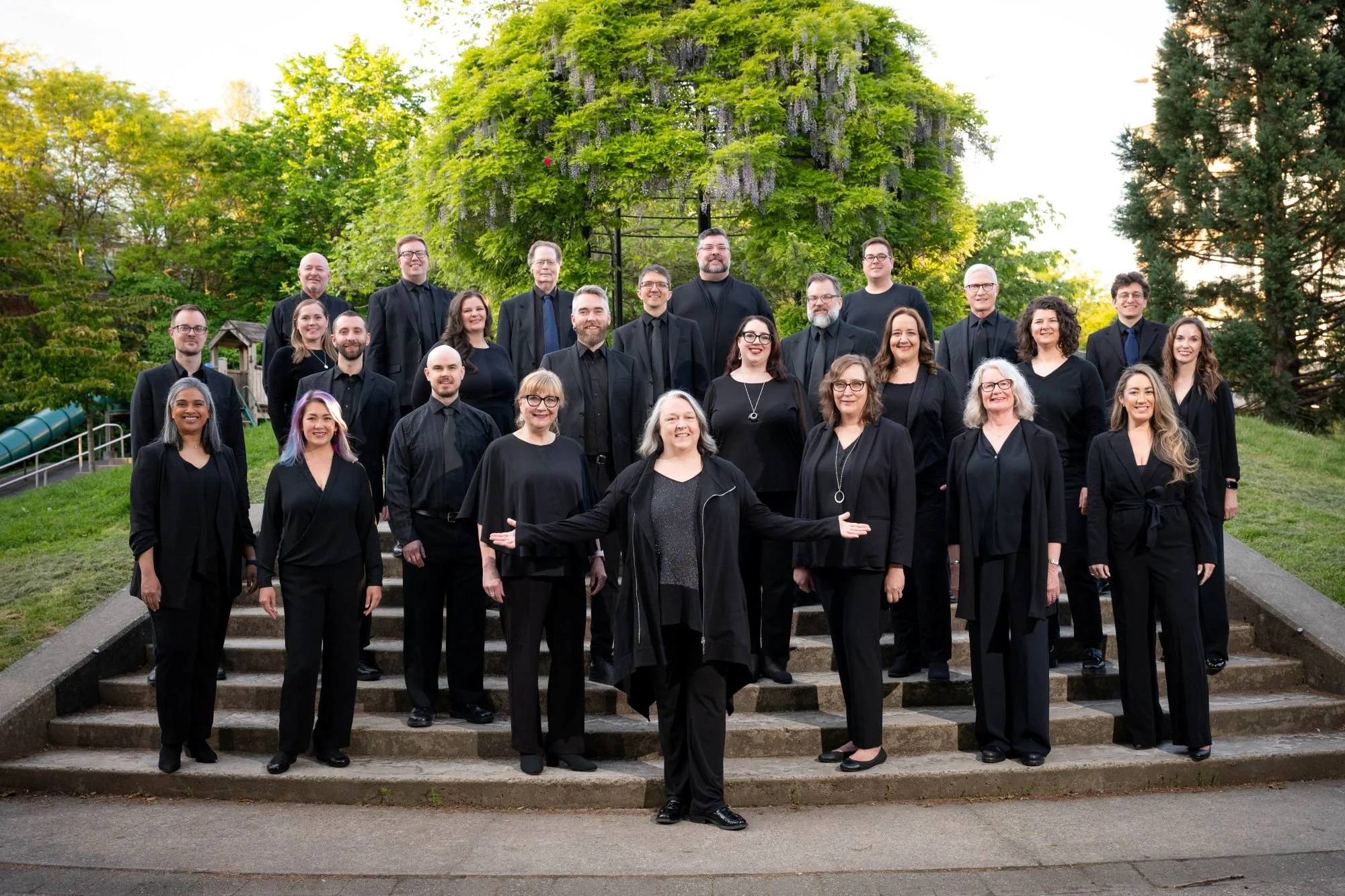
Kari Turunen and the Vancouver Chamber Choir.
We’re not going to give away too many details about Olson’s new VCC commission, which will premiere in May of next year. But she’s shared some elements of the traumatic family events behind its story, and we will say this: expect passion, drama, and the inventive, detailed vocal writing that has already become one of this gifted composer’s trademarks. 

Related Articles