Flutist Mark Takeshi McGregor strives to keep Jocelyn Morlock’s music alive
With the new CD Artemis Sleeps, the late composer’s former roommate celebrates chamber works that range from pithy to rhapsodic to enigmatic
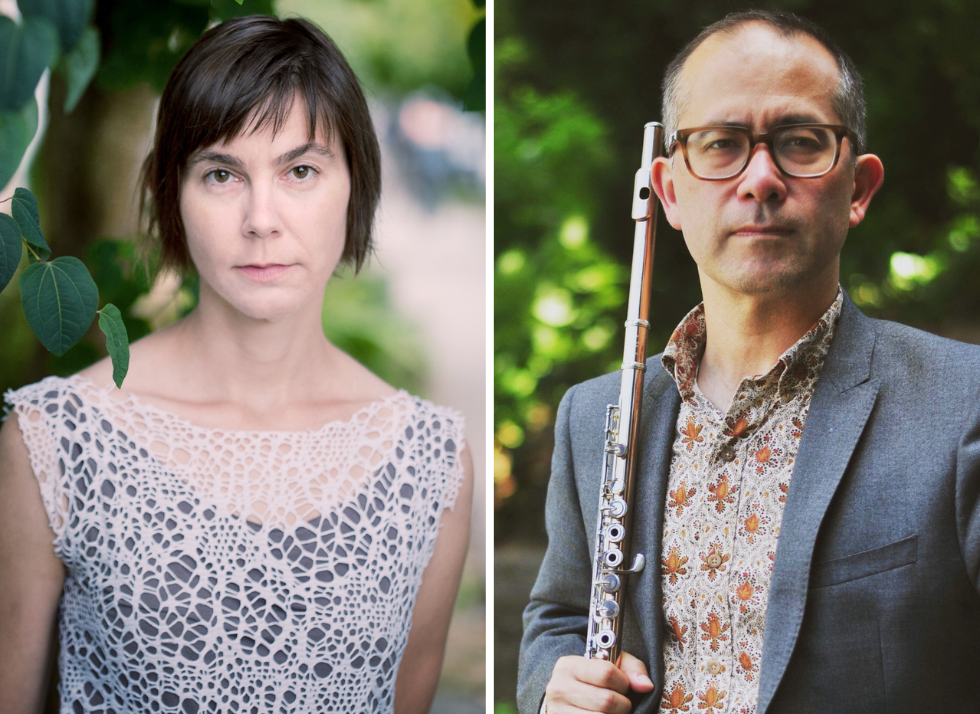
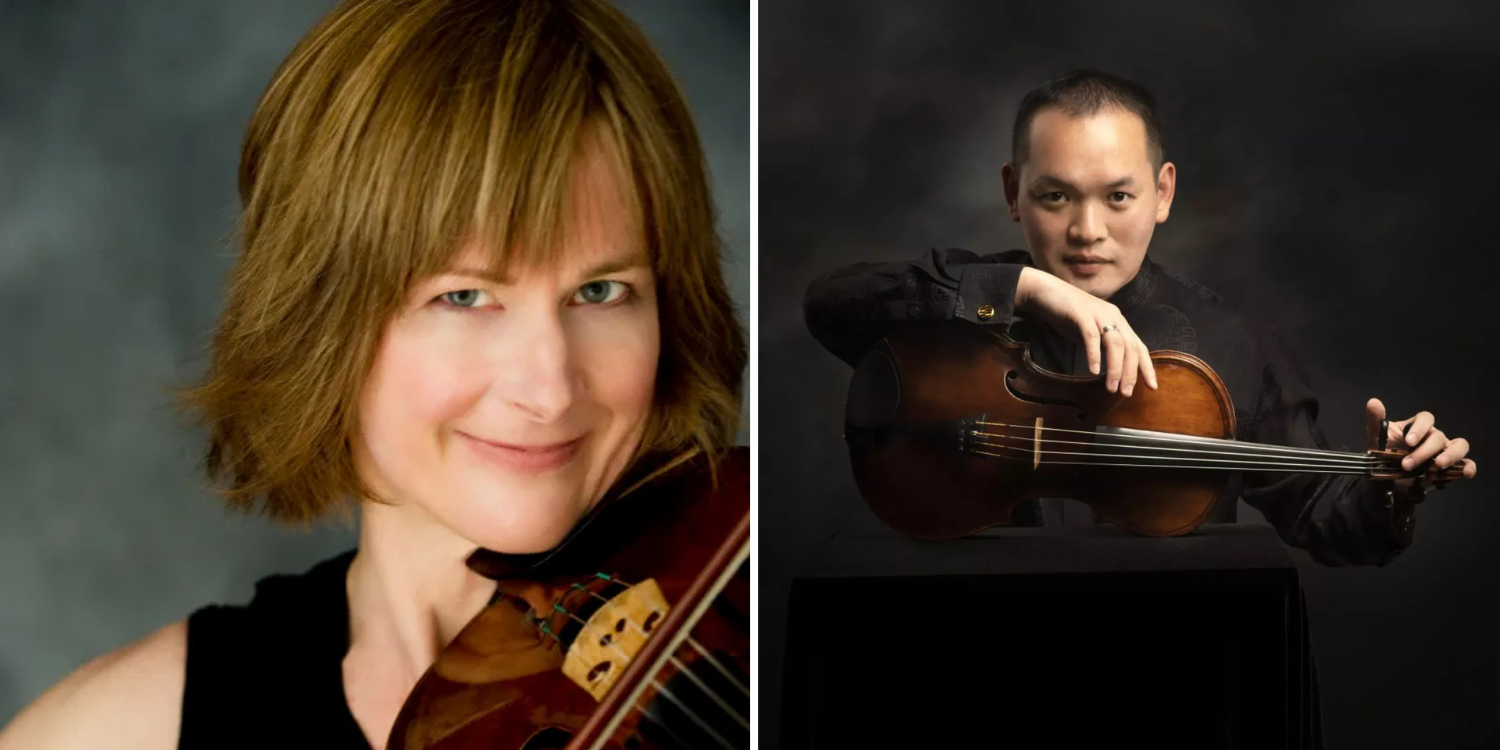
Jocelyn Morlock (photo by Mark Mushet); Mark Takeshi McGregor (photo by Lenora Ede)

COMPOSER JOCELYN MORLOCK’S untimely death in 2023 robbed Canada of one of its most distinctive musical voices—and, beyond that, of a particularly articulate advocate for contemporary music.
As an educator and as the Vancouver Symphony Orchestra’s composer in residence from 2014 to 2019, Morlock presented clear, cogent arguments for the importance of the arts, and backed up her beliefs with music that was as individualistic and inventive as any being written today, but that was also surprisingly easy to grasp for newcomers. “Intuitive” and “sensual” are words that recur in every discussion of her output, and this is not surprising given that among her primary inspirations were medieval ars nova, Balinese gamelan, the French Impressionist composers Claude Debussy and Maurice Ravel, and birdsong.
“Even though she was raised in academia and she spent a lot of time teaching at UBC, she really saw the flaws in the over-academization, or whatever you want to call it, of classical music,” explains her close colleague, former roommate, and internationally acclaimed flute virtuoso Mark Takeshi McGregor. “There’s a real tendency to make it hierarchical, and I think she wanted to be outside of that, bringing it back to what it’s meant to be. How does it move people? How does it make people respond emotionally? That’s really at the core of everything that she did.”
McGregor has some particular insights into Morlock’s creative process. “She was nocturnal, basically,” he reveals. “Like, she was always at her most productive at night. It was quiet, it was dark, there was less distraction. When we were roommates, there was a shared wall between my room and hers, and she had this electronic keyboard that she would compose on. She would sit at the keyboard and basically improvise melodies and harmonies and things. She would record that process as well, and would use that as a starting point for a lot of her pieces.
“Of course, she would wear headphones when she was composing at night, but because the keyboard pressed up against that shared wall you could hear her playing,” he continues, imitating the quiet clatter of an unamplified keyboard. “But for whatever reason, it was never like it was irritating, or kept me up. If anything, there was something sort of reassuring about hearing her do that. When you heard that sort of noise, it was like she was in a good mood and being productive and in her element.
“It was a relatively small space, so we had to sort of negotiate things,” McGregor adds. “I was constantly bringing students in to teach in the kitchen! But it was a really fun time, and there was a lot of creative discourse.”
As both a featured soloist in many of Morlock’s chamber-music compositions and a close confidant, McGregor feels a particular responsibility toward his late friend’s legacy. As a result, he’s embarked on an expansive and welcome campaign to keep her music alive, beginning with the recently released CD Artemis Sleeps. Produced in conjunction with Vancouver’s Redshift Records, it’s a collection of chamber works that range from the pithy and occasionally startling “Velour”, commissioned by McGregor and Edmonton’s Chenoa Anderson for solo flute, to the sprawling and rhapsodic “Unfurl”, which premiered at the Seattle Chamber Music Festival in 2021.
Unsurprisingly, it is an utterly gorgeous recording—and perhaps an ideal introduction to Morlock’s quirky and quietly playful imagination. And, for this listener at least, it’s almost a portrait of the artist, as rendered by some of her most gifted friends and colleagues.
Openers “Salamander” and “Velour” flag the composer’s quicksilver ability to make unexpected connections and equally unpredictable sonic U-turns. The one vocal piece on the disc, “Forgiveness”, finds soprano Sarah Jo Kirsch intoning a Joy Kogawa poem about complex family interactions. It also has at least a tangential relationship to currents in Morlock’s own family life, and showcases her ability to craft indelible vocal melodies. Moody and enigmatic, Vespertine’s two movements touch on the composer as crepuscular animal, as reflected in their velvety shadows and subtle alarms. And then the 22-minute wind quintet “Unfurl”, one of the last works Morlock composed, is so purely her, and so beautifully realized here, that it almost brought me to tears on first hearing.
“It’s one of the hardest pieces I’ve ever, ever played,” McGregor allows. “But I really feel like that piece is Jocelyn at her most unfiltered. It’s pure, raw Jocelyn.
“I remember that we were talking about it when she was writing it, and she was like, ‘People are going to think that it should be edited down. But, you know, I’m happy with it. It represents what I was thinking when I was writing the piece. It represents how I feel,’” he adds. ”And those pieces end up being kind of the most exciting ones for me, because they’re the ones where you’re really engaging in a direct conversation with her. I really get the essence of Jocelyn in that particular piece. There are extremely beautiful moments, and then she almost becomes distracted by something else. ‘Oh, what’s that over there?’ And then something else develops. There’s this very sort of organic unfurling, for lack of a better word, in how this material develops.”
Although “Unfurl” makes it clear how much we’ve lost with Morlock’s passing, there is some good news for lovers of her singular compositional voice: Artemis Sleeps is just the first of several releases that will, together, add up to a comprehensive survey of her output.
“Right when we began recording this,” McGregor says, “I heard from the Vancouver Symphony that they were organizing their own recording of Jocelyn’s orchestral music, with an overview of a lot of the pieces that she wrote when she was composer in residence there, as well as some older pieces. And it it was actually really nice: they reached out to me and said, ‘You know, we have all this music recorded, but we need somebody to help coordinate the final stages, the post-production stages.’ And would I be that person? So the last several months, concurrent with working on the flute album, I’ve been working with the VSO to get their recording finalized.
“That’s going to be the second album in a series, and I think we’re sort of looking at four or five albums in total that look at Jocelyn’s music from a variety of genres. The Vancouver Symphony album is going to be called Night Herself, and then we’re looking at doing at least two more albums after that: something that focuses on her percussion music, because she wrote a lot of really dazzling percussion music, and her chamber music as well.
“What I love about Jocelyn is that she wrote for her friends,” the flutist adds. “What she really, really wanted to do was write music for the people she loved.”
We’ll never know whether Morlock knew how much she was loved in return—but it will be cheering for those she left behind to be reassured that her music will not be forgotten. 

Related Articles