With BlackGate, Ireland’s Caimin Gilmore steps into the spotlight
The project’s success should allow the double bassist and composer—who kicks off Music on Main’s 2026–27 season—to turn down more gigs as a hired sideman

Caimin Gilmore
Music on Main presents BlackGate at the Roundhouse Community Arts and Recreation Centre on November 3 at 7:30 pm
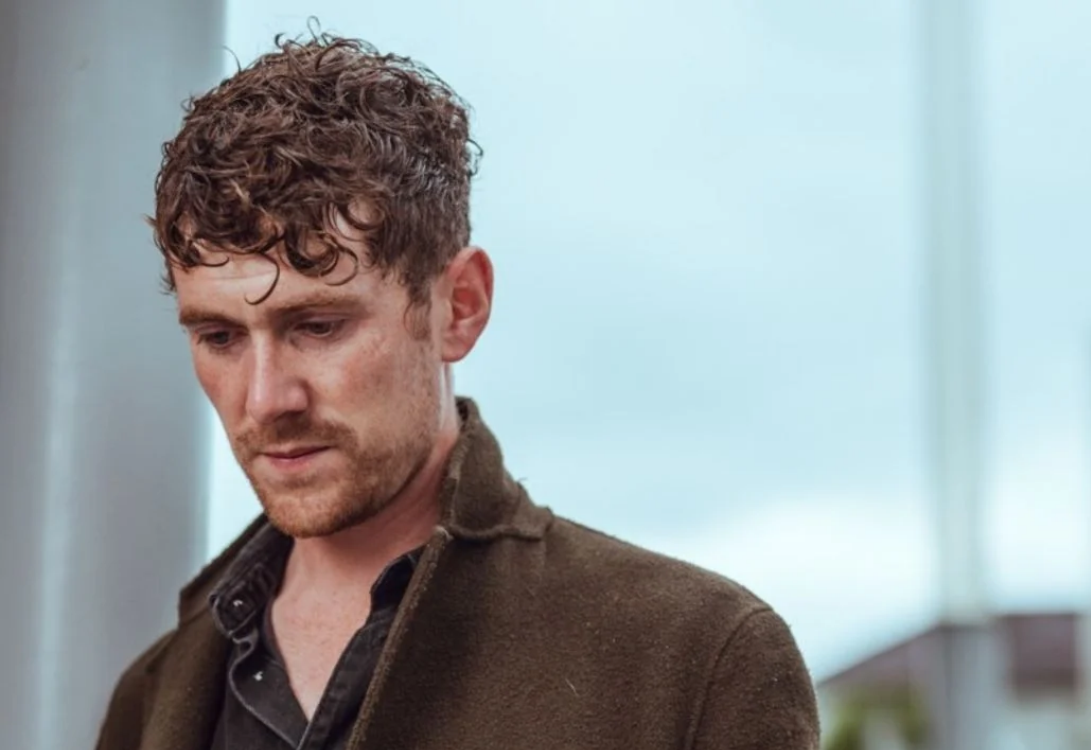
IT’S NOT OFTEN THAT a new-music composer finds himself performing for an audience of 13,000 people, but Caimin Gilmore isn’t just any new-music composer. The Irish musician is also an in-demand freelance double-bass player, which explains why, when Stir gets him on a Zoom call, he is fresh from a gig with Hozier at Dublin’s 3Arena the night before.
The occasion was the kickoff show of American rap superstar Macklemore’s three-show Free Palestine benefit tour. Hozier was a surprise guest at the concert, and Gilmore and other string players joined the Irish singer-songwriter for a six-song set that included the hits “Too Sweet” and “Take Me to Church”.
“This is the first night I’ve been at home in about six weeks,” Gilmore says. “I’ve been out on the road. I was actually just in Canada, in Montreal, with Teaċ Daṁsa, which is an Irish dance company, doing a piece called MÁM. I’m on the road with another two Irish singer-songwriters, called Declan O’Rourke and David Kitt, over the next couple of months.
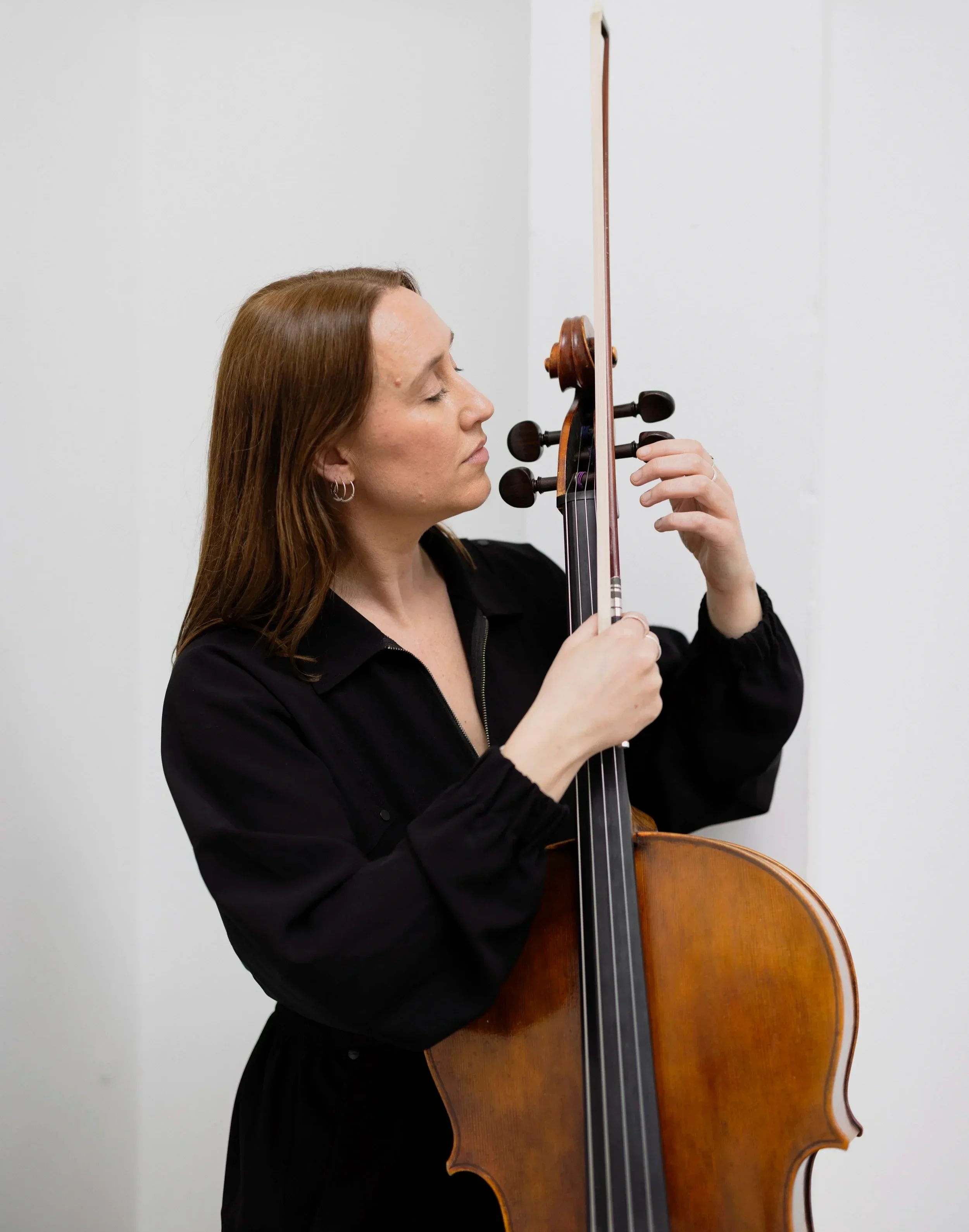
Kate Ellis
“I think the instrument, the double bass, has been quite advantageous to me in being able to sustain just a performance career, because I can jump between orchestras and bands,” notes Gilmore, who admits that keeping a full calendar of such gigs is a double-edged sword. It certainly helps pay the bills, but it also has a downside.
“It’s quite hard to find time to write music, actually,” the composer admits.
Gilmore was able to carve out sufficient compositional time during a yearlong residency with Dublin City Council. With support from the Arts Council of Ireland, he used the opportunity to complete a commission from Galway’s Black Gate Cultural Centre.
The result is an album, aptly titled BlackGate, released in August of last year. For the recording, on which he played both double bass and a Yamaha DX7 synthesizer, Gilmore recruited cellist Kate Ellis and harpist Lavinia Meijer. Throughout the four movements of BlackGate, the three musicians stack shifting melodies in ways that occasionally nod to both Baroque counterpoint and the sustained tones of 20th century minimalism, with the odd dip into musique concrète and white noise in the interstitial segues. It’s a successful melding of the avant-garde and the accessible, and while the individual movements sound free-flowing enough to suggest that some improvisation went on in the studio, Gilmore says that wasn’t the case.
He wrote it all, but he does give Ellis—artistic director Crash Ensemble, of which Gilmore is also a member—due credit for her artistic discernment.
“She had almost a producer role in the first recordings,” he says. “Because the initial first movement wasn’t really working, and she suggested scrapping it. I’m glad I listened to her, because then I wrote the current third movement, which is probably my favourite movement in it. So, in that way it was kind of collaborative, but every bit of music, bar the segues, is notated.
“And then the segues are cut-away parts from the recording,” he continues. “The first movement that we didn’t do, we had recorded pieces of it, so I put that in. I kind of granularized it and just did lots of post-production on it. And that’s ‘Segue III’. The first segue is other found sounds and stuff that we recorded in the recording process that’s been manipulated. I kind of thought it was a nice idea to include sounds of the room, or sounds along the process into the pieces.”
Gilmore won’t be bringing the DX7 on the road with him, but he says he is keen to continue exploring electronic music-making. Specifically, he’s hoping to get a chance to use the Buchla 200e, a hybrid analogue-digital modular synthesizer system introduced by American synth pioneer Don Buchla in 2004 as a modern continuation of his classic 1970s Buchla 200 series instruments. There happens to be a 200e in the collection of the University of Limerick, where Gilmore’s electronic-music mentor, Neil O’Connor, is on faculty as a researcher and associate professor.
As for precisely what his intentions are when it comes to incorporating modular synths into his music, even Gilmore doesn’t know.
“Not really,” he admits. “I kind of like just doing it. And I’m lucky enough that, for the most part, I don’t have a block or anything when I’m doing it. It just kind of comes out. Something happens. So I wouldn’t intentionally think of anything too specific. The only specificity I have with the Buchla, for instance, is that I want to go deeper into microtonal and quarter-tonal harmony. In terms of the future, I like the idea of performing electroacoustic music with a modern twist on what would be deemed a classical ensemble.”
Wherever he takes his music, Gilmore can be assured that a growing number of people will be keen to hear it. BlackGate has been received warmly enough to afford him chances to showcase it abroad. In fact Gilmore, Ellis, and Meijer will be in Vancouver to kick off Music on Main’s 2026–27 season with a concert that will also include music by Philip Glass, Anne Cleare, and Meijer herself.
It’s opportunities like this one, Gilmore says, that encourage him to focus more on his own music and less on his career as a hired sideman.
“Because the compositional side is getting international gigs, it kind of shows me that I should put more time into it,” he says. “There’s a momentum behind it, so that I can say no to freelance gigs.” 

Related Articles