In Red Like Fruit, playwright Hannah Moscovitch grapples with the uncertainty of memory and consent
At The Cultch’s Warrior Festival, award-winning two-hander presents a provocative scenario where a man tells a woman’s story
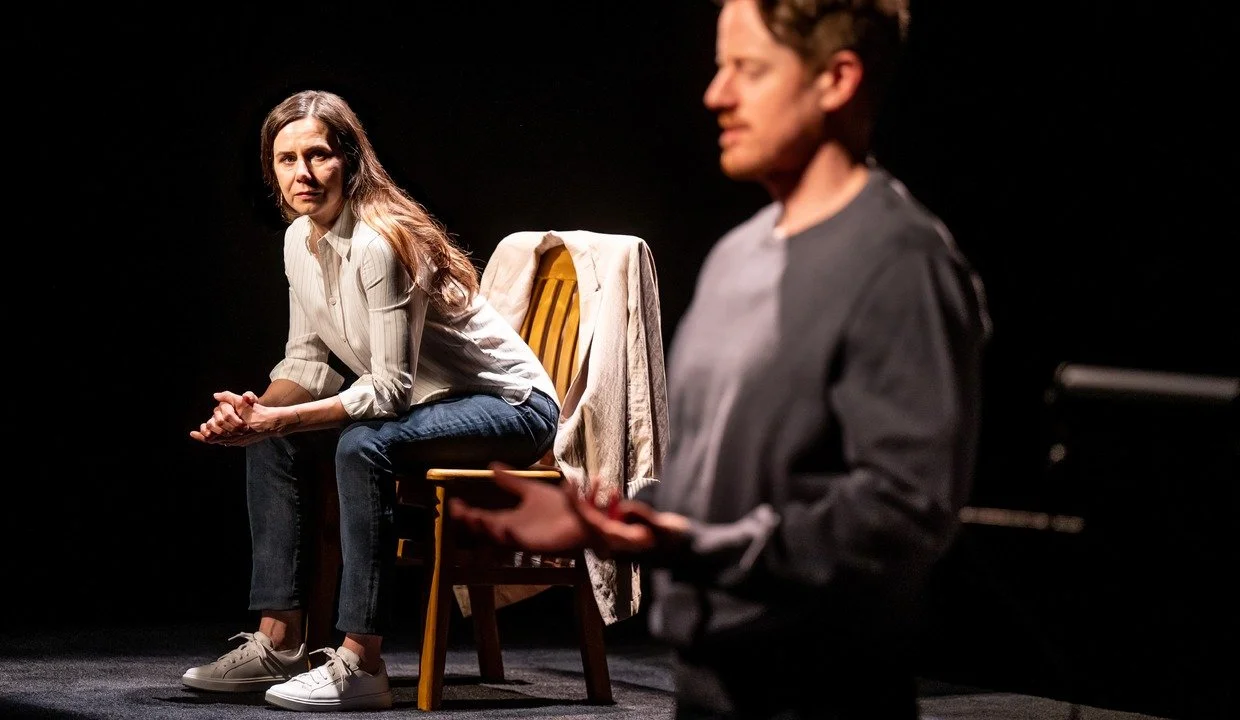
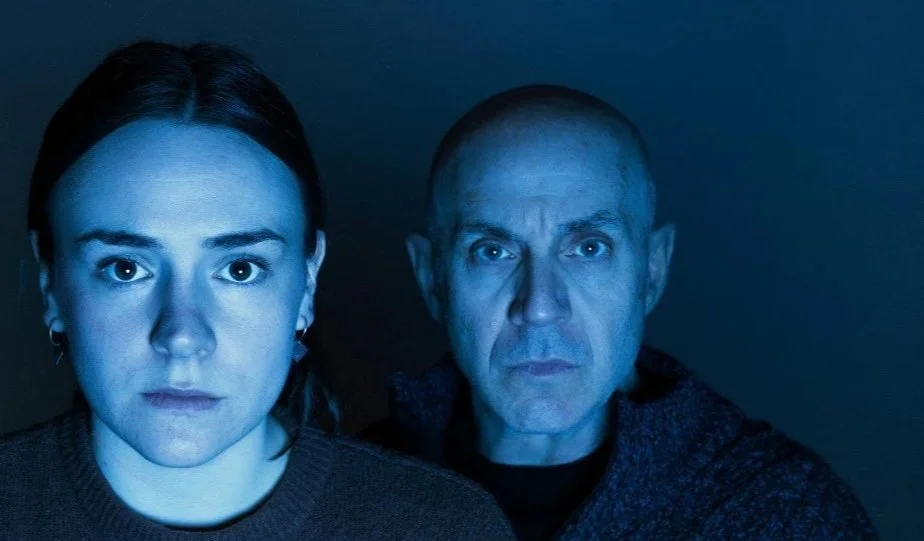
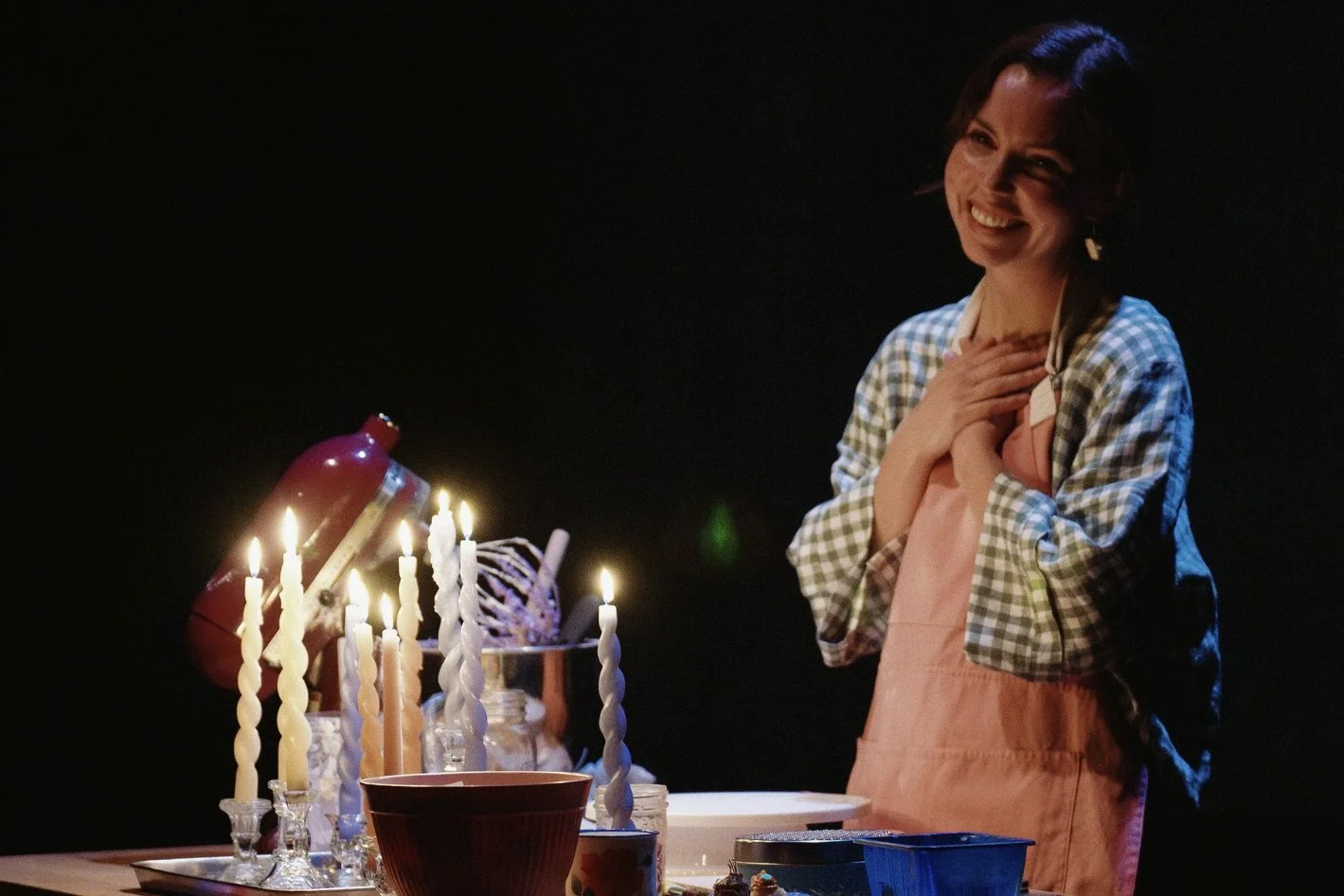
Red Like Fruit. Photo by Dahlia Katz
The Cultch presents 2b theatre company’s Red Like Fruit from February 18 to 22 at the Historic Theatre, as part of the Warrior Festival
CANADIAN PLAYWRIGHT Hannah Moscovitch is celebrated for nuanced, unflinching scripts that are produced around the globe. But she has developed a busy career away from theatre, including her third season of writing and executive producing AMC’s Interview With the Vampire/The Vampire Lestat, and her third opera, 10 Days in a Madhouse, ready to open soon at the Canadian Opera Company.
Luckily for audiences, all that other work is fuelling even more creative risk in her plays—as proven by Red Like Fruit, winner of last year’s The Scotsman Fringe First Award, hitting The Cultch this week.
“I don’t normally get to hang out with live audiences when I’m doing television,” Moscovitch says, speaking to Stir from a snow day in Halifax, where she’s holed up instead of working in L.A. on Lestat. “And so the liveness of theatre becomes more important, and it becomes more interesting to me when I return to theatre, to think that through. So that does sort of push me into more formally experimental work where I’m really using the fact that the audience is there with me.
“I’m older, and I give less of a shit,” she adds with a laugh. “And I don’t make my money doing theatre, so I don’t rely on it. I am so free in theatre—and I have also written a lot of plays, so I feel like I can fuck with the medium in ways that, even for me, are pushing an audience to come with me on this journey.”
The provocative, post–#MeToo–era two-hander Red Like Fruit digs meticulously into some of the loaded subjects—sexual power dynamics, memory, consent—that she’s explored in plays like the Governor-General’s Award–winning Sexual Misconduct of the Middle Classes. But it is the form that Red Like Fruit takes that is most striking. As journalist Lauren investigates a case of domestic violence by a government official, it prompts her to start questioning something that happened to her in the past. Doubting her own recollections, she asks a man named Luke to tell her story while she watches. That plays with the idea of the silenced woman, and prompts us to consider whose accounts we choose to believe.
“I like formal experimentation—yes, I do,” Moscovitch says. “But this seemed to go much further to me than most of my other projects.
“I felt like it was a journey to the edge, but it felt worth the experiment.”
Vancouverites will get to see the original show that was produced in 2024 by 2b theatre company at the Bus Stop Theatre in Halifax, starring Michelle Monteith and David Patrick Flemming, and directed by Moscovitch’s husband, Christian Barry.
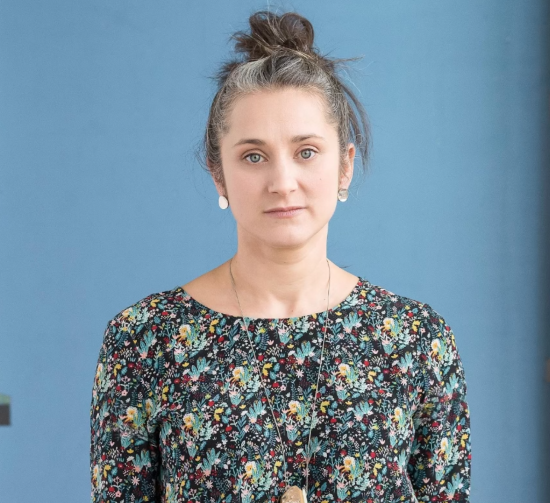
Hannah Moscovitch. Photo by Alejandro Santiago
Performing the play demands as much nuance as Moscovitch has woven into the words. Though it’s driven by the mystery around the domestic abuse case and is punctuated by Moscovitch’s signature hits of biting humour, Red Like Fruit centres around Lauren largely reacting emotionally to hearing her story. Luke has to be the blank slate giving voice to it, as discomforting as that may be.
“Lauren wants to put her inner thoughts against what she’s hearing in the story, and that’s her role: to interrogate her own story, to ask questions about it, because part of what she wanted was to just hear her own story,” the playwright explains. “It’s a play that turns on a dime; it could not work if it was too high drama. There’s something about it that calls for real hyper-naturalism—weirdly within a very formally strange piece. It’s very understated, and it needed to be.
“Each time they do it, it gets stronger,” Moscovitch adds of the team bringing the show here. “Maybe I’m not allowed to say this out loud, but I would say that the production and the actors are better than the play.”
Like so many Moscovitch works, Red Like Fruit refuses to offer easy answers to its questions. Instead, the work digs relentlessly and fearlessly into messy discussions around sexual assault and consent. As Moscovitch puts it, it grapples in real time with “how to be a woman and a person post–#MeToo.” For women of a certain age, that may mean reinterpreting sexual encounters from decades ago in a new light, now that attitudes have changed. That’s something Moscovitch has experienced—even though she grew up in a progressive household she describes as having healthy attitudes toward feminism. (Her father worked as a social policy professor at Carleton University, while her mother was a labour researcher.)
The playwright embraces the struggles to reframe unsettling experiences in Red Like Fruit. “It talks about a character who is thinking through a series of her own experiences and trying to place them on the spectrum of, ‘What is experience and what is trauma?’. ‘What is okay, what is not okay?’ ‘What’s good sex, what’s bad sex, what’s wrong sex?,’” she explains. “Especially if there’s been no framework around that, and you’re of my generation, Gen X. There were all sorts of things that were totally okay which are now not okay. Like, ‘There was that time that dude grabbed my tit and I had to go cry in the bathroom at that party’: now we’d say that’s not okay. I think that it’s very difficult for women to believe themselves.”
Offering characteristic stiletto-sharp introspection, she offers: “I don’t really believe myself, you know. And I’m very inclined to be like, ‘Oh, come on, that’s shit that happens when you’re a teenager.’”
In past showings, some audiences haven’t quite known how to take that uncertainty and questioning of one’s own memory. Others have expressed gratitude to Moscovitch for capturing something they’ve experienced and wrestled with privately.
“One of the things you hope when you do this is that you are helping people—showing people their experiences, and experiences are often nuanced and truthful, rather than being wholly one thing or wholly clear,” she says. “And I think [with] a lot of my experiences with a lot of people who have been on the receiving end of sexual harassment, sexual assault, being molested, you don’t know how to think about it. It’s not simple. It’s not like it falls into easy categories. You don’t have a clear perspective on it, necessarily. You need to find that—especially if it’s somebody who you know really well, or you love. It’s really murky on the inside, I think.
“I do think that there is sometimes a desire for plays to close questions, or to give clear answers, or give didactic answers,” she adds. Leave it to Moscovitch, then, to offer something else: the less-travelled, but more thought-provoking route into the uncertain. 

Related Articles