Theatre review: Everything Has Disappeared explores what we owe to the Filipino diaspora
In The Cultch, PuSh Fest, and Live Biennale copresentation, technicolour visuals complemented Hazel Venzon’s larger-than-life energy in a ride that spoke directly to today’s global economy
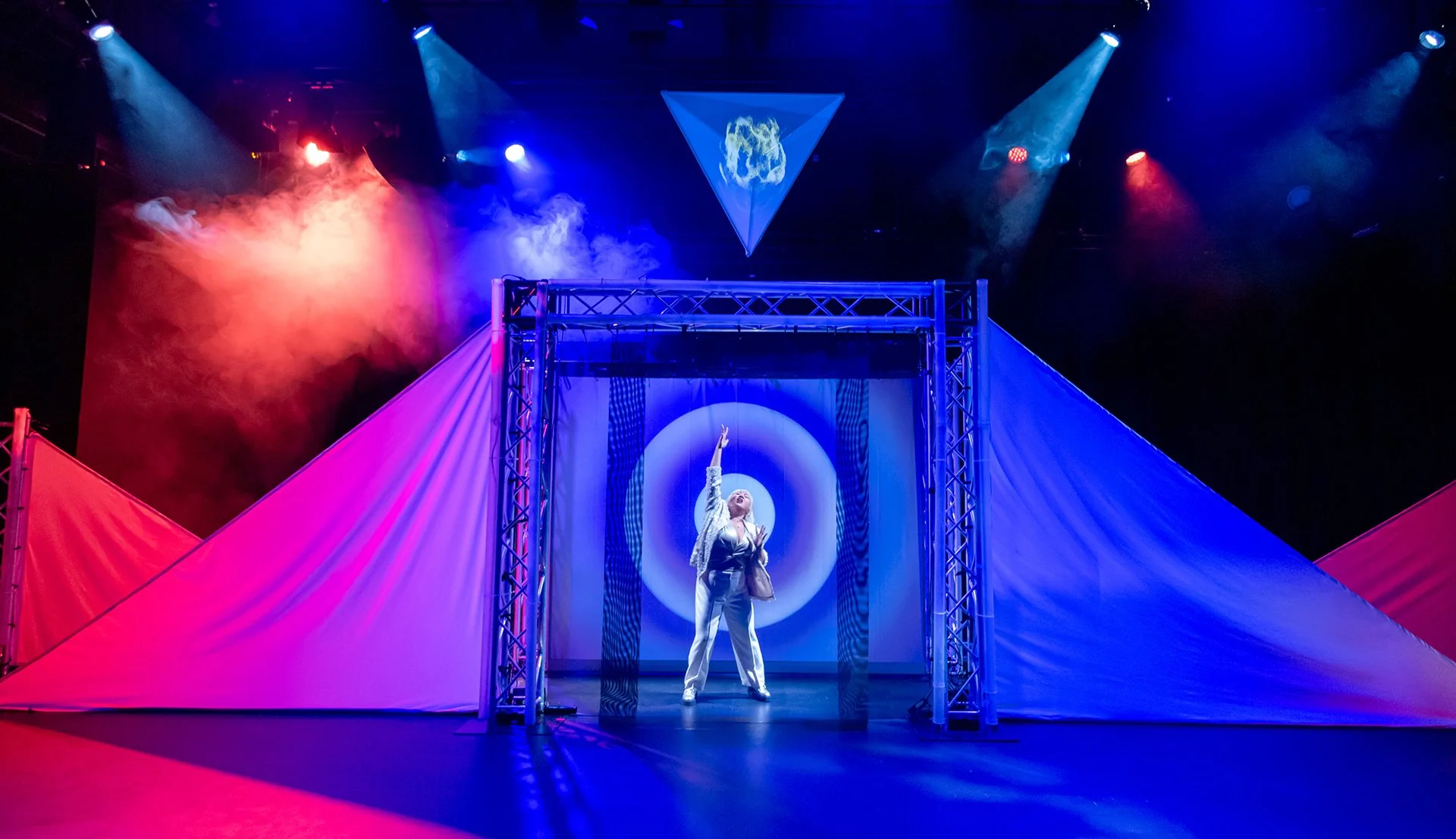
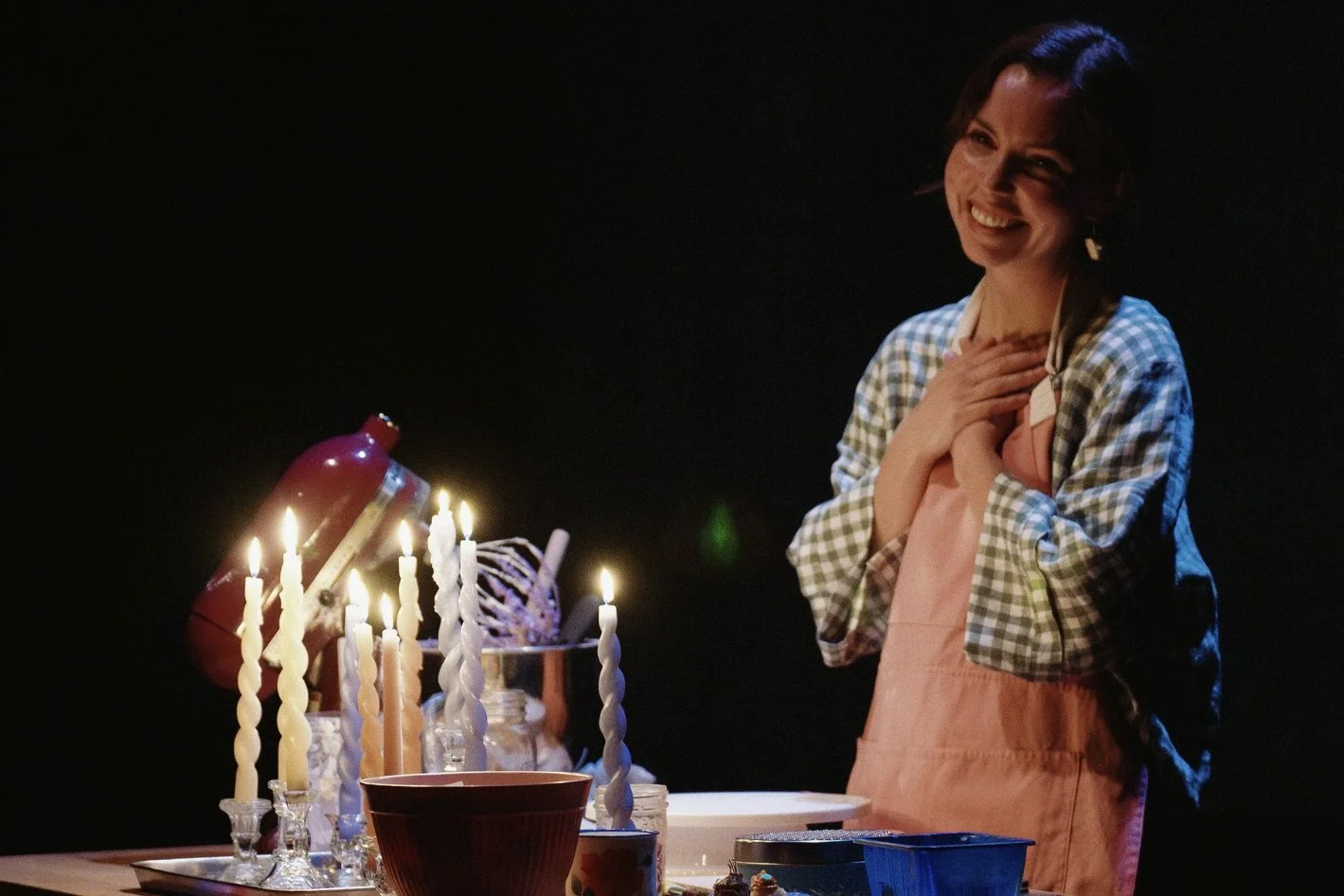
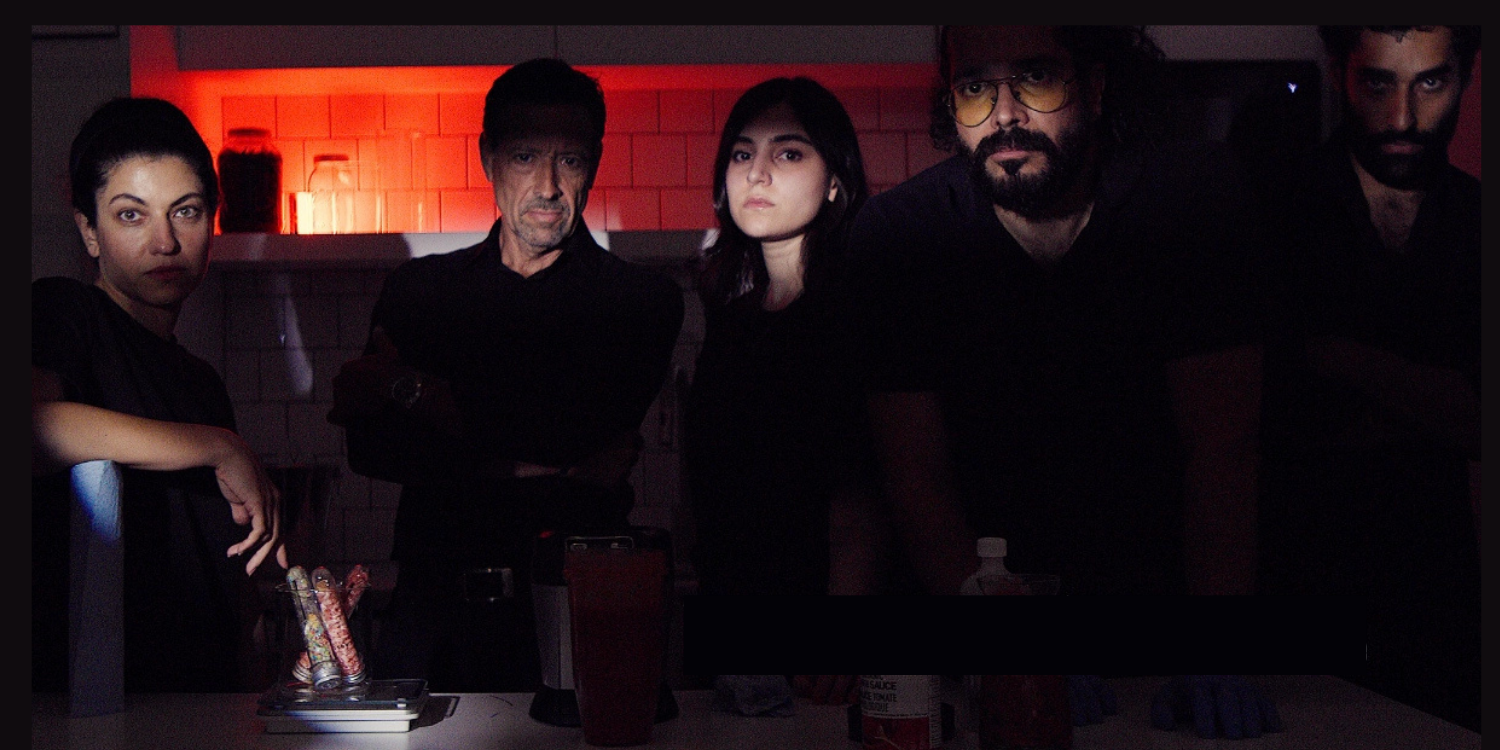
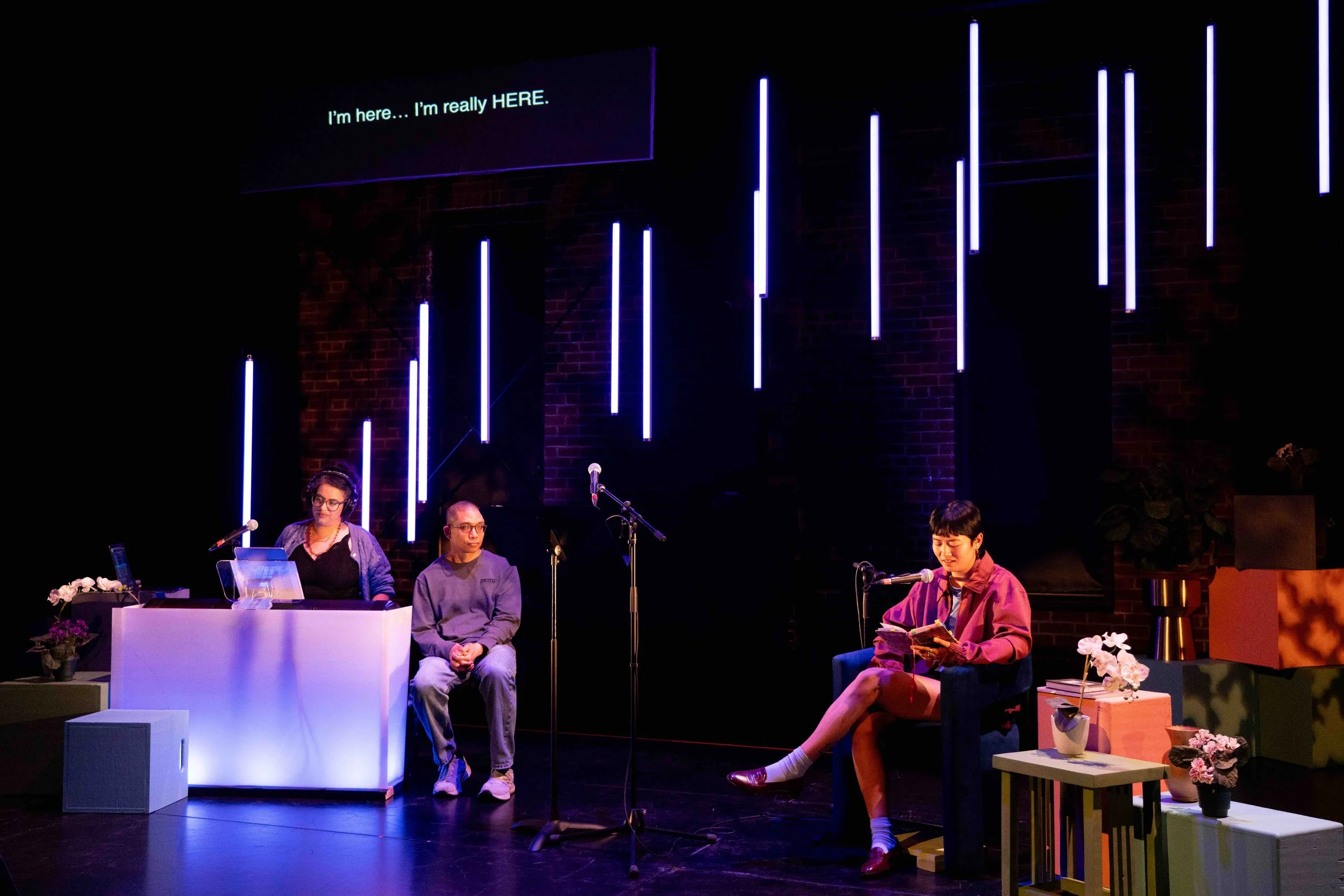
Everything Has Disappeared. Photo by Atle Auran
Everything Has Disappeared was at The Cultch to February 1 as part of a PuSh International Performing Arts Festival, The Cultch, and Live Biennale copresentation
PUSH INTERNATIONAL Performing Arts Festival artistic director Gabrielle Martin has framed the event as an “invitation to the culturally fearless” in this year’s curatorial statement. And that spirit was fiercely evident in Everything Has Disappeared, where theatre artist Hazel Venzon commanded the stage by spotlighting the voices, gifts, and hopes of the Filipino diaspora.
The premise for the UNIT Productions, Mammalian Diving Reflex, and The Chop Canada collaboration was simple: what would happen if one day, the Filipino diaspora disappeared, and how would that impact our world? The speculative premise was immediately grounded into reality as the show began with a dedication to the victims and survivors of the Lapu Lapu Festival tragedy that occurred last year.
Conceived by Venzon and Darren O’Donnell, Everything Has Disappeared could have wrestled with making a show that was perhaps too surface level for a Filipino audience or too disconnected from other audiences. But by the time Venzon appeared onstage with her sparkling, sequinned jacket and blunt bob wig, guiding the audience through mindfulness and breathing to connect with our bodies, all thoughts of assessment and differentiation started to feel irrelevant.
Director Emelia Symington Fedy and the production’s design team tapped into an interstellar, technicolour aesthetic that complemented Venzon’s larger-than-life energy, inviting the audience on a ride that was both speculative and relevant to today’s global economy.
Venzon’s audience work echoed the show’s introduction of long-studied Filipino concepts, such as pakikiramdam—attuning to a shared inner perception and relationship awareness. She danced between Tagalog and English, encouraging us to understand through both emotion and language, before introducing different real-life accounts of local Filipino-Canadians through her narration, and excerpts from their recorded conversations.
Portrait sketches created by David Oro and projected onstage played a significant role in tracking these stories. Even as static images, they worked well with potatoCakes_digital’s set, lighting, and video design, and Simon Campana and Princess Dasha’s moody, astral sound work, to find new transitions between personal narratives and more interactive segments with the audience.
Thanks to the design team behind Everything Has Disappeared, Venzon was given plenty of room to engage, be spontaneous, and build on the show’s elements into its second half.
As the audience learned more about each individual, the show introduced major “choke points” within the global economy that rely heavily on Filipino labour, from healthcare and senior care to seafaring and building semiconductors. At one point, an audience member was given a pair of VR goggles depicting a bird’s-eye view of Hong Kong during its annual labour holiday and noted the sea of working nannies—many of whom are statistically Filipino workers—allowing other families to take the holiday off. Through data and first-hand accounts, the show called out our dependence on foreign and migrant labour, while simultaneously scapegoating and demonizing these communities for our dependence.
As the program notes put it: “Everything Has Disappeared celebrates and explores the very unique relationship the Filipino diaspora has to the global economy: they are everywhere and deeply involved in our lives as central threads in a tapestry that defines human dignity itself. If Filipinos disappear, everything disappears.”
The show benefitted from a clear premise so the audience could instead focus on exploring pakikiramdam and kapwa (roughly meaning shared identity and mutual care) from an experiential place. As Venzon shared more stories, she wove between moments of joy, grief, anger, and pride—sometimes all of the above—and guided the audience to stay connected with every emotion. In the show’s final moments, audience and community member became synonymous, reminding us that our ability to be with each other shapes the cities and communities we share.
As a piece of devised theatre, Everything Has Disappeared was framed around its engagement with different parts of the Filipino-Canadian diaspora. Venzon has spoken about her team’s efforts to interview and celebrate local Filipino communities wherever the show is presented, and its western Canadian debut in Vancouver continued that tradition. There was a touch of genius considering this model could effectively highlight any underrepresented community. As a show led by and centred on Filipino-Canadians, this too reflected the collective spirit of the Filipino diaspora, and the power of pakikiramdam.
As a steward of so many distinct stories, Venzon’s authority onstage did not come from inserting too much autobiographical content. One could be left with a level of intrigue about the artist, so the narrative arc could encompass both personal and collective truths. For a format and subject matter that naturally attracts personal testimony, Venzon’s pakikiramdam was singularly focused on being a voice for the many—from the beginning of the show to its ending chorus.
Thanks to a well-conceived production and Venzon’s tour-de-force effort, Everything Has Disappeared was an artistic and collective achievement. 

Related Articles