Tyrell Crews brings audiences on a suspenseful ride through a 1950s affair in Dial M for Murder
The Arts Club and Theatre Calgary coproduction focuses on a disgruntled husband who plots to kill his wife when he finds out she’s cheating
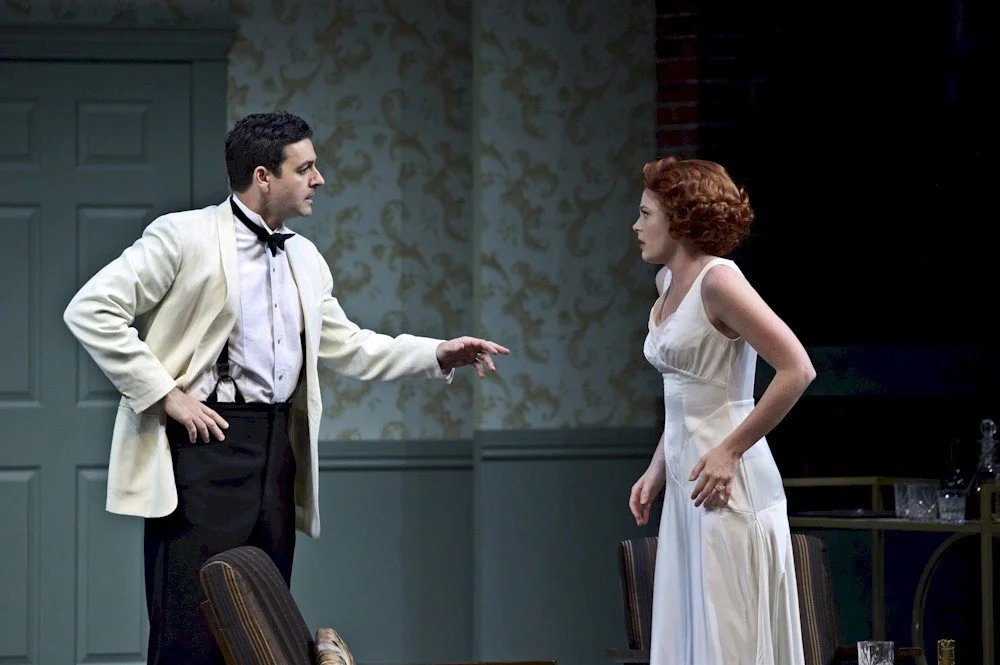
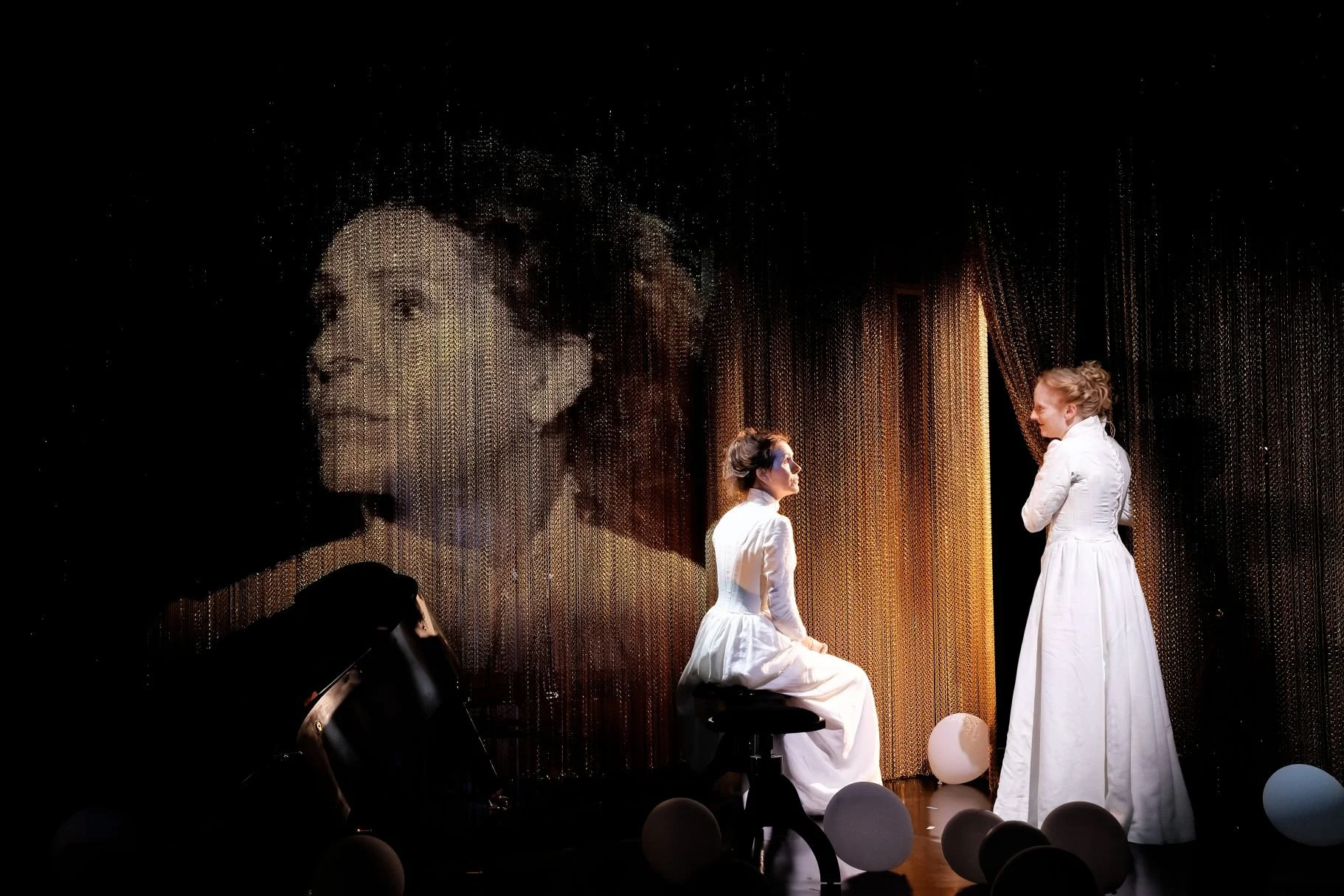
Tyrell Crews (left) and Emily Dallas in Dial M for Murder. Photo by Trudie Lee for Theatre Calgary
The Arts Club Theatre Company presents Dial M for Murder in partnership with Theatre Calgary on the Stanley BFL CANADA Stage from February 5 to March 8
FROM HIS OUTWARD APPEARANCE, you wouldn’t expect Tony Wendice to be a killer in the making. The well-trimmed, middle-aged main character in Dial M for Murder is a retired tennis player who’s married to a wealthy socialite.
So as far as wrongdoing goes, it’d certainly be conceivable to imagine him committing a white-collar crime like tax evasion. But he’s an altogether unexpected perpetrator for the heinous act he’s got up his perfectly tailored sleeve. When Tony finds out his wife Margot is having an affair with a successful author, his bitterness at her betrayal overwhelms him. So he devises a plot to murder her.
In Jeffrey Hatcher’s adaptation of the 1952 Frederick Knott play (which Knott himself adapted into the screenplay for the renowned 1954 Alfred Hitchcock film), Tony isn’t a tennis player; instead, he’s a mediocre writer who’s pigeonholed into a marketing and communications job when his career doesn’t take off. Albertan actor Tyrell Crews, who’s playing Tony in an upcoming co-pro by the Arts Club Theatre Company and Theatre Calgary, tells Stir that the plot change means he’s discontent with his own lack of success in life—and as a result, incredibly resentful of his wife’s accomplishments.
“He actually says, ‘I thought of three different ways of killing the other woman, and I thought of three more of killing my wife—and that, I thought, would be the more sensible route,’” Crews says of Tony. (By murdering Margot, he’ll inherit her wealth.) “So he’s incredibly intelligent. And he operates on this level where he plans this epic revenge story to the millionth degree.”
Dial M for Murder will run on the Arts Club’s Stanley BFL CANADA Stage from February 5 to March 8; Crews stars alongside Emily Dallas, as Margot. What makes this version of the story unique is that Margot’s affair isn’t a straight relationship. Her lover is a woman named Maxine Hadley (played here by Olivia Hutt), a successful writer. Adding to the twisted irony of the whole situation is that Tony introduces the two.
Crews explains that bringing a queer relationship into the picture heightens the intensity of the play, given the era it’s set in.
“Even though it is an affair, there’s an even more difficult layer on top of it,” the actor says. “Being a gay couple in England in the 1950s, that was punishable by death, you know? So the stakes there are just even higher. You see this beautiful relationship and the challenges of the time that it presented.”
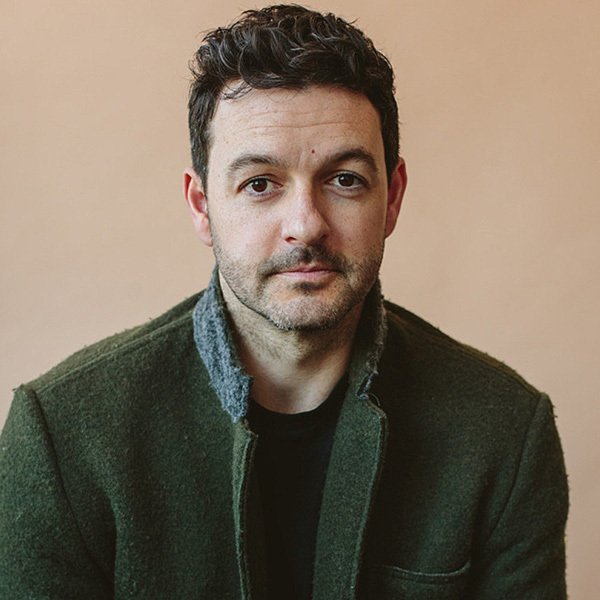
Tyrell Crews
Speaking of the 1950s, Anton deGroot’s set design and Jolane Houle’s costumes help capture the style of the period. There’s faded-yellow paisley wallpaper, big French doors, and midcentury-modern wood furniture framing the stage. The actors, meanwhile, are outfitted in dapper suits and flouncy swing skirts. Anton Lipovetsky’s slick sound design and Itai Erdal’s dramatic lighting enhance all these elements.
“The costume design is just so delicious to see,” Crews notes admiringly, “because it’s like, ‘Oh, this is of a time,’ but maybe there’s a little modern flare on the lapel of one of the suits that you see. And it’s striking—it’s familiar, but of another time as well, which I love.”
Crews is also taking on the role of fight captain for the upcoming Stanley performances. He’s in charge of ensuring all the safety protocols put in place by fight director Brianna Johnston and assistant fight director Mike Kovac are maintained throughout rehearsals.
While Dial M for Murder doesn’t necessarily include the big brawls or drawn swords one might expect with the words “fight scene”, what it does feature is a general sense of peril.
“The scene is tense, and it’s quite still, and then you maybe look down and this character is just having a cocktail,” Crews explains. “They’ve got bourbon on the rocks, for example, but they’re just clutching this thick rocks glass. And you’re like, ‘Oh my gosh, is that actually going to become a weapon in a minute or so?’ The way that it’s staged with our set design as well, everything’s quite open—and it just feels like there’s lots of risk involved. So the stereotypical weapons that you might see come out in 1950s London, like a revolver or a switchblade, that’s not exactly what we’re after.”
In all, Crews notes that Dial M for Murder presents a different type of mystery than most audiences are used to. The viewers are let in on many of Tony’s discoveries and motives, which means they’ll know what he might do next—but not how it will play out.
“It’s quite intense, and the air gets quite thick at times,” Crews says. “In the play, right at the very beginning, actually, they’re discussing Maxine’s book. They’re pretending that they’re being interviewed, and one of the questions is ‘What’s the difference between a mystery and a thriller?’ And at face value, you’d think that those might be pretty similar things. But what this play—and the rest of the cast—does very well is really highlight what a thriller actually is.”
Concluding, the actor notes: “It’s very fun to have the audience on my shoulder for the ride.” 

Related Articles