Stir Q&A: Shelter tackles homelessness through art at Downtown Eastside Heart of the City Festival
Radix Theatre project helps put paint supplies in the hands of marginalized artists whose works will show on bus shelters and at November 4 art sale
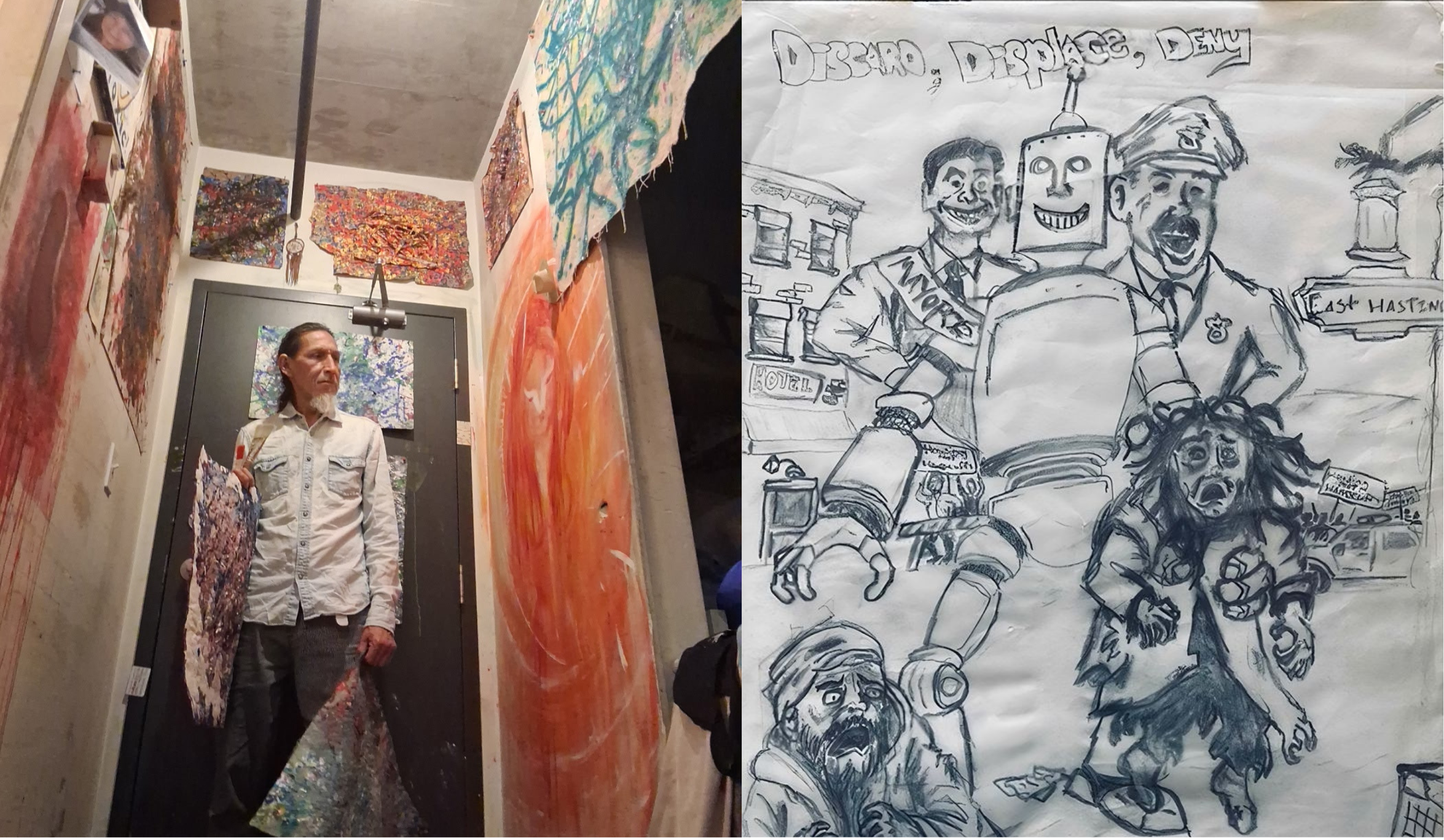
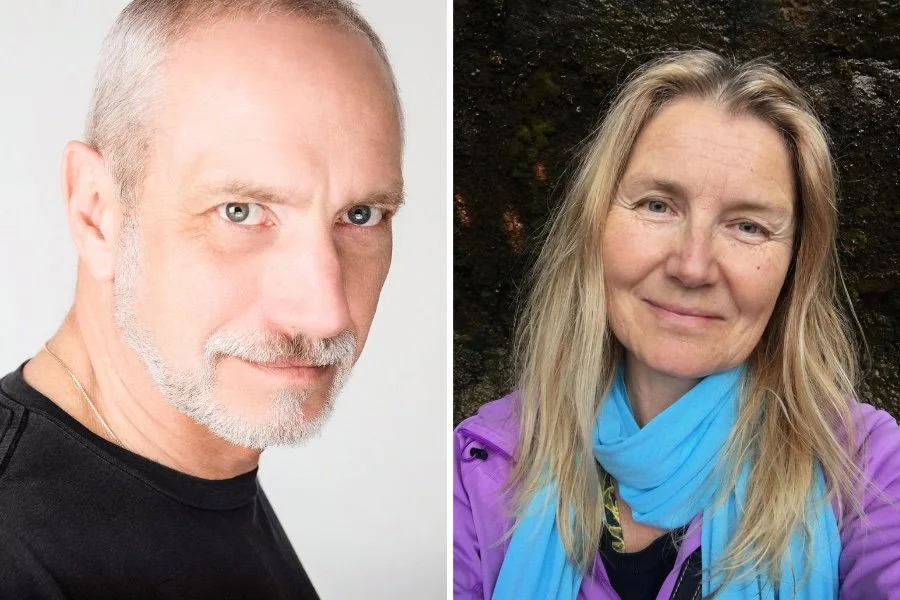
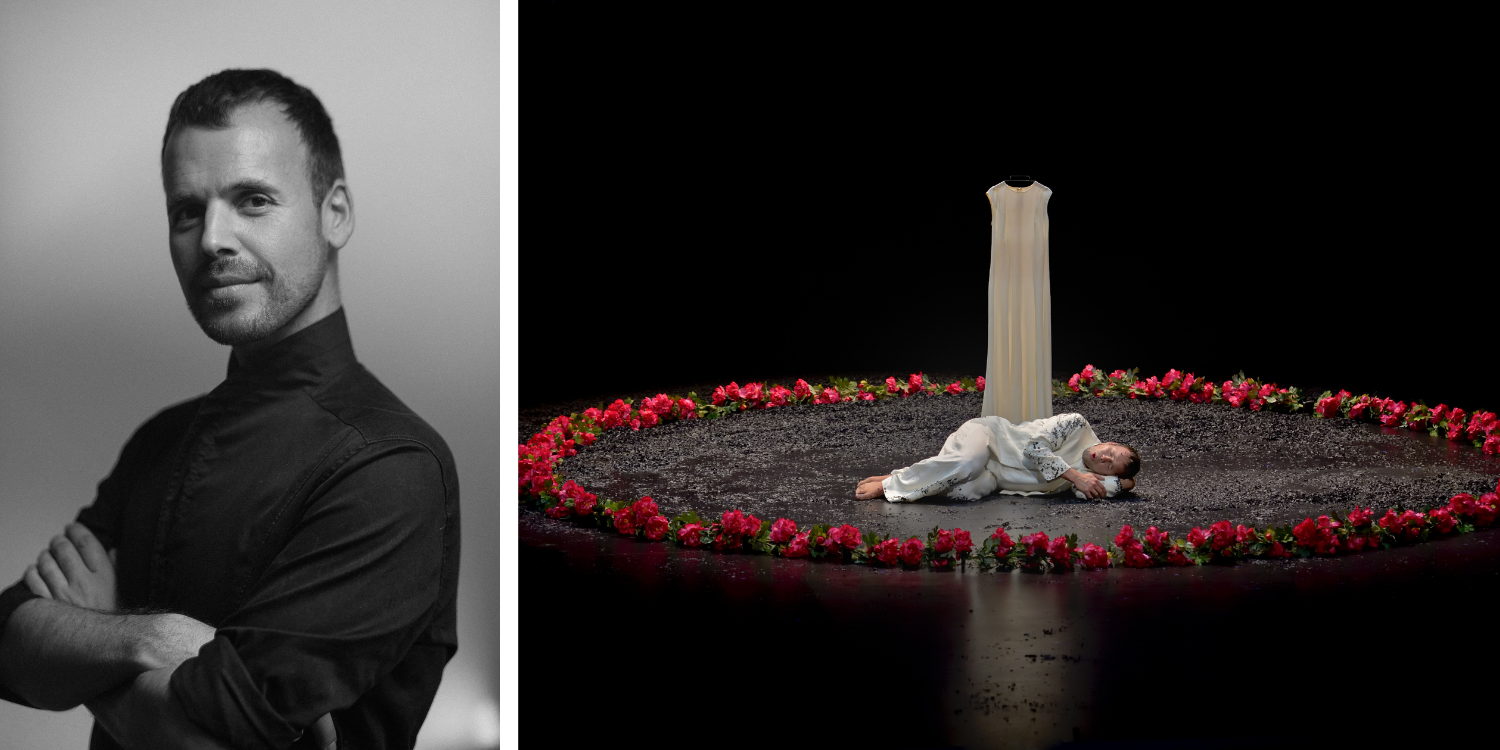
At left, Shelter artist Anthony Favel with some of his work; at right, Shelter artwork by Crab Park resident Weston Shupe.
FROM OCTOBER 31 to November 8, take a look at local bus shelters for a view of homelessness and the housing crisis that we don’t often get. As part of the Downtown Eastside Heart of the City Festival, 30 diverse, marginalized Downtown Eastside artists have individually created large-scale artworks reflecting on their first-hand experience of the issues.
The project, led by Gunargie Ga’axstasalas O’Sullivan and produced by Radix Theatre, is a unique one that will be celebrated on November 4 with an evening of art, painting, and community called Shelter X Crab Park X DTES Art Sale at 312 Main Street, from 5 to 8 pm. It’s a chance to buy artworks from some of the artists who took part in Shelter, as well as to take in live painting by graffiti artists such as Smokey D, Sober, Ken Foster, Dempsey, and Elvo. The same day, the Ayx Community Cooling Bus, painted by artists Smokey D, Sober, and Kirstine Fuhman, will be used for a “one-of-a-kind DTES Toilet Tour”—yes, according to the Heart of the City program, mini-tours of local washrooms to grade them for a “Restroom Report Card” that will be filed at City Hall.
Ahead of the transit showings and sale, Stir caught up with Radix Theatre artistic director Andrew Laurenson, who helped organize Shelter, to talk about connecting with Downtown Eastside artists and the power of their work to tackle issues of housing:
What was the genesis of the Shelter project, and what does the profile on bus shelters offer?
Radix had recently twice presented a project We Live Here during the Heart of the City Festival, where time-lapse videography of visual art created by DTES artists was projected in large-scale outdoors onto DTES buildings. The idea was to highlight the healing powers of creativity and bring attention to local artists, just to say, “Hey we live here, we’re human, we deserve respect as much as anyone,” something to counter the often pathological view of the neighbourhood.
While the project went over very well, I realized it didn’t reach people outside the DTES as much as I had hoped, so I started thinking about the City of Vancouver’s free Transit Shelter Advertising Program, which offers free placement of up to 10 bus shelter posters around the Lower Mainland. I thought this could be a way to spread the reach of the artwork, and that perhaps thematically tying in the theme of shelter, or housing or homelessness, might be appropriate, given the dire state of housing in Vancouver. I figured people might subtly get a sense of the importance of shelter while actually standing in or looking at a bus shelter, so the posters hopefully play a dual role, both promoting the gallery showing and also acting as an advocacy tool for the issue of housing.
Were there challenges in connecting with potentially unhoused artists and getting them art supplies?
With We Live Here, I learned the importance of partnering with DTES individuals and organizations when working in the neighbourhood, and through that project was fortunate to have met and worked with Gunargie O’Sullivan, a media artist and well-known person in the neighbourhood, and also Wendy Peeters, a community liaison worker for Vancouver Coastal Health. Fiona York, who advocates for people in the DTES, also later came onboard. These three were tasked with connecting with the artists, and they all worked to either get the artists to the studio where we were working or get the art supplies to them. This project would not have happened if it weren’t for those three.
What struck you most about the images you received, and what are some of the messages that have come out of this project?
The overwhelming sense I get from the artworks is simply the importance of creativity to the human soul. Certainly, there is a variety of work, different styles and themes and approaches, but my mind goes beyond what I see on the canvases to the people who made them, the struggles they are having or have gone through, and the way the act of artmaking brings focus, clarity, purpose, and dignity to their lives, for however long that may be. The message I got was about the healing power of art, and how the DTES could benefit from more regular opportunities for creative expression.
What role does art have to play in one of the most pressing social issues our city is facing?
I can’t say it any better than the Portland Hotel Society’s Russ Maynard: “As in previous projects with Radix, Shelter aligns with our goals because it utilizes a strengths-based practice. Far too often the DTES is described and literally defined by its pathology; by the community’s needs and not by its gifts and strengths. A strengths-based practice focuses on peoples’ talents as opposed to their deficits. It’s a paradigm aimed at developing and supporting confidence, gifts and social capital. By publicly featuring the work of Downtown Eastside artists this project can promote strength and resilience not only for those participating artists, but for the broader community as well for those who see the transit shelter ad campaign. I believe it can also help to promote engagement and awareness on the pressing problem of housing.”
What can visitors expect at the Shelter X Crab Park X DTES Art Sale, and what role did Crab Park play in the project?
Sorry for the cliche, but I think visitors can expect the unexpected. There will be 40-plus artworks to view and purchase, the live painting display, and the making of the Restroom Report Card through a bus tour around the neighbourhood, with the report to be delivered to City Hall. Sounds kinda wild to me. About five of the participating artists were living in Crab Park in July, when artists were creating work for this project. I was at the park the other day and saw no signs of people staying there now. I hope they are okay. 
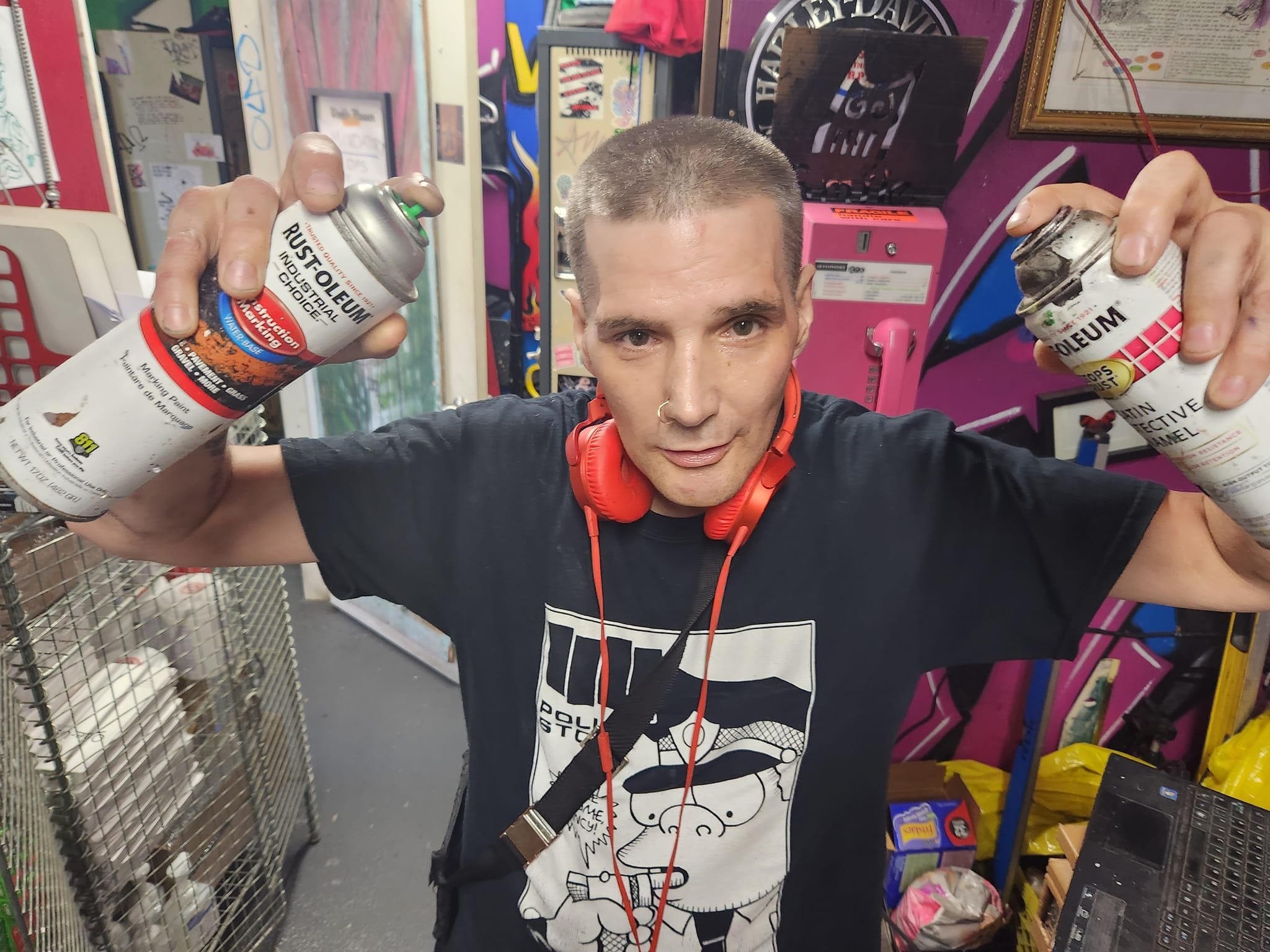
Smokey D, set to live-paint at the November 4 art sale.

Related Articles