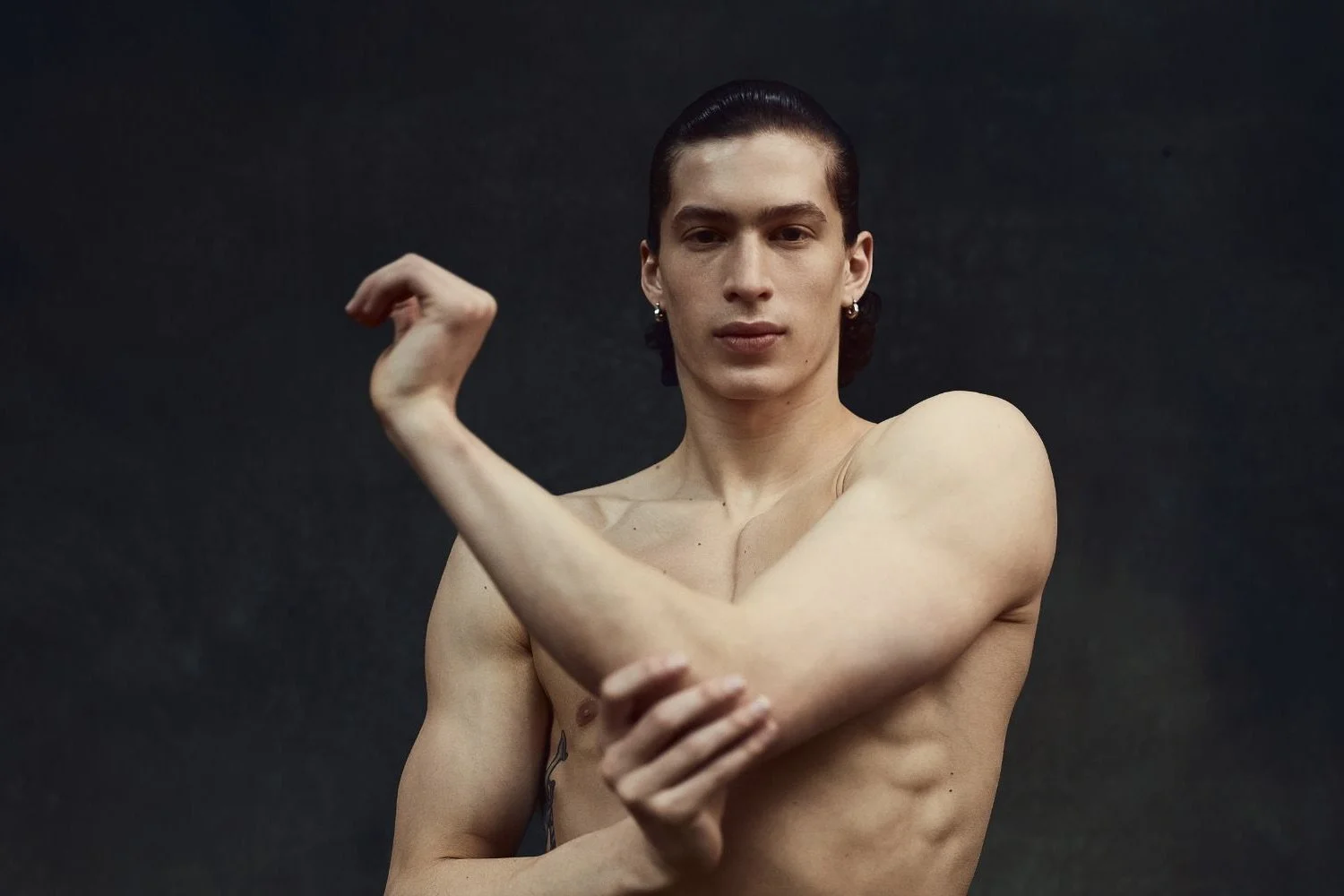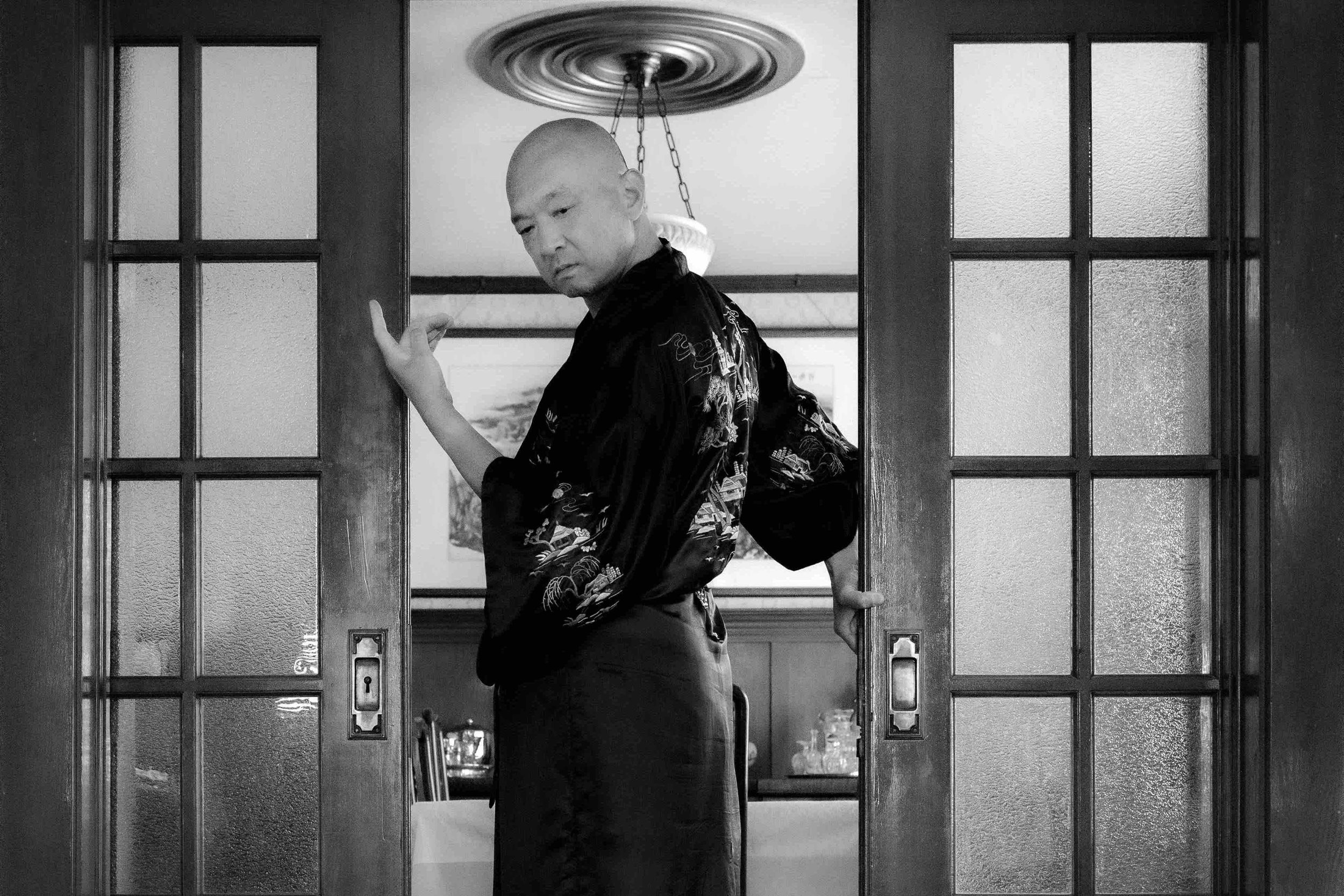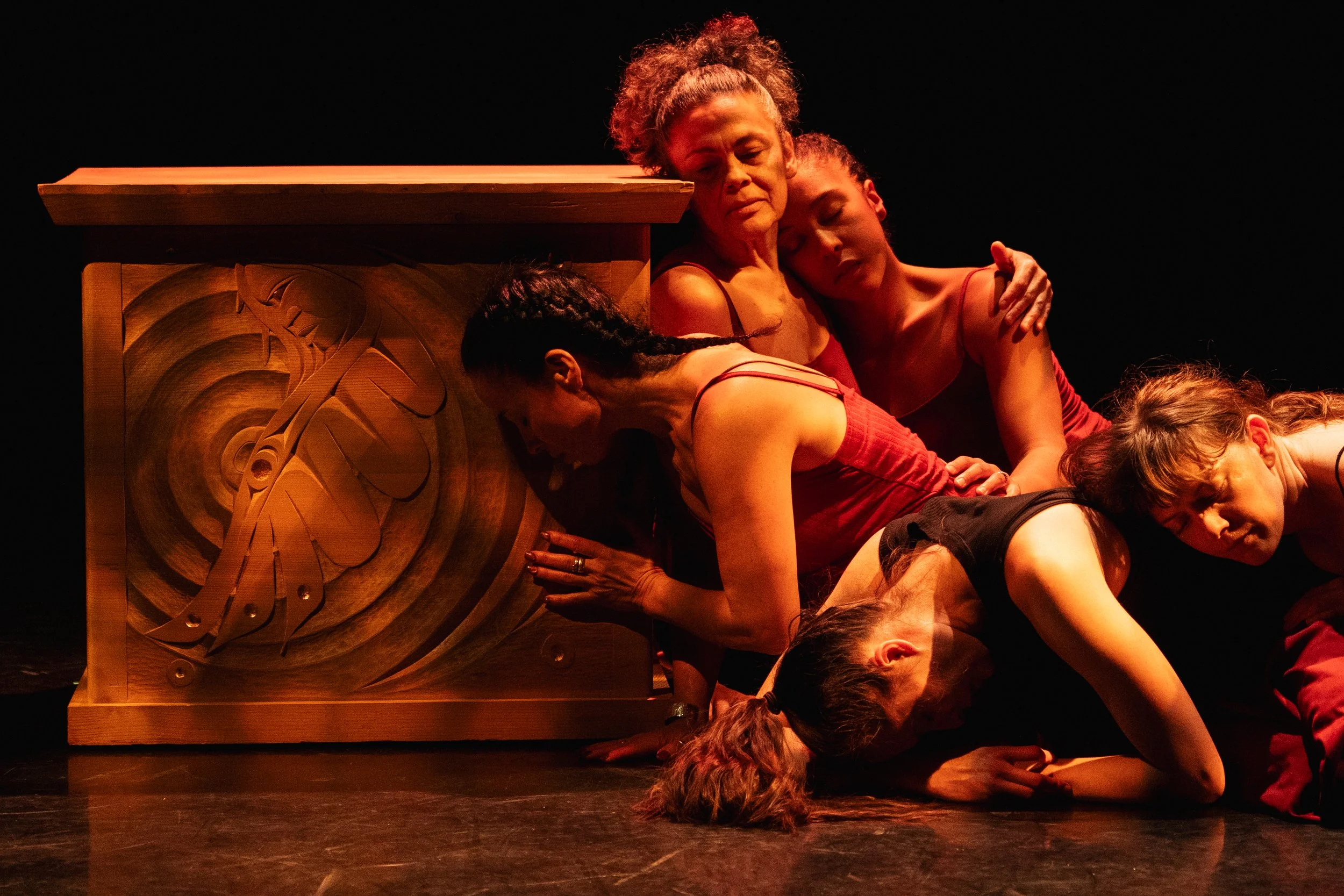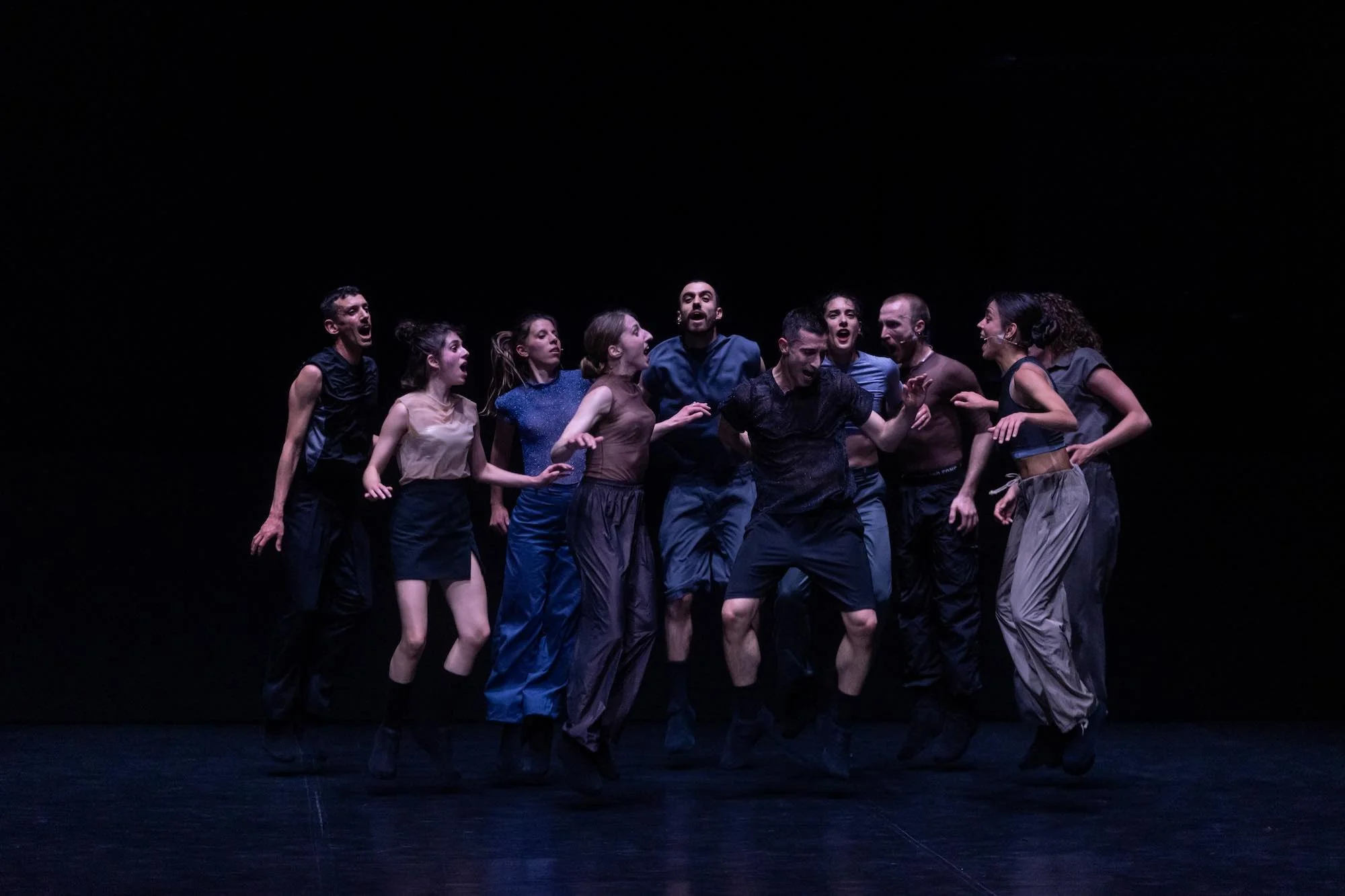
Hoop dance and Métis jigging meet as Beany John and Sophie Dow take the stage at Matriarchs Uprising
The Dance Centre and O.Dela Arts present the piece that draws on the performers’ Indigenous ancestors
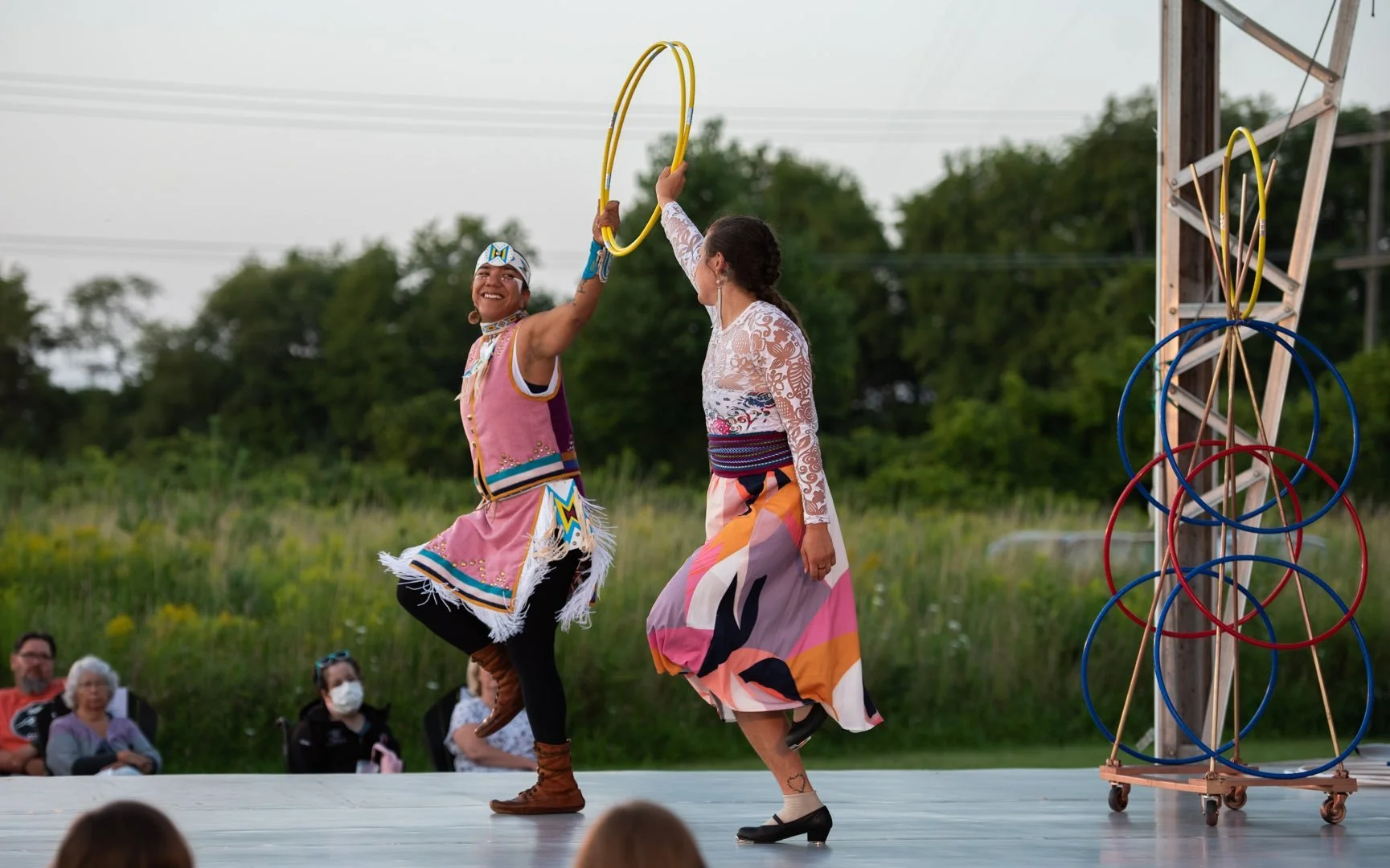
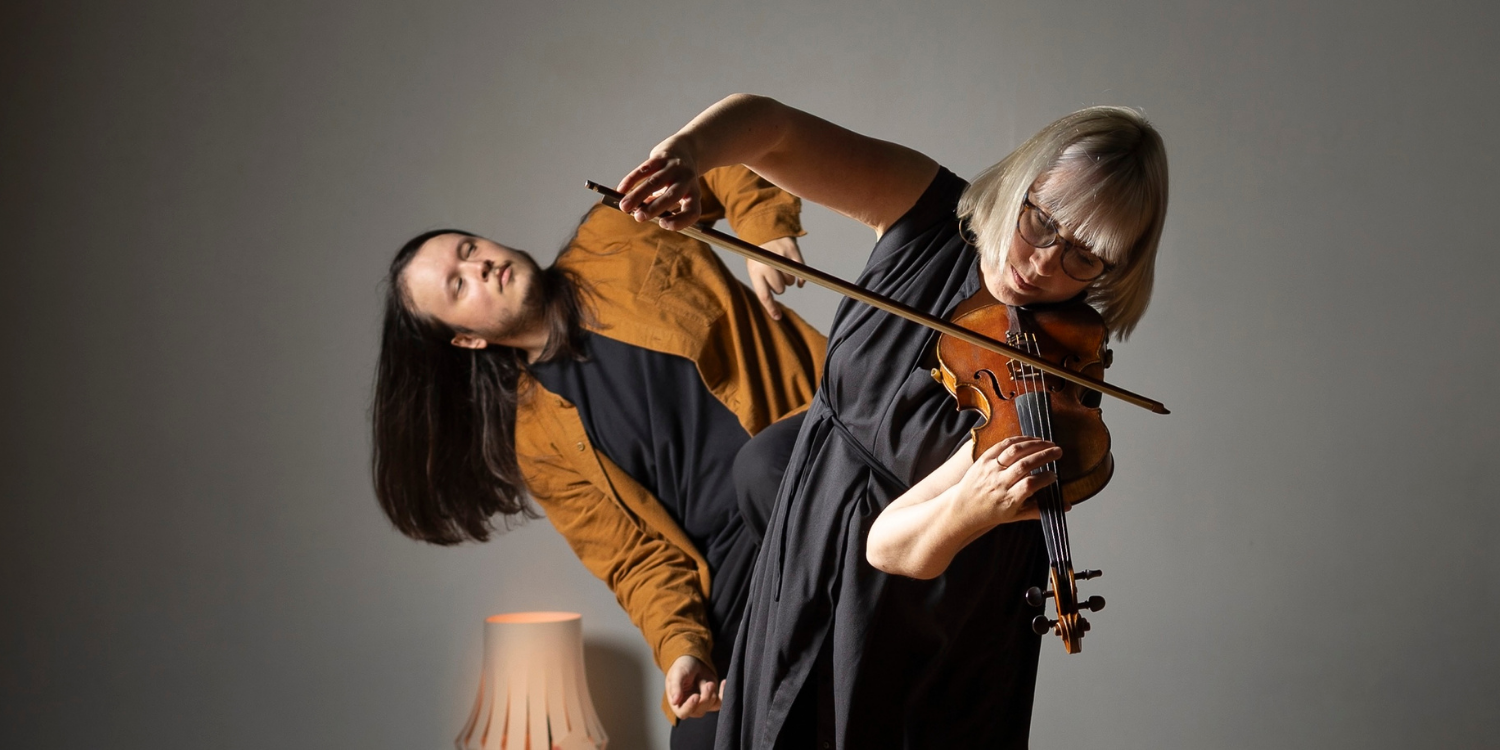
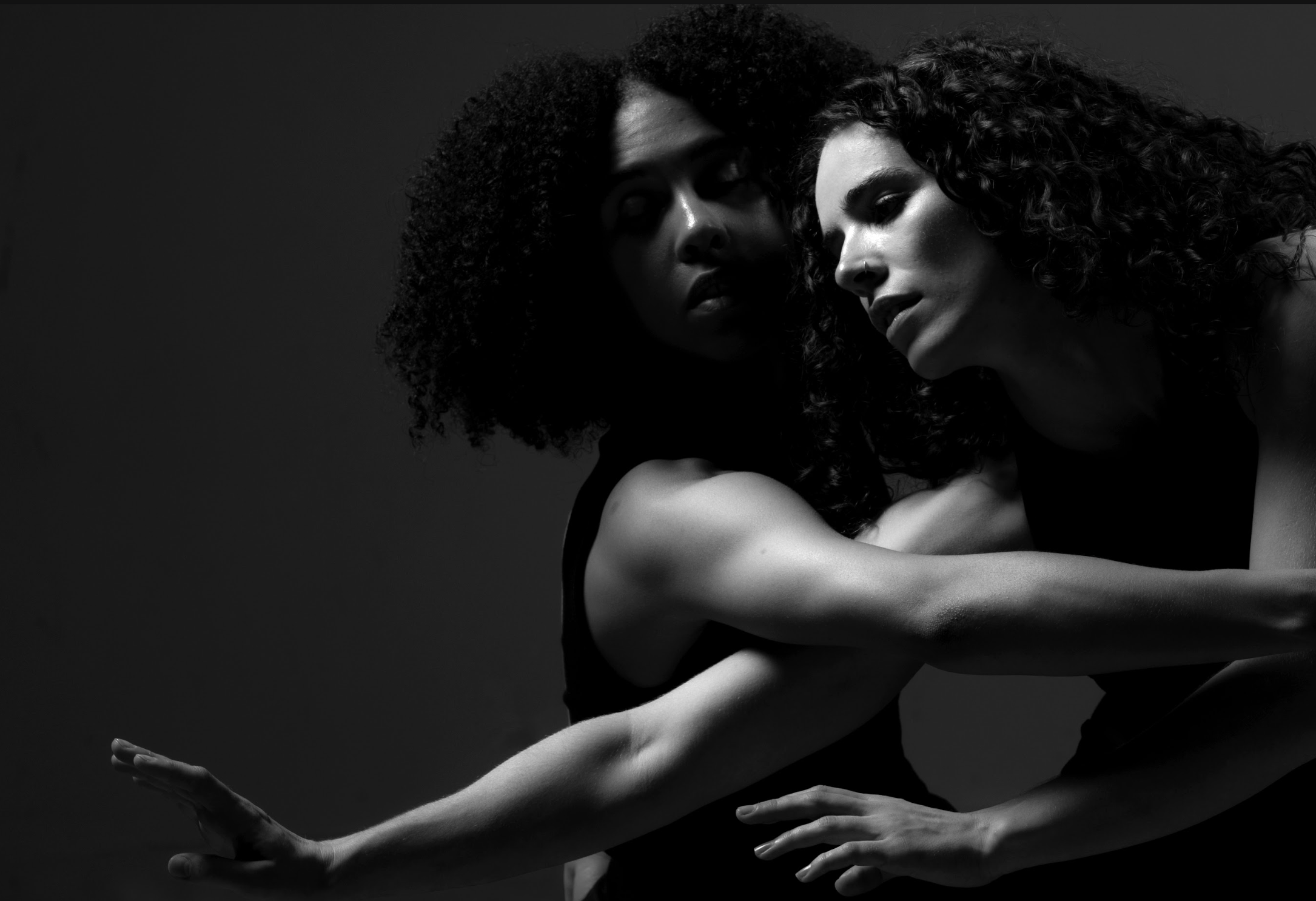
Beany John (left) and Sophie Dow in carriers and keepers of the ancestral portals. Photo by Michael Lindon
O.Dela Arts, in partnership with The Dance Centre, presents carriers and keepers of the ancestral portals on a double bill with ʔa·kinq̓uku at the Scotiabank Dance Centre on February 19 at 7 pm, as part of Matriarchs Uprising
FROM THE DAY they met, Indigenous dance artists Sophie Dow and Beany John knew that they wanted to collaborate together.
Their first encounter was outdoors at the inaugural Flight Festival of Contemporary Dance in Prince Edward County, Ontario, where Dow was one of five creative directors and John, who’s a world-champion hoop dancer, was performing. As they recall, it was bright and early on a sunny summer morning when Dow announced she was going for a coffee run, and John asked if they could come along. On the drive there, Dow offered John the auxiliary cord to play music—a sure-fire way to break bread in modern times—and they instantly hit it off chatting about tunes. Later that evening at a festival-wide artist dinner, the pair connected even further when Dow began juggling and breathing fire, and John set their hoops ablaze.
Speaking to Stir over a joint Zoom call, the pair say that nearly seven years later, the partnership they’ve developed as artists and friends is truly special. But John recalls realizing it was “a match made in heaven” during that first conversation in the car.
“We can go back to being kids again,” John says of their energy when they’re together. “There’s this sense of wonder and creation—and no fear. I feel like she really brings that out a lot more in me when we’re together, especially when we’re creating. Even when we’re not creating, there’s just a sense that we need to do something transcending, whether that’s when we’re on a trail and somehow we find a tree and we start climbing it, or we find a slew and we’re trying to figure out how to get to the other side. There’s always that sense of adventure, of journey—and it doesn’t matter how small, or how little time we have together. We really take every essence of every element in those couple of moments. And it’s really hard to find that in most human beings.”
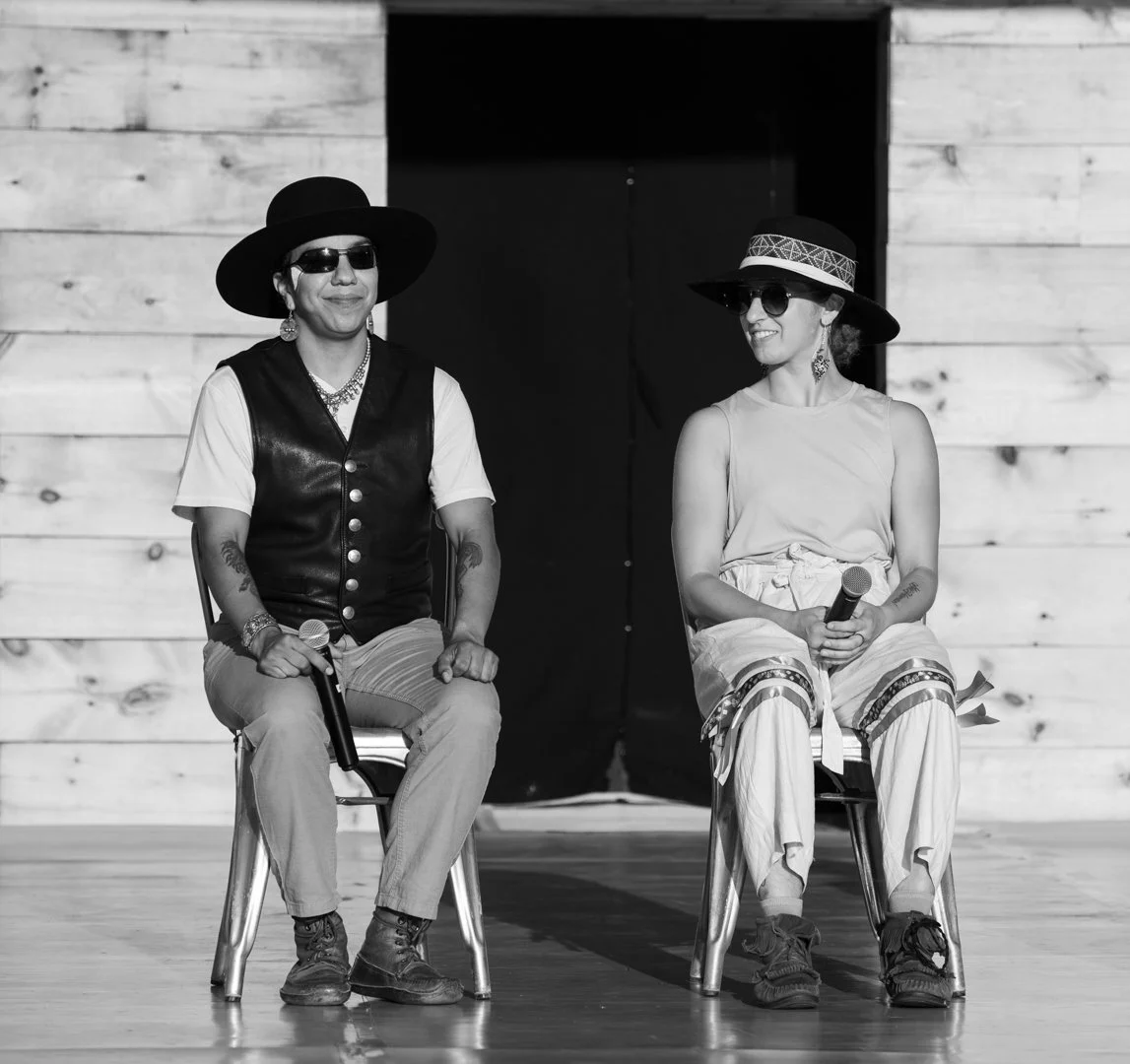
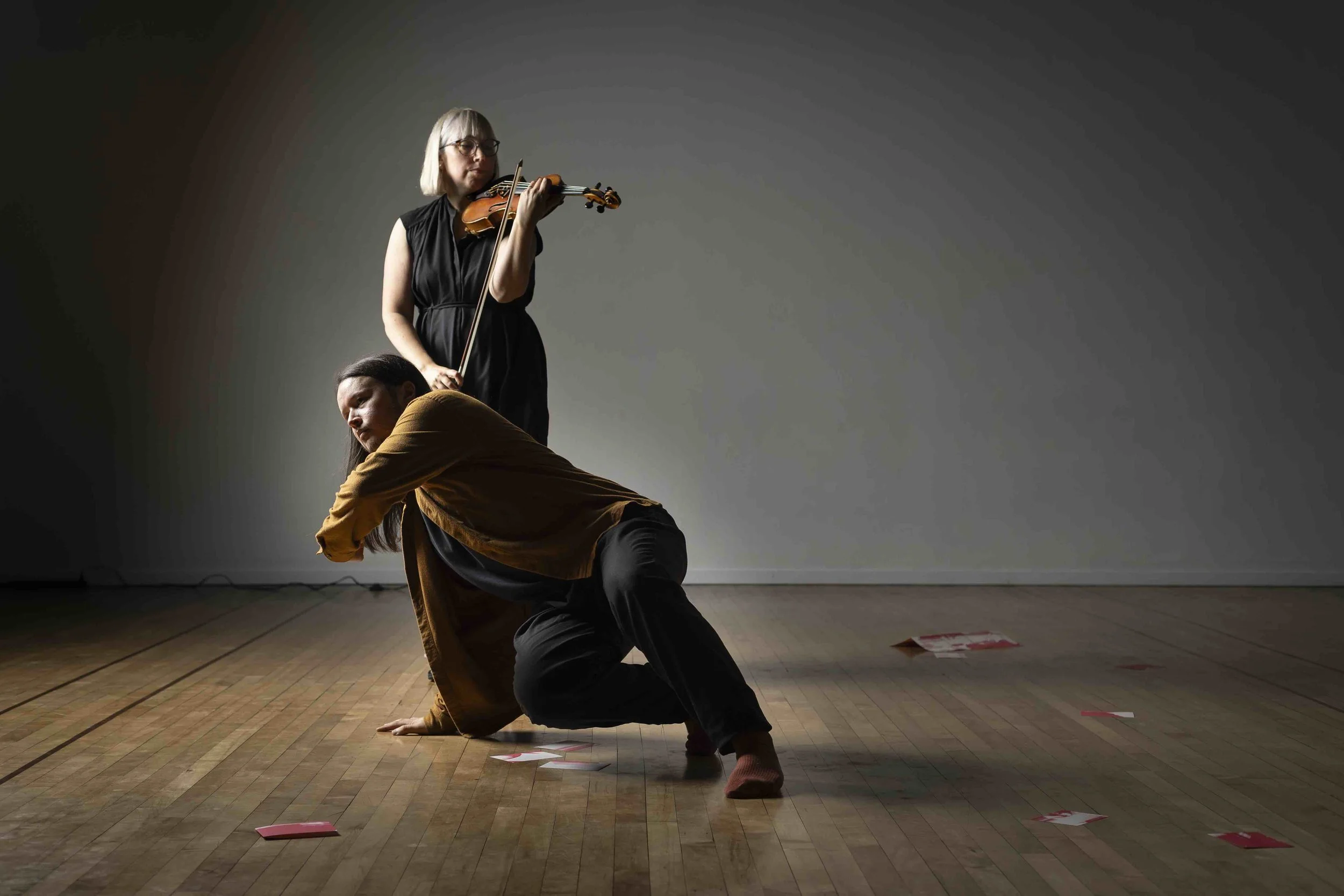
Beany John (left) and Sophie Dow. Photo by Michael Lindon
John, who is of Cree and Taino heritage, hails from Kehewin, Alberta. Dow, meanwhile, is of Red River Métis ancestry from Treaty One in Manitoba, and her dance background is rooted in Western styles like ballet and jazz. The pair enmeshed their cultural histories with their broad spectrum of movement knowledge, which spans hoop dancing, Métis jigging, and contemporary, in a piece called carriers and keepers of the ancestral portals. It premiered on an outdoor stage at the Flight Festival, the same place they first met, in 2023.
“Working on the land, I think, really helped,” John says of their choreographic process outside John’s tiny home on a family property in Kehewin. “We tried working where the horses were. At one point, we set out this whole beautiful rock stage.” But rehearsing in the elements didn’t last long.
“The dogs kept stealing the rocks!” Dow says with a laugh, adding that the pair soon moved indoors. Now, they’re reviving the piece for a presentation by O.Dela Arts and The Dance Centre at this year’s Matriarchs Uprising festival, a celebration of work by Indigenous women artists. They’ll be hitting the Scotiabank Dance Centre on February 19 for a double bill with Ktunaxa choreographer Samantha Sutherland’s solo ʔa·kinq̓uku.
The high-energy carriers and keepers of the ancestral portals draws on an important teaching that John learned from their family.
“You always have to think seven generations back and then also seven generations forward,” the artist shares. “So it’s not just about tomorrow or the next day. And I was just thinking a lot about what our ancestors seven generations ago must be thinking about us now—how proud they must be of our perseverance, how far we’ve come, what we carry.”
Dow grew up with an adoptive family in Winnipeg, and wasn’t raised with Indigenous traditions. Instead, she leaned into her father’s French, Ukrainian, and German roots. It wasn’t until her late teens that she began to explore her matrilineal Métis heritage through what she calls “energetic artifacts”, or parts of the land—think natural medicines like the agrimony herb, which inspired her multidisciplinary piece Agrimony with musician Laura Reznek.
“My ancestors that weren’t on the physical plane with me at this time, it was like they were leaving me little breadcrumb trails here and there, which has led me to where I’m at today,” Dow shares. “I’m still very much learning and still very much finding ways to ground into community and finding ways to ground in with my family, both living and past ancestors. But I feel that’s kind of the role I get to play in the piece, as this new ancestor coming in to the world, and Beany leaves these hoop trails for me throughout….It’s like following these invisible threads, these invisible trails, as a means of learning from the ancestors that we can’t necessarily see.”
Dow posits that it’s as if her ancestors from seven generations behind and ahead are the ones leaving those trails. It’s a sense of reassurance that both dancers say they are always seeking in their lives.
“When my time does come, I’m just hoping that there will be an older ancestor there to help guide me on my way,” John says. “Let me make my mistakes. Show me all this beauty that can be created, but then also let me create my own beauty. That’s kind of my connection with my ancestors and how my family has helped me. It’s always about ‘We’re going to help you as much as we can, until you can lay your own foundation until you don’t really need us anymore—and then we can finally just watch.’”
Though the piece does encompass several different movement styles, they blend together naturally and are driven by storytelling components. For example, says Dow, when their human arms can’t reach as far as they want in a given moment, they’ll elongate them by adding in hoops; and when the piece reaches a major point of celebration, they break out into jigging, which is characterized by its lively, fast-paced footwork.
“Beany is a magician of time expansion,” Dow says jovially. “Five minutes at the airport feels like five hours.”
“I’ve always wanted to stop time,” John agrees. “And when you’re with the right people, it feels like time does stop. Sophie is one of those people who is a time stopper. When we’re together, it really, truly does feel like that. And people that are on the outside of our world, I think they just see these little molecules bouncing everywhere, and they’re just trying to get in there for a second—and we’re like, ‘Oh, sorry, but we have to fill that space!’”
So it’ll be a delight to experience that sense of stillness in the universe, even if just for a moment, when the artists perform at Matriarchs. 

Related Articles