Theatre review: House of Folk evokes the spirit of the 1960s and the slippery nature of memory
Tracey Power’s musical revue poses open-ended questions at the Firehall Arts Centre
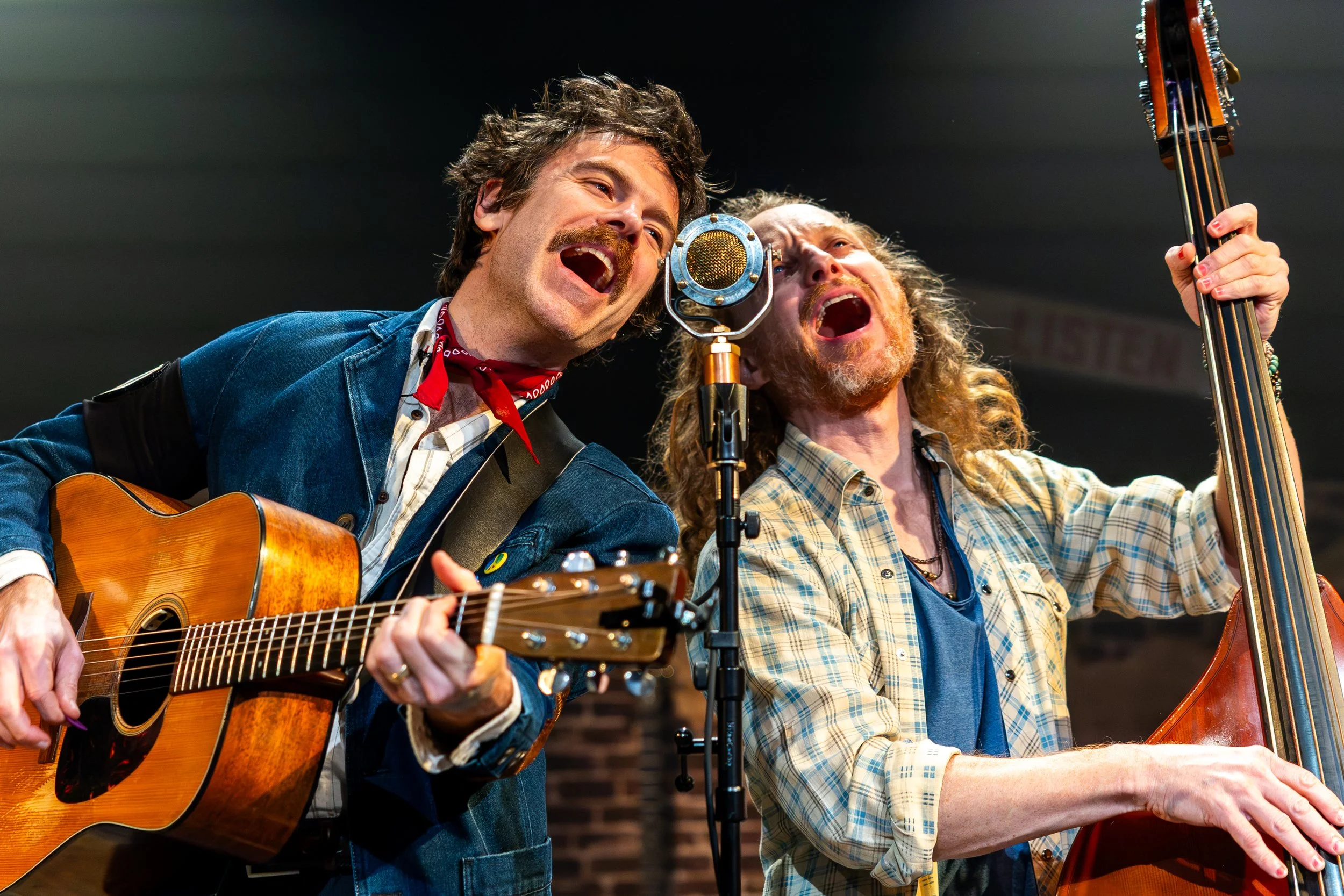
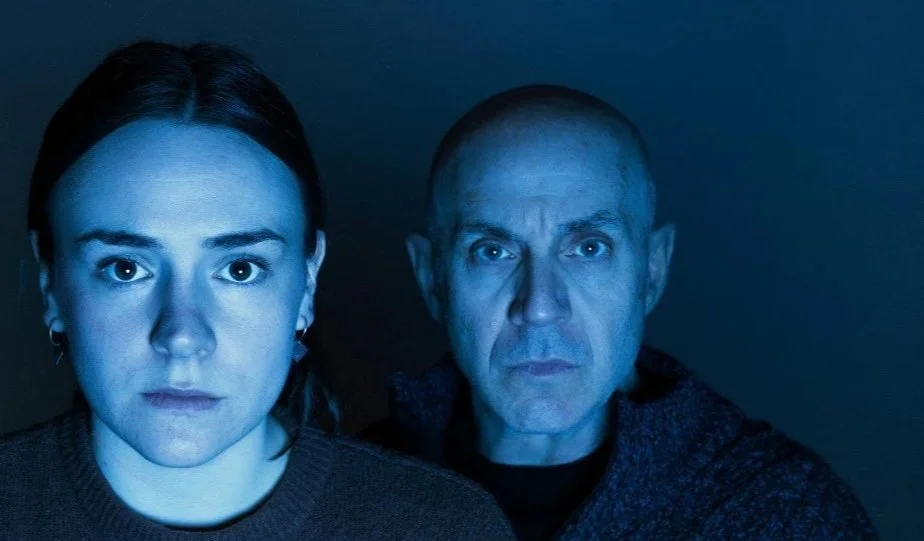
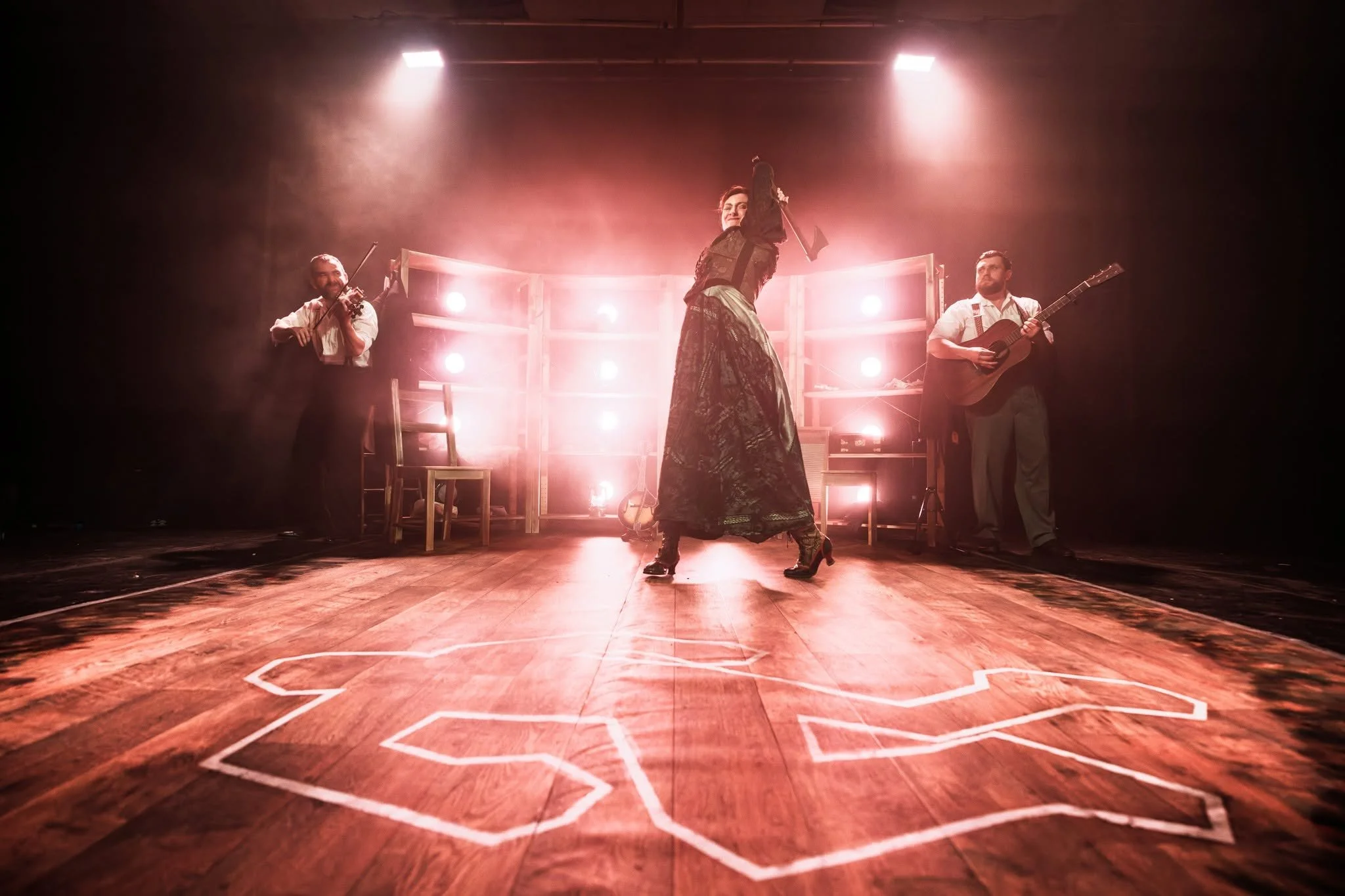
House of Folk’s Jack Garton and Steve Charles. Photo by Jon Benjamin Photography
The Firehall Arts Centre presents House of Folk: A Lost Canadian Folk Show at the Firehall Theatre to March 8
HOW SUCCESSFULLY DOES House of Folk re-create the vibe of a Yorkville coffeehouse in the 1960s? I have no idea, but complete accuracy isn’t really the point. Tracey Power’s show isn’t about the specifics of that milieu so much as it is about its spirit.
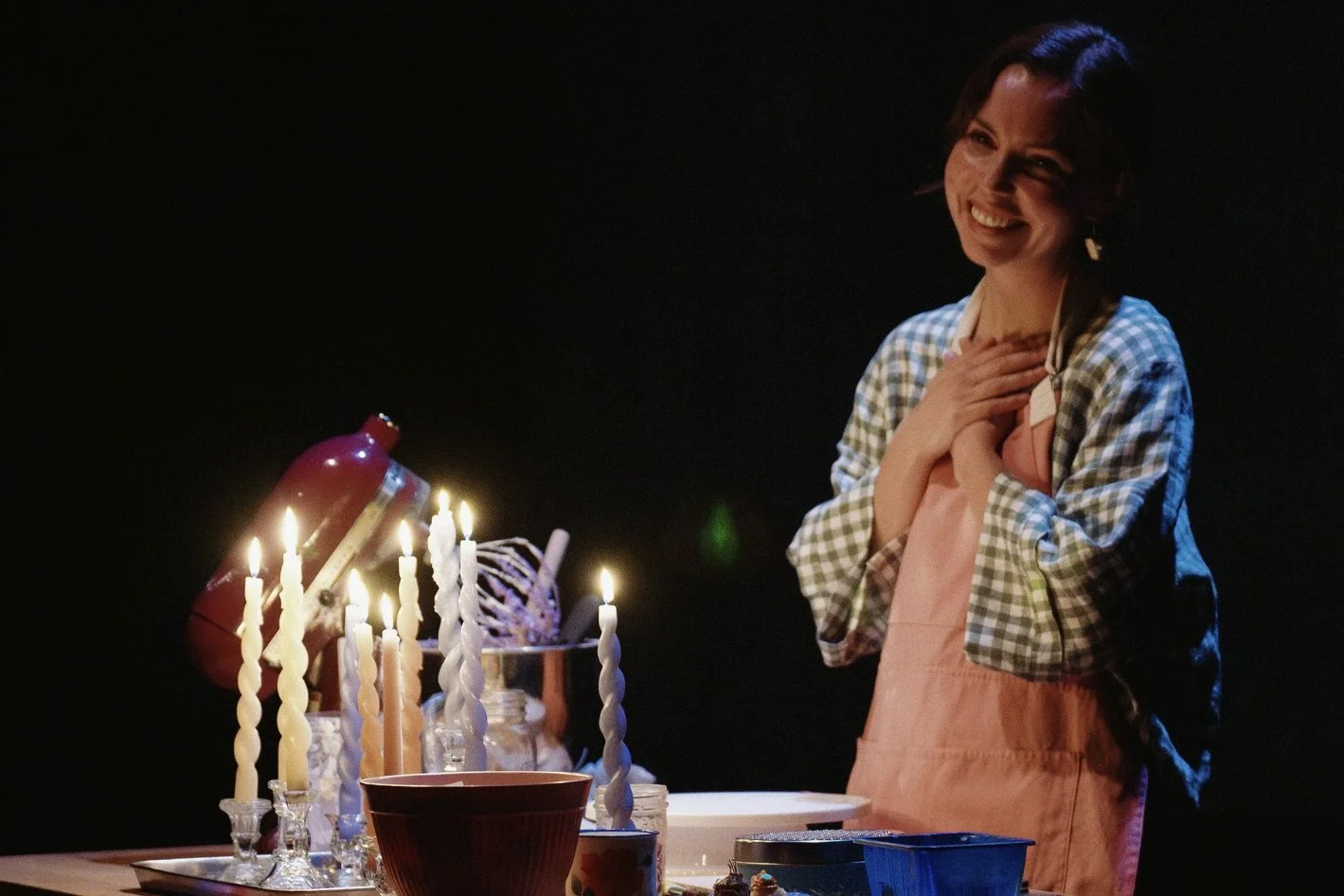
Maybe that’s why the five characters onstage are never given names and referred to only as the Wanderer (played by Michelle Bouey), the Idealist (Steve Charles), the Free Spirit (Ben Elliott), the Eccentric Politician (Jack Garton), and the True Bohemian (Caitriona Murphy).
Each is apparently based on a real person, though, and if you’re an obsessive nerd (like me), you might infer that the Wanderer is based on “Morning Dew” songwriter Bonnie Dobson, or that the Free Spirit is a stand-in for Dennis “Mars Bonfire” Edmonton, author of “Born to Be Wild”. Those are my guesses and I might be wrong, but again, that’s not really the point.
More than anything, House of Folk is a celebration of the music that emerged from the Yorkville scene and its offshoots. One could easily make a case that the big names of Canadian folk (think Joni Mitchell and Neil Young) aren’t wanting for celebration, but for the characters in the show, these people weren’t icons. They were fellow travellers and seekers after truth and decent weed, people with whom they shared a stage and sometimes a bed.
When House of Folk hits its mark, it does so in a big way. A Garton-led version of Crosby, Stills, Nash & Young’s “Ohio” is powerful and its subject matter—uniformed thugs opening fire on protesters—remains shockingly timely in light of recent headlines from south of the 49th parallel.
Equally relevant is “Canada, USA”, performed by the trio of Charles, Elliott, and Garton. Written in 1966 by the Brothers-in-Law, the satirical number lobbies ironically for the Great White North to become the 51st state, promising such benefits as racial segregation, a more powerful dollar, and the atom bomb.
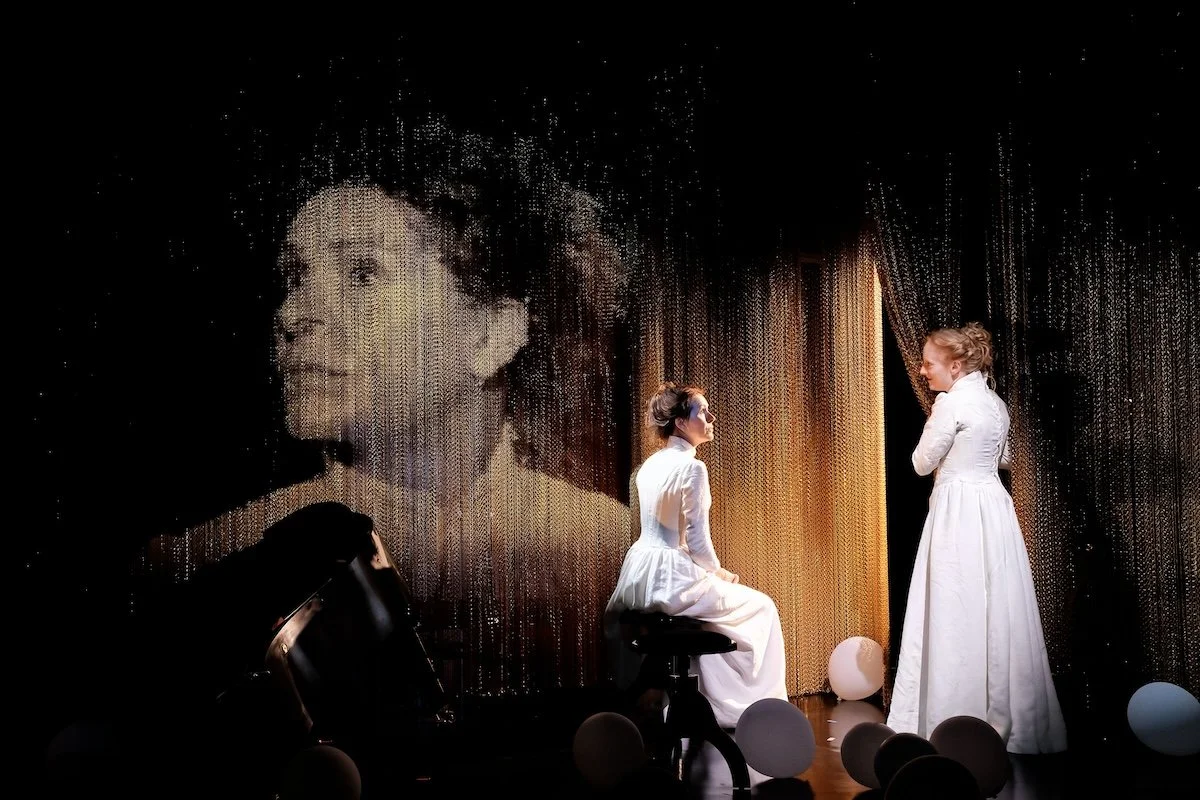
The show’s framing device—the Wanderer enters a convincingly down-at-heel and evidently long-abandoned boho coffeehouse (kudos to set designer Sarah Donald) at the top of Act 1 and exits the way she came in at the end of the show—seems to indicate that all the action takes place only in the Wanderer’s memories, and that the other characters exist only as her recollections of them. As such, there’s no storyline to speak of, and House of Folk plays out more like a concert than a play. Little surprise, then, that the songs leave a more indelible impression than any of the dialogue.
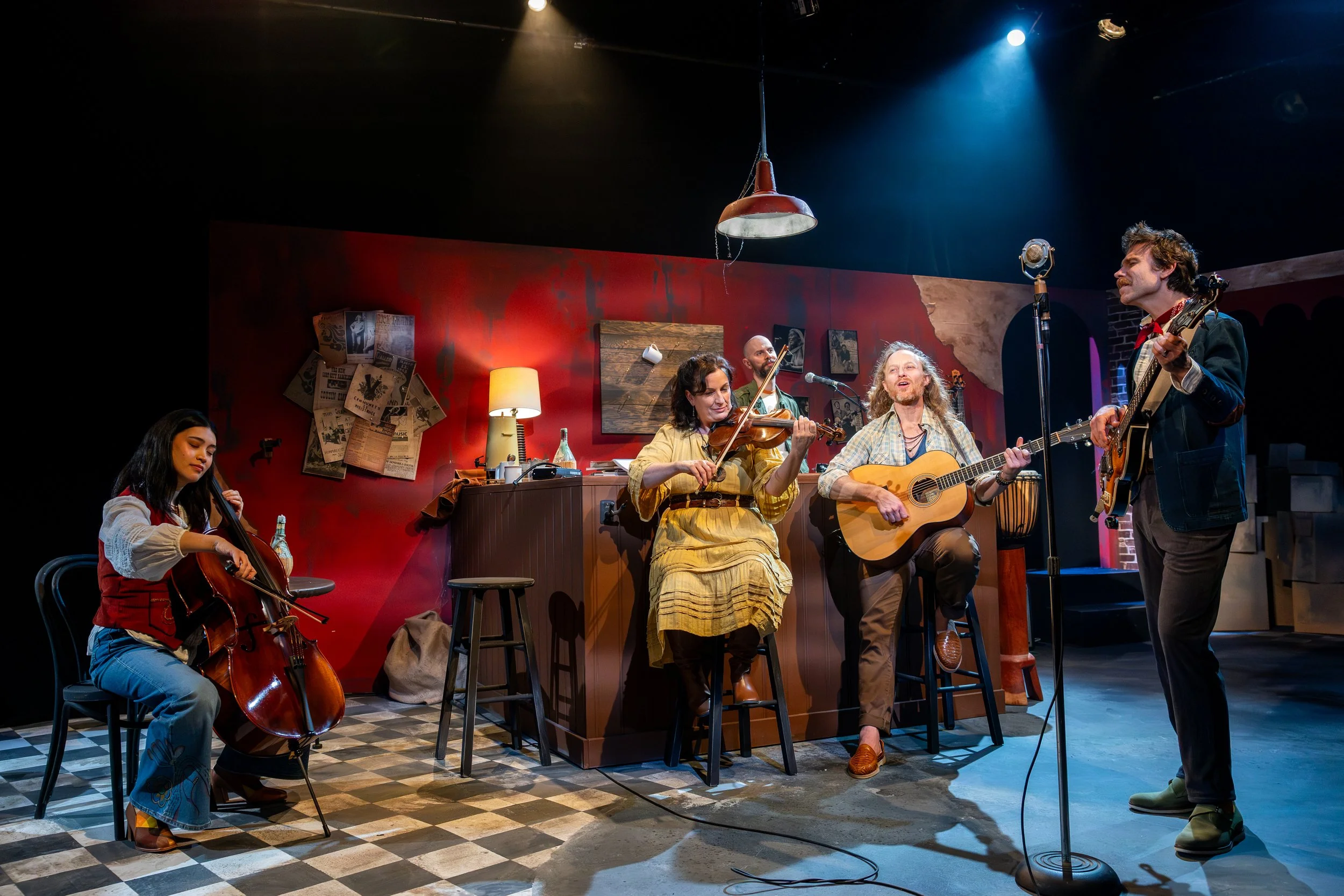
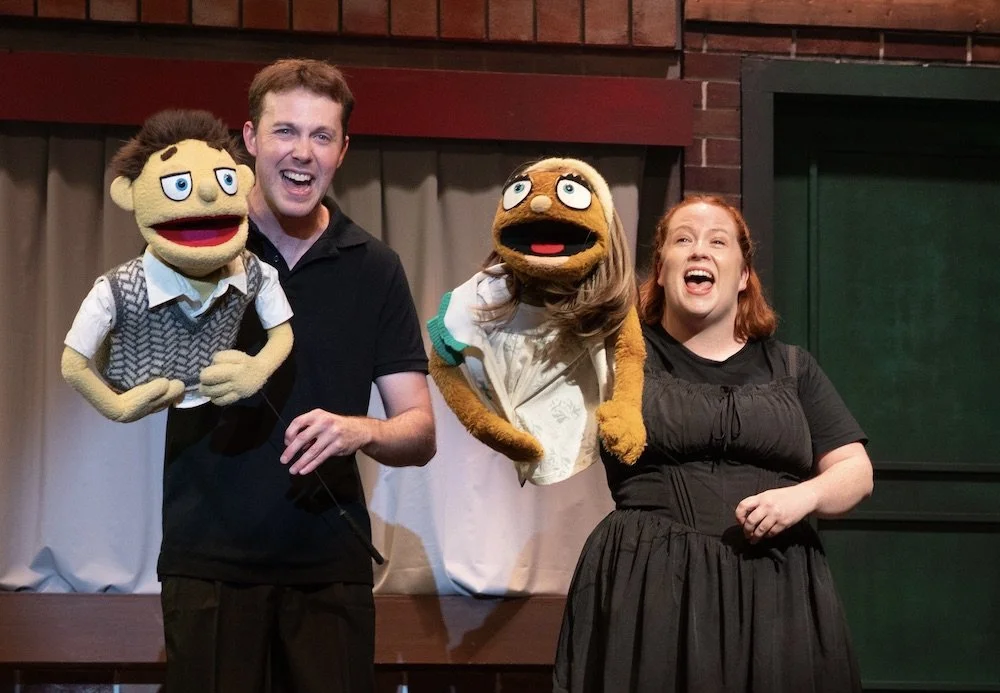
House of Folk. Photo by Jon Benjamin Photography
Much credit is due to Van Wilmott for some superb arrangements; one standout is Young’s “Helpless”, for which Bouey provides both a keening lead vocal and cello work, accompanied by Charles on double bass, Murphy on violin, Garton on acoustic guitar, and Elliott on piano. Each of the cast members sings, and all are prodigiously skilled multi-instrumentalists.
Admittedly, a few of the repertoire choices might be considered something of a stretch. The Mamas and the Papas’ “California Dreamin’” isn’t exactly CanCon, even if Halifax-born Denny Doherty did sing it. Likewise, Buffalo Springfield’s "For What It’s Worth (Stop, Hey What’s That Sound)" was written and sung by Stephen Stills, a noted non-Canadian. Moreover, Bruce Cockburn’s “Wondering Where the Lions Are” was released in 1979, and Leonard Cohen’s “Anthem” dates from ’92. Put it down to the slippery nature of memory; it’s all a blur and maybe it was all a dream anyway.
House of Folk poses a few open-ended questions, including “How much can a protest song actually change anything?” and “What exactly counts as folk music, anyway?” The answers, to borrow from another non-Canadian folkie, are blowin’ in the wind—which is to say that they aren’t in this show. But they certainly give theatregoers something to talk about in the Uber ride home. 

Related Articles