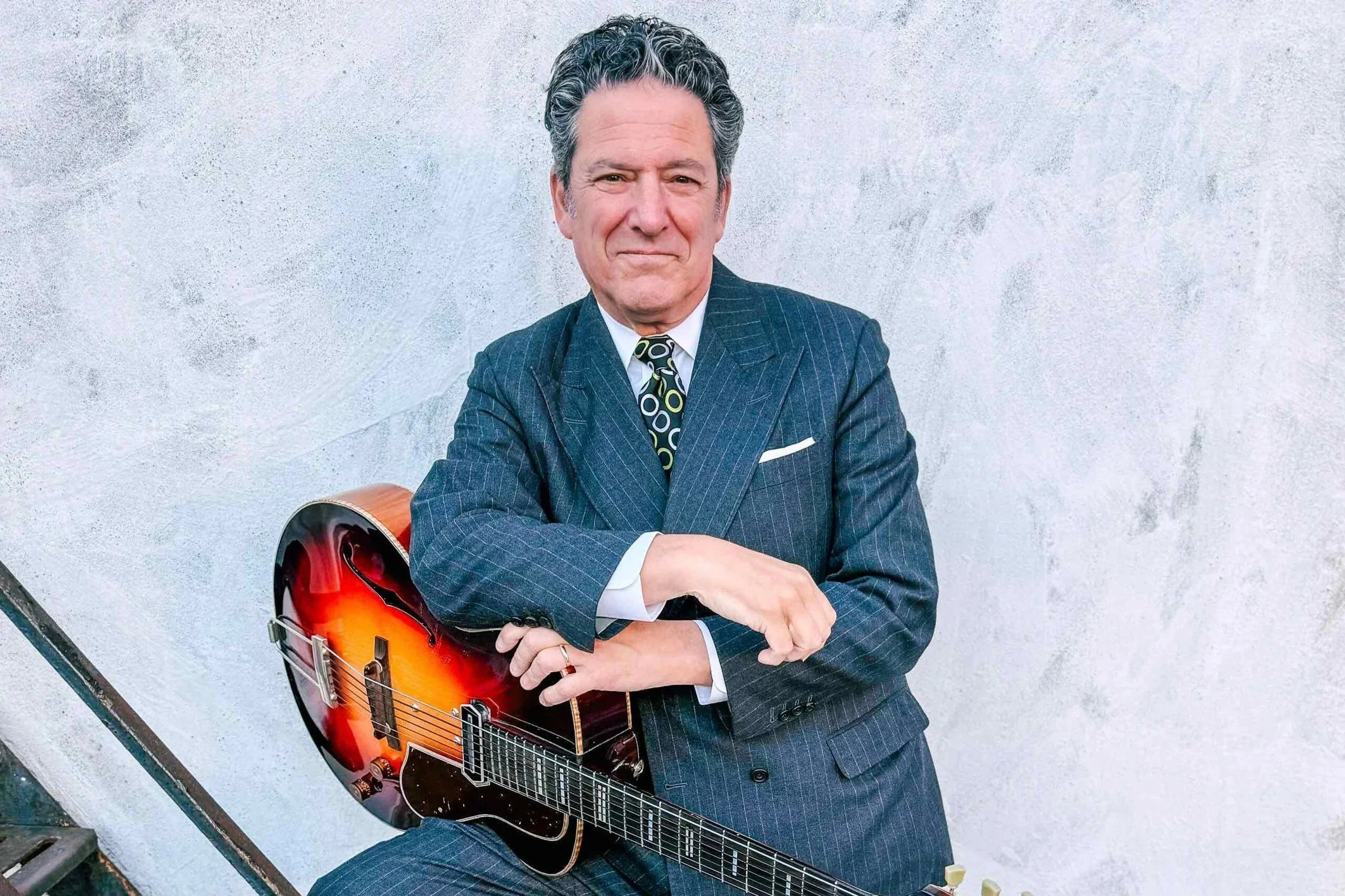
For Black Gardenia's Daphne Roubini, the artist’s life is one of constant evolution
Celebrating jazz group’s release of Whisky Scented Kisses, singer has largely set aside her signature ukulele in favour of an intense focus on songwriting
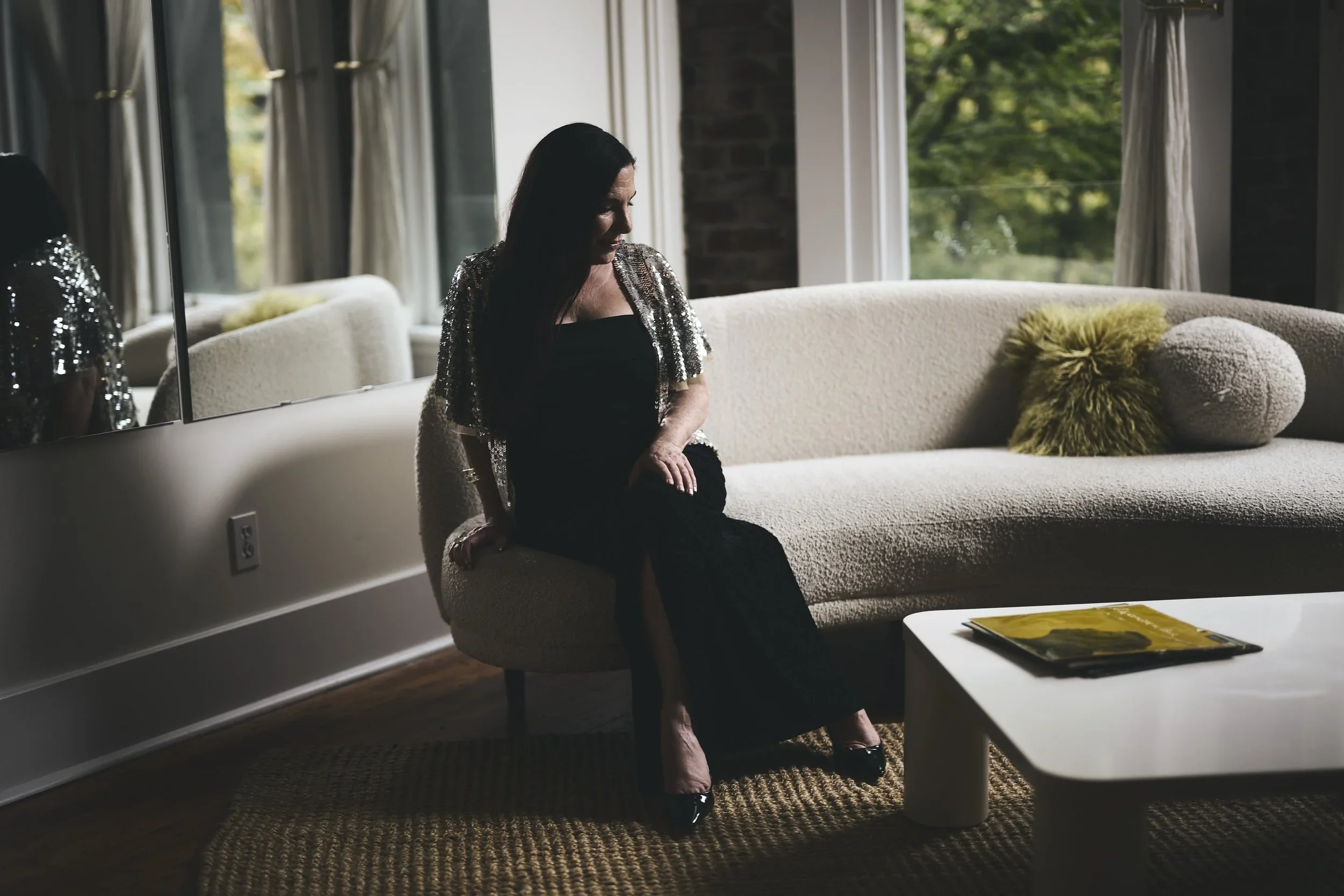
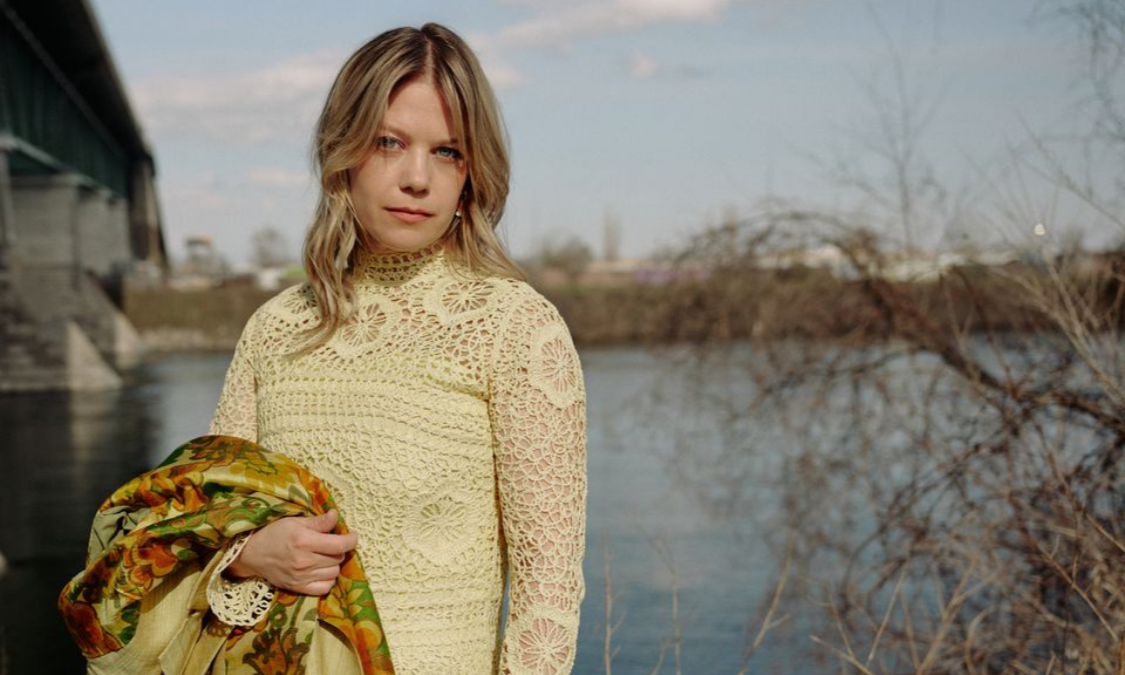
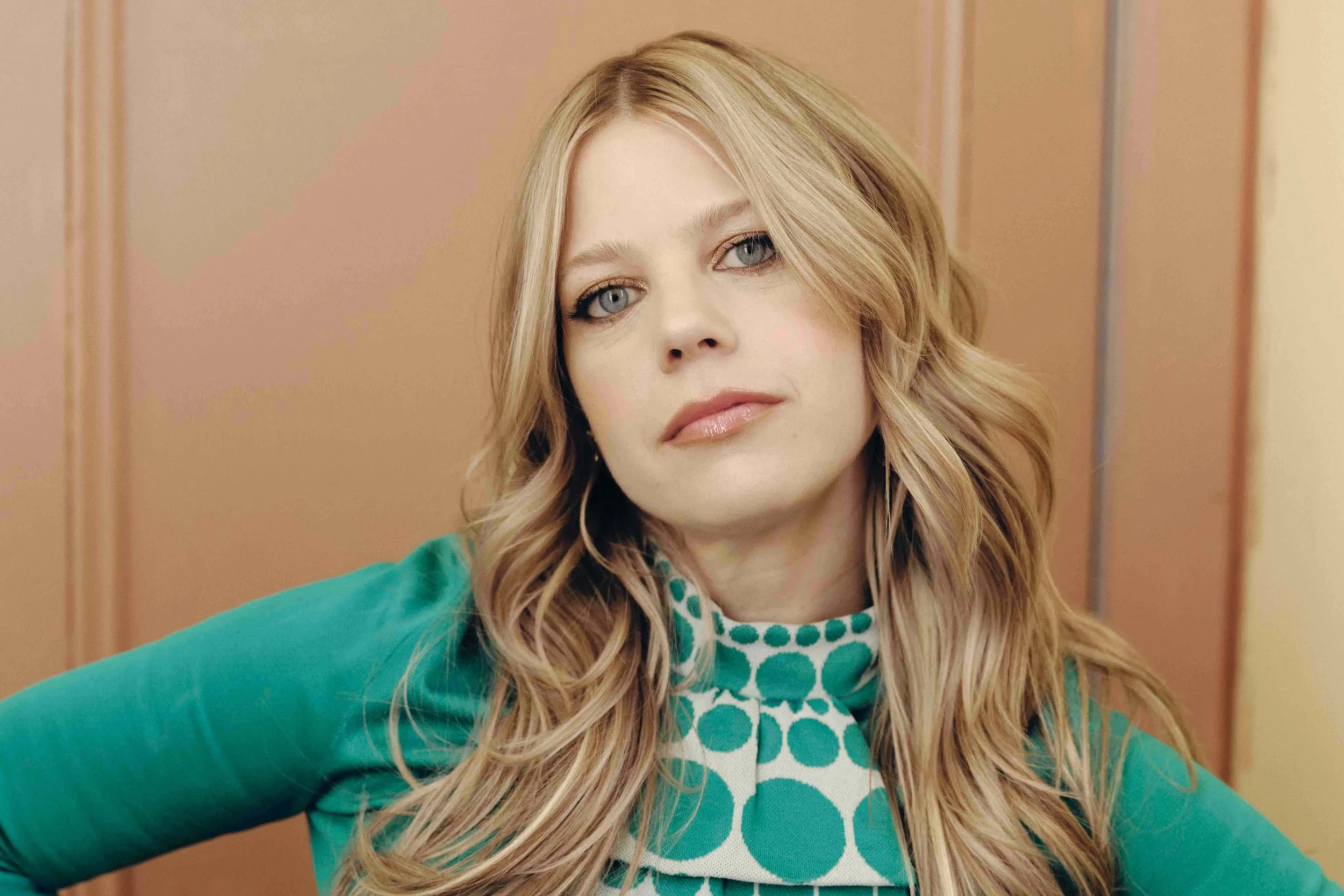
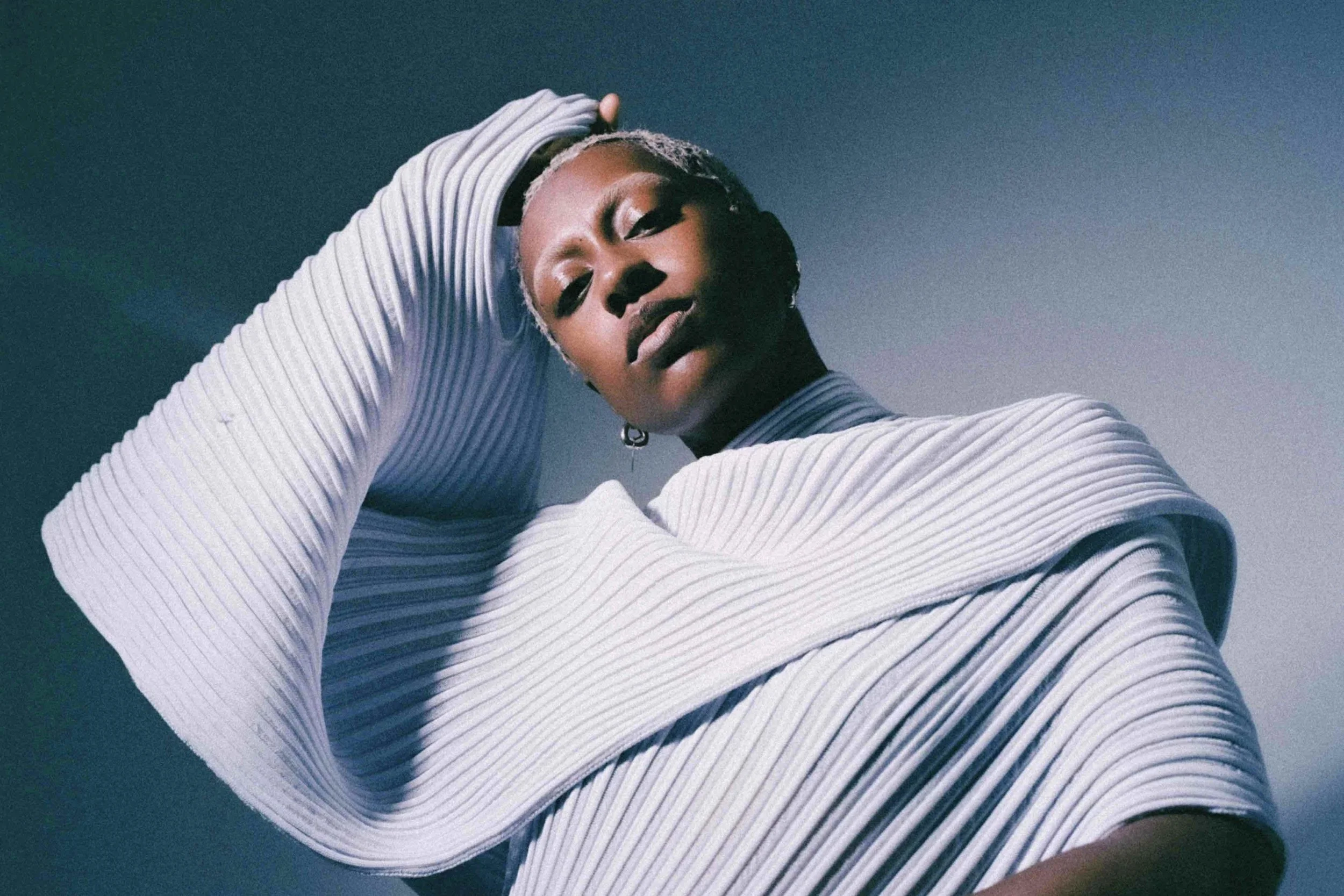
Daphne Roubini. Photo by Adam Blasberg
Black Gardenia celebrates the release of Whisky Scented Kisses with two shows at Frankie’s Jazz Club on March 20 and 21 at 8 pm
THERE WAS A TIME when you almost never saw Vancouver jazz musician Daphne Roubini without a ukulele in her hands. In 2009, the transplanted Londoner started Ruby’s Ukes, which grew into what was possibly the largest ukulele school outside Hawaii, spawning a festival and a 70-member uke orchestra.
Ruby’s Ukes scraped through the COVID-19 pandemic by pivoting to online classes, but by 2024, Roubini decided to wind things down. These days, Roubini, who fronts the band Black Gardenia, hasn’t forsaken the little four-stringed instrument that many associate her with, but playing the ukulele has taken a back seat to writing songs as her creative vehicle of choice.
When she meets up with Stir at a busy Strathcona cafe, Roubini admits that the instrument initially served as something of a security blanket or a shield. “I was a very, very shy singer, so when I started playing the ukulele, I felt like it kind of protected me in some ways,” she says. “It was between me and the audience.”
As Roubini’s confidence as a performer has grown, her need for that barrier has faded.
“I still play it at home, but I don’t often perform with it, because there’s something deep within me that wants to be expressed, and I think that’s the songwriting,” she says. “But if I do take the ukulele out at a gig, everyone starts clapping. They love it. I’ve got a 1940s Gibson concert ukulele that comes out with me every now and then. I’m also playing the guitar.”
It’s worth noting that, while Black Gardenia’s third album, Whisky Scented Kisses (due out April 3 on the Cellar Live label) might not feature Roubini’s uke-playing, it does boast six songs with lyrics and melodies written by the singer.
This is a marked change from the ensemble’s first release, 2012’s No Moon at All, which was made up of jazz standards and a few old country and folk tunes. Roubini cowrote two songs for the next Black Gardenia album, 2017’s Lucky Star, but the new LP finds her more fully coming into her own as a tunesmith.
Each of these albums has its own distinct sound, which is partly a result of an evolving lineup, but also largely due to Roubini’s determination to keep growing. “As an artist, it’s part of the process; to change, to evolve,” she says. “Otherwise, I think we become like a pastiche of ourselves, if we just carry on doing something because that’s what we’re known for.”
No Moon at All, for example, leaned heavily into a rootsy aesthetic, thanks to the shimmering lap steel–playing of Jimmy Roy and song selections that included Hank Williams’s “Cold Cold Heart” and the trad-folk staple “Wayfaring Stranger”.
Whisky Scented Kisses, by contrast, sounds like a 21st-century take on midcentury small-combo jazz, with Roubini’s smoky but smooth after-hours crooning accompanied by guitarists Paul Pigat and Stephen Nikleva, along with Brad Turner on trumpet and flugelhorn, Jeremy Holmes on bass, and Dave Say on saxophone.
“I think we’ve always had a slightly different sound because we don’t have a drummer,” Roubini says. “It’s more like an internalized sense of swing, which I really like.”
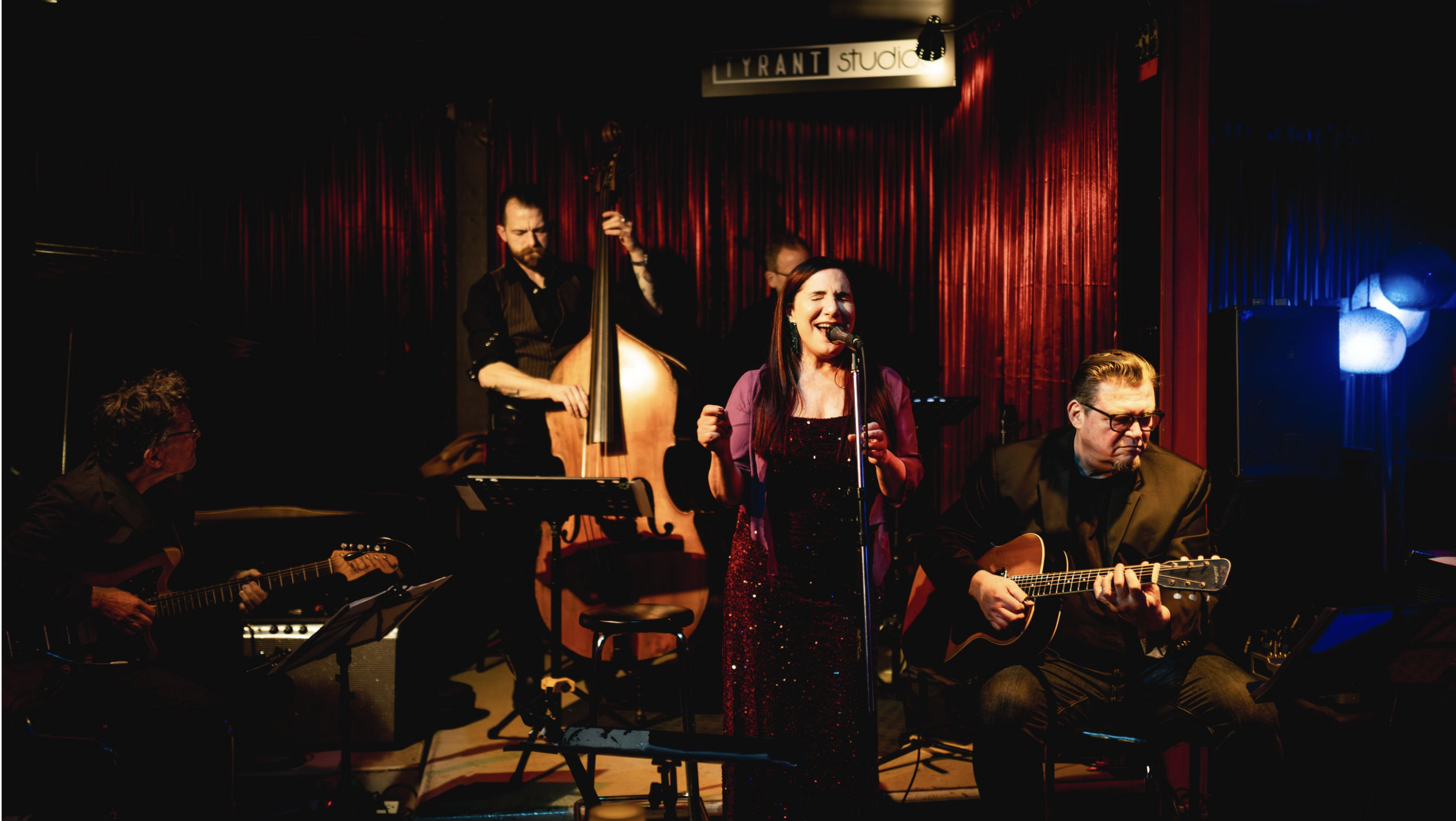
Each member of Black Gardenia brings considerable jazz chops to the table. On the six-string side, Pigat and Nikleva are arguably better known for their work in other genres—the former for playing rockabilly, roots, and blues with Cousin Harley, and the latter for his contributions to recordings by a diverse range of acts including Sarah McLachlan, Ray Condo, and Petunia and the Vipers.
“I love guitarists who are very versatile in what they play, because it comes into the way they approach jazz,” Roubini says. “There's something different. I love that. And I’ve got very eclectic tastes.”
The singer says she has no particular formula when it comes to songwriting. In the case of the new record’s opening track, “Minor Mood”, creative lightning struck during a text exchange with long-time friend and collaborator Chris Davis.
“I said, ‘How are you?’ and he said, ‘I’m in a minor mood,’” she recalls. “I suddenly had this flash of inspiration, and the song just came to me. I’m getting goosebumps just saying this. I’d always wanted to write with him, but we hadn’t even talked about it yet. I sang it into the phone—I would say thank God for Steve Jobs giving us Voice Memos—and I sent it to him, and about an hour later got the harmony back and that was the first song.”
Sometimes a lyric arrives in a flash of illumination; other times, it turns out you’ve been carrying it around with you for years. This, Roubini says, was the case with the album’s title track.
“In my 20s I used to smoke cigarettes,” she notes. “And I had the top of a cigarette box. I mean, I haven’t smoked for decades, but I kept this little piece of a cigarette box, and it had whisky scented kisses on it. Just that one tiny phrase. And I wasn’t even a songwriter then. I was an English major. I kept that phrase with me all these years, and then when I started writing with Chris, I was like, ‘Well, there’s this phrase…’ And that one we actually wrote together.”
Among the originals on Whisky Scented Kisses are a couple of bona fide standards, including “This Year’s Kisses”, an Irving Berlin number memorably performed by Billie Holiday, and Ralph Freed and Friedrich Hollaender’s “You Leave Me Breathless”, which Ella Fitzgerald recorded in 1954. Clearly, Roubini has no reluctance to leaf through the Great American Songbook when it strikes her fancy. With her newfound focus on songwriting, however, she feels inclined to do so far less frequently.
“Singing standards is keeping them alive,” she says. “And singing my own material is almost like keeping me alive. There’s something about my whole being that gets activated when I’m singing something that I’ve written and that is, in some way, from me and my personal life. And so it’s different. It comes from a deeper place to sing it. There’s no better feeling, in some ways. It’s almost like eating my mother’s food. There’s something more real connected to it.” 

Related Articles