Pulsing instruments and voices weave dreamlike patterns in Steve Reich’s Music for 18 Musicians
Renowned percussionist Vern Griffiths and a group of musical luminaries take on the groundbreaking 1976 piece in celebration of Music on Main’s 20th anniversary
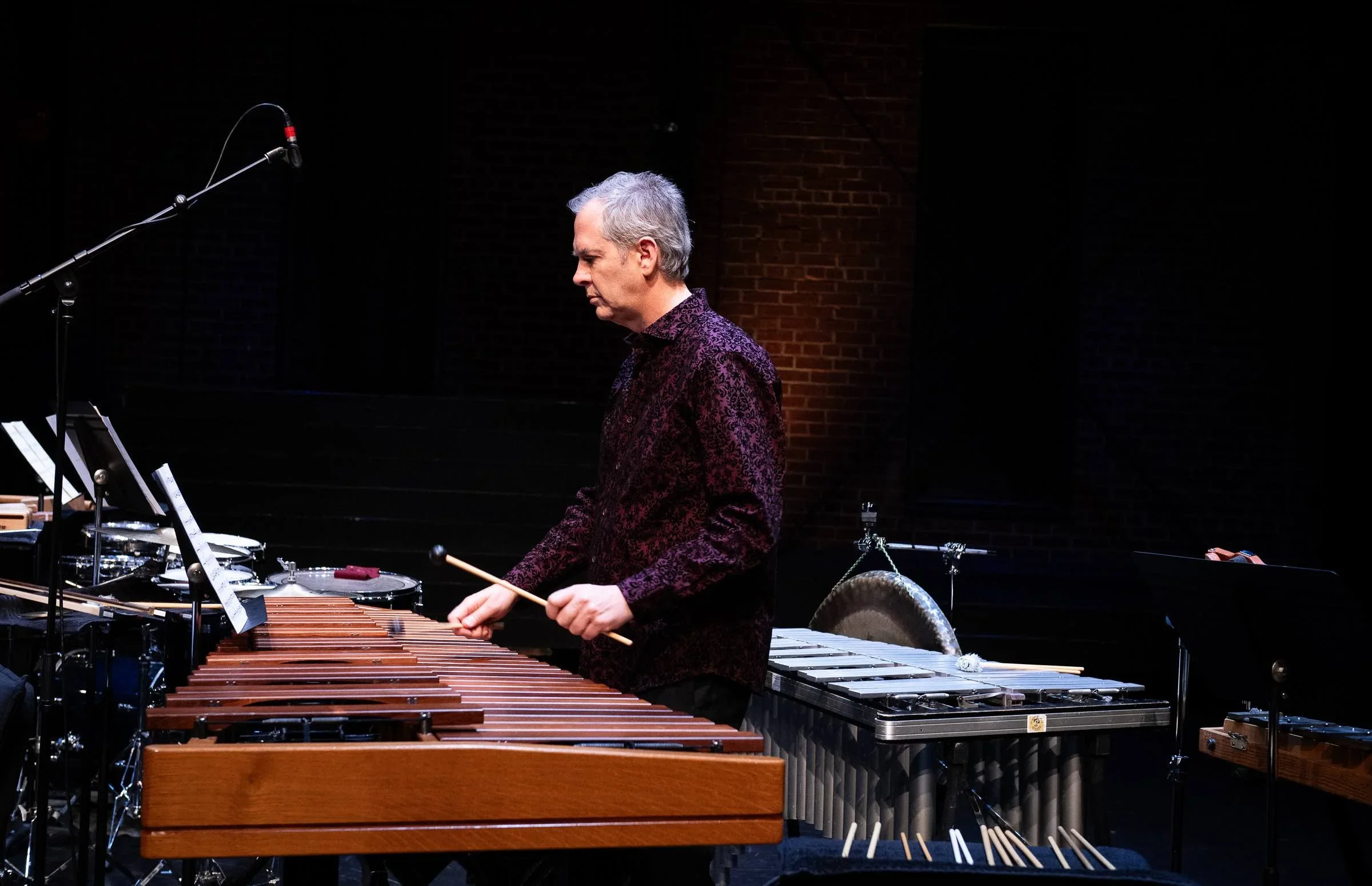
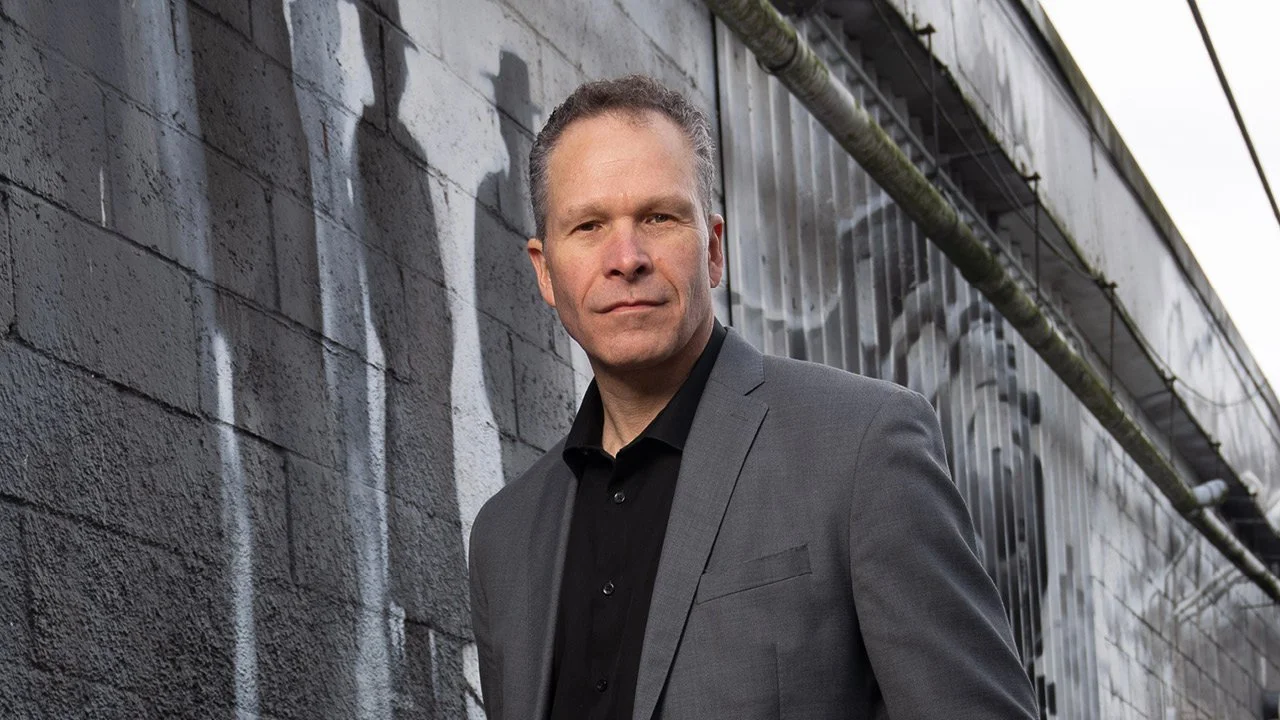
Vern Griffiths. Photo by Jan Gates
Music on Main presents Steve Reich’s Music for 18 Musicians at the Vancouver Playhouse on March 23
ALTHOUGH HE WAS referencing the early tape-loop piece It’s Gonna Rain and not the later masterpiece Music for 18 Musicians, Brian Eno had some provocative and relevant things to say about Steve Reich’s methodology in a 2025 interview. Reich’s compositions, Eno told New York Times columnist Ezra Klein, “work by making your brain behave in a certain way. You are not an inactive listener. All of his work, I think, depends on making your brain perform and watch itself performing in a certain way.
“‘The composer isn’t just Steve Reich,’” he recalls thinking. “‘It’s Steve Reich and my brain that’s making this composition what it is.’ And that thought never left me, that you actually are engaging the technology of the listener’s brain to complete the piece. They’re not passive.”
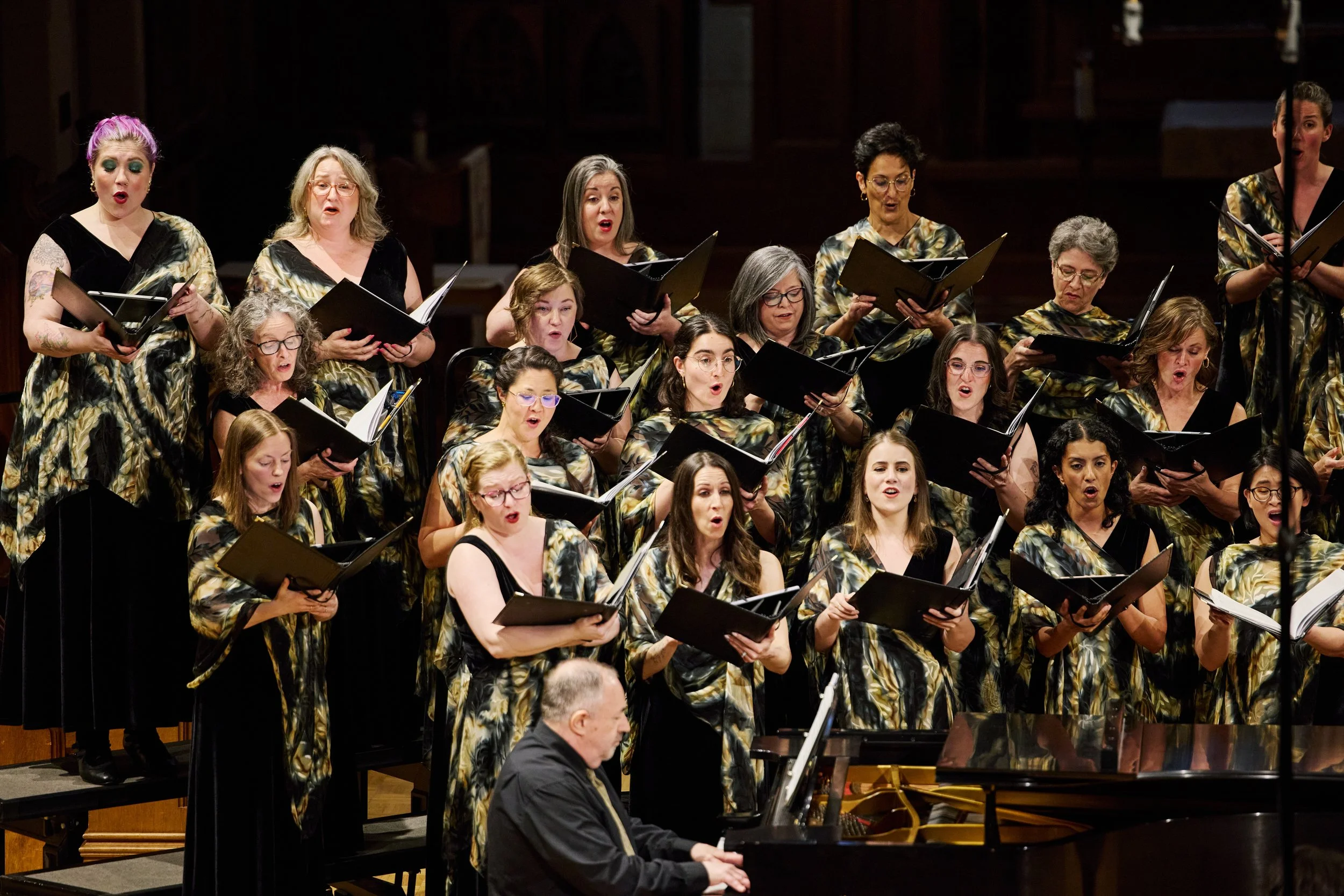
That’s perhaps especially true when it comes to Music for 18 Musicians, which Music on Main will present at the Vancouver Playhouse on March 23, as part of the organization’s 20th-anniversary celebrations. The 1976 composition morphs constantly, with melodic lines emerging and then evaporating within a shimmering whole; heard on a good sound system, it invites listeners to select and follow a particular pattern or motif rather than ponder the greater structure. It’s dreamlike—but each individual listener’s dream will be different, depending on how they choose to edit their focus.
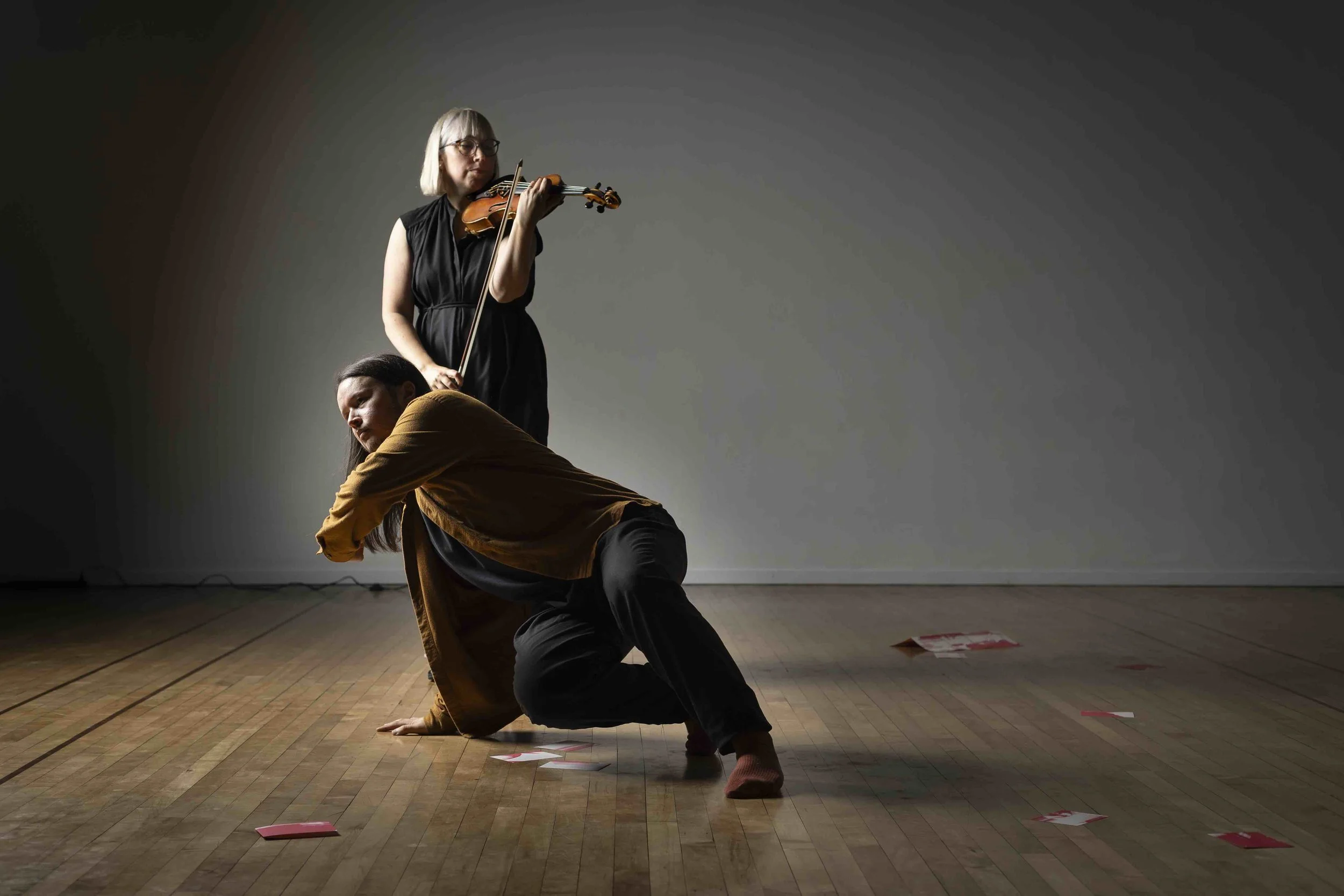
For percussionist and music director Vern Griffiths, however, realizing Reich’s score is quite a different task, one that involves him taking on a fairly unfamiliar role: choreographer.
“As a listener, it’s a normal thing to not be constantly listening with every ounce of your brain,” he explains. ”It’s different being there in person, though. I mean, this is a unique piece in that there’s eight percussionists and four pianists, and a bunch of them move from instrument to instrument at various times. So that’s been the last few weeks of my life: plotting out who’s where and when.
“There’s visual interest as well, and also you can see the architecture of this piece in action,” he adds. “It’s not a piece where things are hidden. It’s very clear what he’s doing. Even right from the beginning, through the music he tells you, ‘Yeah, there’s only 11 chords in this piece, and these are the 11 chords.’ Then he spends the next 58 minutes or so expanding on each of those chords one at a time, and it’s just these waves of incredible sound and this never-ending groove.”
Griffiths has had some help in unpacking Reich’s 234-page score. For one thing, this is the second time he’s directed Music for 18 Musicians, the first being an earlier Music on Main concert in 2016. In putting that performance together, he reached out to one of his mentors, Russell Hartenberger—who also happened to be Reich’s long-time percussionist of choice.
“Actually, when we did this piece 10 years ago, I agreed to lead it only after Dave [Music on Main artistic director David Pay] agreed that we would set up a phone consultation for me to talk to Russell, just to say ‘How do you do this? How do you run these rehearsals? Am I on the right track?’” Griffiths says. “Since then, Russell has written a book called Performance Practice in the Music of Steve Reich. It’s a very academic-ish kind of book, and he goes into great detail about how to play the pieces—but it also tells stories about the premieres and the rehearsals and who played and all that kind of stuff.”
What advice does Hartenberger offer those attempting Music for 18 Musicians?
“A lot,” Griffiths says, laughing.
Reich himself has laid out the particulars of Music for 18 Musicians in his own notes; one thing to consider, he stresses, is how there are essentially two overlapping conceptions of time that run through the work. “The first,” the compose explains, “is that of a regular rhythmic pulse in the pianos and mallet instruments….The second is the rhythm of the human breath in the voices and wind instruments. The entire opening and closing sections, plus part of all sections in between, contain pulses by the voice and winds. They take a full breath and sing or play pulses of particular notes for as long as their breath will comfortably sustain them. The breath is the measure of the duration of their pulsing. This combination of one breath after another gradually washing up like waves against the constant rhythm of the pianos and mallet instruments is something I have not heard before and would like to investigate further.”
In a more recent interview for his publishers, Boosey & Hawkes, Reich elaborated that while his music is often associated with the ever-evolving rhythms of West African drumming and the ringing metallophones of Indonesian gamelan, Music for 18 Musicians’ underlying structure actually draws on the work of the 12th-century French composer Pérotin. This might not be immediately apparent, but when Reich explains that Pérotin was among the first European composers to explore polyphony, and that he had the habit of elongating individual notes to create ongoing, supportive drones, it makes sense.
“Good ideas don’t go out of fashion, they just get reapplied with new, completely unforeseen effects,” says the composer, who turns 90 this year.
For all of the conceptual and indeed mathematical rigour behind Music for 18 Musicians, however, the piece is also a delight for the senses. “It’s not something where you need to know anything about music to appreciate and to immediately love,” Griffiths asserts. “It’s just joyful, and it grooves super hard!” 

Related Articles