Singer-guitarist John Pizzarelli continues the storied tradition of Italian-American jazz
The New York artist draws on everything from the guitar work of legends like Joe Pass and his own father to the unmistakable voice of Tony Bennett—the inspiration of his latest album
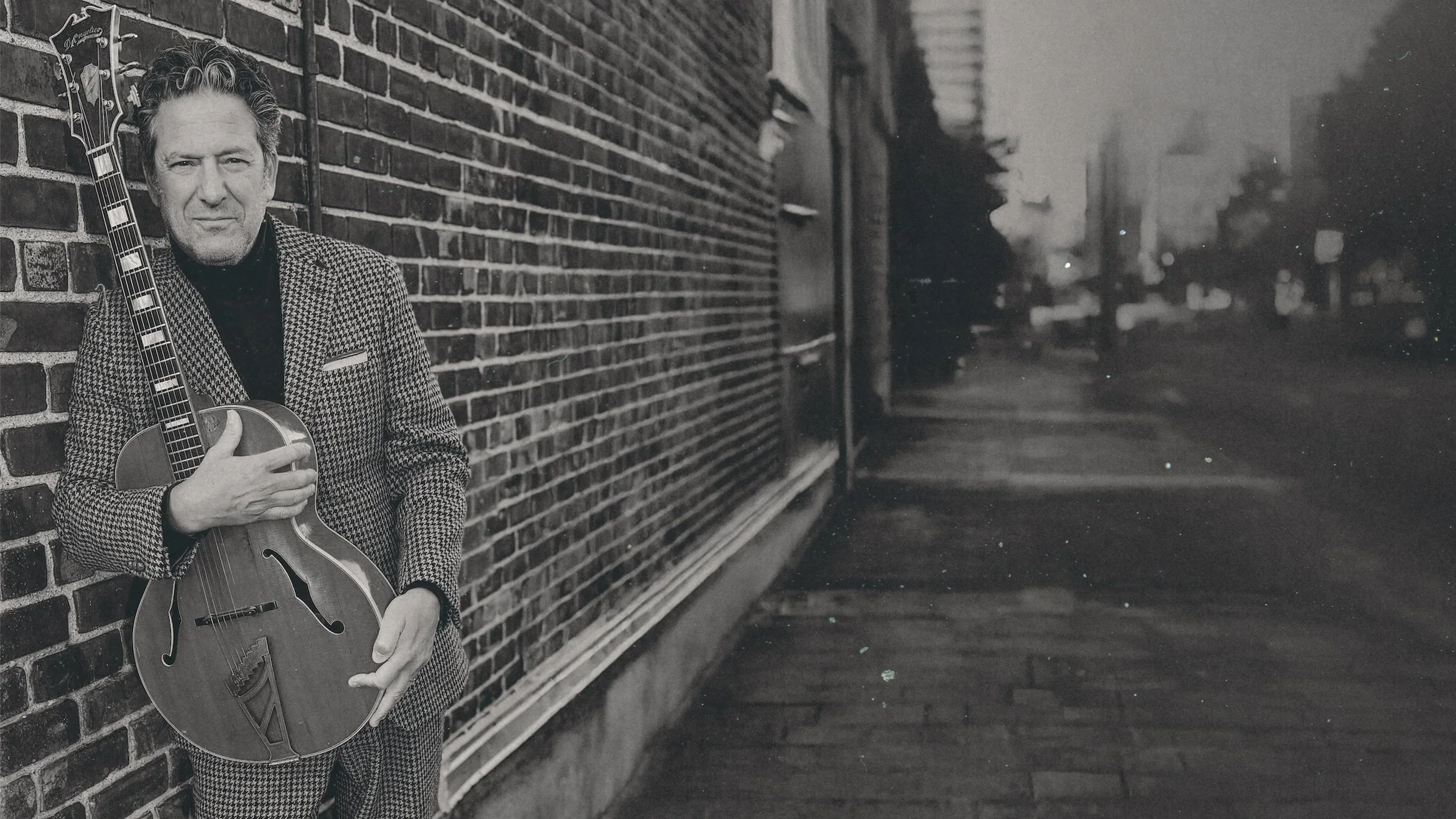
John Pizzarelli
John Pizzarelli presents Dear Mr. Bennett at the CapU Centre for Performing Arts on September 10
ONLINE MISINFORMATION IS a growing problem, even in the generally polite and respectful world of jazz-guitar enthusiasts. Just a couple of weeks ago, for instance, a member of a Facebook group dedicated to jazz guitar made the outrageous claim that all the great jazz guitarists were Italian-American. “Piffle,” another poster replied. “Charlie Christian. Wes Montgomery. Django Reinhardt. George Barnes. Grant Green. Jim Hall. The list of non-Italian giants is endless.”
The OP had a point, however. Italian-Americans don’t have a lock on the jazz-guitar pantheon, but they’ve contributed to the instrument at a level that’s way out of proportion to their demographic strength. The first great jazz guitarist, Eddie Lang, was known to his mother as Salvatore Massaro. Moving into the 1940s and beyond, we have Al Caiola, Jimmy Bruno, Tony Mottola, Pat Martino, Joe Pass (born Joseph Anthony Jacobi Passalacqua), Al Di Meola, Toronto’s Michael Occhipinti, and hundreds more, not to mention the greatest jazz-guitar makers of the 20th century, John D’Angelico and James D’Aquisto.
Singer-guitarist John Pizzarelli Jr. is the proud inheritor of that tradition, quite literally. His late father, John “Bucky” Pizzarelli, was revered for his assured touch, his encyclopedic knowledge of harmony, and his popularization of the seven-string guitar, which he played onstage and in the studio with artists as diverse as Tiny Tim, Aretha Franklin, and Benny Goodman. John Junior has built on his father’s innovations, and expanded them by adding his personable, low-key vocals to the mix. Not surprisingly, he has some thoughts on the relationship between ethnicity and instrumental prowess.
“My father’s generation, and especially the Italians, their fun was by making music at home,” he explains in a phone call from his family’s summer cabin, an hour north of New York City. “They didn’t have anything other than maybe a radio, and when they all got together they would sing songs. My father’s uncles were banjo players and mandolin players, and when he wanted to learn they gave him a guitar because, they said, ‘The guitar is the new instrument. It’s going to be the big rhythm instrument in the band.’
“That’s how I got into it too,” he adds. “I mean, the only way you got to be in the inner circle was to learn [Fats Waller and Andy Razaf’s jazz standard] ‘Honeysuckle Rose’. The language was music, and that’s how you got in with the guys and got to play on Sundays. You got to be in the circle when everybody was sitting around in the living room after dinner, and it was fun! That was the thing, as my grandmother used to say: ‘We made our own fun.’”
Music was not only affordable entertainment for new immigrants and their children, it was a way to stay connected to the traditions of Apulia, Calabria, Sicily, and other musical hotbeds. Could this have been why Italian-Americans found it so easy to learn the vocabulary of jazz, itself invented by African-Americans who were also morphing their own heritage into New World forms?
“I have to say ‘Yes, I agree with you,’” Pizzarelli comments, sounding intrigued. “It makes sense to me that there is that connection.”
Pizzarelli has paid homage to the African-American roots of jazz with tributes to Nat King Cole and Duke Ellington, but his two most recent releases focus on the legacy of an artist whose records would have been a constant in his family home. (And not only because Bucky played on a few of them.) Dear Mr. Bennett and its EP-length sequel, P.S. Mr. Bennett, focus on songs recorded and in some cases made famous by jazz and show-tune singer Tony Bennett—whose birth name, it should be noted, was Anthony Dominick Benedetto. The releases also honour the centenary of the vocalist’s birth; he died in 2023.
Unlike his father, Pizzarelli never recorded with Bennett, although they performed together on a number of radio broadcasts and had a friendly relationship for many years. At one point there was even a possibility that the younger musician could be Bennett, at least on the silver screen. Apparently, a Bennett biopic was being considered, and the singer knew who he wanted in the lead role.
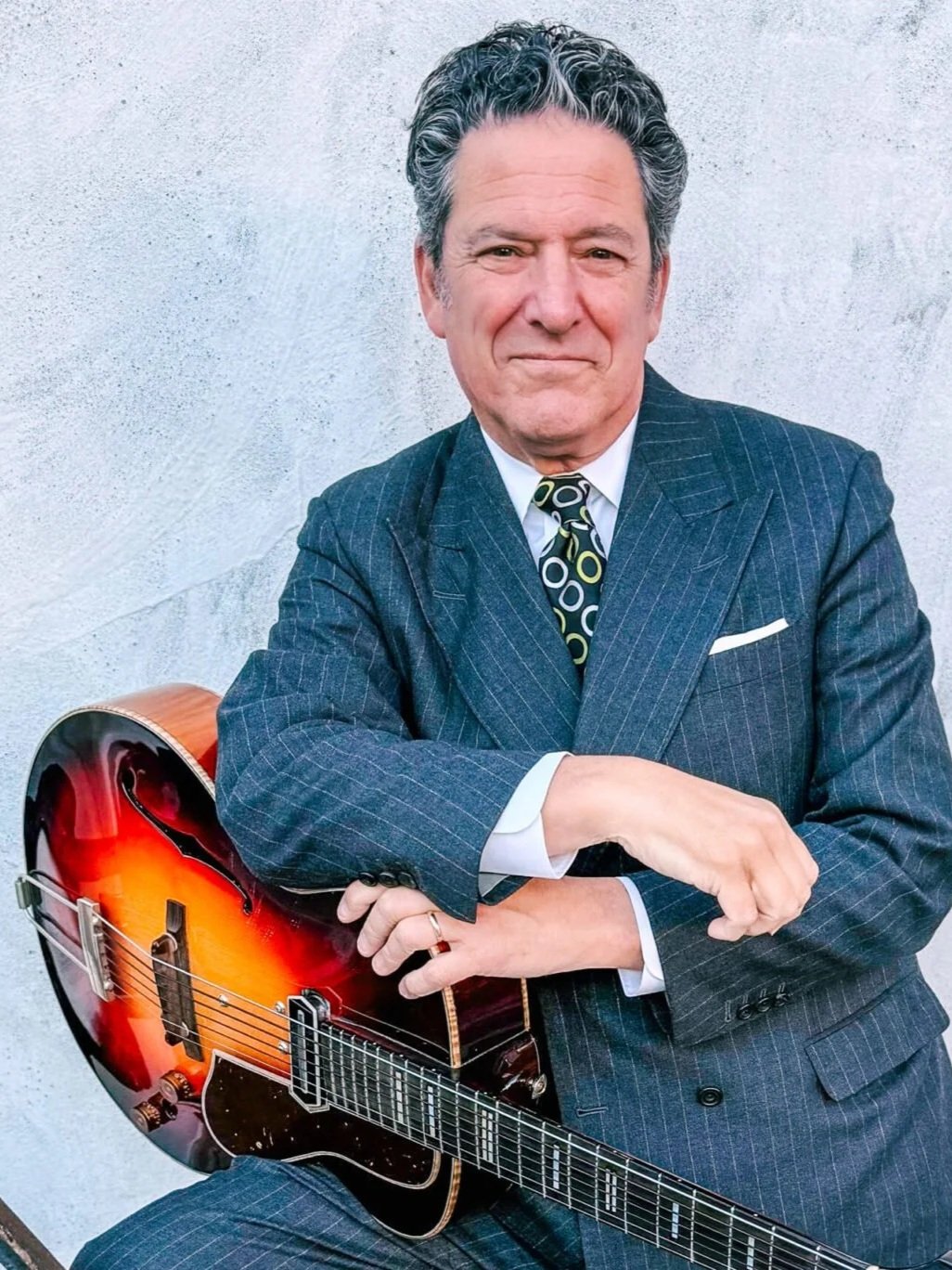
John Pizzarelli
“He was on a talk show, years ago,” Pizzarelli reports. “It might have been Rachael Ray; I forget. Anyway, they said, ‘Who should play you in the movie?’ And he said, ‘Well, John Pizzarelli should play me as a young man.’ Which totally stumped the questioner, and they quickly got away from that. ‘We don’t know who John Pizzarelli is, and we’d better just move on.’ But he had come to see me and said that I looked like him on the back of the Astoria record, where he’s standing in front of his apartment. And then he called me up once. I thought it was a gag, but it really was him, saying, ‘I’m talking about making a movie, and I want you to play me as a young guy.’
“I couldn’t believe the phone call was actually happening, but he was that kind of guy. He’d call people up and he was always walking around New York, coming to your gigs, sketching you… All the aspects of him were so wonderful; he was just such a genuine person.”
A gifted amateur artist, Bennett also provided the cover art for both new releases, an edited version of an impromptu cocktail-napkin portrait of Pizzarelli and his vocalist wife, Jessica Molaskey. “We have it framed at our house, and he put on the top ‘What an evening!’” Pizzarelli says. “It was very sweet to receive this, and he was always handing these things out.”
Despite this skein of connections, neither Dear Mr. Bennett nor P.S. Mr. Bennett aims to reproduce Bennett’s unique style, or the strength of his voice—which can probably be attributed to the older performer’s early exposure to operatic tenors. In his live performances, Bennett would often step away from the microphone and wow every listener at the back of the room without electronic assistance. Pizzarelli is a more intimate singer, with a quietly confident approach to the Great American Songbook.
“With me, it’s more about finding material that I like to sing,” he explains. “So I’m not concerned about sounding like anybody but me after all the years I’ve been doing it. I just like to find some chords, find a nice arrangement, and songs that I think are interesting and that will keep the listener listening.
“The things that I like about Tony Bennett and even Frank Sinatra is that I just love their phrasing,” he concludes. “Listening to Tony sing with [adventurous jazz pianist] Bill Evans is a very inspirational thing, the way he communicates those songs. And that’s just something that you keep in mind. It’s like listening to a great soloist: you can’t play like Joe Pass, but you can sort of take something from it that you can apply to your own playing.”
It’s funny, perhaps, that Pizzarelli concludes our chat by referencing two great Italian-Americans, but he’s very much in their tradition—and advancing it in his own way too. 

Related Articles