At Vancouver Opera, Tosca reveals the full complexity of one of Puccini’s smartest women
Director Brenna Corner dove deep into history to flesh out the corruption that surrounds a tragic character who lives life on her own terms
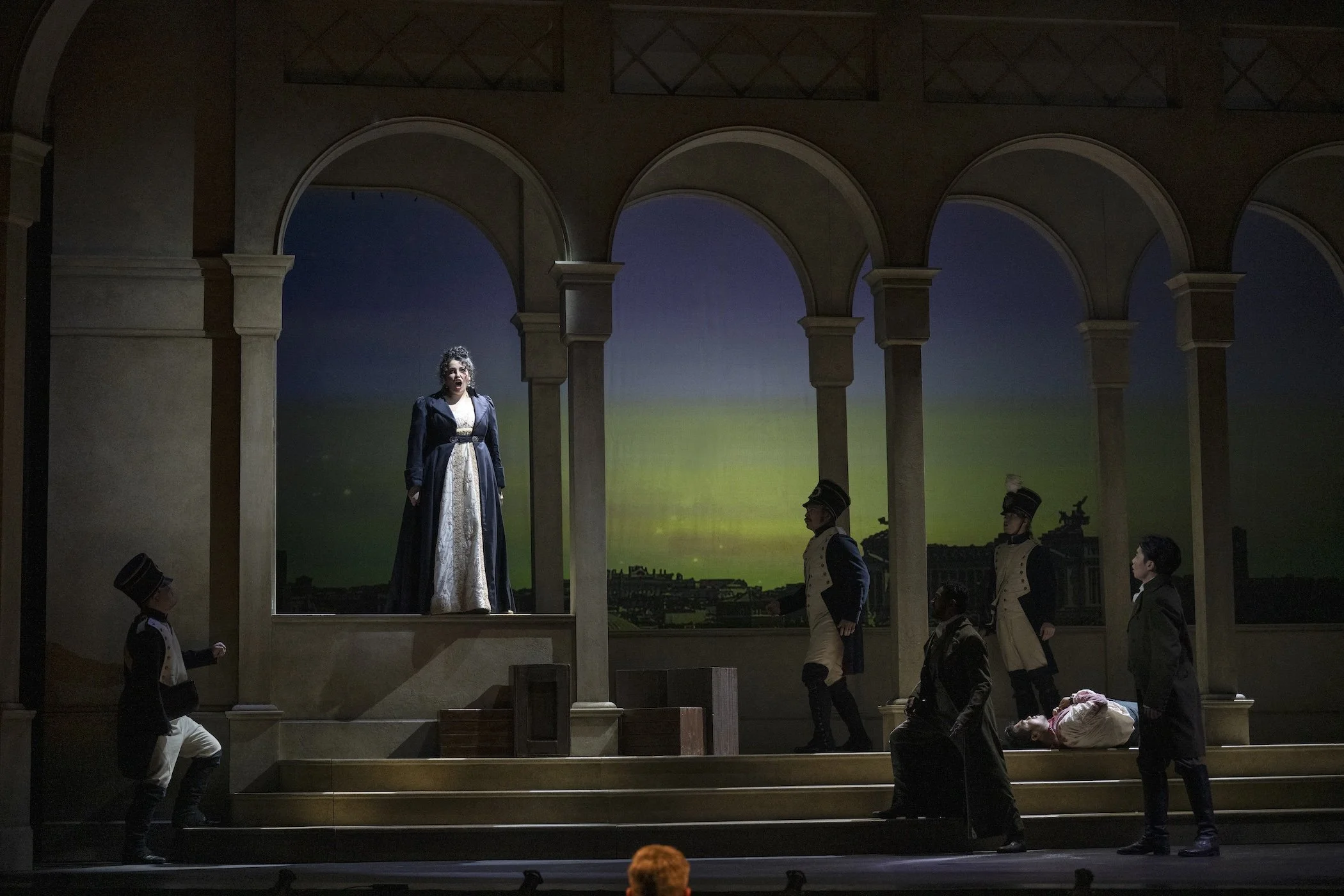
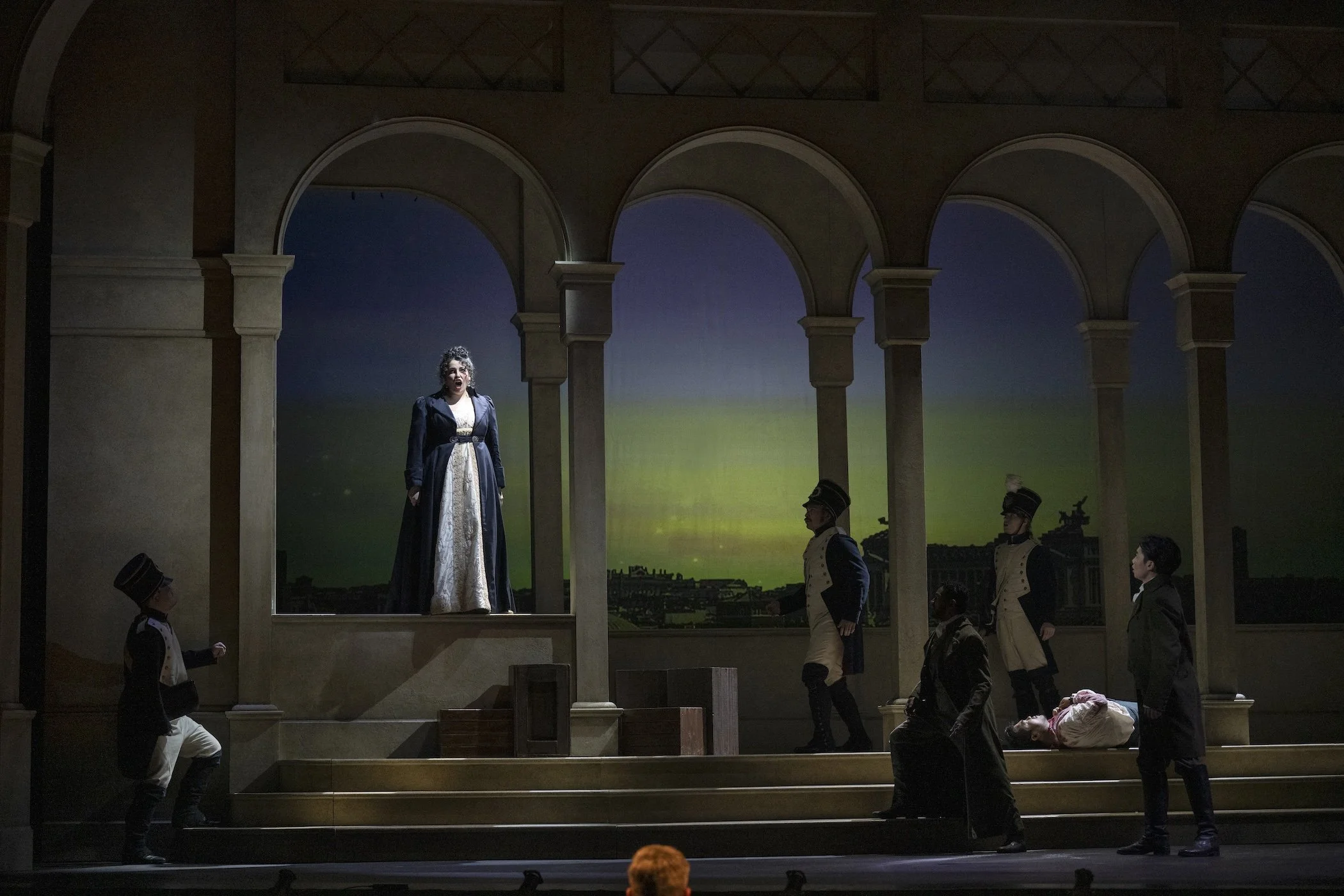
Tosca at Pacific Opera Victoria earlier this year. Photo by David Cooper
Vancouver Opera and Pacific Opera Victoria present Tosca at the Queen Elizabeth Theatre on October 24 and 29, and November 1
“VISSI D’ARTE, vissi d'amore”—“I lived for art, I lived for love.” Those words from Floria Tosca’s famous aria “Vissi d’arte” have won over opera fans for generations. In Giacomo Puccini’s Tosca, the glamorous opera singer lives life fiercely on her own terms, but is suddenly forced to consider personal conviction and artistic expression in the face of corruption and oppression.
Brenna Corner, who is stage director for Vancouver Opera’s season-opening production of Tosca, is trying to dig into the complexity of that character—to lift Tosca, as she has lifted other iconic female roles in the genre, above the two-dimensional archetype. Corner, who multitasks as artistic director of Victoria’s Pacific Opera, has become an exciting West Coast voice in an art form that has been historically male-dominated.
“Being a woman, one of the things that I can bring is a different understanding or a different way to look at those characters, and that’s something I try really hard to do in any piece I work on,” she tells Stir before rehearsals on a recent morning. “I think any time we put any of these incredible female characters onstage, I want to make sure that any young woman who comes to see it sees the strength and the power that it took to be that story—that there’s humanity that is deep and complex.”
Corner has a long association with Tosca: it’s the first opera she ever appeared in, at only six, as a supernumerary in a Calgary production. “I got to throw flowers, I got to wear a really pretty dress, and I had absolutely no idea what happened at the end of it at all,” she says with a laugh.
Since then, Corner has acquired a deep understanding of the work’s dark political twists and romantic betrayals. The director says she’s never spent as much time doing historical research for an opera as she has for this rendition of the Puccini warhorse—one that premiered as a coproduction with VO at her Victoria company last February. To understand the period, Corner says, is to start to understand Floria Tosca and her actions.
In a production that stays true to the opera’s original setting, Tosca unfolds in an intense 24 hours in Rome, circa 1800. It’s a time of high political volatility and fear over invasion by Napoleon Bonaparte’s army. The city is governed by a reactionary papal police state, led by the sadistic Baron Scarpia, who ruthlessly hunts down political dissidents—including Tosca’s lover, the revolutionary artist Mario Cavaradossi. Scarpia then uses her lover's life as leverage to try to force Tosca to yield to his sexual demands.
“It’s very much a political thriller—a political statement on what was happening in Rome at that time,” Corner says. “But in our modern world, particularly in North America, our deep understanding of the nuances of the Napoleonic Wars in Italy is maybe somewhat lacking compared to what the original audience had. So I think one of the most important things we can do is try and help the audience understand that sort of baseline of where we are. We’re in a world where there is corruption. We are in a world where the idea of who’s leading is very much askew. We’re in a world of oppressive institutions.
“We are going to use projections in this piece, particularly before the show and at intermission, to help fill some of those knowledge gaps,” she adds.
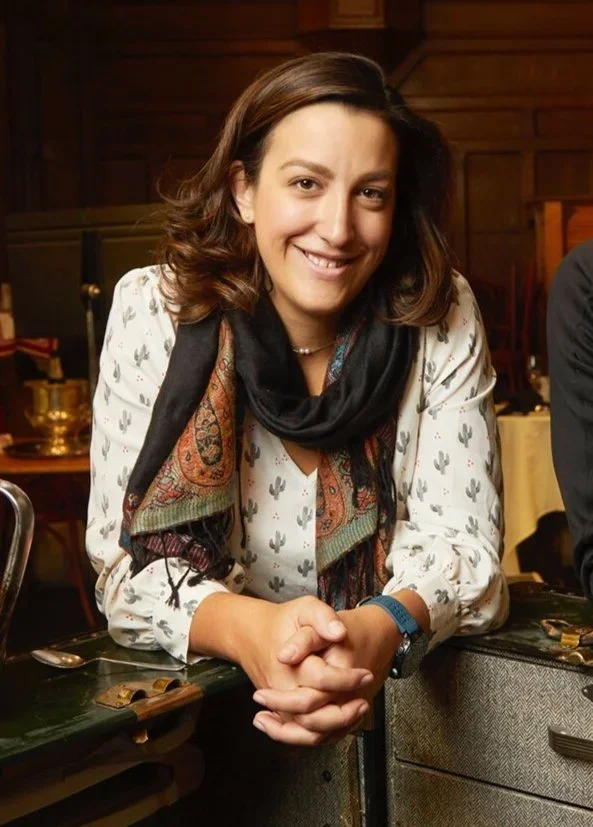
Brenna Corner. Photo by Trudie Lee
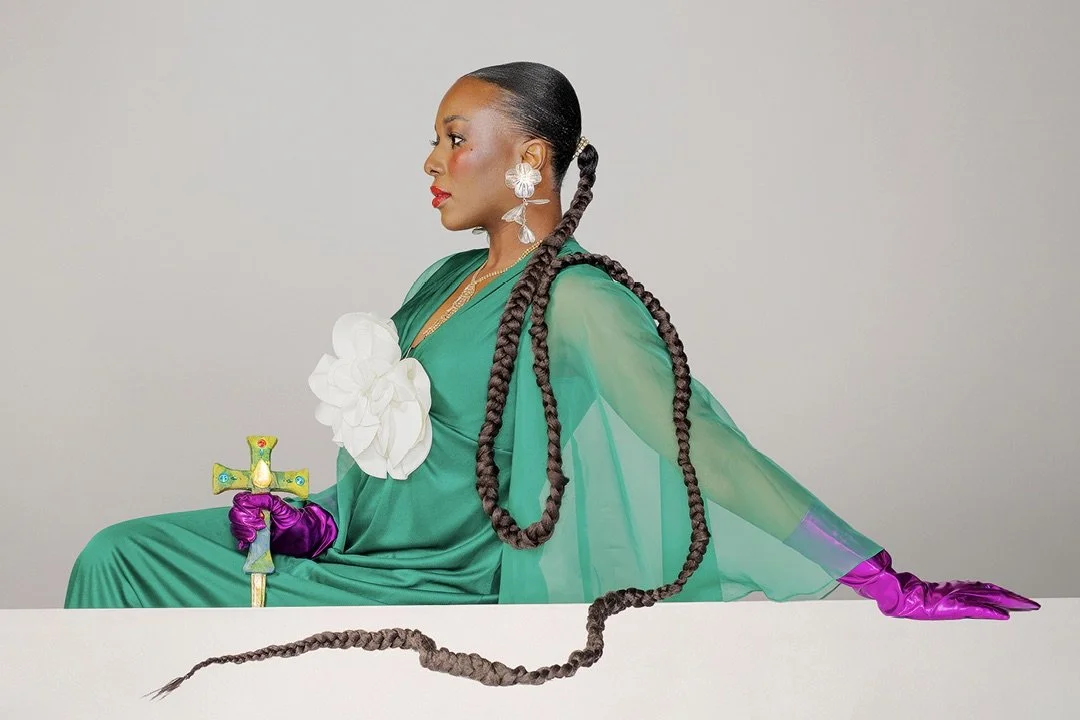
Tosca, played here by Lebanese-Canadian soprano Joyce El-Khoury, must go through a dizzying transformation in the story’s 24 hours, journeying from a jealous lover to a desperate killer and then a tragic victim of political corruption. The woman who has spent so long onstage, and devoted herself so fully to art and romantic love, is awakened to the injustices of the real world.
“The thing about Tosca, she’s so smart,” Corner observes. “She’s so smart because she’s able to go toe to toe with Scarpia. She’s able to try and be brave enough and smart enough to engage with him like that. And I think that’s something that is a real indication that this woman is more powerful than her world lets her be.”
Corner praises El-Khoury for the nuance she brings to Tosca’s emotional journey.
“Joyce keeps the sort of crispy clarity of the story, so it doesn’t just become a mess of emotion,” she says. “What you’re really getting is the very specific reasons why she is feeling the way she is feeling, and then how those feelings are motivating the actions that we’re seeing onstage.”
El-Khoury plays opposite a dream duo of male opera singers—VO favourites David Pomeroy and Gregory Dahl—in an exuberantly all-Canadian production, under the baton of VO music director Jacques Lacombe. Even the scenic design, built in Victoria, is homegrown—a rarity, considering that in the pre-pandemic Canadian opera world, companies often imported their massive sets from south of the border. It’s all possible thanks to growing collaboration between Pacific Opera Victoria and Vancouver Opera, with the season’s closing, pop-art-inspired La Traviata next spring also a coproduction between the two West Coast outposts.
The Vancouver Opera season opener is a great introduction to the form, Corner points out—a taste of some of Puccini’s most iconic music, and an introduction, of course, to one of his strongest, most dramatically complicated women.
Says the director: “Puccini wrote this incredibly extraordinary and complex and brilliant woman, and so it’s so exciting to get to dig into her. We’re really wanting to highlight and own that as opposed to, like, apologize for it.” 

Related Articles