Poiesis Quartet takes musical approach founded on artistic and social inclusion
Featuring contemporary and canonical pieces, the acclaimed ensemble’s program at the Kay Meek Arts Centre reflects dedication to creating space for emerging and marginalized voices
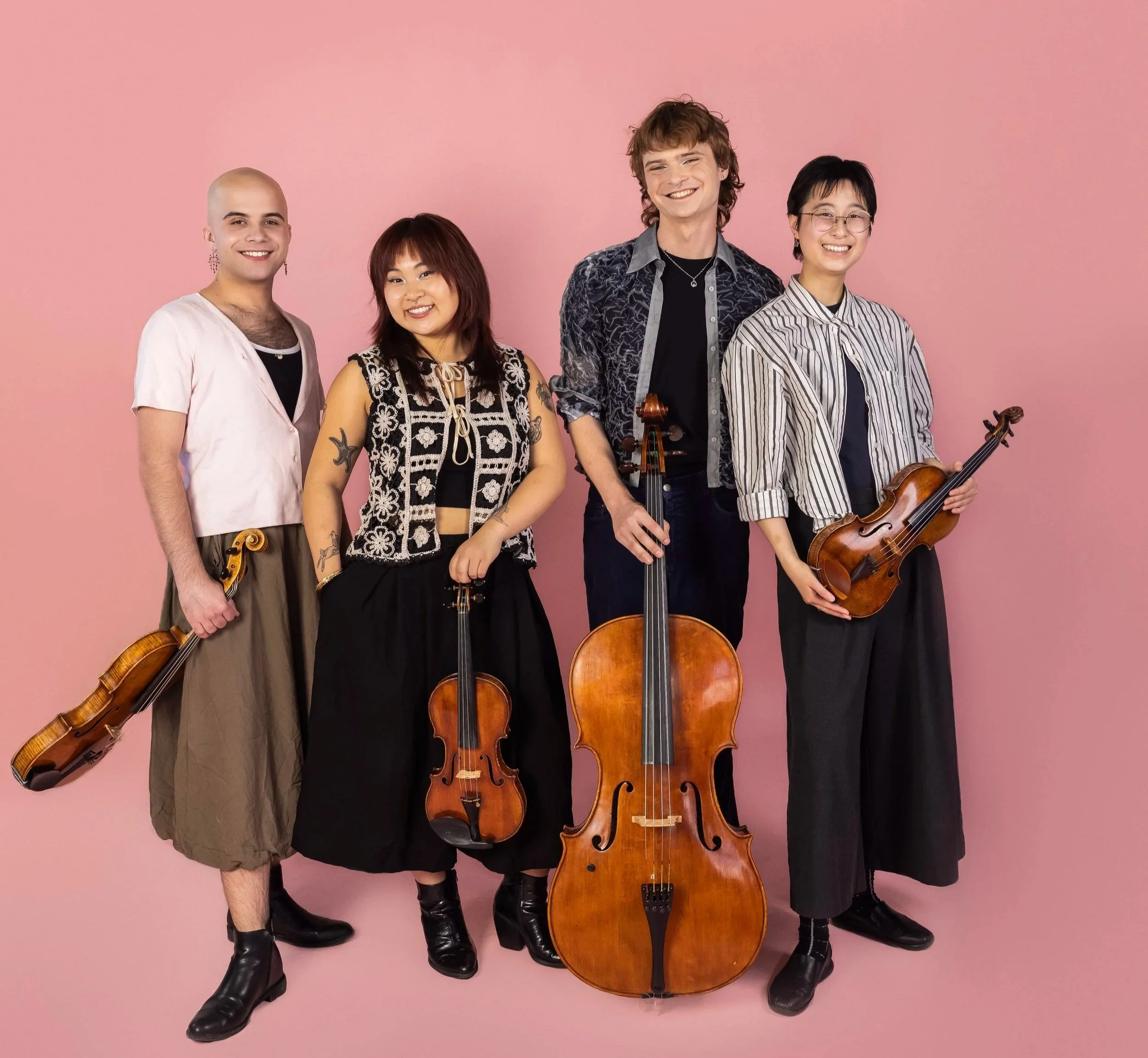
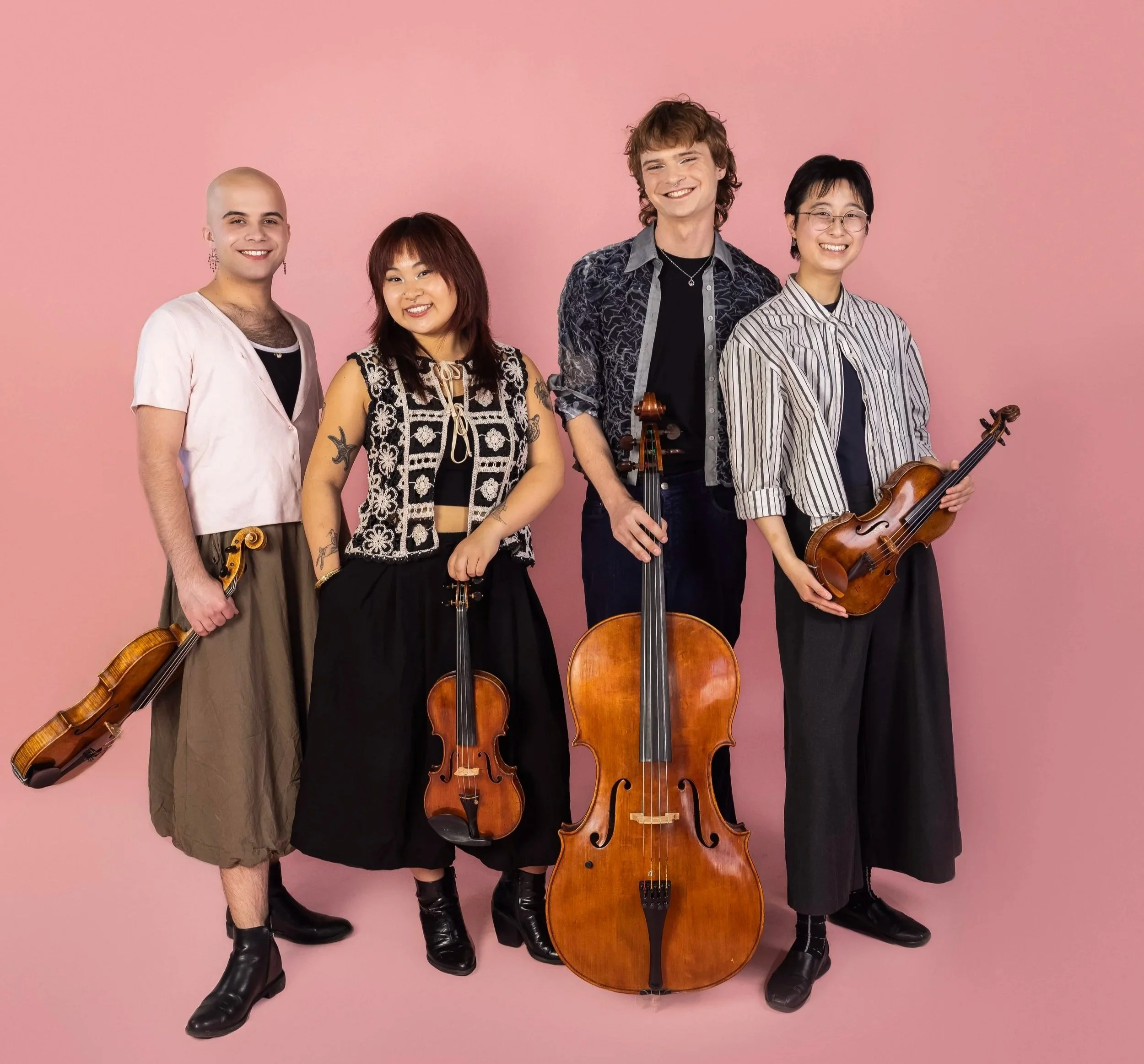
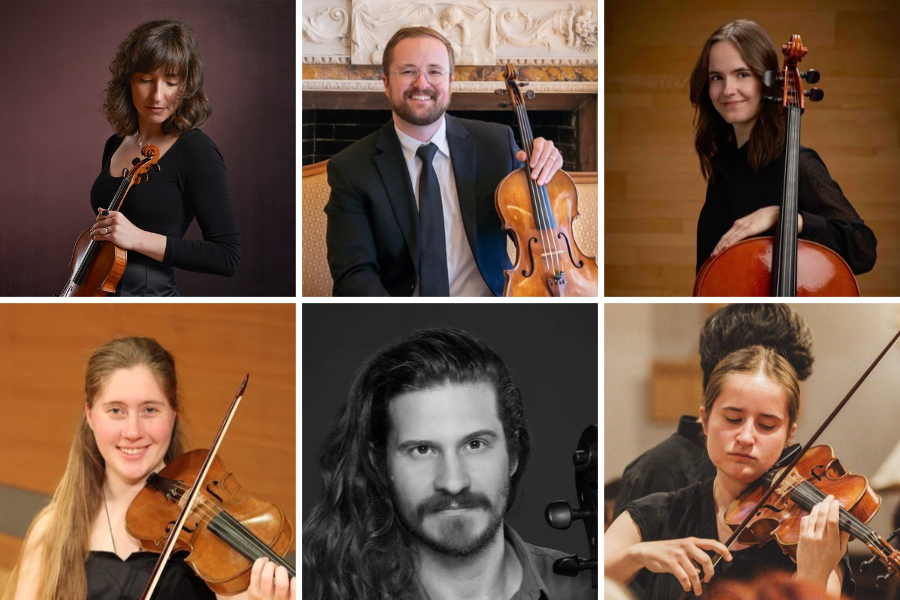
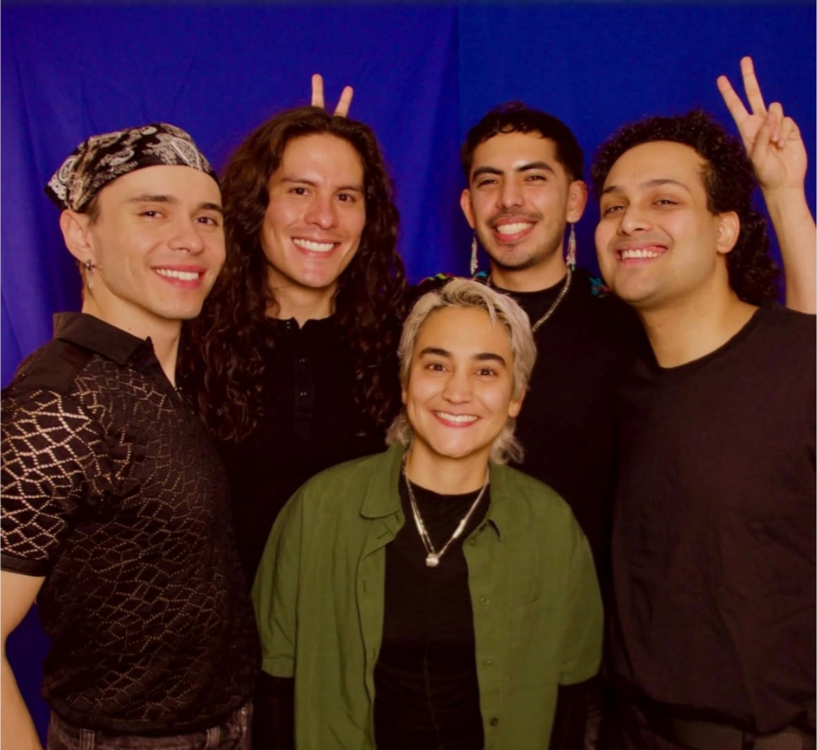
The Poiesis Quartet. Photo by Eden Davis
The Poiesis Quartet performs at the Kay Meek Arts Centre on October 25 at 3 pm
THE GREEK WORD “POIESIS” refers to the creation of something new where nothing existed before. In social philosophy, the concept applies to how people—especially marginalized individuals—actively construct communities for themselves. In the context of the Poiesis Quartet, both meanings apply.
“We feel like that name has really come to define and influence a lot of what we do,” cellist Drew Dansby tells Stir via Zoom, amid the quartet’s North American tour. “Not only with our work, but also commissioning new composers, making it possible for there to be new art where there were none before. We also really care about creating a space for ourselves in the industry—a space for queer voices and artists who are interested in non-traditional or non-Western approaches to music.”
Formed in 2022 at the Oberlin Conservatory of Music, Poiesis has a growing reputation for programs that push past conventional expectations, embracing its collective queer identity while championing works by emerging and underrepresented composers.
Currently the quartet in residence at Philadelphia’s Curtis Institute of Music, the group comprises Dansby, violist Jasper de Boor, and violinists Sarah Ying Ma and Coco Mi (who joined earlier this year, following the departure of Max Ball). On their extensive list of accolades is the 2026 Cleveland Quartet Award, the grand prize and Canadian Commission Prize at the 2025 Banff International String Quartet Competition, and the gold medal and BIPOC Prize at the 2023 Saint Paul String Quartet Competition. Just last week, the ensemble released its latest album, Surfacing, a rumination on its ever-expanding musical repertoire and artistry.
On October 25, the young string players make their Vancouver debut at the Grosvenor Theatre, opening the Kay Meek Arts Centre’s 2026–27 Resonate Series. In true Poiesis fashion, the program brings contemporary pieces such as Kevin Lau’s String Quartet No. 7 and Sky Macklay’s Many, Many Cadences into conversation with more canonical works by the likes of Sergei Prokofiev and Ludwig van Beethoven.
The group’s unconventional approach to music, Dansby explains, is inextricably tied to its members’ queer identities. “Being queer informs our practice and how we think about art in a fundamental way—a way that you can’t separate being queer from being an artist,” he elaborates. “Being queer is about challenging notions and hierarchies in society, and when you apply that to a field as traditional as classical music, it can bring some really beautiful results.”
Challenging one foundational notion is Macklay’s Many, Many Cadences, a satirical piece that confronts normative expectations of chord progressions. “Instead of a cadence being a point of return and satisfaction, it becomes something more like overstimulation and oversaturation,” says Dansby. “Macklay puts so many cadences in a row really quickly, with irregular rhythms and key centres that are as distantly related to each other as possible. So we have these cascades of chords that we feel aren’t going anywhere, but technically, they’re written exactly as they should be in the Western practice.”
Macklay is deliberately paired with Beethoven’s “deceptively simple” Quartet in F Major. Completed in 1826, near the end of his life, the composer’s final quartet returns to a more traditional structure, conveying a light and playful sound that diverges from the bleakness of his deteriorating health at the time.
Elsewhere on the program, Prokofiev’s melancholy String Quartet No. 1 is juxtaposed with Lau’s euphoric String Quartet No. 7. The former was written during the Russian composer’s United States tour, primarily on long train rides while studying Beethoven’s quartets. For Dansby, the work exudes homesickness, contrasted with boisterous passages that ultimately give way to a slow, inconclusive ending. “It’s kind of like a gradual decay towards the end of the piece, or however you want to see it, but it does leave us questioning what’s next,” he adds.
Lau’s String Quartet No. 7, also known by its subtitle, “Surfacing”, responds to that question with hope, drawing inspiration from the composer’s experience of grief and uncertainty. “He wrote it during a time in his life when he was going through some really intense family trauma,” Dansby explains. “His newborn son Robin was diagnosed with a rare liver condition that required months of surgeries and being in the hospital, not knowing what was going to happen. ‘Surfacing’ here refers to the feeling of gasping for air after you’ve been underwater for too long. Lau says that grieving is a very cathartic process where you go for long stretches of feeling hopeless, but then every once in a while, there’s an uncontrollable violent breakthrough.” The piece holds a special place for Poiesis as their first commissioned work, appearing on their album of the same name alongside Macklay’s Many, Many Cadences.
Ahead of their Vancouver appearance, Dansby reflects on what Poiesis brings to the world of classical music.
“I hope that the audience hear something that they didn’t know was possible for a string quartet to do, or for classical music to sound like,” he says. “I hope that they feel a lot of hope, not only for the future of classical music, but the importance of art and music in our everyday lives.” 

Related Articles