Beauty and brutality intermix in Polygon Gallery’s new show Lee Miller: A Photographer at Work (1932-1945)
Trailblazer shot everything from fashion in front of bombed-out buildings to the liberation of Dachau and Buchenwald

Untitled, Entrance to concentration camp, Buchenwald, Germany 1945. © Lee Miller Archives, at the Polygon Gallery show Lee Miller: A Photographer at Work (1932-1945).
The Polygon Gallery presents Lee Miller: A Photographer at Work (1932-1945) from November 7 to February 1, 2026, Ami Bouhassane hosts a tour of the show with Elliott Ramsey on November 8 at 1:30 pm. The Polygon Gallery screens Lee on November 13 at 8:30 pm
LATE PHOTOGRAPHER Lee Miller’s stunning 1937 image Portrait of Space turns the Egyptian desert into surreal art, framing the barren landscape with a torn mosquito net.
Today, Miller’s granddaughter Ami Bouhassane remembers, as a child, watching adults stare at the famous photograph in galleries.
“I genuinely thought that, because I took the title seriously, it was a picture of the moon, and that she’d actually been to the moon,” she tells Stir in a Zoom call from Miller’s archives and former home, which is now Britain’s Farleys House & Gallery. “I was like, ‘She’s done so many other things, of course she’s been to the moon.’”
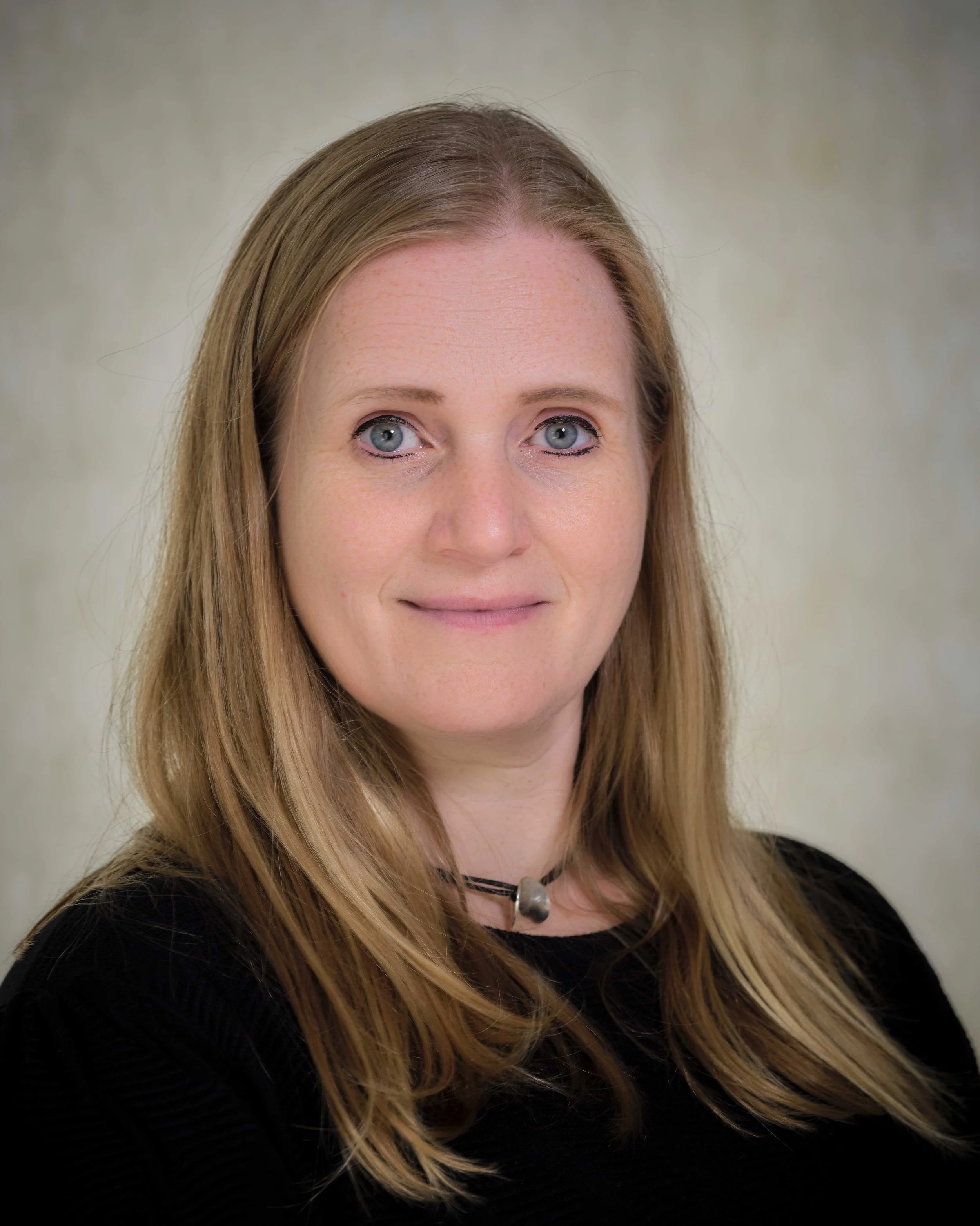
Ami Bouhassane. Photo by Jim Holden. © Lee Miller Archives
That idea is not as far-fetched as it sounds. The photographer—who was the subject of the recent biopic Lee and is set to be celebrated in a major new exhibition at the Polygon Gallery—had an extraordinary life that criss-crossed the globe while defying early-20th-century gender roles.
Although she was born in small Poughkeepsie, New York, in 1907, Miller went on to become a high-fashion model in New York City, stunning with her cropped blonde hair. Later, in the late 1920s, she worked as the muse of surrealist Man Ray in Paris. In 1932, she returned to New York to run a successful commercial portrait and fashion photography studio, before heading to Britain to shoot for Vogue. From there, she radically switched gears to become a war correspondent on the front lines of the Second World War.
The Polygon Gallery’s new show Lee Miller: A Photographer at Work (1932-1945) focuses on the artist’s trailblazing professional range. For years, Bouhassane reports, she and her father, Antony Penrose, fought to have the artist recognized for more than being Man Ray’s muse—a tiny fraction of her career.
“A lot of the time, we would just have to play the kind of patriarchy game and we’d have to name-drop all these male 20th-century artists that she’d known—you know, ‘Picasso painted her portrait seven times,’” she recounts, sitting in the rose-hued study formerly used by her grandfather, Miller’s second husband, famed surrealist painter Roland Penrose. “And then, in the last 10 percent of the time that we had, we’d get to talk about her work and her career in its own right.”
Often, people focus more on Miller’s love affairs than on her vast body of work. She did, after all, hook up with the likes of Man Ray, Egyptian businessman Aziz Eloui Bey, and Life magazine photojournalist David E. Scherman. It was Scherman who took the famous photo of Miller sitting nude in a bathtub in Adolf Hitler’s abandoned Munich apartment, on the day in 1945 when the Nazi leader committed suicide in his bunker in Berlin.
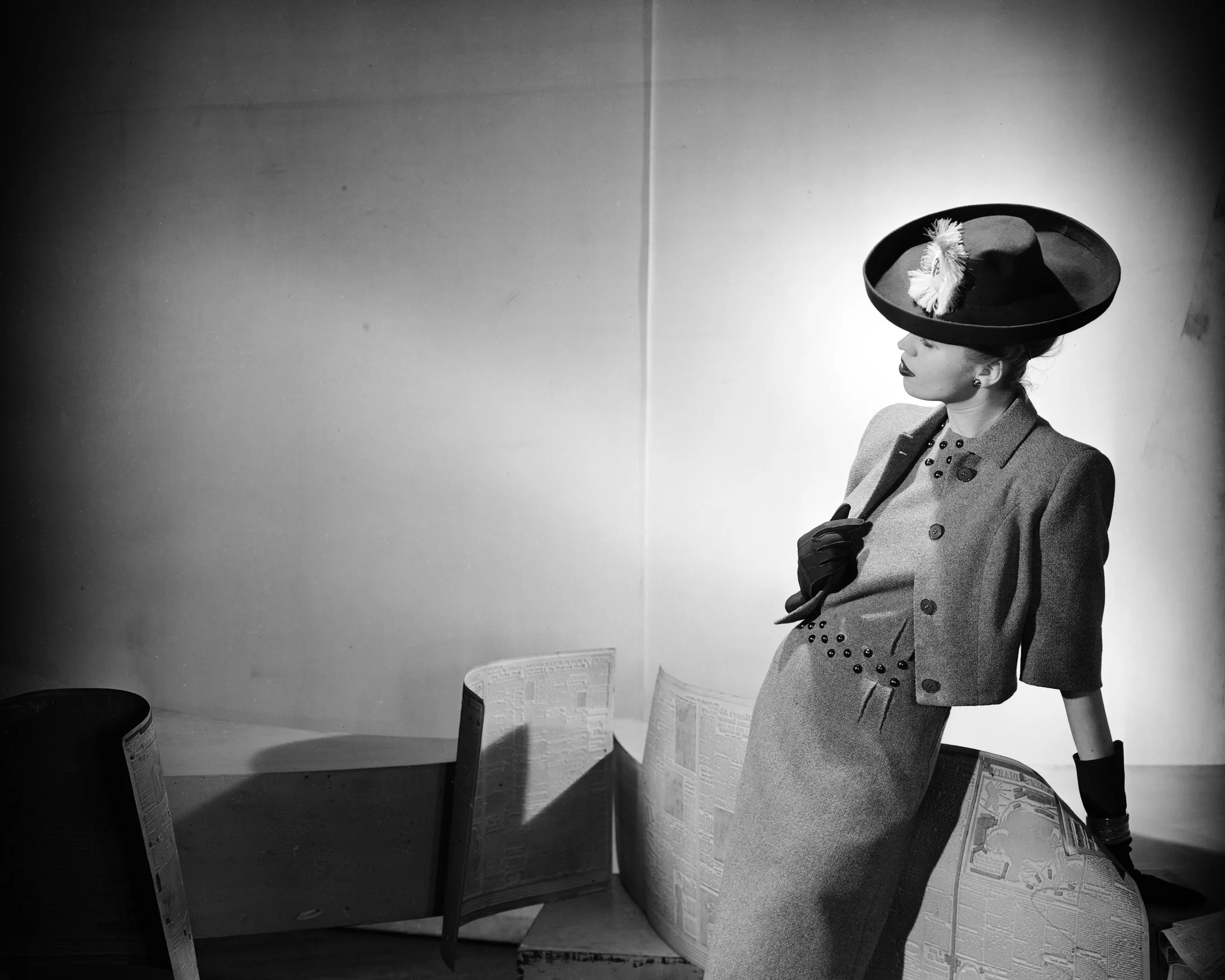
Todays Standard Fewer, Simpler, Better Cloths, London, England 1944. © Lee Miller Archives, at the Polygon Gallery show Lee Miller: A Photographer at Work (1932-1945).
“A lot of the time, when people are writing about her or making documentaries that are about her, they get sidetracked and they look too much at her private life,” Bouhassane adds. “Because her private life is pretty fascinating! But at the same time, how about we recognize her for what she was wanting to do and how she was wanting to be seen—which is as a professional photographer. And one of the things that I really love about this show is I think it gives a taste of how prolific she was.”
Curator and photo historian Gaëlle Morel wanted to capture the complexity of an artist whose versatility, technical skill, and business savvy were also often overlooked. She had no shortage of material to draw on: Miller’s British archives have 60,000 negatives, 20,000 vintage prints, and 20,000-odd pages of her writings.
“With Lee Miller, there’s this pervasive idea that her career really was tied to Man Ray, and being a muse, and learning from him, and benefiting from his network,” Morel explains in a separate Zoom interview. “All of it is true, but that was really a very short period of time in her overall career.”
Images in The Polygon’s exhibition Lee Miller: A Photographer at Work give a fascinating sense of the unique lens the artist brought to her practice. In 1939, when Miller began working for British Vogue, her reportage became critical to transforming the magazine from a simple fashion periodical to one that captured the gravitas of the war and the role of women to pitch in, join the work force, and ration and reuse. In one sly 1941 image, model Elizabeth Cowell poses in an impeccable Digby Morton tailored suit, standing in an archway that reveals London’s bombed-out buildings, her hat’s long feather arcing over the rubble.
“That’s a section of her life where she’s prolific and she is finding solutions in very difficult circumstances to create beautiful pictures,” explains her granddaughter, pointing out the challenges of running a fashion magazine during the rationing of everything from paper to fabric.
The turning point in Miller’s life came when she left that fashion studio to become a correspondent on the front lines of World War II. Driven by the invasion of Paris, the city she loved, Miller fought to join the 83rd Infantry Division of the U.S. Army as a foreign correspondent for the advance from Normandy to Paris.
Some of her most haunting imagery documented the liberation of the Dachau and Buchenwald concentration camps, where American troops were unprepared for the shocking starvation and death they found. Untitled, Entrance to concentration camp, Buchenwald, Germany 1945 is one of her least graphic but most unsettling photographs. Taken inside the camp, it looks back at the silhouettes of locals and soldiers peering through gates that had greeted prisoners with the words “Jedem das Seine”—German for “To each his own,” a gutting reference to the inhumane Nazi belief that the “master race” had the right to destroy others. While it’s not precisely surrealist, it is clearly a piece of art, rather than straight-up photojournalism.
“Those photographs are so unique and extraordinary that Vogue, a fashion magazine, decides to publish them, with the text that she’s going to write—because, again, she can do it,” Morel points out. “So the magazine kind of changed its own identity because of her work.”

Women accused of being Nazi collaborators, Rennes, France 1944. © Lee Miller Archives, at the Polygon Gallery show Lee Miller: A Photographer at Work (1932-1945).
In many of the photos documenting the end of the war, you can see Miller’s camera drawn to women’s experiences. One of the most striking in the show is the 1944 shot of Frenchwomen accused of being Nazi collaborators, jeered by townsmen as they’re paraded with shaved heads through the streets of Rennes, France.
Miller shot cruelty, tragedy, and despair, but she also captured the joy of the war ending: there are several photos that depict stylishly dressed Parisian women with bicycles in 1944, their faces filled with dazzling smiles, the walls behind them plastered with celebratory liberation posters.
Still, something about the trauma Miller witnessed changed her forever. By the time she and Roland Penrose moved into Farleys in 1949, the photographer was exhausted and depressed. The house became a gathering spot for artists and bohemians, and Miller gradually reinvented herself, once again. Leaving photography behind, she became a gourmet chef. The negatives and prints lay hidden in the attic, undiscovered until 1977, after she died. That was when her son, Antony Penrose (Bouhassane’s father), and his wife Suzanna stumbled upon the massive collection, leading to the re-evaluation of a career that had been largely forgotten by the time of her death. From there, the archives were established.
The world is only now getting a full appreciation for Miller’s talent. The Polygon Gallery show offers deep insights into her body of work, and the way that fashion and commercial photography overlapped with war correspondence and more artistic pursuits. Beauty rubs shoulders with brutality, often with unexpected, subtle surrealist twists in the angles and perspectives on her subject matter. With all the new interest from the art world, Bouhassane—raised surrounded by her grandmother and grandfather’s work—is clearly thrilled not to have to argue hard for her grandmother’s photography anymore.
What may come across most clearly in the exhibition is Miller’s courage, fierce independence, and unique eye on the world—a true woman before her time. “She had this excitement for life; she wanted to make sure she lived an interesting life,” the curator Morel observes. “She was someone who was scared to be bored. She was a woman who took chances and took risks—and because she just happened to be a photographer doing that, we kind of get a window on how she did that.” 

Related Articles