Review: At Vancouver Opera, knockout arias and inspired staging live up to Tosca expectations
Season opener, coproduced with Pacific Opera Victoria, features a strong central trio of singers and striking lighting and sets
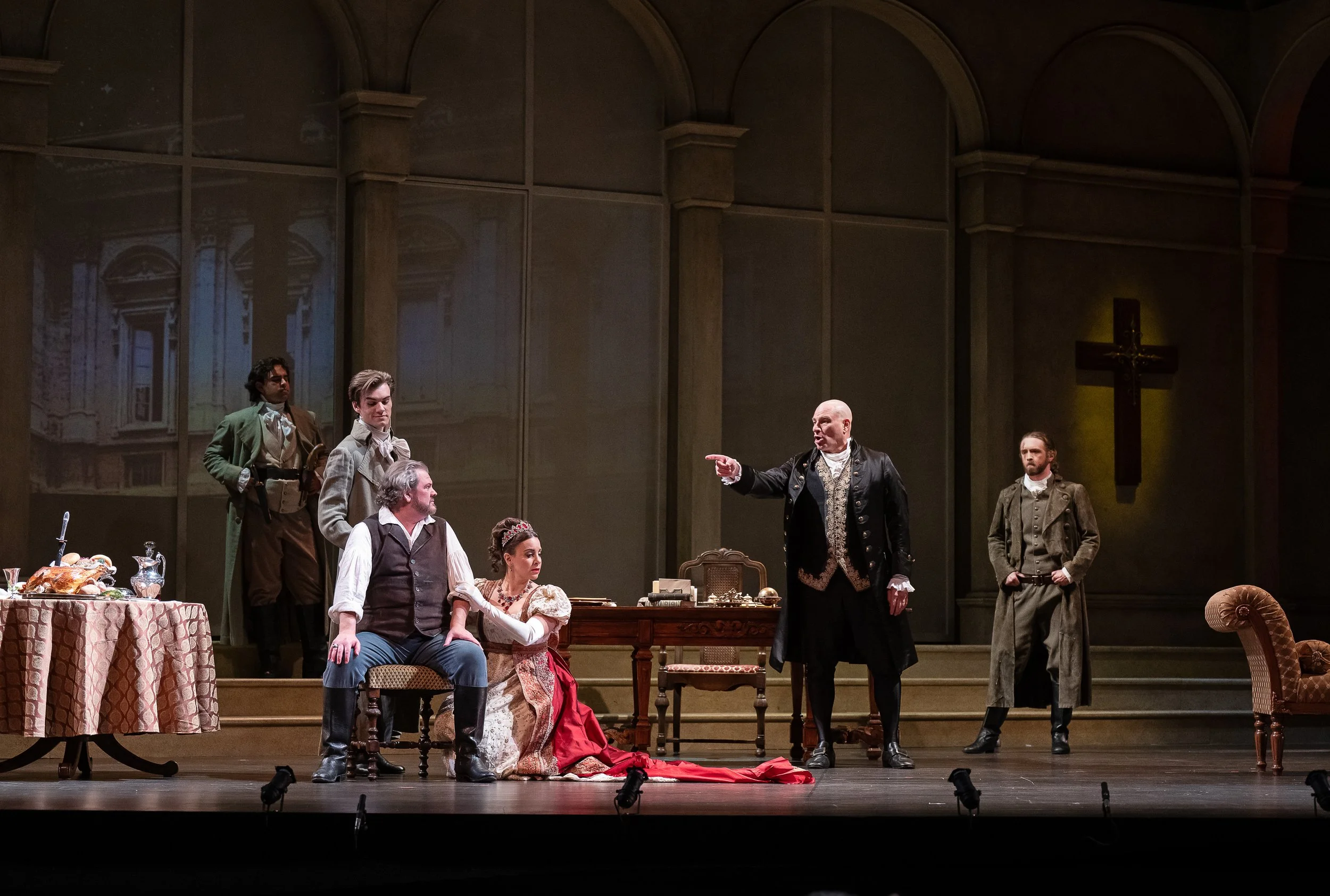
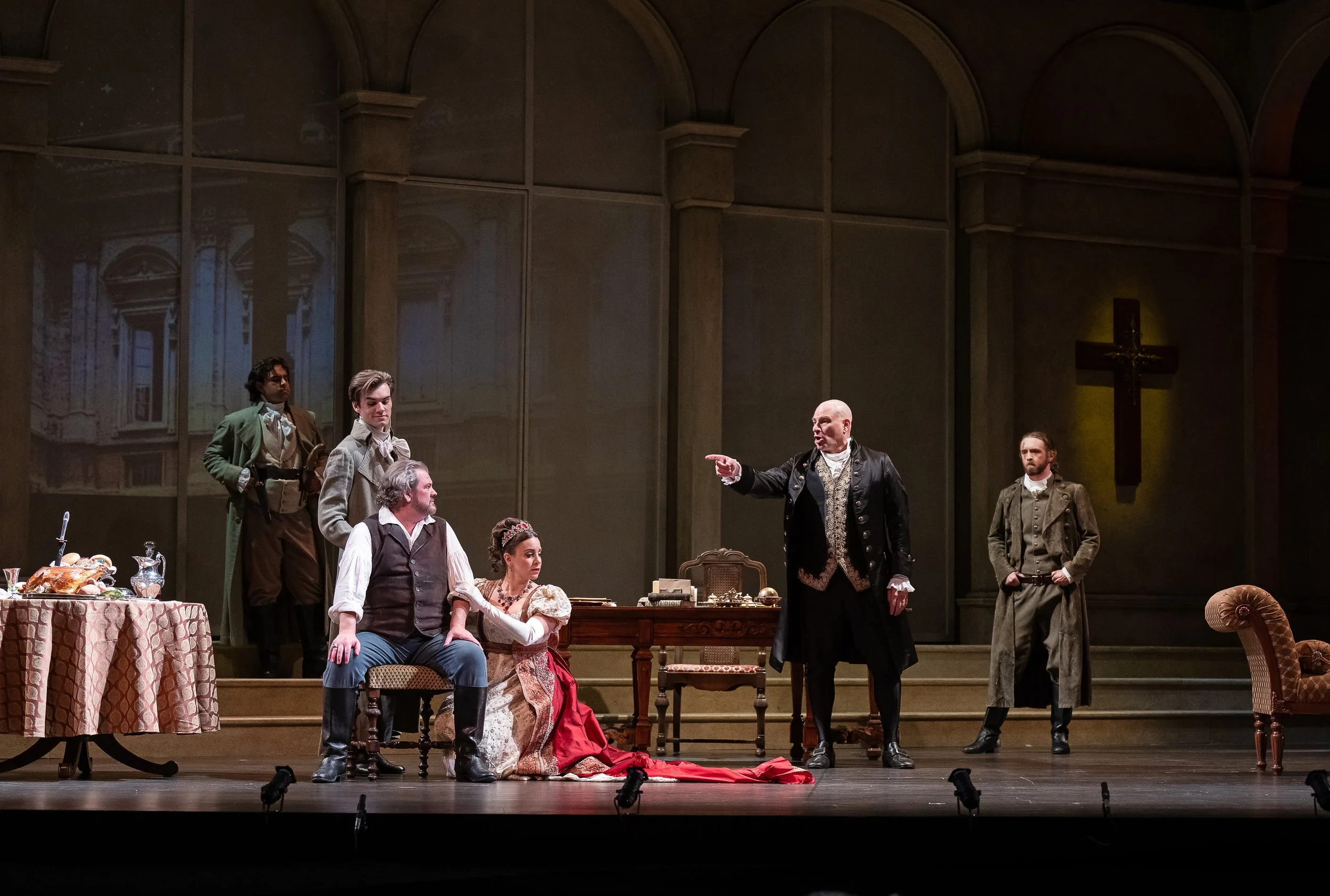
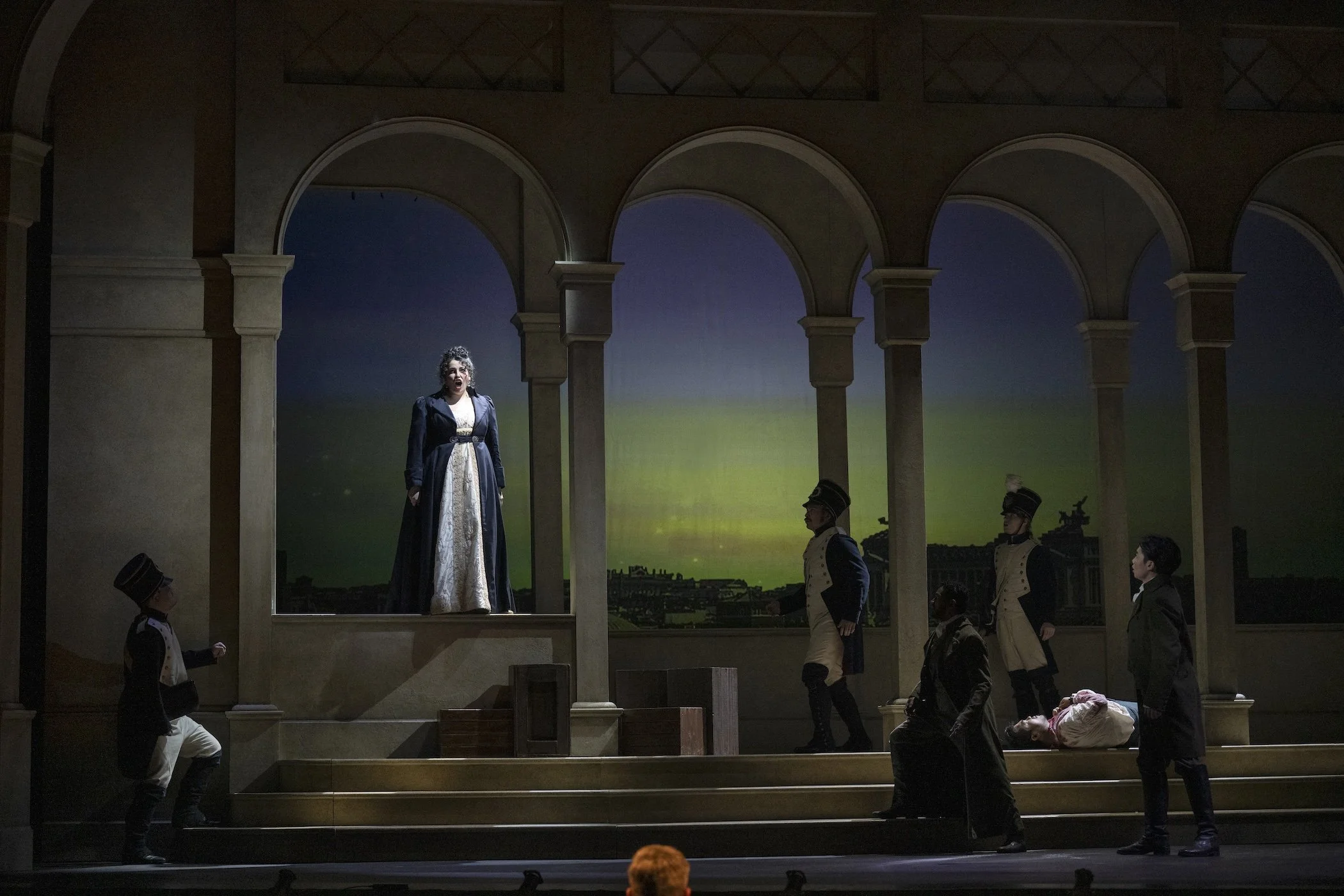
Vancouver Opera and Pacific Opera Victoria’s Tosca. Photo by Emily Cooper
Vancouver Opera and Pacific Opera Victoria present Tosca at the Queen Elizabeth Theatre on October 29 and November 1
A POWERHOUSE TRIAD of singers, clear storytelling, and visually striking sets ensure Vancouver Opera’s season-opening Tosca delivers on multiple fronts.
Giacomo Puccini’s masterwork carries considerable challenges—the first being arias so well known that, thanks to legendary interpretations by the likes of Maria Callas and Luciano Pavarotti, they carry high expectations. Here, the all-Canadian cast lives up to that anticipation across the board.
The famous Act II “Vissi d’arte” is a masterclass in modulation, time standing still as Joyce El-Khoury’s Floria Tosca oscillates between mesmerizing quiet moments of despair and rafter-rattling anguished high notes, with all the star power and charisma that the diva role demands.
As her artist boyfriend Mario Cavaradossi, tenor David Pomeroy opens into his gorgeous “E lucevan le stelle” aria with even more assuredness than he did in the role here 13 years ago; as the character faces his mortality, he taps a raw honesty that’s integral to the piece—hushed, broken, and melancholy at first, building to dynamic swells.
And the VO’s favourite villain, Gregory Dahl, brings sinister heft to Baron Scarpia without ever overacting. His “Te Deum” finds the sadistic police chief gloating about his evil plan over a resounding church choir, nailing the chilling contrast between the sacred and the sacrilegious. And watch the malevolent anticipation Dahl brings to the simple, single word “Ebbene?” (“Well?”) to Tosca, waiting to see if she’ll give him what he wants.
With music director Jacques Lalonde at the podium, the Vancouver Opera Orchestra offers lush yet nuanced support, never rushing the tempo, providing just enough romantic flourish, and allowing space for the formidable cast to stretch languidly into their emotions.
Another of Tosca’s challenges is that its taut plot unfolds over a fast-paced 24 hours across multiple iconic Rome locations, from the Basilica di Sant’Andrea della Valle to the fortress Castel Sant’Angelo. Under the lucid direction of Brenna Corner, the story plays out compellingly as the bloody, lust-charged political thriller it is. Set during the political and military tensions of 1800 Rome, Tosca centres on three characters: the title diva, a famous opera singer; her lover, the painter and revolutionary Cavaradossi; and the corrupt chief of police, Scarpia, who has long lusted after the diva. When Scarpia finds out Cavaradossi has assisted an escaped political prisoner, he manipulates Tosca into revealing the escapee’s hiding place and then offers her an impossible bargain: if she’ll sleep with him, he’ll save her lover from torture and death.
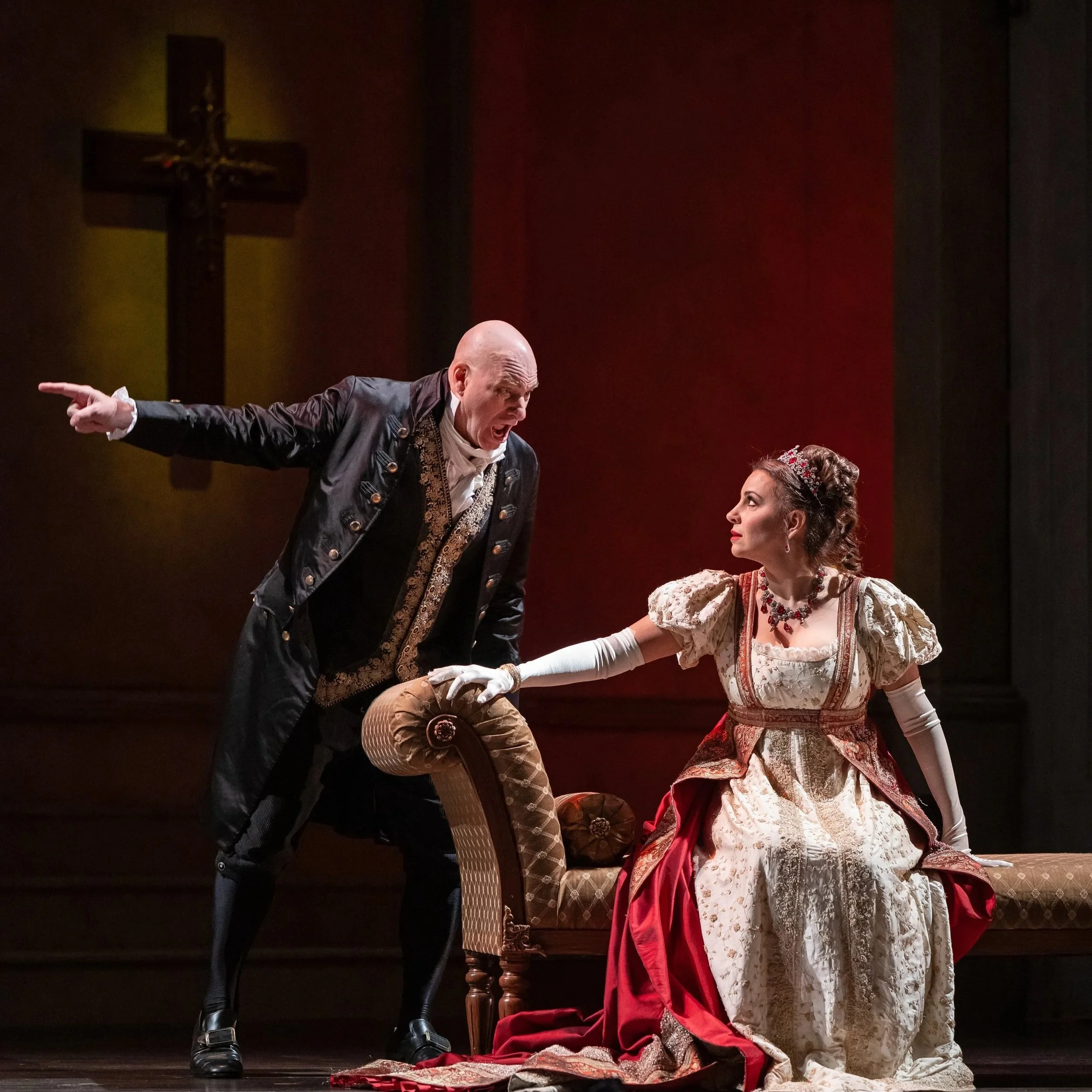
Gregory Dahl and Joyce El-Khoury in Tosca. Photo by Emily Cooper
In this Vancouver Opera–Pacific Opera coproduction, many of these scenes are staged with inspired touches. The treatment of Cavaradossi’s torture is one of the most memorable, with the shadow of the gruesome procedure stretching up the wall behind Tosca as she listens to his agonizing screams. Later, when the diva discovers a knife, it flashes wickedly in the light. And her death scene from the upper archways of the fortress does not disappoint.
Scott Reid’s sets, with their dramatic and disorientingly angled walls, are integral to the production’s success. They bring added intensity to Cavaradossi’s final aria, Rome’s dramatic skyline slowly emerging from the starry night as the sun rises. Michael Walton’s lighting choices work evocatively with the scenic design throughout, especially in Scarpia’s lair in Act II, where ivory, gold, and warm candlelight mix with foreboding hits of blood red.
Staged with the intensity demanded by its high-stakes plot of romantic jealousy, political intrigue, murder, and revenge, this Tosca is a fantastic introduction to the world of opera. What was clear on opening night, though, was that audience members knew the art form well enough to recognize a good thing when they heard it—roaring their extended approval after each knockout aria. 

Related Articles