Hamlet, Prince of Denmark captures the inner turmoil of a man zeroed in on revenge
In a DanceHouse presentation, Guillaume Côté and Robert Lepage stage their tightly paced adaptation of Shakespeare’s story
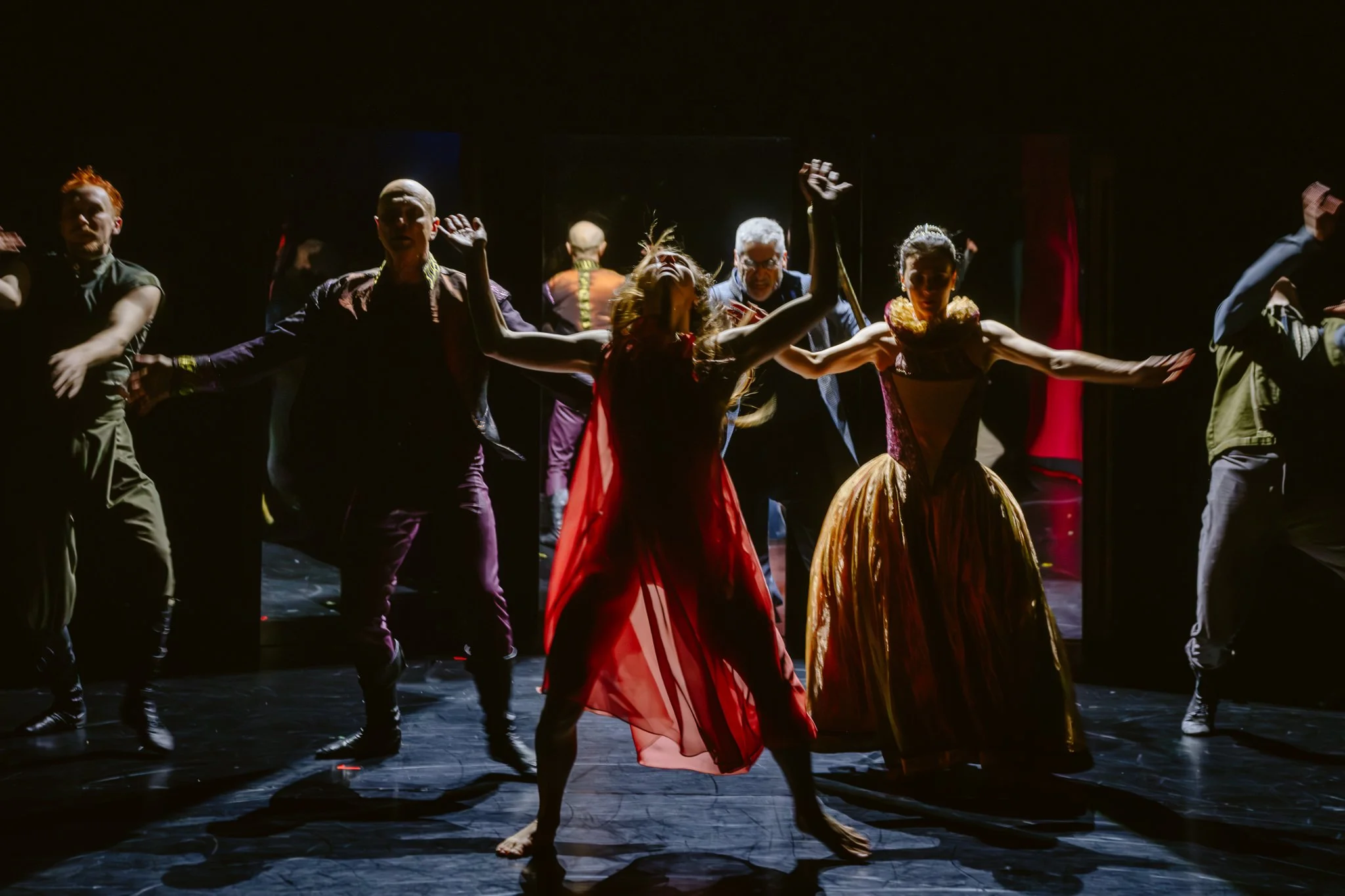
Hamlet, Prince of Denmark. Photo by Stéphane Bourgeois
With Théâtre la Seizième and community partner Bard on the Beach, DanceHouse presents Ex Machina and Côté Danse’s Hamlet, Prince of Denmark at the Vancouver Playhouse from March 18 to 21
THE HUMAN SKULL has long been a prominent symbol of Shakespeare’s Hamlet. In a play wrought with death, the object is emblematic of the mortality of the people around us, and of the inevitability of endings.
It makes sense, then, that the skull is also a driving force in Hamlet, Prince of Denmark, a collaboration between long-time National Ballet of Canada principal dancer Guillaume Côté, of his own contemporary company Côté Danse, and internationally acclaimed theatre artist Robert Lepage, of the multidisciplinary company Ex Machina. The sharply designed dance piece follows the trajectory of Shakespeare’s play, telling the story of its existentially anguished prince—but without dialogue.
When Stir connects with Côté by Zoom, he’s in The Hague, shadowing Nederlands Dans Theater artistic director Emily Molnar, the former head of Vancouver’s own Ballet BC, who has been steering the revered Dutch company into a new era of creativity since she joined it in 2020.
“To come into an organization that has had such extensive success, and to try to pivot it into something contemporary and apply contemporary leadership to it, is very inspiring,” Côté says. “Which I aspire to do eventually one day. But also it’s inspiring me as artistic director of Côté Danse as well, even though it’s a small company—how to consistently lead through the work, lead from the inside out. And I really adore her idea that vision is the people that you work with, and the work is essentially a development program for those people.”
From March 18 to 21, Côté will be on the West Coast to perform Hamlet, Prince of Denmark at the Vancouver Playhouse, care of DanceHouse, with the support of Théâtre la Seizième and community partner Bard on the Beach. The piece premiered nearly two years ago in Toronto, and has since evolved into an even more tightly paced examination of darkly human instinct, drawing on themes of corruption, betrayal, and revenge.
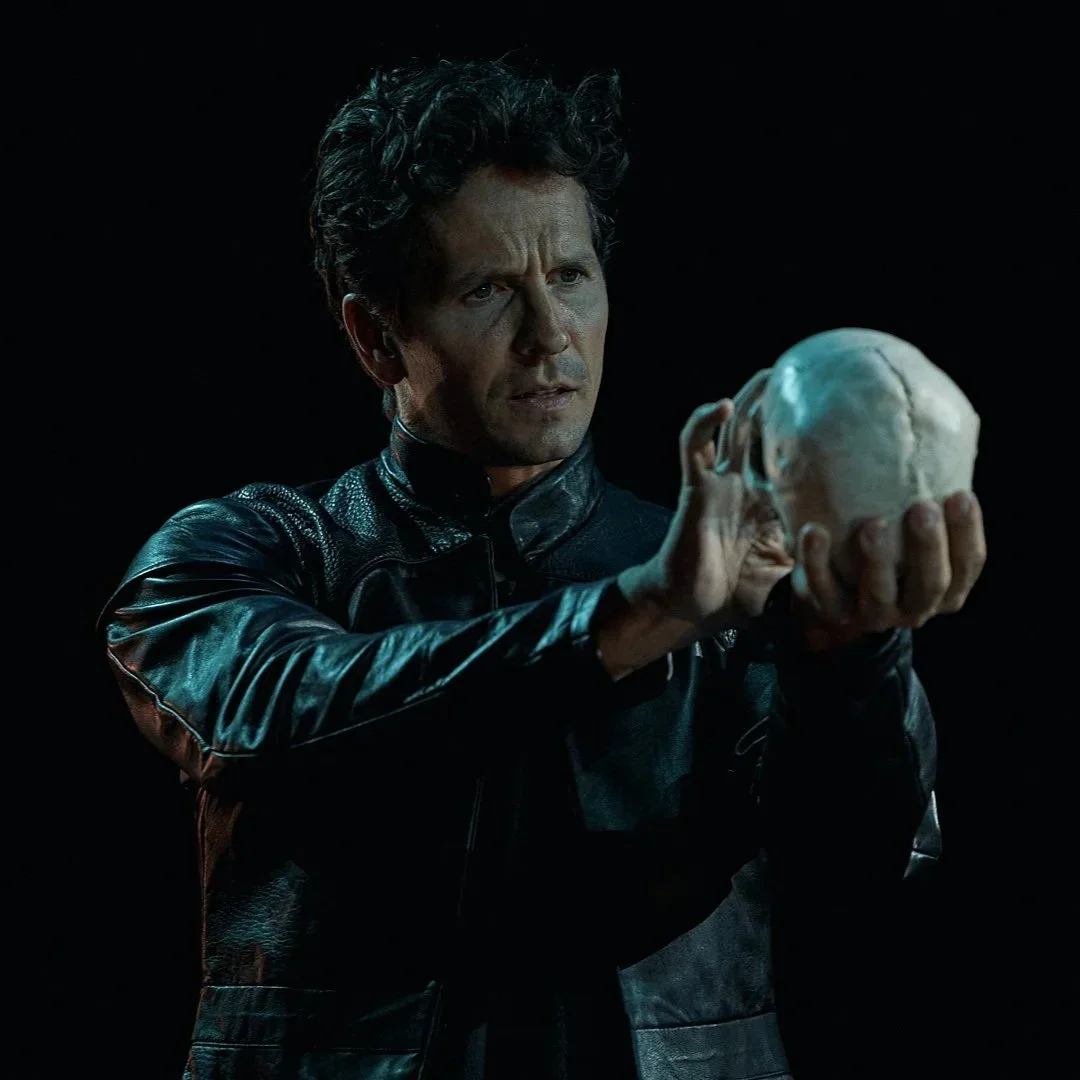
Guillaume Côté in Hamlet, Prince of Denmark. Photo by Sasha Onyshchenko
Côté and Lepage first worked together on the National Ballet of Canada multimedia piece Frame by Frame, which detailed the life of famed Canadian filmmaker Norman McLaren, whose work with the National Film Board of Canada was nothing short of brilliant. So when Côté approached Lepage about the idea of transforming Hamlet into a dance production, the theatre authority agreed, on the condition that it be a very literal interpretation.
“In the same way that the skull is the emblematic symbol for Hamlet, he wanted to strip away the skin and the flesh,” Côté explains. “He wanted it to be just the structure of the play, the skull of the play, revealed to the audience in a way that highlights another side of Shakespeare’s genius.”
He and Lepage would spend days workshopping the show, studying Shakespeare’s text and picking apart all the theories and symbolism it contained. When the show premiered, says Côté, he played Hamlet with a strong sense of anger and brattiness. But after a year of touring, he realized there was much more nuance to the character. Hamlet is clever and charming, but stubborn, and focused solely on his own agenda; as Côté puts it, we see him “strive for his own truth, to his demise”. So the way he portrays Hamlet today leaves more room for viewers to feel empathy.
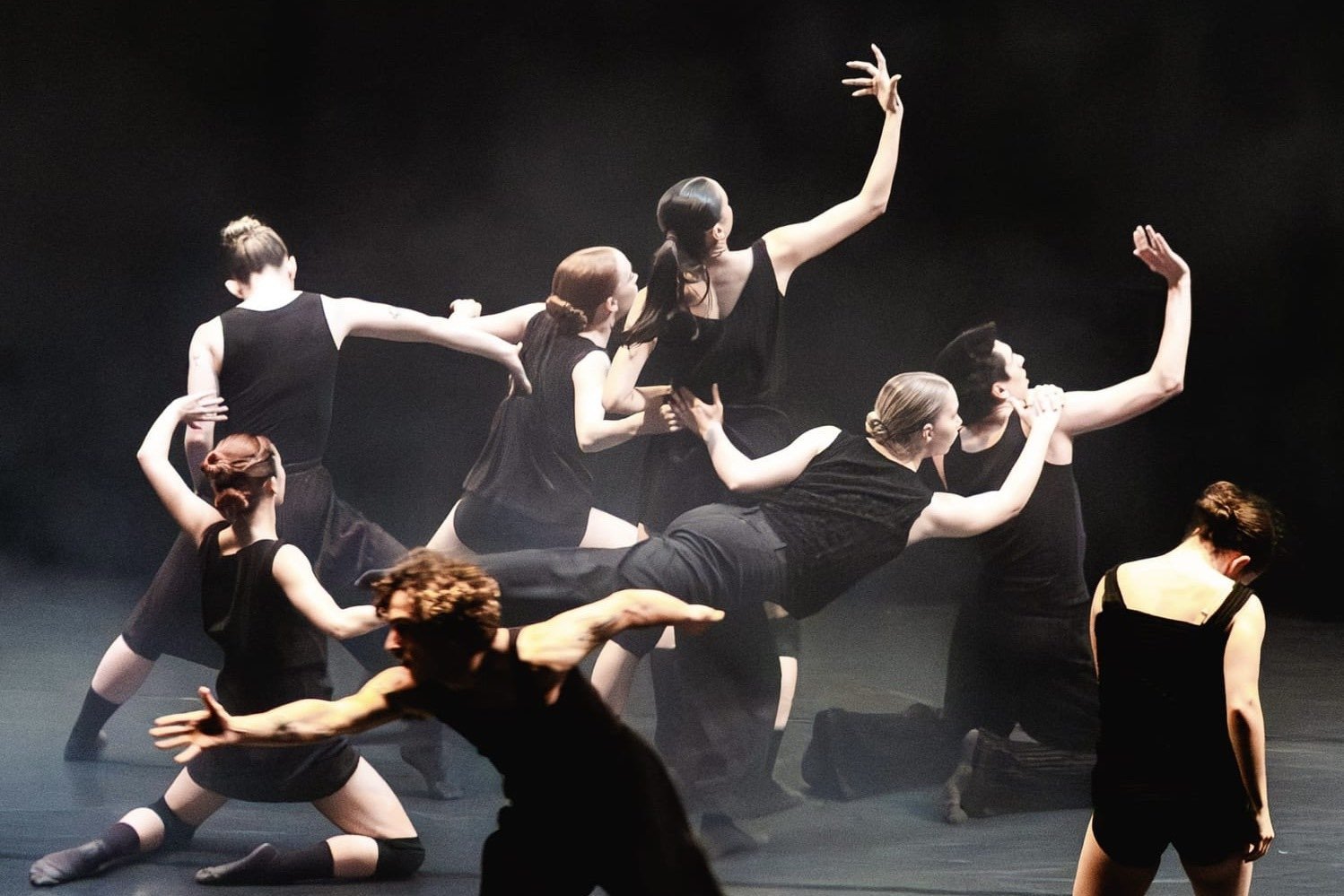
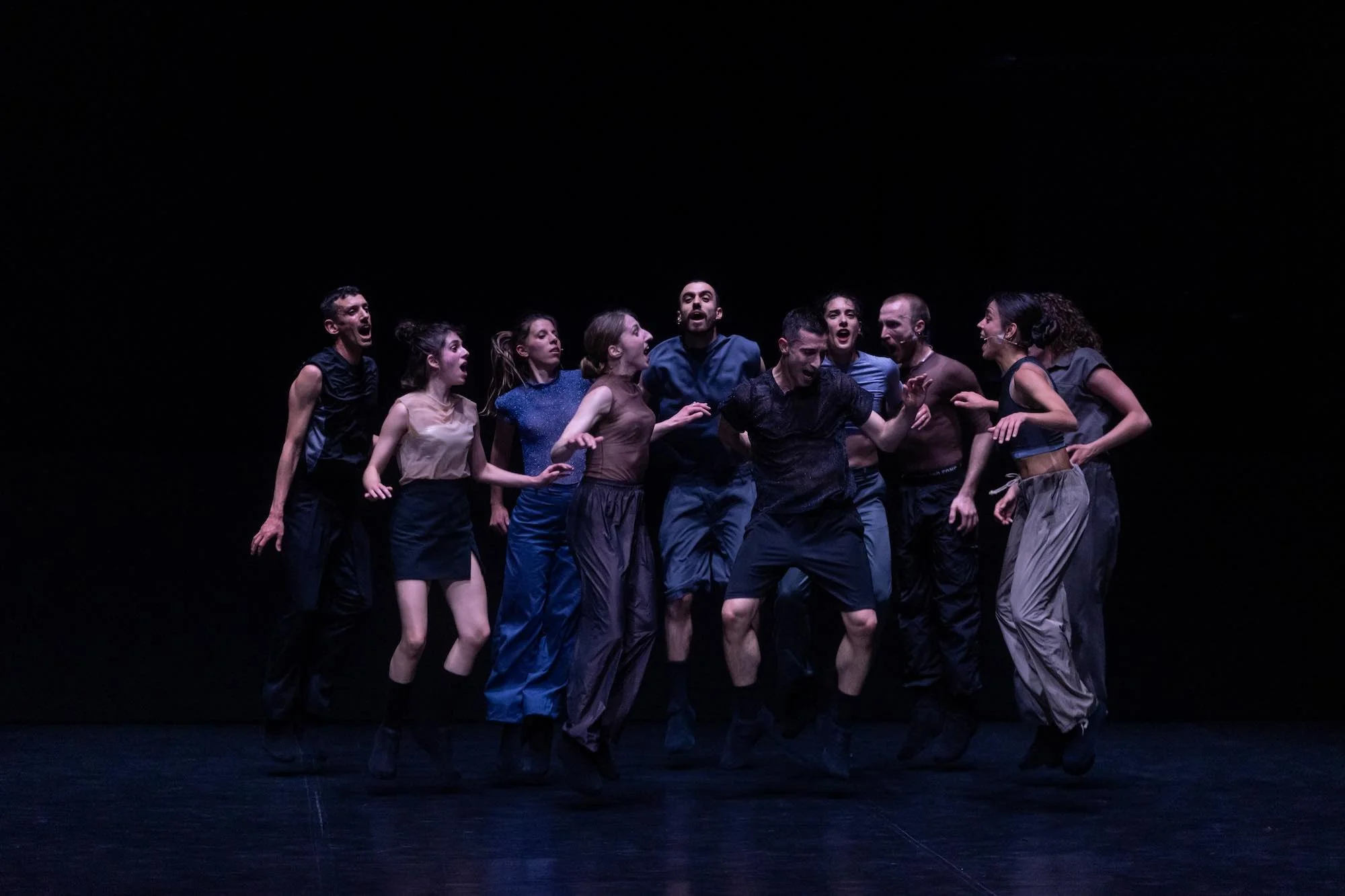
Across 24 scenes, a minimalist set is used to its full potential to drive the storytelling. Tables and a mirror are combined with a blood-red velvet curtain that’s constantly sliding across the stage—and it’s all bathed in golden light designed by Simon Rossiter, with an original score by John Gzowski. Together, those components serve to magnify the actions of the nine dancers onstage.
“Robert wanted it to stay relatively simple in order to carry forward the characters and the storyline,” Côté explains. “It’s so that we understood exactly what was going on, and we didn’t have an artificial duet all of a sudden about joy in the middle of the thing, or an artificial duet about anger. He wanted to keep driving forward the narrative. And that’s the nicest thing for me to be able to do at this age, where I am in my career, at a time when I really value that and I have the maturity to want to explore that, you know? It’s a really wonderful challenge.”
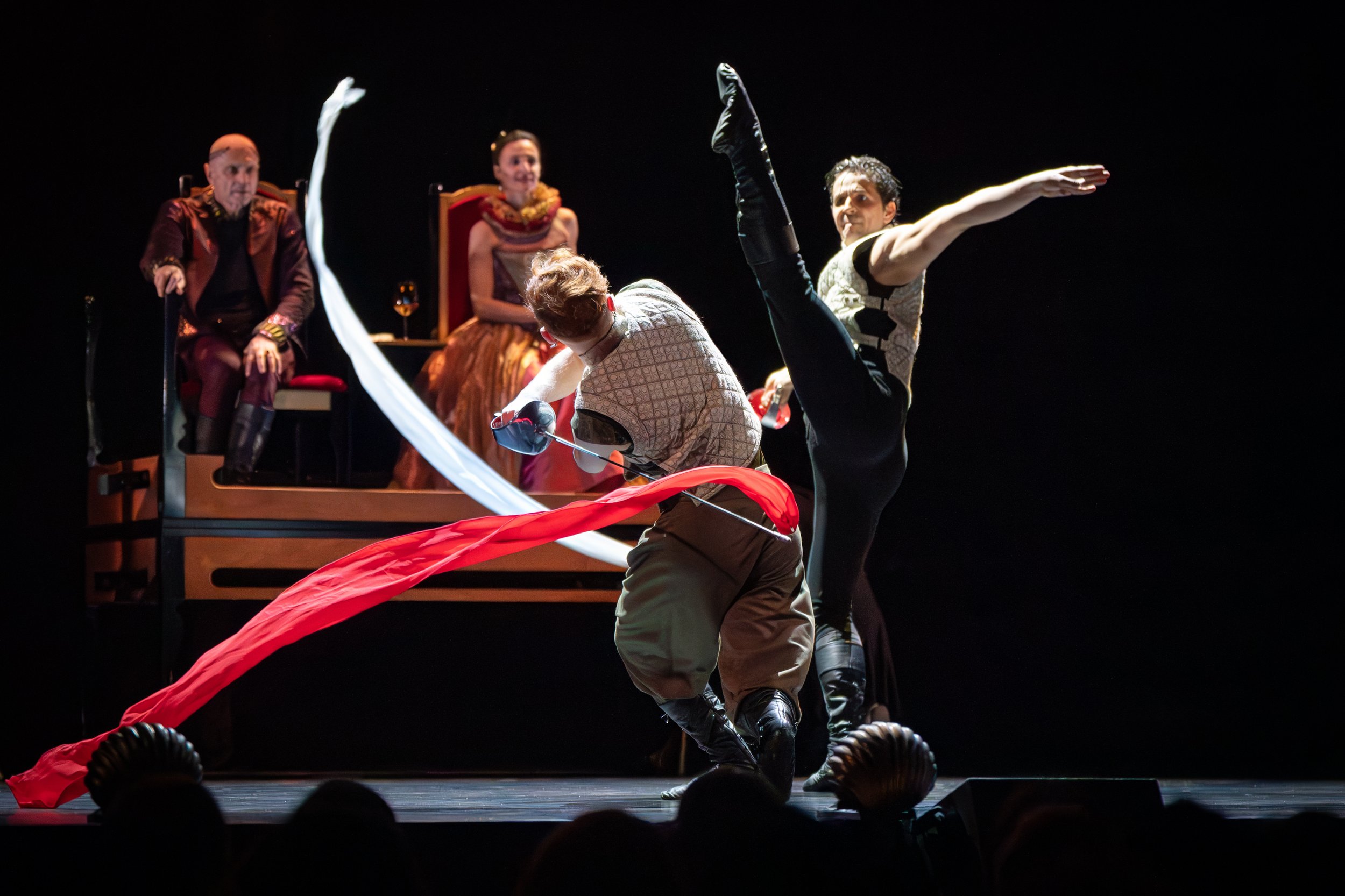
Hamlet, Prince of Denmark. Photo by Roman Boldyrev
Born in Lac Saint-Jean, Quebec, Côté became entrenched in the world of dance at a young age, and by the time he was in his early 20s, he had risen through the ranks of the National Ballet of Canada to become principal dancer. During the 26 years he spent with the company, he performed in internationally touring productions of such classics as Swan Lake, The Sleeping Beauty, Coppélia, and Le Corsaire, and worked closely with respected talents like William Forsythe and Crystal Pite. He founded Côté Danse in 2021.
But portraying Hamlet, he says, is a whole different ball game from his classical-ballet days.
“It’s a much more complex role than a lot of the roles I had to play, let’s be honest,” Côté admits. “A lot of the princes I played are just like ‘Ooh, a swan. I love swan.’ And then, ‘I don’t love swan.’ And then you do double tours, and everybody’s really happy, and you have good hair, and the show goes well. You know, I don’t want to dilute it—the skill of doing that at a high level is the most difficult thing ever, with white tights, and very exposed, and it has technical elements that are so amazing.
“But story-wise and acting-wise, it’s quite superficial,” he continues. “It’s a thing that gets you to the double tour—as opposed to this show, which is about the acting. It’s about the interactions. It’s about the partnering. And the movement is not supposed to be groundbreaking; it’s supposed to be movement that takes you from one place to another. It’s supposed to be movement that is infused with meaning at every single step. Every step needs to get us from point A to point B.”
There are just two scenes in Hamlet, Prince of Denmark that feature more abstract moments of dance choreography, those being Ophelia’s insanity and her subsequent drowning. The artistry of movement in these traumatic scenes allows them to take on a more poetic quality.
Elsewhere, including the start of the piece, the movement is more literal. But there’s a certain quality that the dancers embody to draw the audience into their orbit.
“There’s sort of a bizarre magic of when you want people to listen, you whisper,” he says. “We turn down the voice a bit, and then we sort of get this moment. And the first 20 minutes of the show is quite slow. People kind of understand what this is going to be like, and they start trusting us. Then, eventually, you can feel the audience—everyone kind of comes into this thing. And I think it’s a very fascinating construction of a show.”
From there, it’s a whirlwind of artistic prowess as the dancers dive into the story. But Hamlet is not an overly emotional piece; it’s a matter-of-fact display of inner turmoil, vengeance, and paranoia. And after two years of performing it, Côté is still up for the challenge.
“The show is really hard,” he admits. “It is, you know? Two hours, no intermission, and I’m on every scene. And so it still keeps me in shape, and it’s still challenging. After 47 shows, I’m still finding ways to develop. Every character in the room is still really growing within the work, which I find fascinating. And to come in at this time with my company, to be able to tour this way, you know—extensive tours that take us to a lot of different places, and we see different audiences, and we see how the work is sitting in different theatres and different venues—it’s really amazing. I would say it’s a very nourishing experience.” 

Related Articles